
TL;DR
The iPhone 11 offers a strong camera with impressive Smart HDR and an automatic Night Mode for great shots in low light. It boasts solid battery life and a powerful A13 Bionic chip, keeping it ahead in performance. However, the LCD screen is a step down from competitors, and the inclusion of a slow 5W charger and the absence of a headphone jack adapter feel like cost-cutting measures. The "Pro" models step up with superior OLED displays and a more advanced triple-camera system. Ready to see if it's the right upgrade for you? Read on for the full review!
iPhone 11 has been released, and we’ve had a few days before the launch to stress-test it in order to share our first impressions with you, our readers. This time, we won’t spend too much time on iPhone history; instead, we’ll jump straight into what’s new, what’s old, the pros and cons, and whether Apple’s new iPhone 11 models earn a buying recommendation (or perhaps even a “must-buy”) or not.
Support senses.se and get the best price on iPhone 11 & iPhone 11 Pro Max.
iPhone 11 – the entry-level model
After an “interim year” of S-models with incredibly confusing names like Xs and Xr, Apple is doing the right thing this year by giving us an entry-level model that starts with the new generation number: iPhone 11. This base model is symbolically cheaper than the entry-level model (Xr) was last year (negligible in context, about 300 SEK), which would have been even cheaper if we didn’t have such a weak krona and an ill-conceived chemical tax, which automatically pushes up the price by 440 SEK + exchange rate in Sweden (though you get the same phone with chemicals, but without the tax, if you import it from any other EU country – logically enough). All iPhone 11 models feature the mid-sized 6.1″ screen, which is sufficient but unfortunately is only an LCD screen with 326 ppi and 1792 × 828 pixels. It’s OK, but a bit on the low side for a premium handset like the iPhone, especially considering the price tag. Most Android competitors offer at least Full HD, if not 4K (which is admittedly unnecessary on such a small screen, but still – they usually offer better panels), and paired with Apple’s economical choice of an LCD display – which isn’t even AMOLED – the first impression of Apple’s “new” iPhone is a bit of a disappointment.

At the same time, it is, of course, not a bad screen: the colors are still brilliantly clear and beautiful (among the best on the market), and the experience is elevated further thanks to Apple’s implementation of HDR – both HDR10 and the dynamic, leading HDR format today, Dolby Vision. The latter provides a massive boost to contrast, colors, and overall image quality – the biggest leap for imaging since the transition from analog to digital, we would say – especially in UHD 4K films that support it (which many films do within Apple’s own ecosystem, currently called iTunes but soon to be Apple Movies). Watching movies on an iPhone has always been an unexpectedly pleasant experience, but this has just grown significantly.
iPhone 11: A camera out of the ordinary
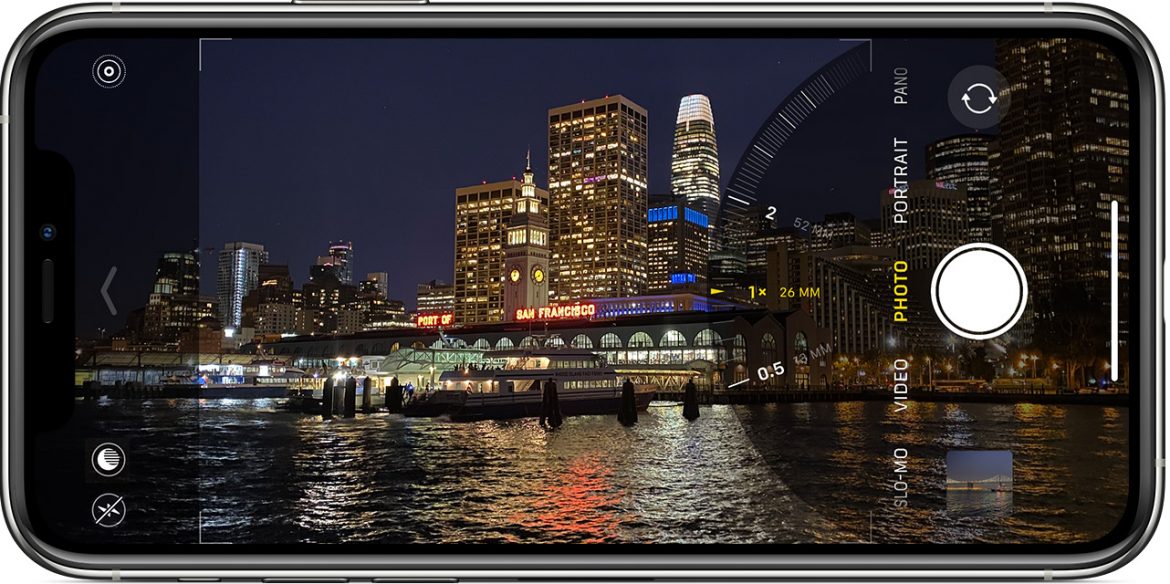
Another area that has evolved considerably this year is the camera. It has been endowed with even better optics, 4K capabilities once again, and a dual-camera setup – which, honestly, looks quite ugly on the back – but provides 12MP, wide-angle, and ultra-wide-angle. If you want even more from your camera, you should check out iPhone 11 Pro (which we cover further down in the article). The image quality is truly superb: the iPhone 11 takes stylish, fast, and colorful photos (with Smart HDR). The digital function (“Night mode”) that brightens dark images sometimes gives extremely good results and can be set to fully automatic. Every user now has the potential to appear as a master photographer with relatively little knowledge or preparation – just choose the right mode, a reasonably decent subject, decent lighting, and press the shutter. Hello, Ansel Adams!

Wide-angle 
Telephoto 
Ultra-wide (Pro Max) – drama

For those belonging to the selfie generation, the wide-angle can also be turned forward, providing a shot that feels less like a face close-up and more like a portrait photo. Pets are also supposed to be detected better now, giving them that “movie star look” with a shallow depth of field – but we didn’t have any (sufficiently) fluffy members at the editorial office to test this on.
2007 called and wanted its tech back
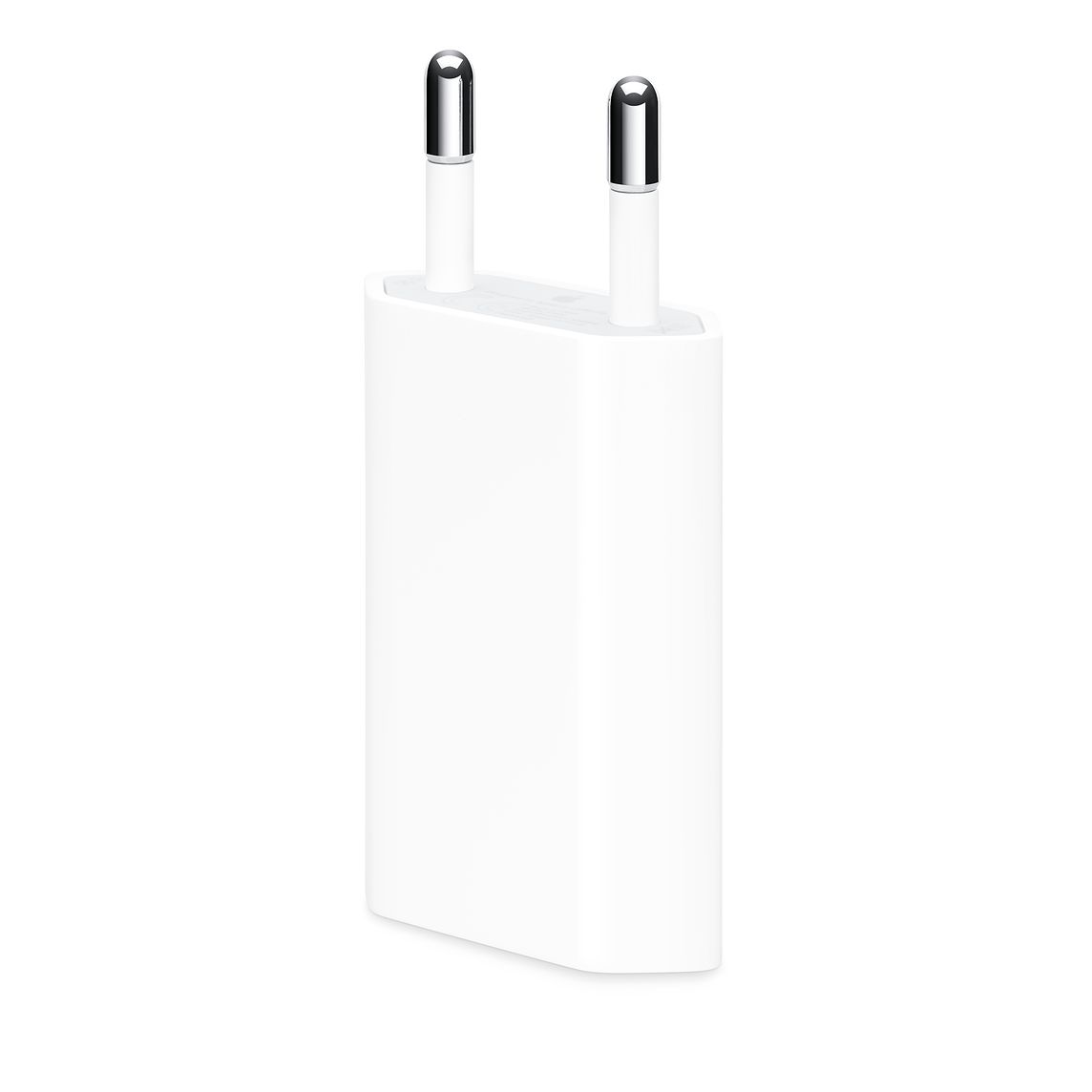
It took ten years for Apple to give us something resembling water resistance. Imagine our surprise when even today – 12 years later – we still get the same tired 5W charger for a phone that is supposed to be premium and top-of-the-line. To put it bluntly, it’s embarrassing. Slow and outdated doesn’t even begin to cover it; while the competition includes chargers up to 65W – for phones costing about half as much as the iPhone 11 that can charge to 50% in a few minutes – iPhone 11 owners are expected to pay for an additional purchase of a modern charger themselves. This is so penny-pinching it’s unbelievable, and it only fuels the critics’ feeling that Apple has become unreasonably greedy and was overtaken long ago; both technically, functionally, and above all, in terms of value for money.
Speaking of stinginess, Apple has also removed the dongle that lets you connect 3.5mm accessories to the lightning port. Not a catastrophe, admittedly, as wireless headphones have become so dominant (if only they had thought to include a high-resolution codec for these, so that the sound quality on the iPhone 11 could be fully utilized…). But still, it’s once again absurdly cheap for a small cable that costs Apple a few cents at most.
Great battery life
On the positive side, when talking about charging, the battery in the iPhone 11 is even better than the one in the iPhone XS, which was already better than the iPhone X[[[XXXTRANS_65]]]. It is rated for 17 hours of video playback (presumably with low brightness and airplane mode), which is substantial, and in practice, a single charge easily lasts a full workday, even if you are a fairly heavy user (with the exception of demanding games). The larger battery combined with more power-efficient technology is noticeable and well worth the 11-gram weight increase of the iPhone 11.
Good sound, but…
iPhone has always boasted good speaker sound for its small, slim design. And the iPhone 11 can claim the best speaker sound yet, partly because Apple has added virtual surround to support Dolby Atmos. Yes, you read that right – Dolby Atmos, the cinema sound format that normally requires 8 to 34 speakers. And even if you can’t help but smile at how good UHD 4K movies with Dolby Vision and Dolby Atmos look and sound – for example, Spider-Man: Into the Spider-Verse (which features DV on Apple’s movie service, but not on the physical UHD release) – you can’t help but also feel your blood pressure rise over Apple’s priorities. Because once the first impression fades, you’re left with a total gimmick, a costly license from Dolby that in practice will be used by… well, who? Atmos only works if you play the audio from movies directly through the phone’s speakers. And when do you actually see yourself doing that? On the bus? In bed? On your favorite sofa, instead of watching your 100″ projector screen or razor-sharp 65″ OLED and listening via a Dolby Atmos surround system with real speakers? This is a fun party trick that impresses the audience but offers no real value for the vast majority of users.

Apple had the chance here to upgrade the iPhone’s long-neglected audio codecs for wireless transmission – you know, those several-year-old HD audio innovations like aptX, aptX HD and, not least, the completely free and open Sony format LDAC – which do wonders for sound quality in good headphones. But did they do it? No. Here again, the same old, tired AAC dominates – a codec that admittedly sounds OK – but come on! Apple is three years behind the competition here – again. Every Chinese handset released in recent years has all these codecs built-in or can easily install them (yes, Qualcomm may be Apple’s arch-enemy and owns the license for aptX, but LDAC is completely free to implement). Android handsets also let you actively choose your codec, providing total control over audio quality depending on what your headphones support. This would have been an audio upgrade for the iPhone that would have made a real difference for an enormous number of users. But instead, we get virtual surround sound…
New A13 chip delivers new records
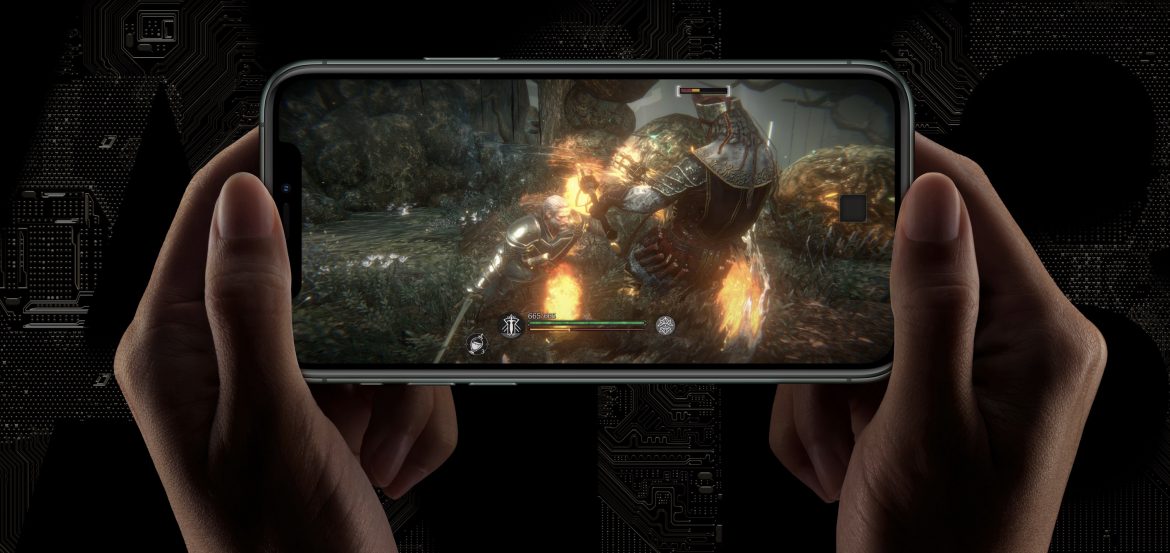
A13 Bionic, the primary chip in the iPhone 11 (and Pro), once again performs the best and is even more power-efficient than before. Geekbench 5 has published figures showing an impressive 5,472 points in single-core and 13,769 points in multi-core. That is a good bit (a full 70%) faster than its closest competitor, the Snapdragon 855 Plus. Early figures for Huawei’s newly released Kirin 990 suggest it roughly corresponds to the Snapdragon 855 and – according to preliminary Geekbench figures – measures 3,842 single and 11,644 multi (since the Kirin 990 has just been released, these figures should be taken with a healthy grain of salt, but they serve as a good measurable reference). The closest competitor is likely to be Samsung’s new Exynos 9825, which however only seems to perform almost as well as the previous generation A12 chip, with figures roughly 20% behind the A13 (4,532 and 10,431 respectively). So on paper, Apple wins this round easily. However, one should keep in mind that benchmark figures don’t tell the whole story of real-world performance. In that arena, software quality and component synergy are major factors (iOS 13 is promising but buggy, so we advise everyone to wait to upgrade until after September 30 when 13.1 is scheduled for release). But this remains tangible proof that Apple is (once again) the king of the theoretical performance hill.
Waterproof and built for tougher conditions?
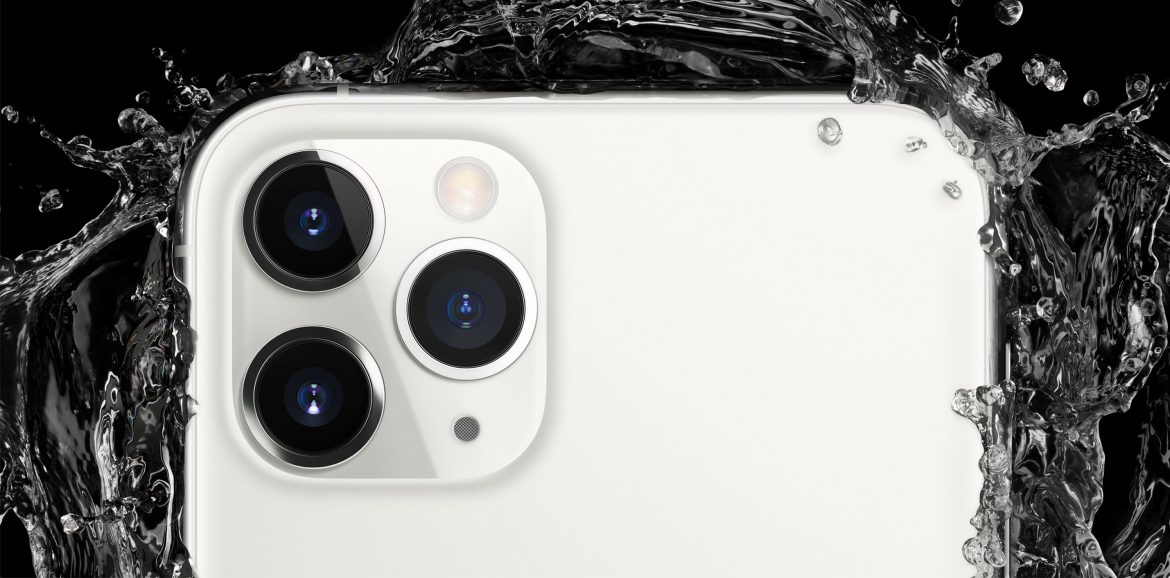
The iPhone 11 and Pro have now received their respective versions of IP68 ratings, which in theory means they should withstand being submerged in water at depths of two and four meters for 30 and 120 minutes, respectively. While this is good in theory, it should be considered with a major caveat: Apple remains very strict regarding water damage on all its products, and should your iPhone 11 suffer such damage, the warranty will not apply, even if the argument “but you promised the product would be waterproof!” wouldn’t feel entirely unreasonable in this case. This is because Apple clearly emphasizes that protection can diminish over time due to wear, impacts, dropping the phone, etc. So view it instead as a small extra safety net, but don’t assume you’ve bought some kind of underwater GoPro.
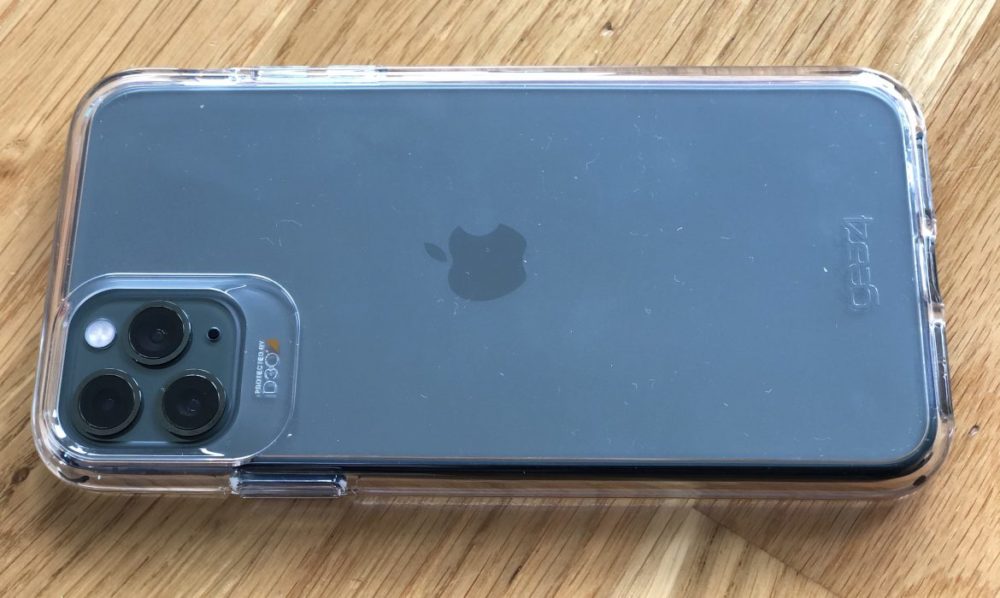
When it comes to cracked displays, this is a major source of income for Apple (and various smaller mobile repair shops). This year, the glass is supposed to be even better, stronger, and completely exclusive to iPhone. iPhone 11 Pro Max is reportedly having production problems with the glass (it’s unclear if there is a defect or just a capacity shortage), so we would definitely – like the National Board of Health and Welfare – continue to recommend using both a case and a screen protector. One brand we have had good experiences with over the years is the American company ZAGG, and they are now releasing transparent cases that look decent while enclosing your new luxury handset, featuring D30 technology to better withstand high falls (Piccadilly, 349 SEK). They also offer a display protector from their sub-brand Invisible Shield, which is commendably easy to install – using a frame to guide you step-by-step so you avoid crooked applications. The screen protector is antibacterial, features an oil- and grease-repellent treatment, and includes EyeSafe technology that filters out portions of harmful blue light without altering colors (Glass Elite VisionGuard+, 349 SEK).
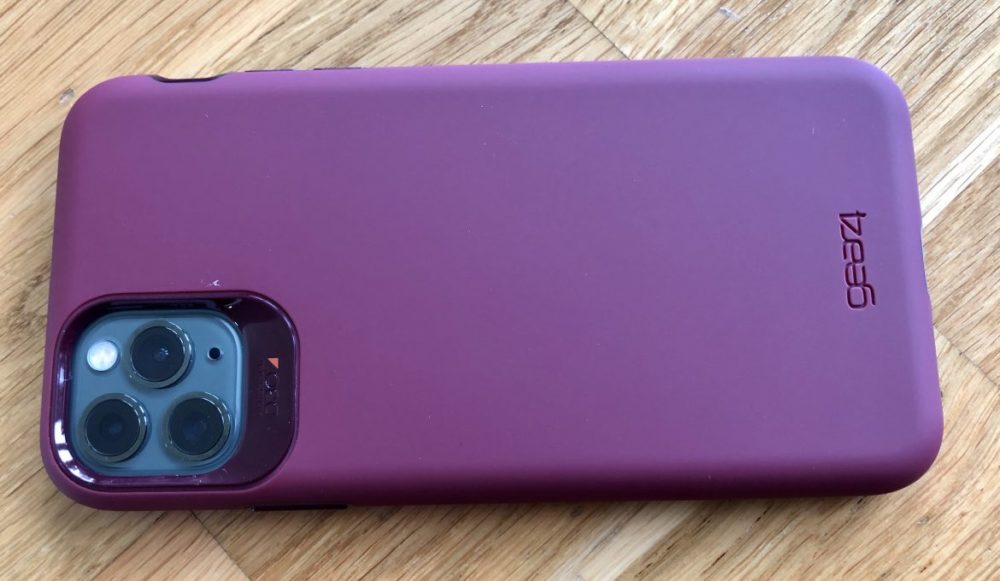
One protector we really like is Gear4’s Holborn (349 SEK), as it features an anti-slip treatment (unlike the Crystal Palace, which is entirely smooth plastic). This provides stability on, for example, a train table while traveling (or when propping the phone up to watch a movie), though the downside is that it is colored, so you won’t be able to show off that flashy Midnight Green color you’ve waited so long for.
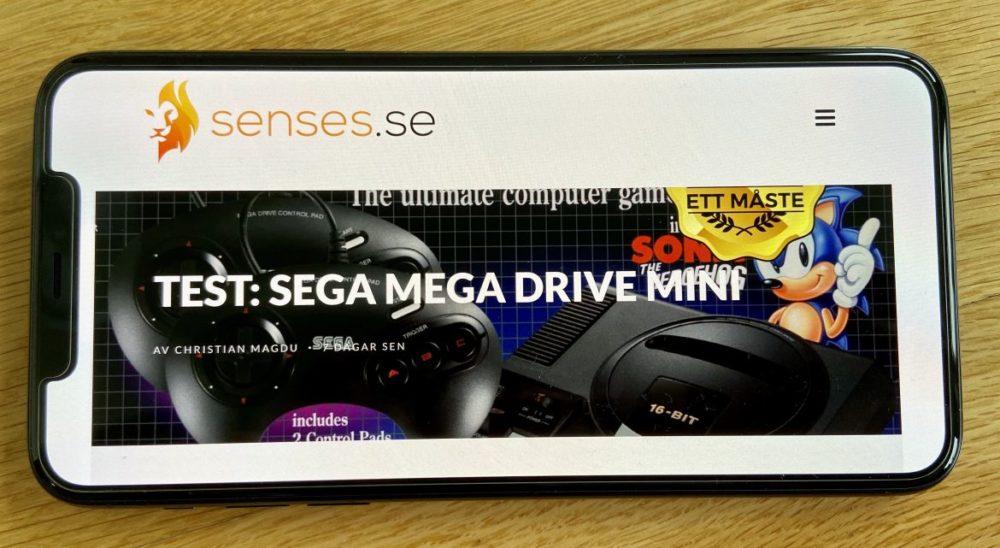
Regarding the design, the black border (the “notch” introduced with the iPhone X), which many people hate, is unfortunately still there. Many Android competitors have copied Apple’s buttonless display over the years and, in our opinion, have solved this more elegantly and effectively. For us, it isn’t a dealbreaker, but given how many people have complained, Apple might have considered looking at the competition this time (in this regard as well).
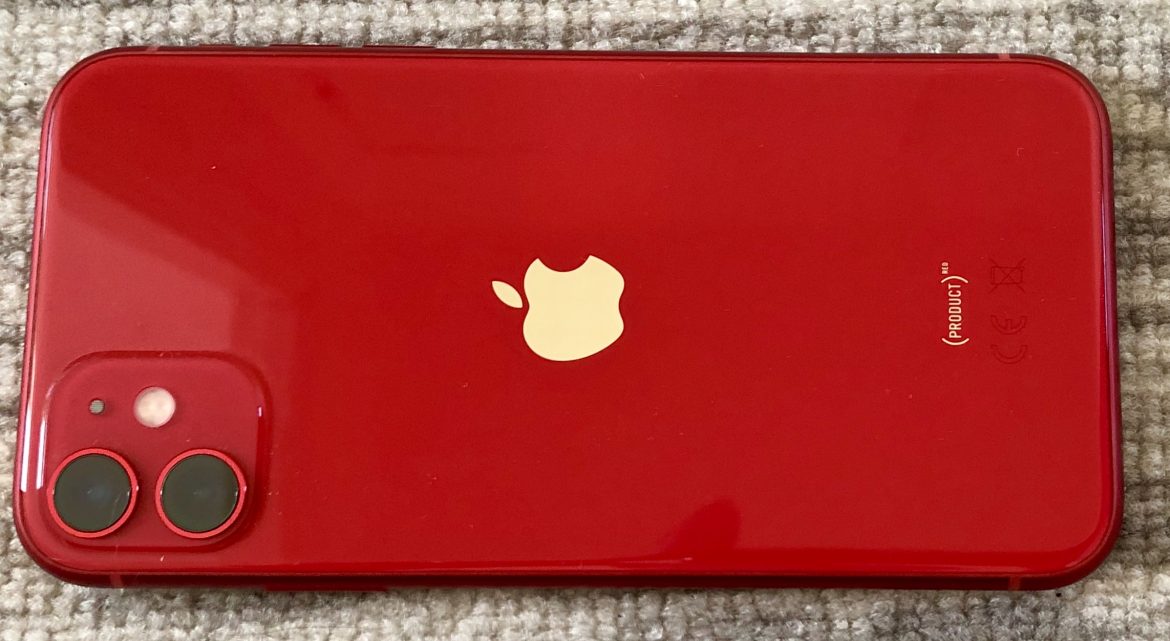
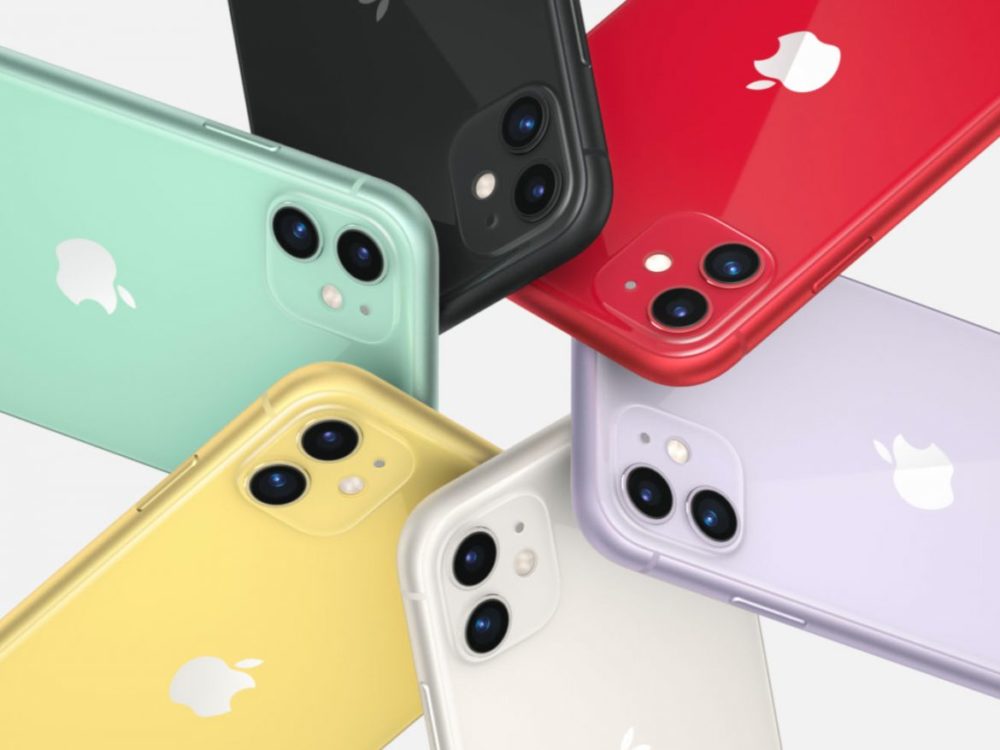
The iPhone 11 comes in six colors – mint green, RED (which contributes funds to AIDS research), yellow, gray, black, and light purple. Personally, the red one will be the reference here at the office, partly because it supports a good cause, looks great, and is practical for avoiding those “where did I put the iPhone…?” moments, as it shines bright and clear.
Should I buy an iPhone 11?
The price tag lands at 9,295 SEK for a standard iPhone 11 with 128 GB (64 GB is a bit on the low side if you plan to film in 4K and use the Apple Arcade gaming service, which installs games that take up a lot of space). This is a significant sum for most consumers. For this price, you get a solid and well-equipped phone with a great camera, a decent (though somewhat low-resolution) screen, and Apple’s iOS system, which remains the most intuitive and well-curated of all existing mobile operating systems today.
At the same time, it’s unavoidable that the iPhone is an expensive phone, and Apple’s pricing strategy has caused Android manufacturers to drive up the prices of their models as well. From a purely technical standpoint, you get much more value for your money from, for example, a OnePlus 7, which costs around 6,000 SEK. However, you wouldn’t get that brilliant camera or iOS – a transition that doesn’t feel entirely painless for many users, and something Apple is well aware of. If you have an iPhone that is more than two generations old, the iPhone 11 is not a bad upgrade, but it does have some flaws that annoy us and unnecessary gimmick features that simply drive up the price.
RATING – iPhone 11 (Red) 128GB: 7 (Recommended)

Review: iPhone 11 Pro Max – for the pros?
The big draw this year is undeniably Apple’s push to introduce a “Pro” model into its iPhone lineup. Whether it ultimately proves to be as “Pro(fessional)” as claimed, we will address further down.
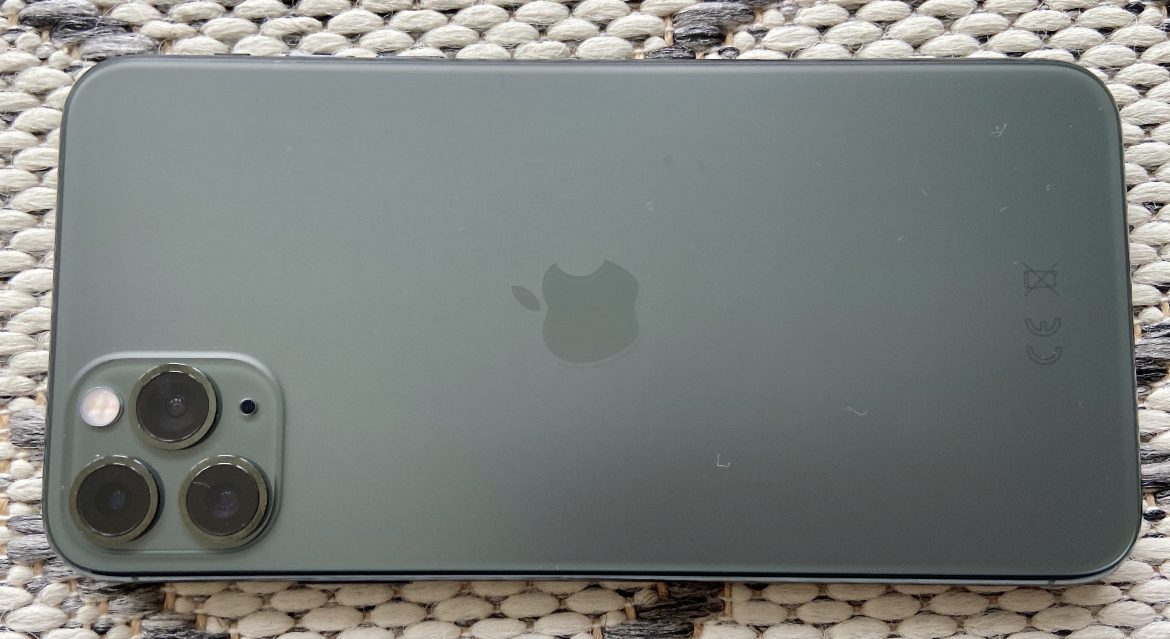
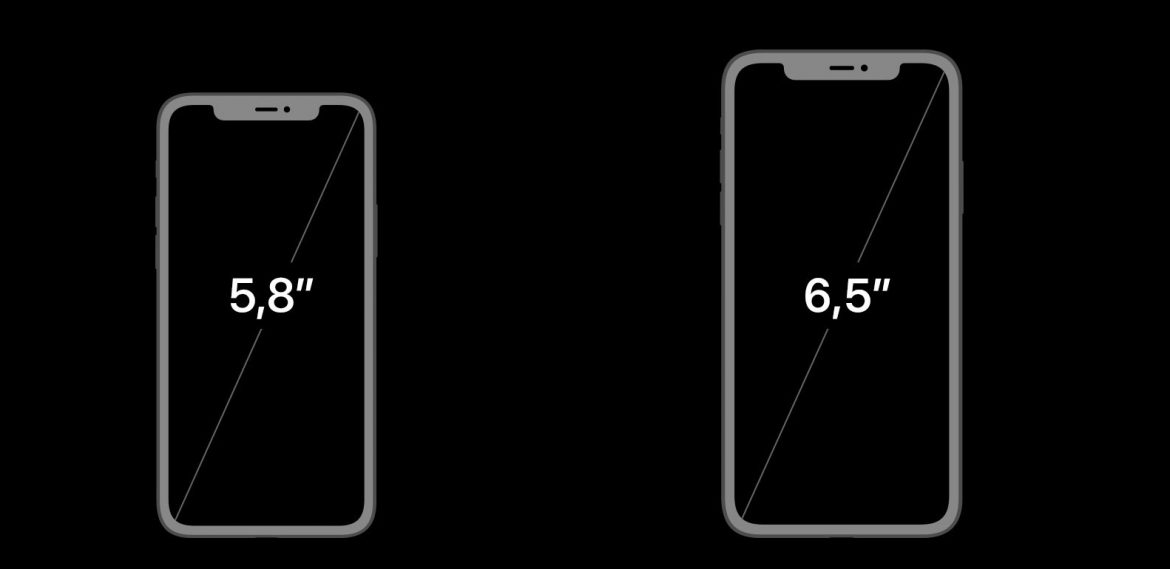
This “everything-extra” model is offered in both 5.8″ and 6.5″ sizes, with the smaller one named iPhone 11 Pro and the larger one iPhone 11 Pro Max. The “big brother” (which is the one we tested here) is a true giant at 226 grams (nearly a quarter of a kilogram!). Demand for the Pro Max in the new color, Midnight Green, has significantly outpaced the supply at launch, and the waiting period for those who didn’t pre-order early on September 13 is (once again) around six to eight weeks. Whether this is an intentional move to build “hype” (and a lot of frustration – which everyone seems to forget by next year) or due to a genuine difficulty in gauging pre-order interest, we don’t know. But it would certainly be more considerate and respectful of Apple toward its loyal customers in the future to not overestimate its capacity and allow more time between taking pre-orders and promising delivery (seven days is clearly not enough).
What distinguishes the iPhone 11 Pro (Max) from the standard iPhone 11?
Everything in the overview above basically applies to the Pro and Pro Max as well, but we list below a few significant differences you should consider for your choice:
- Screen size: The Pro Max features a 6.5″ screen, which is substantial and utilizes what Apple calls Super Retina XDR (the same screen technology featured in the company’s 50,000 SEK professional desktop monitor). The 2688 × 1242 pixel resolution at 458 ppi is a visible upgrade over the iPhone 11’s standard screen, and the HDR here can push a steady 1,000 nits, making it literally brilliant even in full sunlight (and excellent for movies; this is a “phablet” in the truest sense). The standard Pro has a 5.8″ screen, slightly smaller than the iPhone 11 – but it also features Super Retina XDR with a 2436 × 1125 pixel resolution, resulting in the same pixel density of 458 ppi.
The camera! The already class-leading camera gets an additional lens in the Pro and Max versions, for a total of three, offering even more versatility and control. We are talking about one of the absolute best mobile cameras on the market right now. You get three 12 MP cameras, including wide-angle and ultra-wide-angle. The highly popular portrait mode (“bokeh”) now allows for manual depth-of-field adjustment.
Video is also a real highlight. 4K recording has been available on Apple handsets for a long time, but now you can shoot at 30 and 60 fps without restrictions (other than storage space), so the iPhone Pro Max comes close to being called a professional camera; we look forward to seeing Henric and Christian shoot their next film on it. One fun addition this time is the ability to record with all (three) cameras on the phone, which wasn’t possible on previous iPhones.
Just like the standard 11, the selfie camera is improved, as is the slow-motion function, alongside a more powerful flash and Smart HDR.
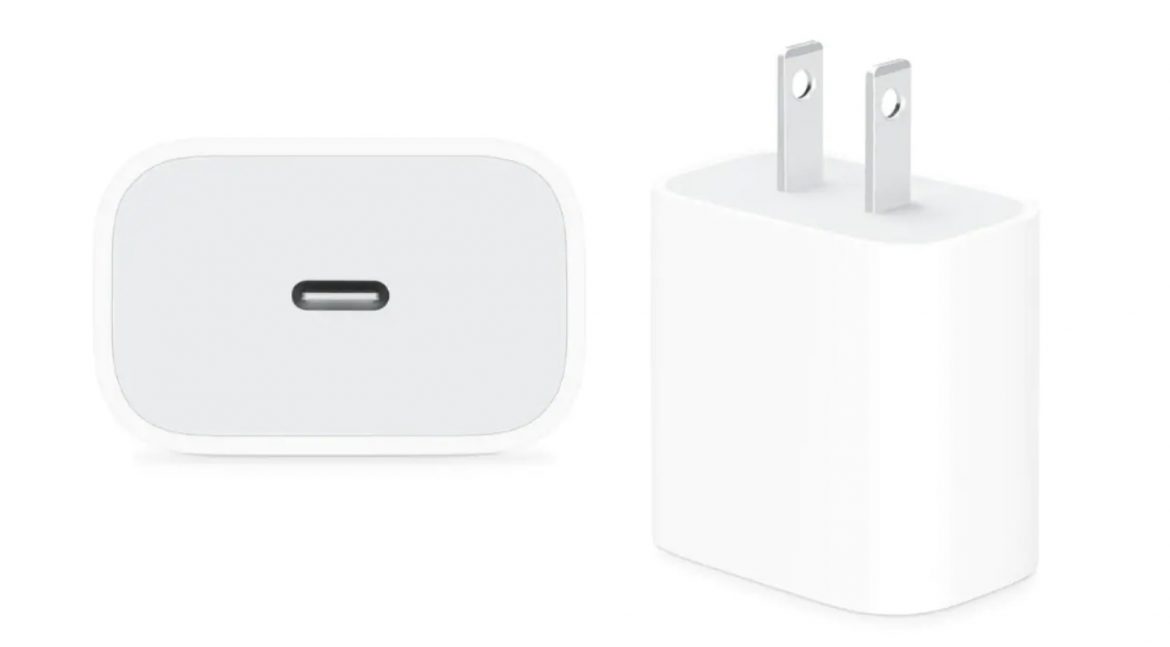
The charger! Apple has found it in its infinite generosity and wisdom to include an 18W charger that supports fast charging via USB-C with PD (Power Delivery); you can get a 50% charge in about 30 minutes. This is included “free” when you spend 13,000–18,000 SEK on a mobile phone… There is one catch, however: it now requires a cable with USB-C at one end and lightning at the other – because Apple naturally doesn’t want to miss out on its cash cow, selling careless consumers new lightning cables that only work with i-devices. Now you can’t just switch to any old lightning cable, as those have USB-A and the charger only has a USB-C output. Fortunately, you can buy third-party cables for a fraction of the price; just make sure to choose a high-quality one with PD support – otherwise, there is a real risk of fire at higher power outputs.
Record-breaking battery life – with 20 hours of video playback (at low brightness in airplane mode), the Pro Max should easily last through an entire workday, even for diligent users of social media, music and movie streaming, and messaging. And yes, perhaps even heavy gaming – we’ll have to get back to you once we’ve had the chance to play games for a full workday. 🙂
Just like the entry-level model, the Pro Max features HDR, Dolby Vision, and Dolby Atmos. And while the latter sounds good in movies, we consider it a bit of a gimmick that unnecessarily increases the price of the handset. HDR and especially Dolby Vision look better here than on the standard iPhone 11, as the Pro (Max) features a superior screen (AMOLED) and can push many more nits (brightness per area) – 1,000–1,300 nits, compared to the 11’s LCD which manages 800 nits.
Wi-Fi 6 – all new iPhone models support the latest Wi-Fi technology (802.11ax), and as soon as we receive our Wi-Fi 6 router, we will return with real-world measurements. The theoretical performance increase for networking is certainly promising.

Should I buy an iPhone 11 Pro (Max)?
The model we tested, the iPhone 11 Pro Max 256GB, costs 16,195 SEK. That is a small fortune; the price of a high-end laptop. To call it “good value” would be absurd. At the same time, it is, objectively, one of the best and most versatile phones on the market today, featuring a brilliant screen, three cameras, and features we genuinely like, paired with some unnecessary additions that simply cost the consumer money (and Apple’s persistent refusal to adapt to newer, better codecs for wireless music).
If you didn’t pre-order a Pro Max last week, you will likely find it difficult to get your hands on one in the near future (unless you’re willing to pay scalper prices on private sales sites). Apple has (intentionally or unintentionally) underestimated demand, and some retailers are predicting availability in one to two months (potentially as late as mid-November). However, this can change quickly as supply balances out across different markets, and it doesn’t necessarily have to be a disadvantage for you as a consumer. The most popular color – Midnight Green – has faced quality issues with the glass (and also comes pre-installed with the buggy iOS 13), so waiting a few weeks might actually be recommended. If you use a case and screen protector, the color might not matter that much anyway.
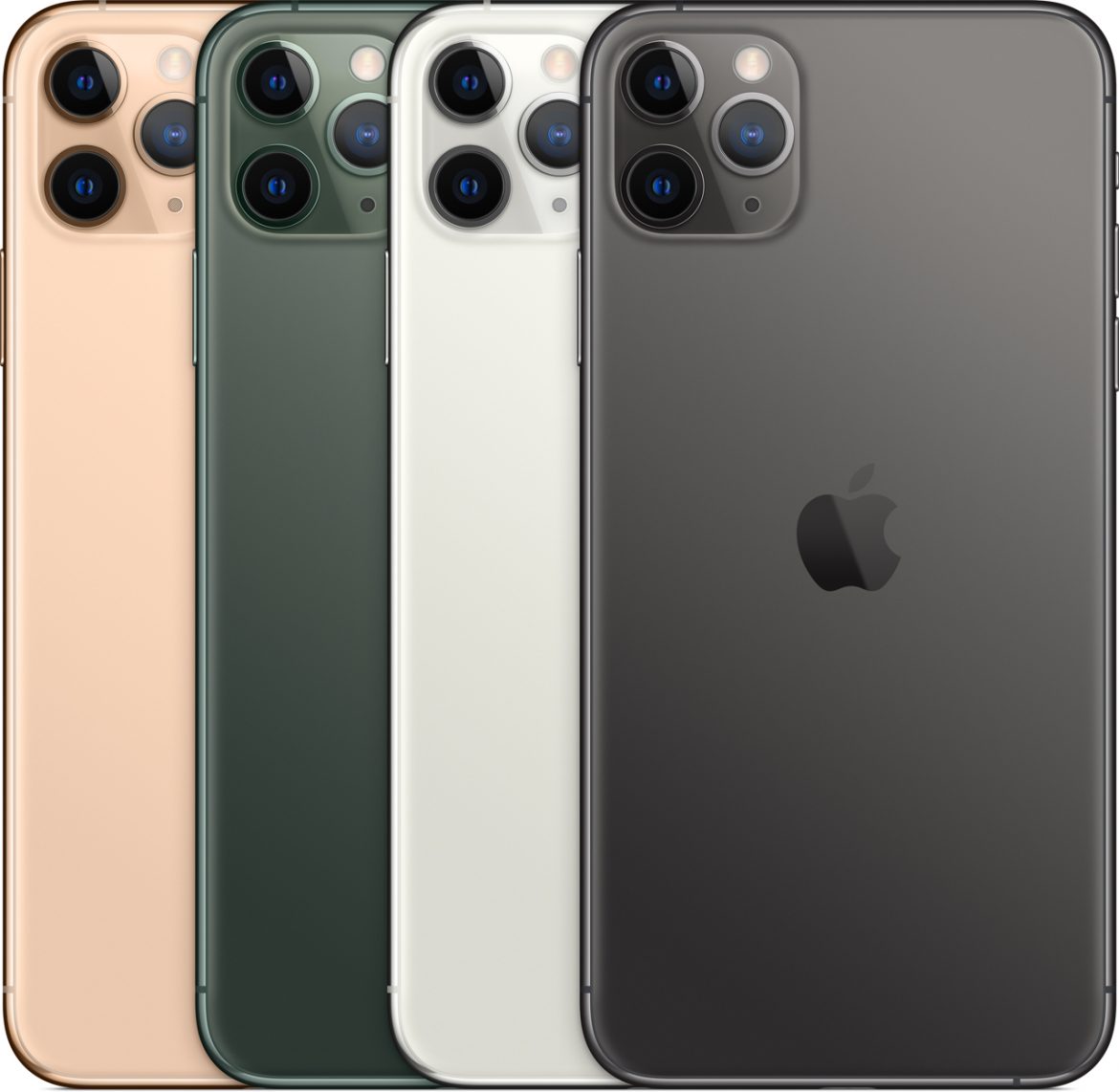
The iPhone 11 Pro Max might not quite live up to the “Pro” epithet (though it certainly lives up to “Max” in terms of size and weight!), and we are annoyed that there is no 128GB alternative. No one buys the most expensive model of a phone with the smallest storage capacity (64GB). On the other hand, far from everyone needs the next step up to 256 GB, which drives the price up by a staggering 1,900 SEK. Apple still doesn’t allow for expanded memory via microSD cards, so you’re stuck with their extortionate prices, and the decision you make at the start cannot be expanded later. So think it through carefully, as it also significantly affects the resale value.
For those who must have the very latest and best and don’t mind the substantial size and weight, it’s hard to find any phone today that beats or even measures up as a total package to the iPhone 11 Pro Max. Possibly Huawei’s new and slightly cheaper Mate 30 Pro, but its future is extremely uncertain given that Google has sanctioned them from using the Google Play Store due to the USA’s ongoing blockade against Chinese companies (specifically Huawei). The iPhone 11 Pro Max costs a pretty penny, however, and isn’t a direct revolution in the way the iPhone X felt in 2017 – so it’s not exactly a “must-have.” But it still receives a warm recommendation, especially for those moving from a generation older than the two-year-old iPhone X or iPhone 8 Plus.
RATING – iPhone 11 Pro Max – Midnight Green – 256GB: 8 (Recommended)
Note: The Apple TV+ streaming service is included for one year for anyone purchasing a new iPhone, and it launches on November 1. A separate article detailing our impressions will be coming soon to senses.se.
Offer: Get the best price with installments on iPhone 11 & iPhone 11 Pro Max and support senses.se at the same time!
How we rate products at SensesReview Highlights: Q&A
What is the difference between the displays on the iPhone 11 and the iPhone 11 Pro Max?
The iPhone 11 128 GB & iPhone 11 Pro Max 256GB feature different screens. The standard iPhone 11 uses a 6.1-inch LCD with 326 ppi and 800 nits brightness, while the Pro Max has a 6.5-inch Super Retina XDR AMOLED screen with 458 ppi reaching 1,000 to 1,300 nits.
What chargers are included in the box?
The standard iPhone 11 includes an outdated 5W charger, whereas the Pro Max comes with an 18W USB-C fast charger that reaches a 50% charge in about 30 minutes. The Pro Max charger requires a USB-C to Lightning cable.
How do the camera setups compare?
The iPhone 11 features two 12MP rear cameras providing wide-angle and ultra-wide-angle shots. The Pro Max adds a telephoto lens for a total of three 12MP cameras and supports manual depth-of-field adjustment in portrait mode as well as recording from all cameras.
What battery life can be expected from these phones?
The iPhone 11 is rated for 17 hours of video playback and easily lasts a full workday. The iPhone 11 Pro Max is rated for 20 hours of video playback under low brightness in airplane mode and lasts an entire day even with heavy use.
Is water damage covered under the warranty?
No. Although the phones have IP68 ratings for water submersion, the standard warranty does not cover water damage because protection can diminish over time through wear, impacts, and drops.