
TL;DR
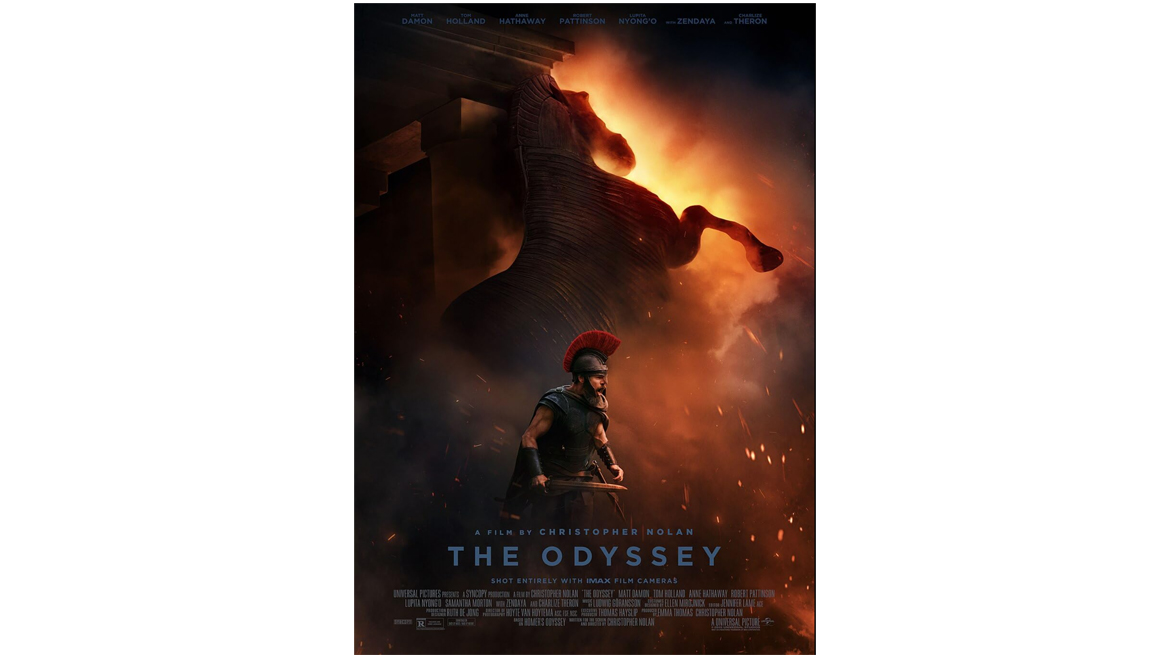
Christopher Nolan has delivered a historic cinematic event with The Odyssey, an ambitious 70mm masterpiece that redefines the modern epic. Shot entirely on IMAX cameras, the film eschews digital trends for tactile, practical effects and a visceral sense of scale. Matt Damon provides a grounded, powerful anchor as Odysseus, leading a staggering ensemble cast that includes a career-best performance from Tom Holland. From Ludwig Göransson’s haunting, ancient-inspired score to Hoyte van Hoytema’s breathtaking cinematography, every technical detail serves a narrative that feels both classic and cutting-edge. Rivalling the grandeur of Lawrence of Arabia, The Odyssey is a triumphant reminder of the power of physical filmmaking in a digital age. This is a rare, perfect-score achievement that must be experienced to be believed. Dive into our full analysis to see why this film is being hailed as a landmark of our generation.
A capacity crowd at the Rigoletto for a 70 mm screening of Christopher Nolan’s The Odyssey—the mere thought is enough to inspire awe. The experience felt particularly poignant following reports that Sony may cease production of physical video games by 2028. There we sat: 300 people gathered to witness the year’s most anticipated film in the most tactile format possible, helmed by one of the preeminent directors of our era. For months, internet discourse suggested this might be Nolan’s first true misstep or that the film appeared underwhelming. I remained skeptical of those claims. We are, after all, discussing Nolan. Over the past decade, he has delivered some of the most ambitious and distinctive cinema in modern history—films that bear his unmistakable signature. With Nolan at the helm, the result is never mediocre; he constructs vast, intricate narratives with a clarity of vision that few peers would even attempt, let alone execute. He operates on a different plane. As for The Odyssey? When the credits rolled, I was left with a rare sensation: the realization that I had just witnessed a historic cinematic event. It is a film that lingers long after the house lights come up—an experience I’ll be describing to my grandchildren decades from now, telling them: I was there.
To follow the success of Oppenheimer (2023), Nolan naturally turned to Homer’s The Odyssey—an ambitious choice by any standard. The production boasts a cast so extensive it’s staggering. It evokes the grand scale of old Hollywood, where it seemed every major star was involved. We’re talking about Matt Damon, Tom Holland, Anne Hathaway, Zendaya, Travis Scott, Robert Pattinson, Charlize Theron, Jon Bernthal, Mia Goth, Himesh Patel, John Leguizamo, Benny Safdie, Elliot Page, and the list goes on. The scale is truly gargantuan.
My primary reservation going into the film concerned Tom Holland. His previous dramatic turns in Cherry and The Devil All the Time, while earnest attempts at darker roles, lacked the necessary gravitas and intensity. While he excels as Spider-Man, I have been eager to see him move beyond that archetype and truly establish himself in a more serious light.
In The Odyssey, however, he delivers his finest work to date. Though his role isn’t the most extensive, he fits seamlessly into Nolan’s meticulous world. There is a newfound restraint in his performance that works to his advantage, creating a presence that feels essential to the ensemble. While perhaps not showing his entire range, it is the first time he has felt entirely at home in a production of this magnitude and weight.
Matt Damon anchors the film as Odysseus. He provides a measured, powerful performance where a single glance conveys as much as the dialogue. Damon perfectly captures the war-weary hero, defined by years of conflict and a grueling journey, yet he maintains the sharp intellect and resolve that make Odysseus a literary icon. Amidst the film’s technical grandeur and visual scale, his grounded human presence provides the necessary emotional stakes. It is easy to overlook how consistently excellent Damon is, but here he proves once again that he is among the best in the industry. Even when the spectacle is at its peak, Damon ensures the focus remains on the man whose ultimate goal isn’t immortality, but the simple act of returning home to his family.
Hoyte van Hoytema’s cinematography remains a cornerstone of Nolan’s methodology. Utilizing the massive IMAX frame, he creates a profound sense of scale, lending a mythological dimension to the vast seas and rugged landscapes. Yet, van Hoytema avoids using the format for mere show; the camera frequently pivots to intimate close-ups and subtle gestures, grounding the epic in human emotion amidst the grand environments.
Consistent with their previous work, the visual style relies on natural light and practical locations. The harsh sun, flickering firelight, and cold blue of the ocean create an organic visual language that feels physical rather than digital. Every frame exhibits technical precision and emotional resonance, reinforcing Odysseus’s isolation and his yearning for home. Notably, The Odyssey is the first feature film shot entirely on IMAX cameras. Unlike productions that toggle between formats, Nolan and van Hoytema utilize the expanded aspect ratio throughout. The result is a more immersive experience—IMAX serves not as a marketing tool, but as a deliberate artistic choice that places the audience directly into Odysseus’s arduous journey.
This tactile quality extends beyond the format to the film’s entire visual identity. Nolan continues to prioritize practical effects over digital alternatives, giving every sequence a visceral physicality. Ships have a visible weight as they crest waves, and storms possess a raw power that resonates through the theater. The ancient sets feel lived-in and weathered, avoiding the clinical perfection of modern blockbusters. Even the mythological elements—gods and monsters—carry a material weight. These effects enhance the reality rather than distracting from it, ensuring the fantasy remains anchored in a believable, physical world.
Ludwig Göransson further solidifies his status as one of cinema’s most innovative composers. Eschewing traditional romantic orchestral suites, he develops a unique sonic language using ancient instruments like the lyre, aulos, and bronze gongs. The score feels simultaneously ancient and avant-garde, acting as an invisible narrator for the journey. Low-frequency rhythms and recurring motifs emphasize themes of fate and longing, while quieter passages allow for internal character development. Much like Hoyte van Hoytema’s cinematography, Göransson’s work avoids being bombastic for its own sake, instead growing organically from the narrative to provide a soul that persists long after the film ends.
Christopher Nolan once again demonstrates his standing as one of our most ambitious filmmakers. Adapting such a foundational text into a modern blockbuster is a feat that could easily have faltered under its own weight. The Odyssey deftly navigates war, mythology, politics, and family drama, shifting between the intimate and the monumental with ease. Ultimately, the film’s greatest triumph isn’t its technical prowess, but how effortless it feels. Nolan directs with a steady hand, never letting the spectacle overshadow the narrative core. Every action sequence and every quiet dialogue feels like a natural part of a cohesive whole.
In an era of over-edited, exposition-heavy blockbusters, The Odyssey trusts its audience. It allows the imagery and music to breathe, building drama through rhythm rather than constant stimulation. It is a work where technical innovation serves the story, resulting in a film that is both classic and cutting-edge. The fact that a production of this magnitude remains so focused and emotionally engaging is a testament to Nolan’s exceptional directorial skill.
The editing is a crucial, if understated, strength and a major reason why The Odyssey manages its massive narrative with such precision. Jennifer Lame continues her collaboration with Nolan, demonstrating an exceptional grasp of his narrative pacing. Managing the flow between epic conflict and personal moments is a significant challenge, yet Lame’s work provides a remarkable sense of cohesion.
She expertly balances scale and intimacy, preventing the myriad of characters and subplots from becoming overwhelming. Every scene is given room to breathe without sacrificing momentum, making this monumental story feel remarkably focused. Much of the film’s success lies in this invisible but essential craft.
In a landscape dominated by franchise formulas, The Odyssey recalls the tradition of the grand cinematic epic. It is a film that is patient, uncompromising, and monumental, revitalizing an ancient myth through expert craftsmanship. It stands as our generation’s equivalent to classics like Ben-Hur, The Ten Commandments, and Lawrence of Arabia—films that didn’t just tell stories, but defined the potential of the medium. The Odyssey is a clear and successful attempt to reclaim that legacy for modern cinema.
Sometimes the thought occurs, when a film receives universal acclaim on platforms like IMDb and Letterboxd, that a sense of critical consensus may pressure audiences to follow suit. However, despite that possibility, I must join the ranks of those awarding The Odyssey a perfect score.
Review Highlights: Q&A
Who stars as the main character Odysseus?
Matt Damon anchors the film as Odysseus.
How was the movie filmed and presented?
It was shot entirely using IMAX cameras.
What is the quality of Tom Holland's performance?
He delivers his finest work to date here.
Does the film rely on CGI for its effects?
Nolan prioritized visceral practical effects.
Who is responsible for the movie's score?
Ludwig Göransson created the unique score.
What makes the visual style of the film unique?
It uses natural light and practical locations.