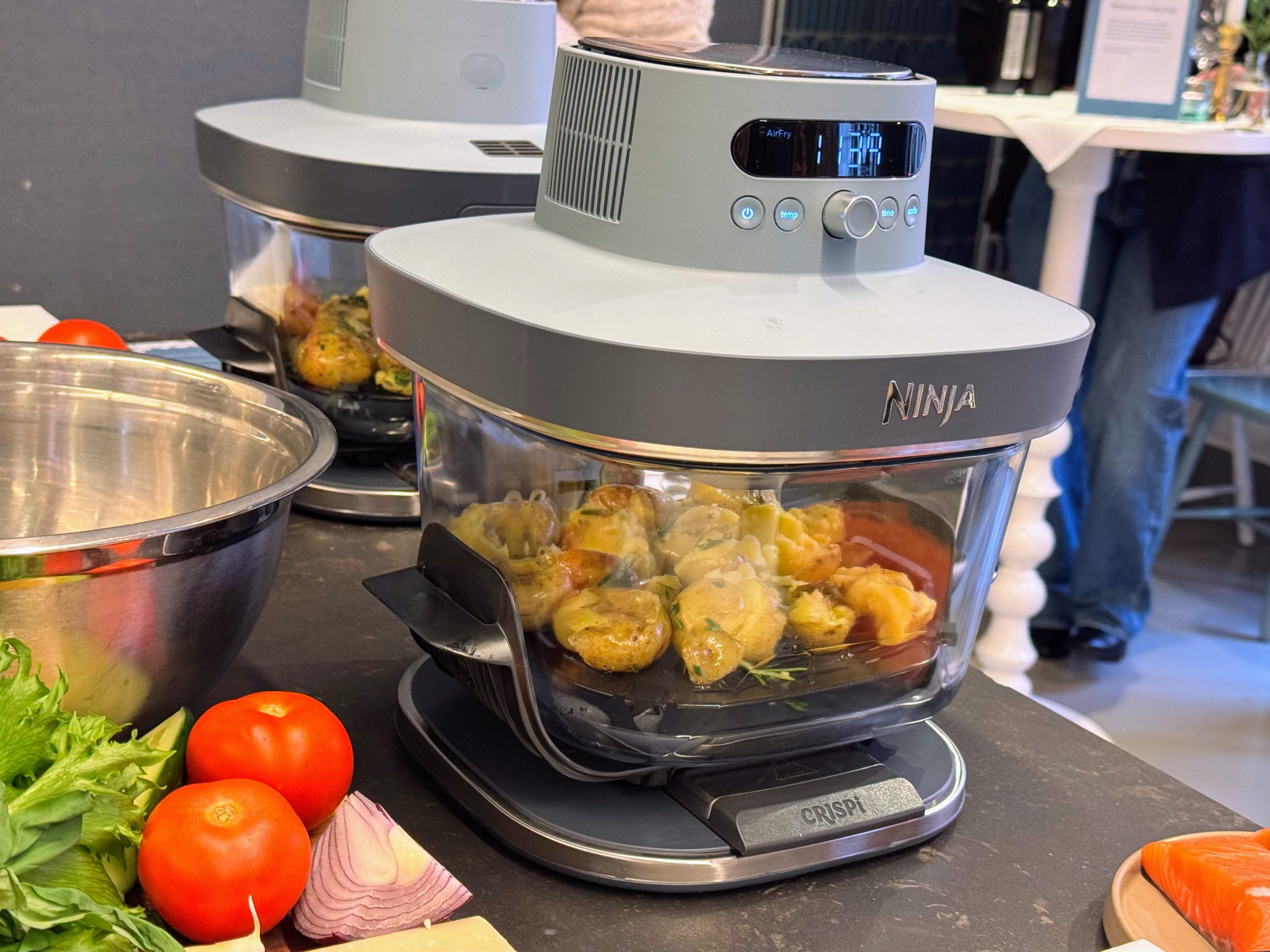

TL;DR
The Ninja CRISPi PRO is a 2,050-watt airfryer featuring borosilicate glass containers and Teflon-free nanoceramic plates. Priced at 3,300 kr, it delivers even cooking, stable temperatures, and effortless dishwasher cleaning. However, it lacks internal lighting, produces 67 dBA of fan noise with strong airflow, and cannot cook two dishes separately. It suits a family of four seeking non-toxic, transparent cooking.
I must admit that I was a bit skeptical of the concept of airfryers at first. When Shark Ninja invited us to the Nordic launch of its brand in Mallorca, the appliances certainly looked nice and the food was decent (the hired chefs spoke highly of the technology), but I wondered how much you would actually use the device in real life and how good the results could be? We even got to eat inside an Airfryer in London, and when the Ninja Double Stack XL showed up at the office just over two years ago, a friendship began to grow. Since then, I’ve re-evaluated my prejudices, and today I think the airfryer really holds its own in everyday life; marinated chicken breasts and salmon fillets are world-class, with a perfect sear while remaining so juicy inside in a way that is difficult to achieve by pan-frying without a thermometer and a lot of manual effort. I still sometimes miss a “one-stop-shop” button that does “everything” automatically—defrosts, drains the water, and cooks. But while waiting for this practical AI feature for everyday life, the airfryer is still a huge help and has replaced the microwave in our household (even if it doesn’t heat cooked food quite as fast). Beyond the wish for a magic mode, however, I’ve had one major drawback with the Double Stack XL—health-conscious as I am—and that is that the drawers and the grill plate are treated with Teflon and thus PFAS (a collection of “forever chemicals” we don’t want in our bodies or in nature). Yes, Teflon is practical when frying perfect pancakes that don’t stick like they do in a cast-iron pan (alternatively, you can drown them in oil or butter), but the slightest scratch over time can involve unnecessary health risks that aren’t worth even the most beautiful pancakes in the world.
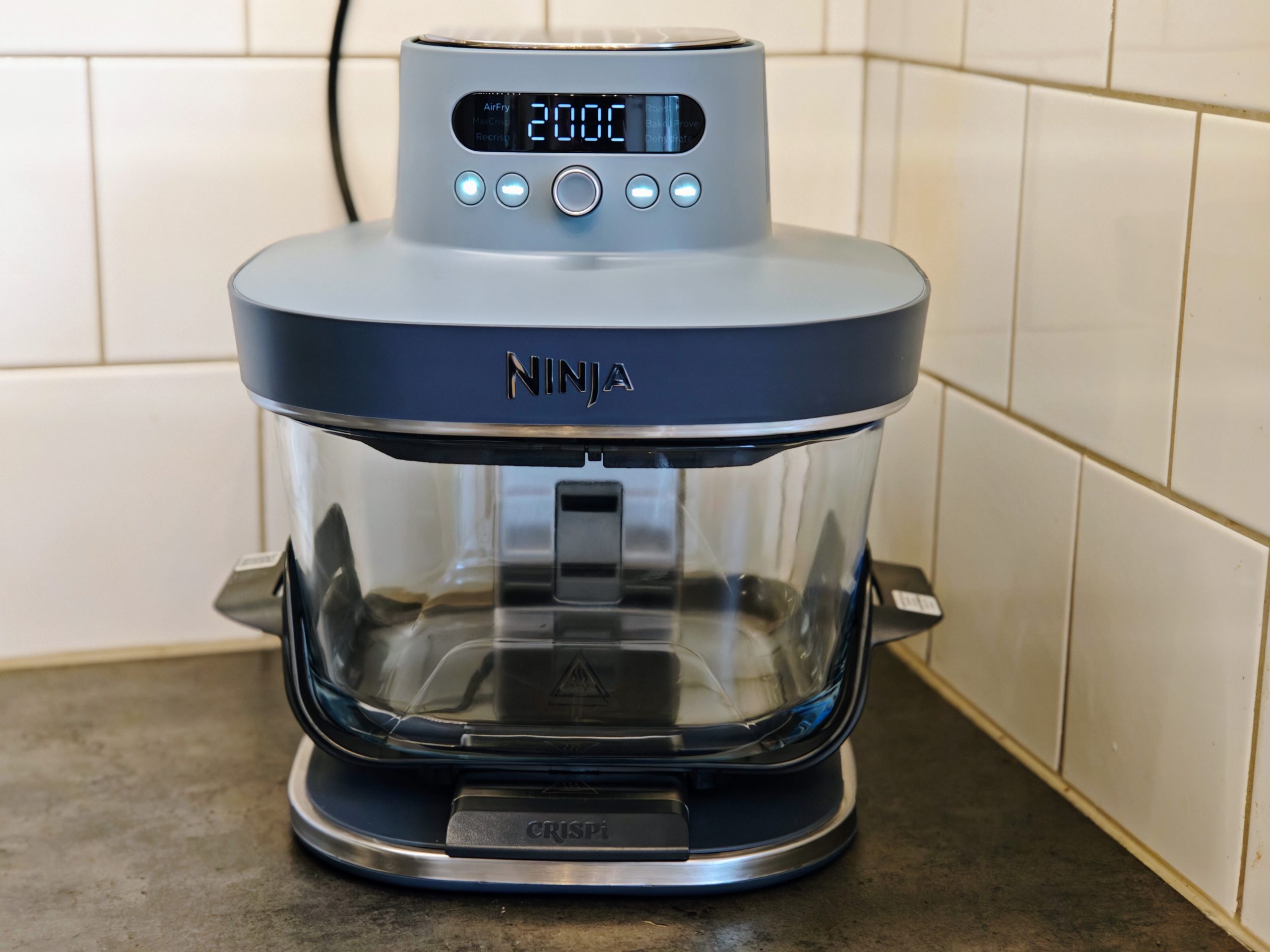
Enter the Ninja CRISPi PRO (AS101EU) — a smaller model airfryer, with two glass containers in thick, untreated borosilicate glass of the Pyrex type in different sizes, and nano-ceramic cooking plates that are entirely Teflon/PTFE/PFAS-free. Could this be the new kitchen favorite?
The Pro model being released now is an updated version of the old CRISPi, which was released about two years ago, and it reimagines the design from the ground up. Now, the heating element is 2,050 watts and the fan is fixed in the upper part of a stationary chassis, while the glass vessels are slid in underneath on a movable stainless steel shelf. The unit weighs in at just over five kilograms (closer to ten kilograms if you include all the glass) and certainly takes up some space on the kitchen counter, but not as much as its predecessor. Also, remember to leave at least 15 centimeters of free space around the air vents; this is not something you should tuck away in a cupboard (though why anyone would think of that is beyond me!)
The fact that the “food basket” is completely transparent also provides a rather fun side effect at home: the kids find it great entertainment to stand in front of the machine and watch as nuggets, fries, or a gratin start bubbling and browning. For us adults cooking the food, it eliminates the bad habit of pulling out the drawer constantly (and thus losing heat) just to see how the cooking is progressing. However, it is a bit strange that our European model lacks the built-in lighting that the American version was gifted with; if the kitchen is dim, the upper part casts so much shadow that you still have to pull the bowl out a centimeter to see properly, which feels like a clear oversight that wouldn’t have cost much to fix. When you do so, the machine thankfully pauses automatically and resumes immediately when the bowl is pushed back in.
The box includes two glass containers (called CleanCrisp) with accompanying plastic lids and insert plates: a smaller 2.3-liter one for smaller portions or leftovers, and a large 5.7-liter bowl. To ensure the glass rim seals tightly against the heating element, the steel shelf has three different height slots. However, the product planners left a rather strange gap here: the top position is for the 2.3-liter bowl and the bottom for the 5.7-liter bowl, while the middle slot remains completely unused unless you purchase the 3.8-liter medium bowl separately for around 400 to 500 kronor (those who already own a regular Ninja CRISPi can, however, reuse their 3.8-liter bowl here).
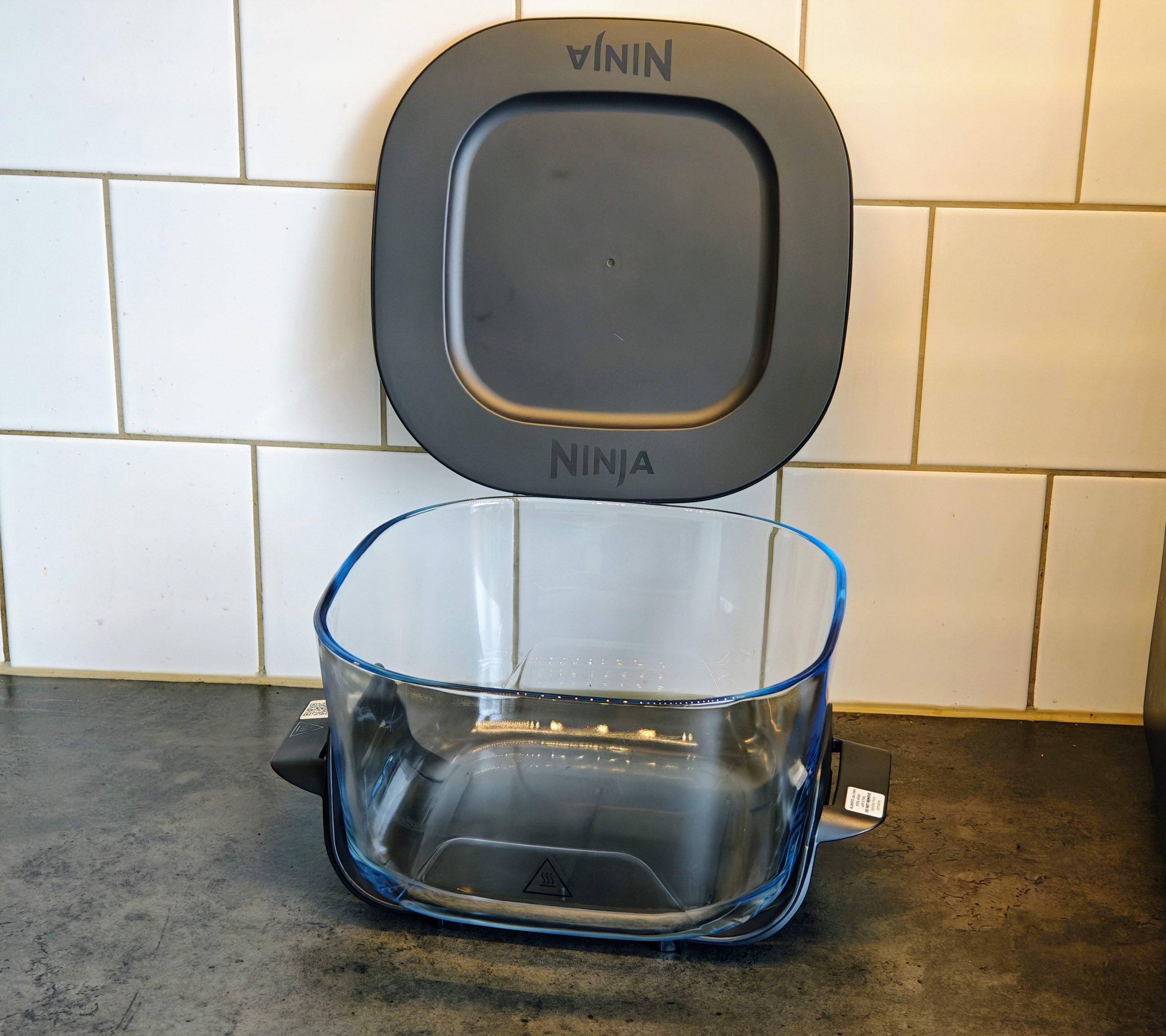
One shouldn’t be entirely fooled by the fact that the large bowl holds 5.7 liters on paper. Measurements conducted by the test lab RTINGS show that the floor area at the bottom is exactly the same as in the smaller 3.8-liter mold, just over 342 square centimeters. All the extra liters are thus in the height (just over 11.2 centimeters internally). If you are cooking food that must lie in a single layer on the bottom, such as salmon fillets (four to six narrow pieces) or chicken breasts (four, maximum five), it doesn’t hold more in terms of width than a smaller airfryer. However, the ceiling height allows you to fit a whole chicken of 2.5 to 3 kg with root vegetables around it without the skin touching the heating element in the ceiling, or if you are going to cook salmon and potatoes with vegetables in different layers, which I will return to later.
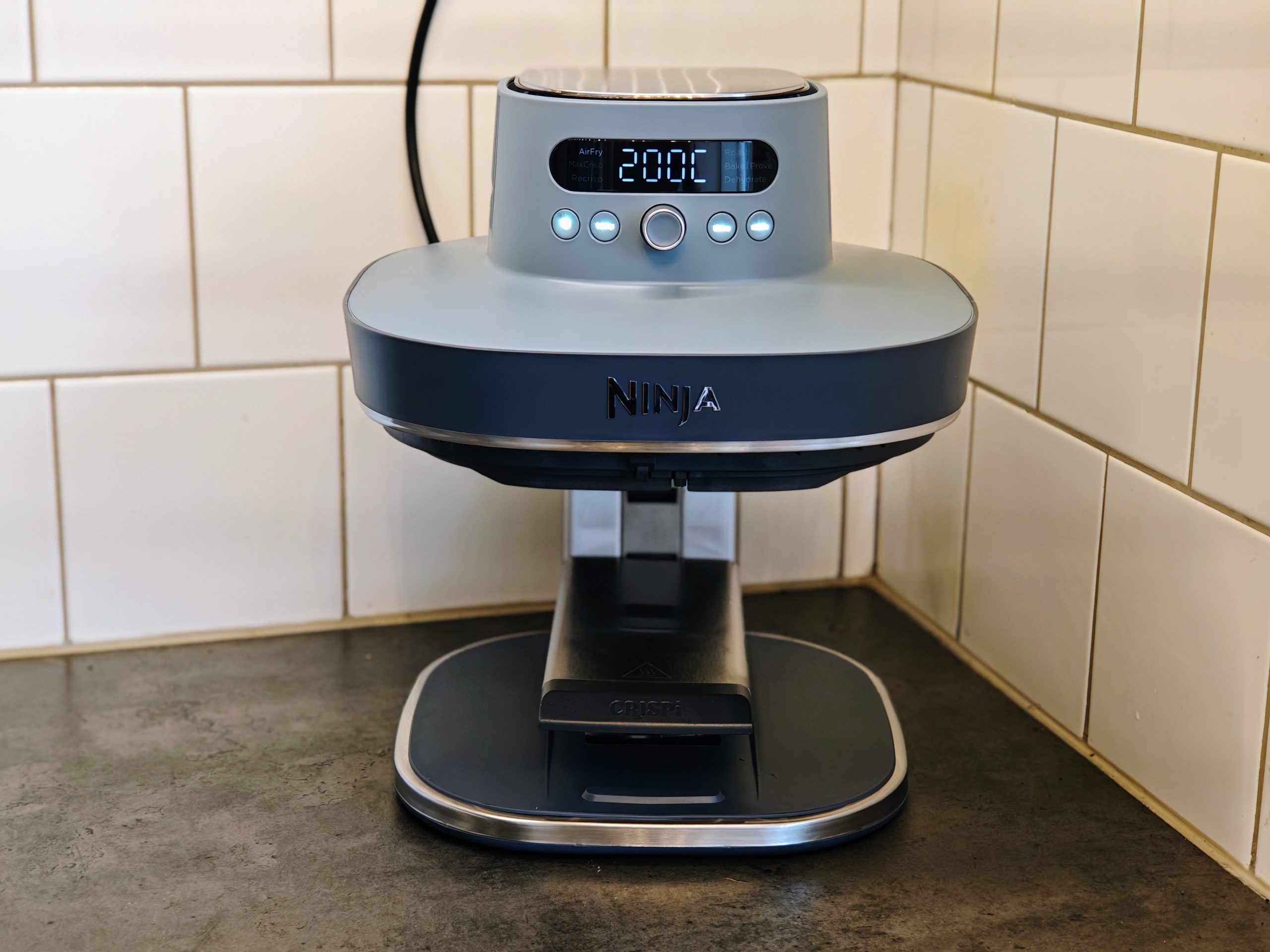
On the top, there is a simple digital screen with a rotary dial that clicks distinctly when setting time and temperature. Unlike its predecessor, you can now choose the temperature yourself from 26 °C up to 240 °C, and it works fine to change both time and heat during operation. Seven modes are available: Max Crisp (locked at 240 °C), Air Fry, Roast, Bake, Recrisp (to make yesterday’s food crispy again), Dehydrate for drying fruit or berries, as well as a fermentation mode for dough (Prove) which appears as “PrF” if you turn the knob all the way to the left. There are no ready-made shortcut buttons or a cheat sheet with small icons for fish, chicken, or fries á la Double Stack XL, so for the first week, you’ll have to make do with the table in the included booklet until the times are committed to memory.
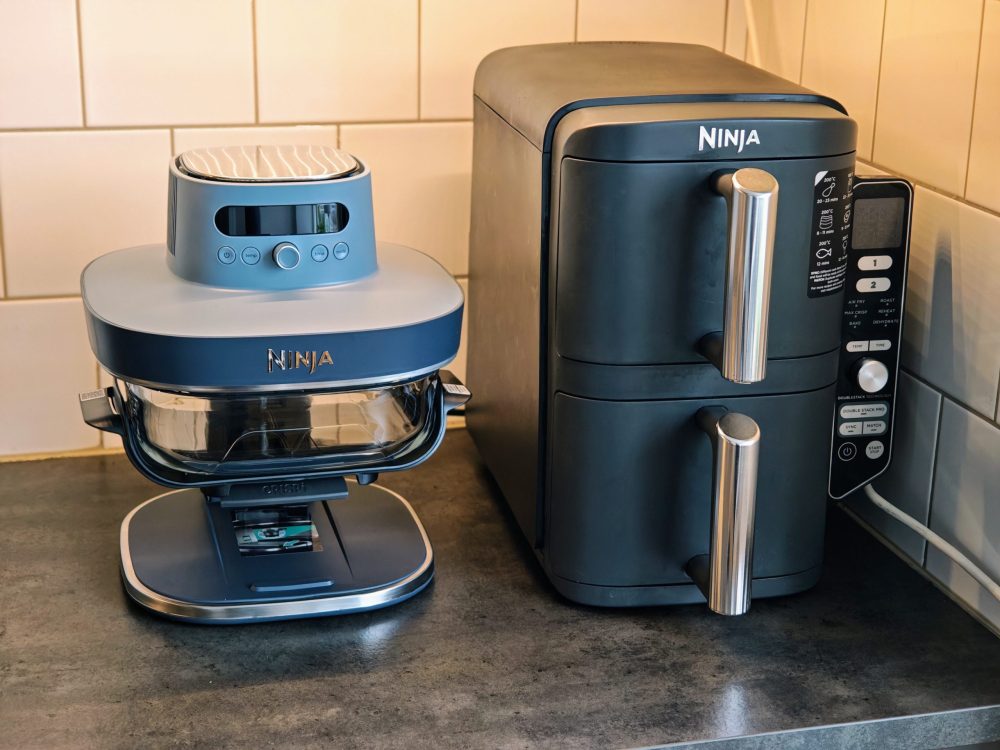
The CRISPi PRO handles the actual cooking with flying colors. Since the thick glass stores heat well, the temperature remains very stable, and the heat distribution is significantly more even than in the previous CRISPi model (in lab tests, over 81 percent of the fries became crispy here, compared to a meager 40 percent in its smaller sibling). If you run half a kilogram of French fries on Max Crisp at 240 degrees, it’s almost too much of a good thing; after 18 minutes, they are on the verge of being over-baked, so the standard Air Fry mode around 200 degrees usually gives a more consistent result for everyday use—and you should also spread the fries out as much as you can so they both bake and get air, as clumped-up fries easily become soggy and dull otherwise. Chicken thighs and burgers get a nice sear without becoming dry inside, and if you throw together a pasta gratin directly in the dish, you have a bubbling crust in under ten minutes.
Two things, however, require some thought during operation. Firstly, the fan has to work hard to push the hot air all the way to the bottom of the deep glass bowl. Not only does this make some noise (around 67 dBA), but above all, the airflow is incredibly intense in there. If you try to toast sandwiches with a loose slice of cheese on top or heat light nacho chips, the cheese will lift in the draft and burn onto the heating element unless you anchor it with, for example, a toothpick.
Secondly, glass vessels are heavy and get very hot. You can probably forget about pulling out the large vessel with one hand and tossing the fries in the air as you would with a standard basket airfryer (there is no beep to remind you to turn the food halfway through either). The plastic handles work well, however, so if you are just a little careful, you don’t need any oven mitts when handling the hot containers.
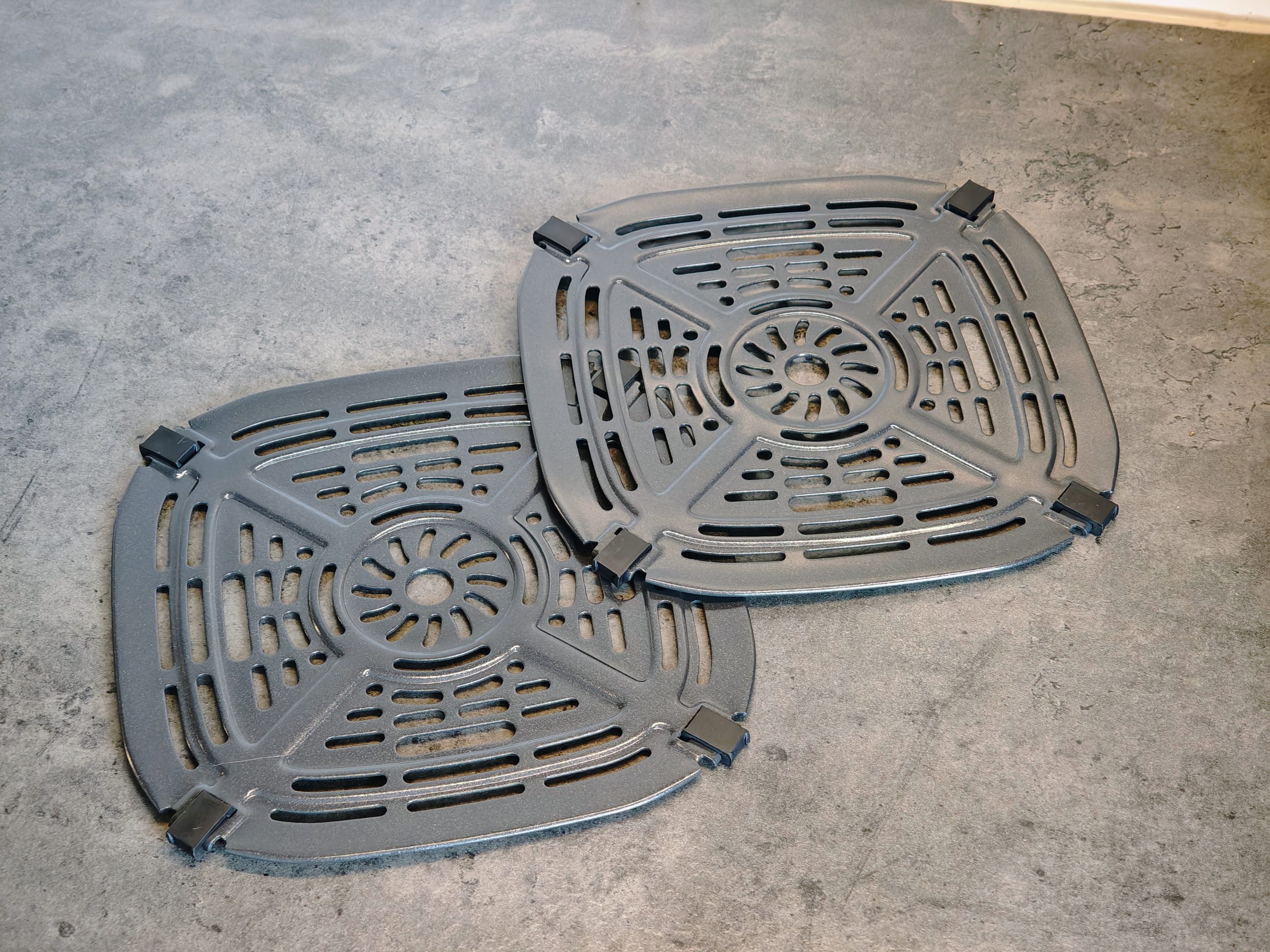
On the plus side, everything that happens after cooking is much smoother than with conventional machines. The glass bowls have fixed, heat-protective feet underneath so you can place the whole dish directly on the dinner table like a regular oven dish. If there are leftovers, you just put on the included lid once the glass has cooled and put the whole thing in the fridge. And when it’s time to wash up, perhaps the best practical difference is noticed: instead of standing and scrubbing burnt-on grease from metal corners by hand, the glass bowl, plate, and lid go straight into the dishwasher and come out completely clean without any old food smells sticking (just remember never to run cold water into a red-hot glass vessel, as it could crack). The only place that is a bit awkward to reach with a cloth is the protective grill in front of the heating coil and fan at the top of the machine, as it is fixed in place.
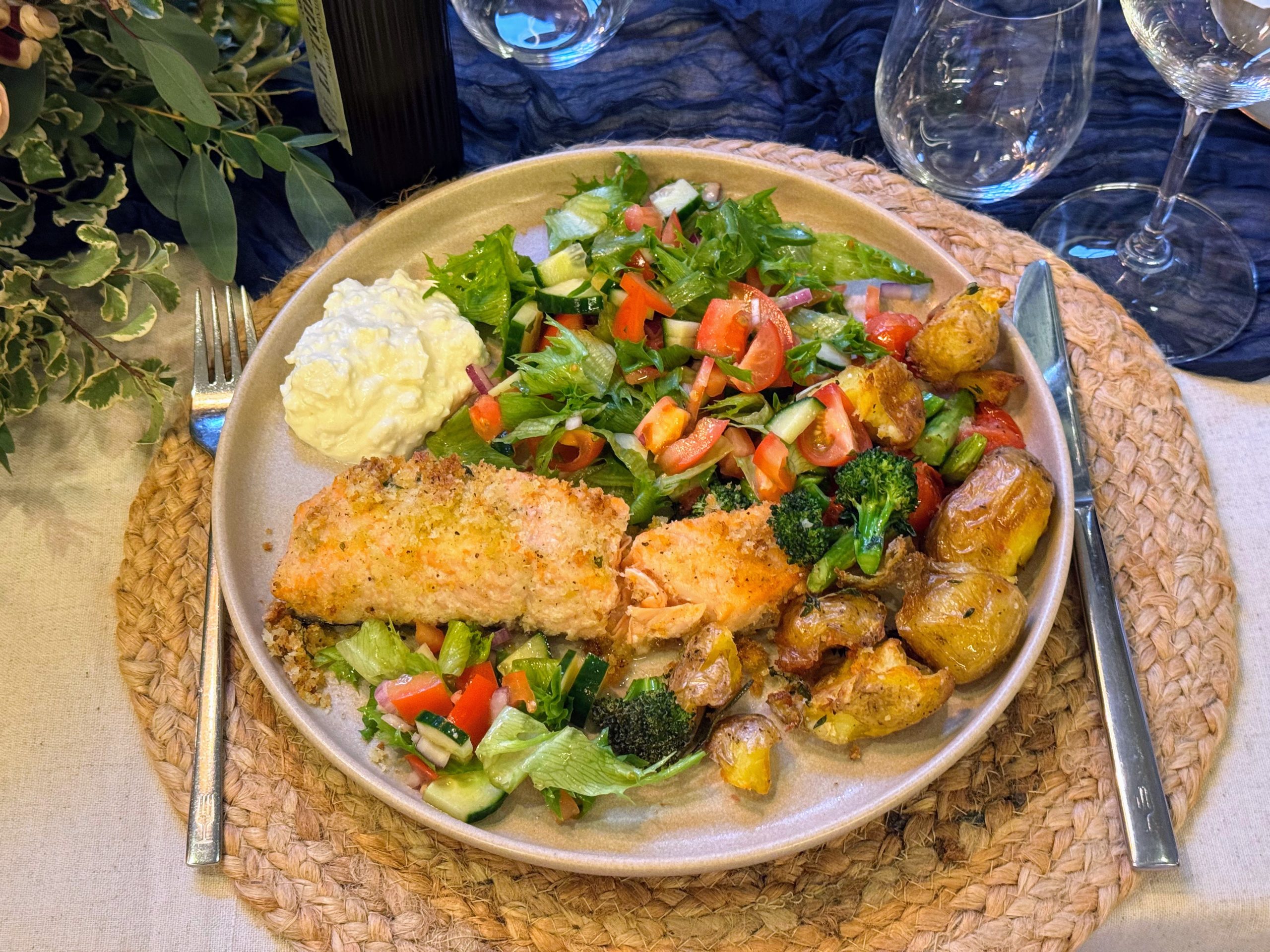
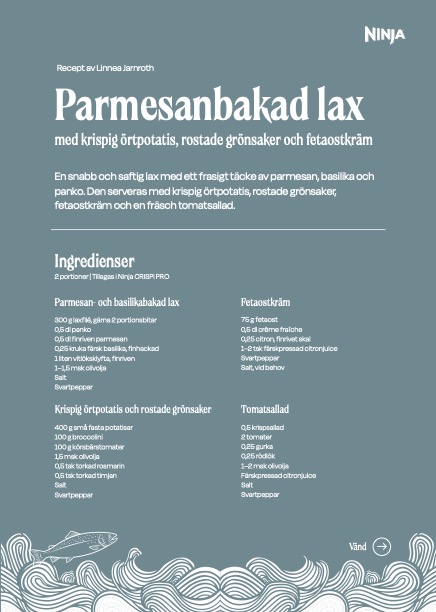
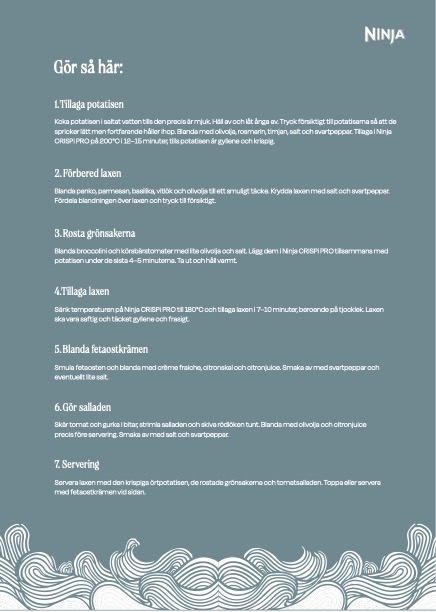
I had the pleasure of cooking a truly delicious recipe for parmesan-baked salmon with sides, together with Sweden’s latest MasterChef Linnea Jarnrot, following her recipe—and it actually went very well, as you can see below.
I also promised to post the recipe, and here it is on senses:
So, all in all, to summarize the situation, the Ninja CRISPi PRO certainly doesn’t replace a dual-zone airfryer with a SYNC function if the whole point for you is to cook salmon and potato wedges at different temperatures for a larger family in two drawers simultaneously (if you want exactly that in glass, you’ll have to look at its sibling Ninja CRISPi DualZone, which is a thousand kronor more expensive at 3,999 kr). You also need to have a free corner in the kitchen cupboard for whichever glass bowl is not in the machine at the moment. But for the average family of four who want to move away from Teflon baskets, who like being able to see the food cooking through the glass, and who appreciate the luxury of moving the dish from the machine straight to the table, then into the fridge and directly into the dishwasher, this is a particularly pleasant machine.
A quick buying tip: SharkNinja’s own online store sells a bundle for 3,299 kr that includes an extra 5.7-liter glass bowl, which is money well spent if one dish is often occupied with leftovers in the fridge.
Ninja sent review units for this test. Senders of material have no editorial influence on our tests; we always write independently with our readers and consumers in focus.
Review Highlights: Q&A
What containers are included with the Ninja CRISPi PRO?
The Ninja CRISPi PRO comes with two untreated borosilicate glass containers: a 2.3-liter bowl and a 5.7-liter bowl, both featuring nanoceramic plates and matching plastic storage lids.
How loud is the machine during operation?
The fan generates around 67 dBA of noise as it pushes hot air down into the deep glass vessels.
Are the containers easy to clean?
The glass bowls, cooking plates, and lids are completely dishwasher safe and do not retain lingering food smells.
Can lightweight foods be cooked safely?
Due to intense airflow, lightweight foods such as nacho chips or loose cheese slices will blow upward toward the heating element unless secured with a toothpick.
Does the appliance include an interior light?
The European version lacks built-in interior lighting, meaning the upper chassis can cast a shadow over the food in dim kitchens.