
TL;DR
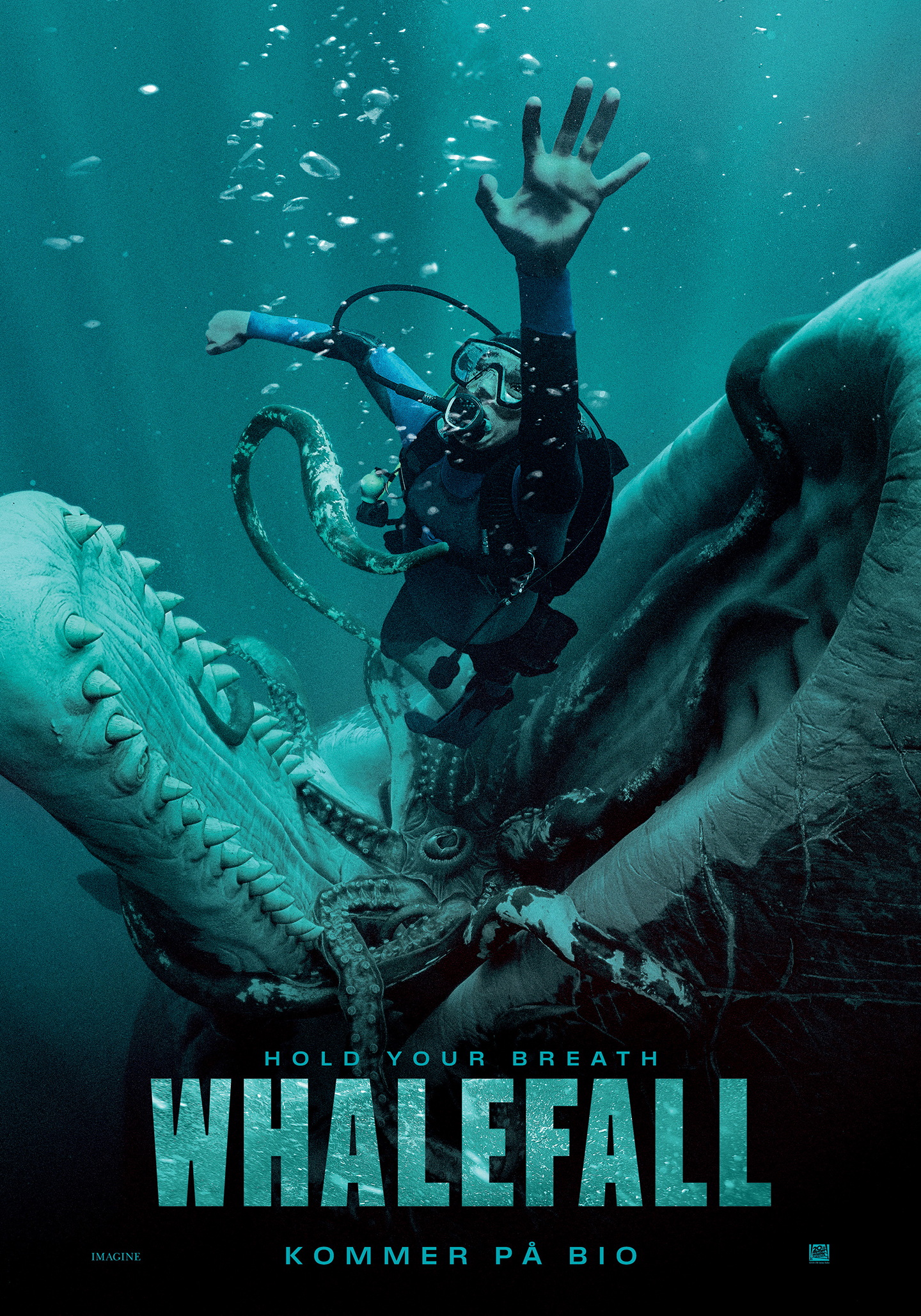
Whalefall is a survival movie following a diver trapped inside a sperm whale with one hour of oxygen. Anchored by an impressive performance from Austin Abrams alongside practical sets, it delivers fast-paced tension and emotional weight. A somewhat exaggerated father dynamic and a contrived ending hold it back. Viewers who enjoy stylish, high-stakes thrillers will appreciate it, while those averse to sentimental twists should pass.
A movie about a guy stuck inside a whale, fighting against the clock to get out before his air runs out—could that be anything worth watching? On paper, it sounds like a completely crazy idea, and when the trailer for Whalefall dropped this summer, it garnered a lot of attention. Personally, I was very curious but didn’t know if I thought the idea was genius or really, really bad. And my thoughts on the final result fluctuated somewhere in between as well. Now it’s here, I’ve seen it, and I can finally provide the answer as to whether it holds up or not.
The plot, as we’ve already touched upon: In search of his deceased father’s remains, the young diver Jay is swallowed by a sperm whale and trapped inside the whale’s interior with only one hour of oxygen left. As time runs out, he is forced to confront memories of his father and find the strength to keep fighting against all odds. It’s no more complicated than that.
Brian Duffield is the director. This is his third film. I haven’t seen his debut, Spontaneous, but I have seen the following one, No One Will Save You, about a girl who has to fight an alien that breaks into her house. It stood out and had some really effective scenes, but I recall it being hampered by some issues. Duffield co-wrote the script with Daniel Kraus, who is behind the literary source material based on an idea he got after seeing the viral video where a man kayaking ended up in the mouth of a sperm whale but was spat out. The stuff of nightmares, if you ask me. I would never have dipped my foot in anything but a wading pool after an incident like that.
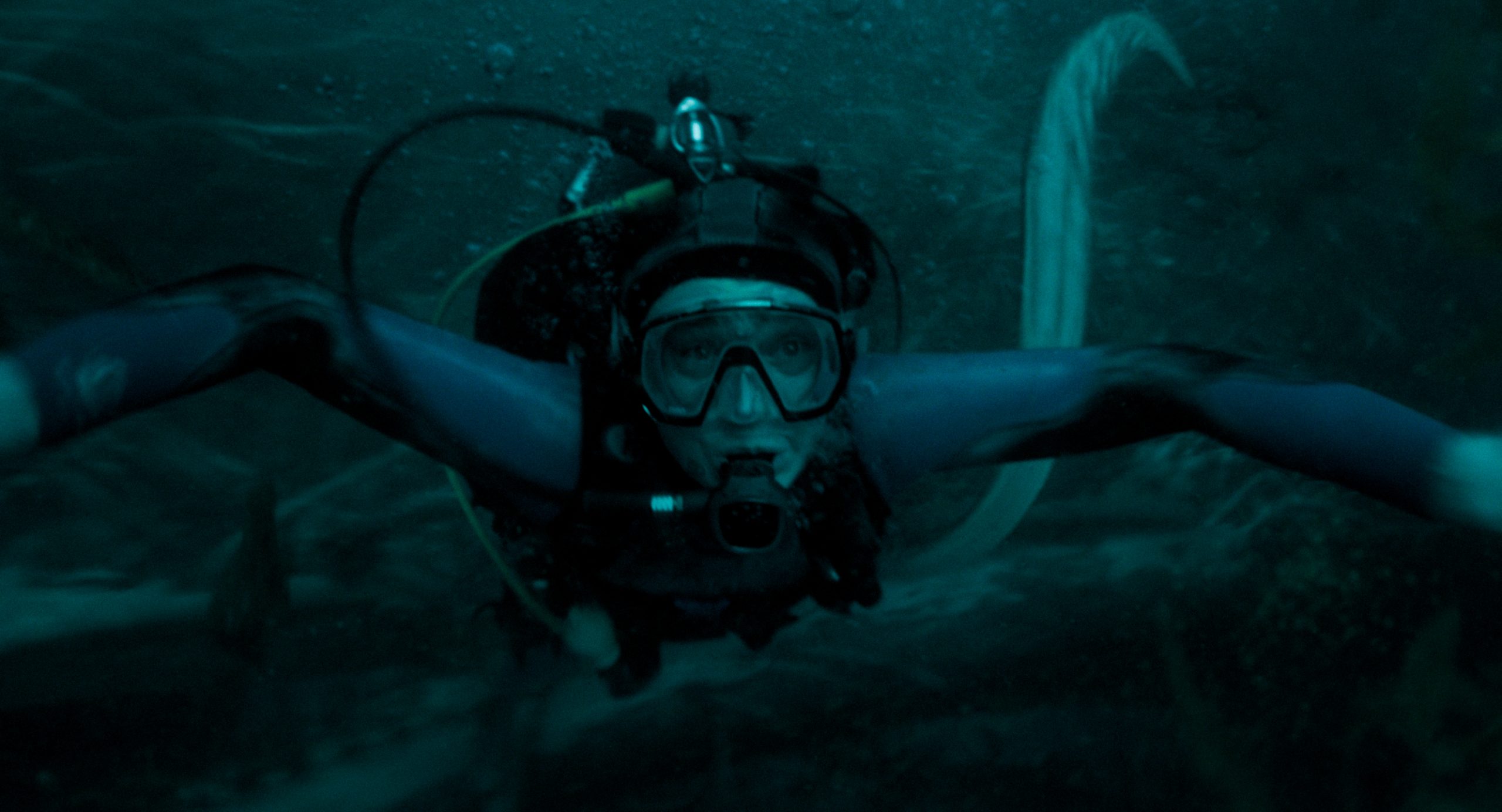
The cast features Austin Abrams, currently also appearing in the lead role in Resident Evil (watch it!), as the swallowed Jay, and Josh Brolin (No Country For Old Men, The Dog Stars), who plays his father. In smaller roles, we see, among others, Elisabeth Shue (The Boys, Leaving Las Vegas) and John Ortiz (Ad Astra, The Cloverfield Paradox). This is the kind of film that truly stands or falls with its lead actor. There is so much tension and emotion to be conveyed, and it only works if the actor has the ability to make the audience feel something—although, of course, annoyance at bad acting is also a feeling. Thankfully, Austin Abrams is definitely the right man for the job. He impressed me in Weapons, he impressed again in Resident Evil—and with Whalefall , I’m willing to say he is currently one of our most interesting actors. He truly has the ability to convey big emotions with small means. More on that later. Apparently, he also performs most of the film’s stunts himself.

We don’t need to say more about the plot itself. It’s super simple. And the settings—we get magnificent environmental shots of what, according to IMDB, could be Monterey, and then there’s a lot of stomach for your money. Jokes aside. What I really, truly like about Whalefall is the fact that they didn’t just rely on a lot of CGI effects from inside the literary “belly of the whale.” There are practical effects and sets. But does it work, you ask? Is it exciting, entertaining? Thankfully, the answer is a resounding yes. Really good, even. It’s fast-paced and tense throughout. The flashbacks that occasionally take us away from Jay’s high-pressure (pun intended) situation are effective and provide a sometimes necessary breather. I might find the story with his extremely tough macho-man father to feel a bit exaggerated, even though I can imagine this type of “fantastic” parenting actually occurs. But it feels a bit much sometimes.
The same applies to the ending. I won’t go into detail to avoid too many spoilers. In some ways, it works and is quite clever, seen from the perspective that our main character suffers from decompression sickness and a nervous breakdown. My biggest problem is probably that it feels a bit too contrived. But not so much that it bothers me excessively. I’ve read some reviews criticizing it for being a bit too sentimental, and that relates specifically to this contrived nature. I can partially agree. At the same time, I’m surprised by how hard Whalefall still hits me emotionally somewhere around the last twenty minutes. It’s been a long time since I sat crying in a cinema, but there was something here that hit me right in the “dad heart,” and isn’t that what’s so great? When a film makes us reflect and see the situation from the perspective of our own life choices.
In summary, I am surprised for several different reasons. Partly by how hard it hit me emotionally, despite the contrived and at times hazy elements. And the fact that it works on all levels. I went in with the expectation of seeing an entertaining, at times exciting, and probably technically polished film. But I also went in with a fear that it might feel silly or simply wouldn’t work. In the end, Whalefall turns out to be unexpectedly damn good. Extremely stylish, exciting, emotional, and at times a bit clever. Actually one of the most pleasant cinema experiences I’ve had this year. And that wasn’t solely due to the company.
Review Highlights: Q&A
What is the premise of Whalefall?
Whalefall follows a young diver named Jay who is swallowed by a sperm whale and must fight to escape before his one hour of oxygen runs out.
How is Austin Abrams's performance in the lead role?
Austin Abrams carries the film effectively, conveying big emotions with small means and performing most of his own stunts.
Does the movie rely mostly on CGI effects?
Rather than relying entirely on CGI effects, the production utilizes practical sets and effects to depict the inside of the whale.
What are the main flaws of the film?
The dynamic involving the tough macho father can feel exaggerated, and the ending suffers from being somewhat contrived and overly sentimental.