
TL;DR
The Huawei Freebuds 5 Pro are a masterclass in audio engineering, positioning themselves as a top-tier flagship in the crowded in-ear market. Featuring a unique dual-driver system and planar magnetic technology, these earbuds deliver an exceptionally balanced soundstage that rivals the industry’s best. Beyond the music, you’ll find world-class call quality powered by bone conduction sensors and highly effective AI noise cancellation. While the Android installation remains a bit cumbersome due to app store limitations, the payoff is immense: incredible comfort for all-day wear, innovative head-gesture controls, and a luxurious design—especially the stunning vegan leather variant. Currently priced competitively, they offer premium performance that is remarkably hard to beat for the price. Ready to find out if these are your next pair of daily drivers? Dive into our full review for the complete breakdown.
We have previously tested headphones from Huawei (including FreeArc and Freeclip 2), which we liked very much. Above all, both models delivered surprisingly good sound quality for sports headphones. Now it’s time to test Huawei’s new Freebuds 5 Pro, which are in-ear headphones in the absolute flagship class.
The specifications look really promising: a dynamic bass driver combined with a planar magnetic tweeter, powerful active noise cancellation, high-resolution audio, Bluetooth 6.0, multipoint support, and a total battery life of up to 38 hours.
But how good are they? We are going to find out!
Design and Comfort
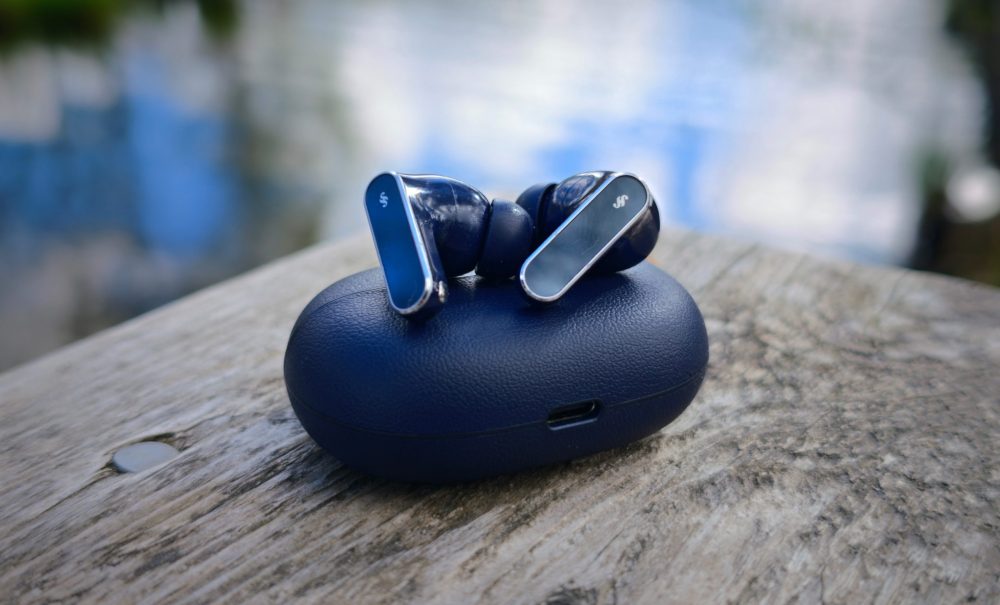
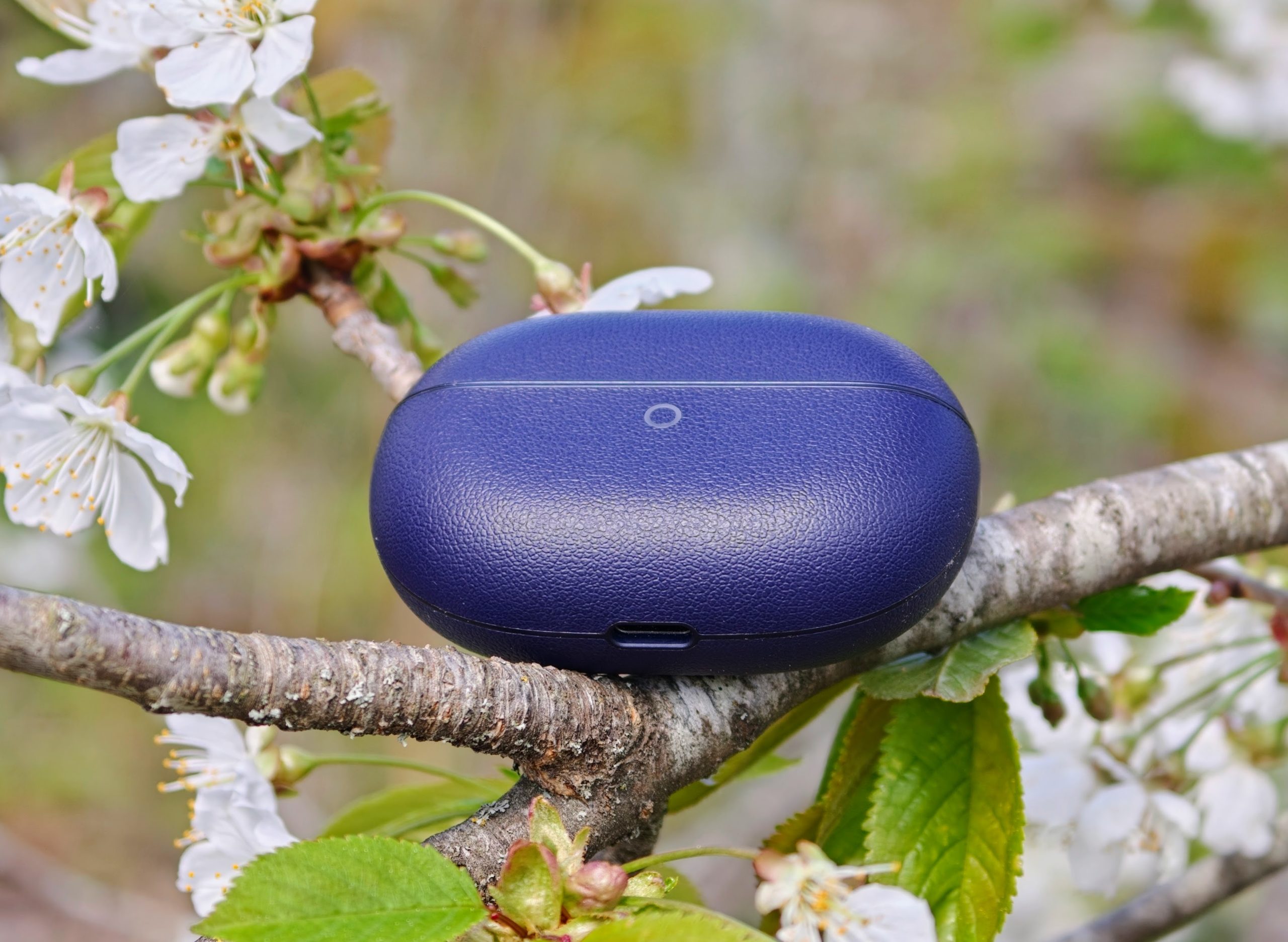
We have tested the blue version in vegan leather, and we actually have to say it is the most attractive color combination we have seen in a very long time. The faux leather has a fine-grained texture that is incredibly pleasant to hold. Furthermore, the surface does not collect any fingerprints at all and feels genuinely luxurious.
The other color variants (Sand, Grey, and White) instead have a matte coating that is also stylish, but it is undeniably the blue version in vegan leather that truly stands out from the crowd. Unfortunately, at the moment, it seems that only the Sand and White colors are sold here in Sweden.
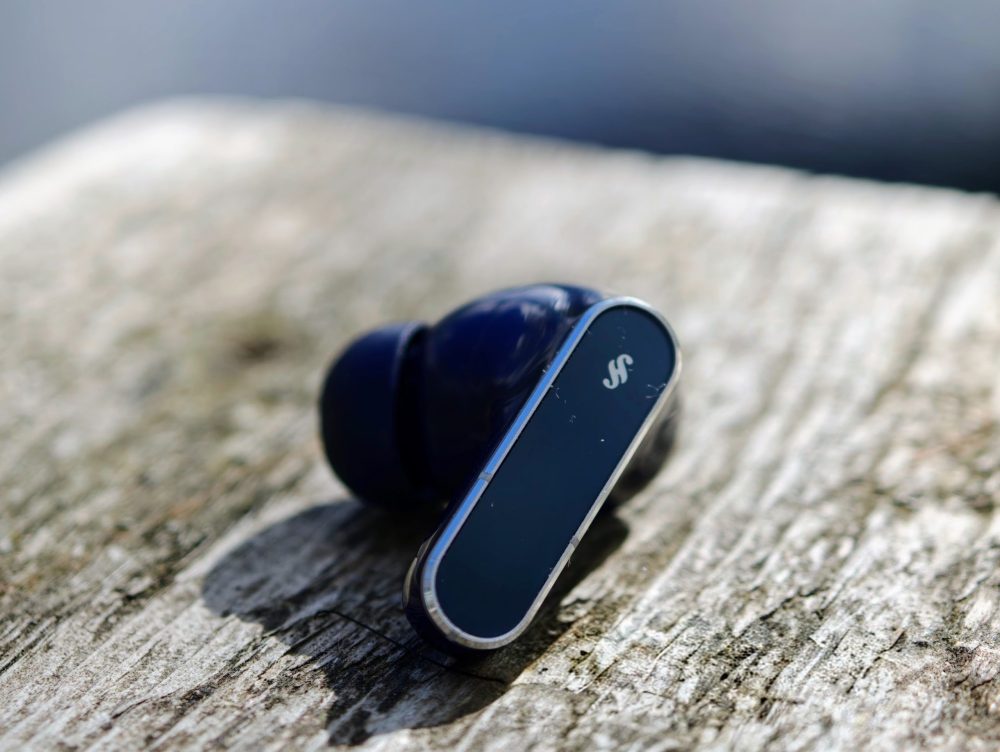
The headphones themselves weigh only 5.5 grams each, and the design is based on the now-classic stem type. However, the manufacturer has added their very own twist with a diamond-cut, rectangular bevel. The high-gloss color, which most closely resembles piano lacquer, is also really stylish.
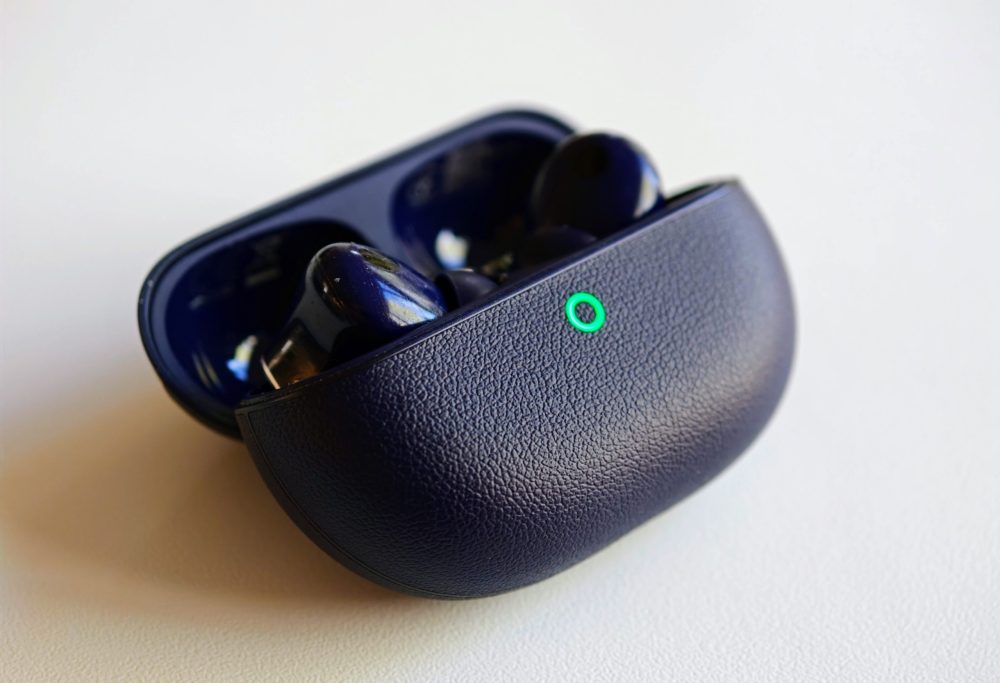
The charging case is small and compact. On the front, there is a discrete LED ring that changes color depending on the current battery status and connection.
The fit of the earbuds is really good. The manufacturer has studied over 10,000 ear profiles to be able to design an asymmetrical shape that distributes pressure evenly across the entire outer ear. The result is a pair of headphones that you barely feel you are wearing. We have worn them during full workdays of six to eight hours, completely without any sensation of pressure or ear fatigue.
The earbuds themselves are IP57-rated, so they can handle both sweaty workouts and heavy rain showers without any problems. Even the charging case has been equipped with an IP54 rating.
Installation
It’s starting to get a bit repetitive when we test products from Huawei, but if you don’t use an iPhone, there is a high risk of some hassle. As an Android user, just like with FreeClip 2, you have to download the “Huawei Audio Connect” app via Huawei’s own AppGallery. The phone warns of “unknown apps” and “potential security risks,” and it generally feels unsafe and cumbersome.
Sound Quality and App
We start our test list without making any EQ adjustments in the app and… wow. It sounds good, really good. The heart of the audio experience is the dual-driver system, where a dynamic dual-magnet bass driver handles the lower frequencies, while an ultra-thin planar magnetic diaphragm takes care of the midrange and treble. Behind the scenes, it is all controlled by an audio chip with dual DSPs and dual DACs. It involves a digital crossover solution where bass and treble each get their own completely dedicated signal path.
In practice, you hear the difference immediately. The soundstage is wide and airy, with a texture and separation between instruments that you don’t often hear in a pair of in-ear headphones. The bass is deep and physically present without becoming sloppy or dominant, the midrange is full-bodied and voices emerge with impressive realism, and the treble has a level of detail that brings out hi-hats and string instruments in a truly enjoyable way.
Discounting the Technics EAH-AZ100 and Beyerdynamic Amiron 300, these are probably the best-sounding in-ear headphones I have tested. What is particularly impressive is that the default sound profile is so incredibly balanced; regardless of the genre, there is no reason to make any adjustments. You can choose between four predefined profiles: Balanced (which is the default), Voice, Bass, and Classical. There is also a 10-band equalizer for those who want to fine-tune.
When it comes to support for high-resolution codecs, there is support for Huawei’s own L2HC 4.0 (2.3 Mbps / 48 kHz/24-bit lossless audio). However, it requires a newer mobile phone from Huawei, and who has one of those in Sweden in 2026? If you don’t have a phone from Huawei, you’ll have to make do with LDAC (up to 990 kbps), and on iPhone, AAC is what applies.
Multipoint is available and works excellently.
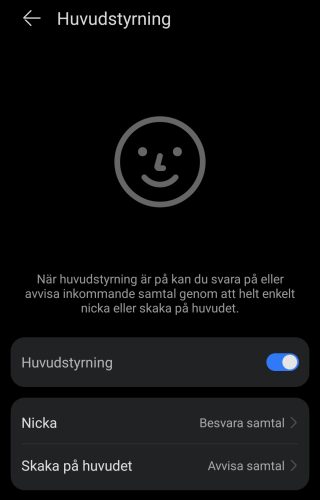
The headphones are controlled through combinations of pinches, swipes, and even head movements. Head control is a bit of a favorite feature. When your hands are busy, it’s incredibly convenient to just nod to answer or shake your head to reject a call.
Battery and Charging
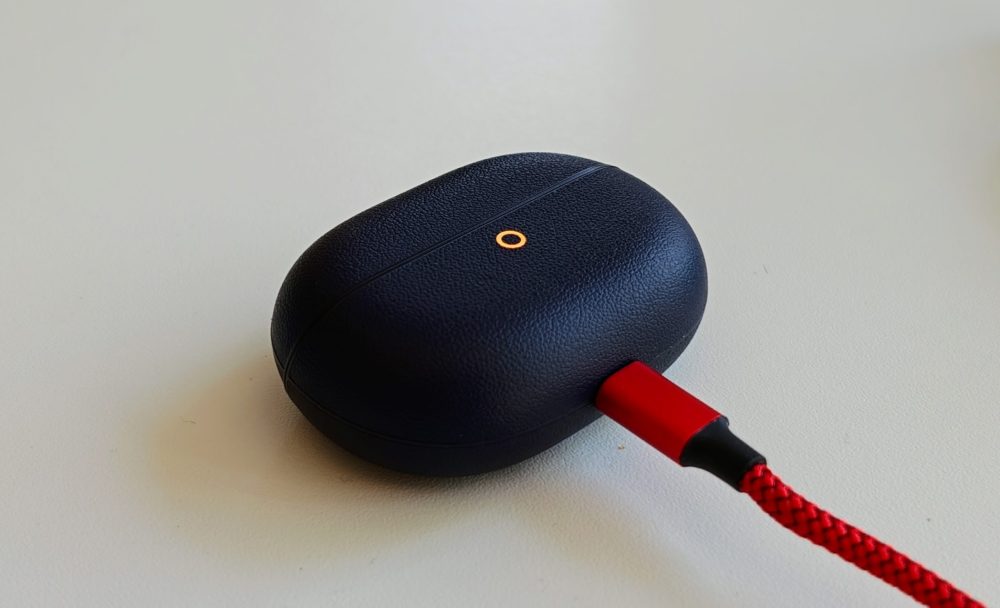
Huawei promises up to 9 hours with ANC turned off and 6 hours with ANC on. In practice, we have come quite close to those figures with AAC playback, and slightly under with LDAC activated. In total with the case, you reach about 22–25 hours with ANC & LDAC, which is okay but nothing more.
The charging case supports both USB-C and wireless Qi charging. It takes about 40 minutes to fully charge the earbuds in the case, while the case takes about 1 hour (wired) and 150 minutes wirelessly.
Calls and ANC
The call quality is without a doubt among the best we have ever tested. The headphones are equipped with three microphones plus a Bone Voiceprint Pickup sensor (VPU) that measures vibrations from the jawbone when you speak. In quiet environments, the voice sounds full and completely natural. But what really stands out is how they perform in noisy environments or where it is very windy. The algorithms manage to isolate the voice completely and erase background noise totally. The person you are talking to barely notices that you are in a very noisy environment.
When it comes to noise cancellation, Huawei calls its new system “Dual-Engine AI Noise Cancellation,” where both the dynamic bass driver and the planar treble driver are used to emit opposing sound waves. The software analyzes the environment 400,000 times per second (!!), and the manufacturer promises up to 47 dB of attenuation.
And it works. Really well. We have tested them on public transport, in the office, and in cafes, and the ANC is in the absolute top class when it comes to eliminating background noise like subway sounds, bus hum, and traffic noise. If we have to complain about something, there is a small downside: voices and human chatter leak in a bit more than we would have liked.
The ambient mode is also really good and sounds very natural. You can choose between a standard mode that lets in all sound, a voice mode that suppresses noise but highlights speech, and an adaptive mode that dynamically adapts to the environment. The latter, for example, dampens traffic noise but ensures you always hear important warning sounds and announcements.
It is possible to set the ambient mode to start automatically when you start talking; the volume of what you are listening to is then lowered as well. This function works very well, although we would have preferred if what you were listening to paused completely.
Conclusion
Huawei Freebuds 5 Pro are a pair of headphones that we like very, very much. They deliver sound quality that ranks among the absolute best we have ever tested. Furthermore, they are ridiculously comfortable to wear. The call quality is world-class throughout, and even the active noise cancellation is at the highest possible level.
Is there nothing bad, then? Well, as is almost always the case with products from Huawei, the installation on Android phones is unnecessarily messy. Even though the battery life is perfectly fine, we would have liked it to be a bit better.
The recommended retail price is 2,900 SEK, but at the time of testing, they actually only cost about 2,200 SEK. For a price tag around 2,000 SEK, it is incredibly difficult to find anything better on the market.
Huawei sent review samples for this test. Senders of material have no editorial influence on our tests; we always write independently with you, the readers and consumers, in focus.
How we rate products at SensesReview Highlights: Q&A
Are they comfortable for long-term wear?
They are very comfortable for workdays up to 8 hours.
How long does the battery actually last?
You get about 22 to 25 hours total with ANC and LDAC.
Is the active noise cancellation effective?
It is top-class, although some voices can leak through.
Are these earbuds safe to use for workouts?
Yes, the IP57 rating handles heavy rain and sweating.
Is the setup process easy for Android users?
No, it requires a manual app download from AppGallery.
How is the performance for phone calls?
Quality is world-class, even in very windy conditions.