
TL;DR
The Social Reckoning is a spiritual successor to The Social Network, written and directed by Aaron Sorkin. It excels with strong supporting acting and an effective prologue illustrating social media's problems. However, it suffers from jarring tonal shifts, flat dialogue, and impenetrable tech babble. Audiences interested in the subject matter should wait for its streaming release, while those seeking theatrical greatness should skip paying for cinema tickets.
Aaron Sorkin wrote the screenplay for David Fincher’s acclaimed The Social Network from 2010. I must admit that I actually don’t remember much of the film at all. There, we followed a young Mark Zuckerberg in the creation of the phenomenon Facebook. Now, it is time for a spiritual successor of sorts, The Social Reckoning. This time, Sorkin is responsible for both the screenplay and the direction, and it is no longer Jesse Eisenberg stepping into the role of Zuckerberg—apparently, in part because he no longer wanted to be associated with the tech billionaire. Entirely understandable, I feel. So. First, we followed from the beginning—what is Reckoning about?
The Social Reckoning tells the true story of how journalist Jeff Horwitz is commissioned by the Wall Street Journal to write a series of articles about Facebook’s less pleasant sides. He tries to establish contact with someone on the inside willing to share information, and the one who eventually bites is Frances Haugen, a young Facebook engineer. Reluctant at first, she opens up more as more things happen on the inside. No one on the outside has really gained any insight into what is actually happening and how Facebook is run—and in what way they affect people.
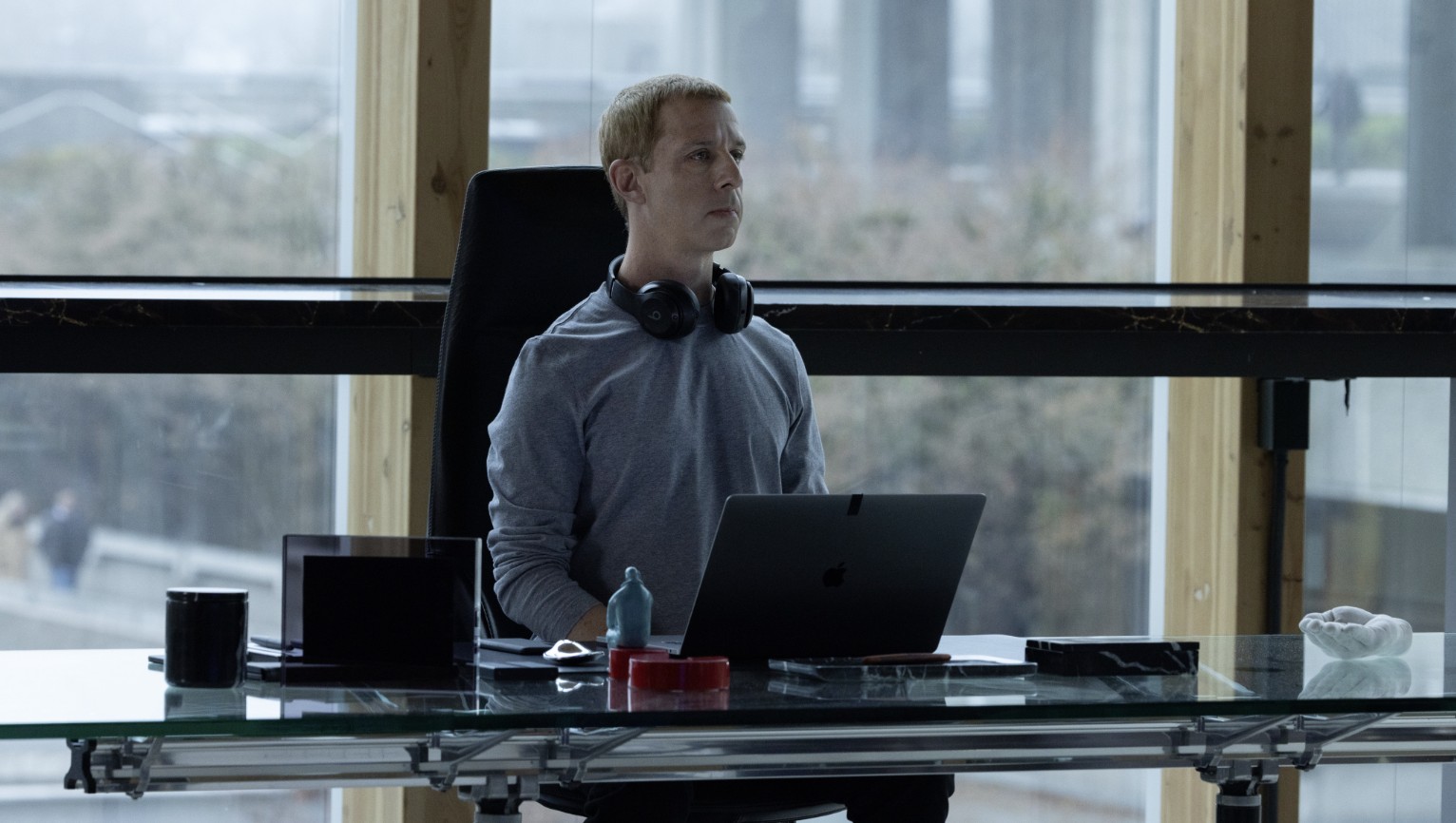
A very interesting and important topic. The basic idea behind social media—connecting people, perhaps primarily for those who are not great at, or even capable of, making contact in real life—provides a platform for socializing. That is a fine thing. But that it is harmful, primarily for our youth, is hardly a secret. How actively they actually work on various levels to maintain activity and monetize hardly comes as a surprise, even if much of what is mentioned is new information to me. I won’t go further into the actual manipulation, but it is frightening.
What about the actors? We have Mikey Madison in the role of Frances Haugen. Mikey had a major breakthrough in the buzzworthy Anora recently, a film I personally didn’t think was particularly good. She is very good as the socially maladjusted computer geek with clear autistic traits. And celiac disease. The journalist Jeff is played by Jeremy Allen White, you know, from The Bear. But I followed his work years before that in the excellent series Shameless. I like White, even if I can agree with the critics who, in their Reckoning reviews, wrote things like “Jeremy Allen White is Jeremy Allen White,” because there is some truth in that. He essentially plays the role exactly as he usually does. He is basically a less shouty version of Carmen in The Bear. And that brings me to Jeremy Strong, who takes on Zuckerberg. He bears a much stronger resemblance to the real person than Eisenberg did. Apparently, Strong is quite a difficult method actor who stays in character the whole time. Considering how stiff, rigid, and cold Zuckerberg seems to be, I understand that it isn’t much fun. He doesn’t actually get a huge amount of space, because the truth is that Strong isn’t in it that much. But it’s a similar situation here—it doesn’t stand out much. He feels roughly like his character Roy Cohn in Succession but with an even bigger stick up his ass. On the other hand, I think he delivers a version that is very close to the truth, so kudos! And comedian Bill Burr makes an appearance as Charlie, one of Zuckerberg’s advisors. He plays the role really well. In fact, all the supporting actors do.

Social Reckoning is interesting and entertaining; it would be a lie to say otherwise. I perhaps don’t expect greatness, and I don’t get it either. But Sorkin’s script, unfortunately, is quite jarring. Tonally, it dances around like a tipsy businessman at a silent disco. It feels like Sorkin can’t quite decide what kind of story he wants to tell. The topics raised are serious, and there are a few scenes that are a bit darker, primarily at the end when the storming of the Capitol is used as fuel for the fire. But in between, it is often far too lighthearted, at times almost as if it can’t take itself seriously. The same applies to a lot of the dialogue. There are exchanges that are really sharp, some quotable. But there is also a lot of dialogue that falls flat and, frankly, feels strange. People blur out irrelevant information in a way that is sometimes used for comic effect and works once in five times, but the other times it mostly just feels weird. There is also a lot of tech babble that you won’t understand unless you are very well-informed. I should also mention the extremely unnecessary need to have Mikey Madison show skin. It might be an attempt to say something about her character’s previously mentioned clear autistic traits, but it mostly comes across as a way to sexualize—even if we aren’t talking about nude scenes. It just becomes silly.
The absolute best example of a scene that works is actually the prologue. A white intoxicated woman who has broken down gets into a confrontation with two police officers of foreign descent. It says a great deal about our contemporary era, and I love how it escalates—and is followed up in a clever way to highlight part of the problematic nature of the platform throughout the film. Here, Sorkin shows his best side. And there are a couple of similar scenes sprinkled throughout the runtime, but it’s a shame no one put their foot down when he tends to go off the rails with jaunty and recurring, rather pointless dialogue that confuses rather than entertains. It takes the edge off the whole experience quite significantly, and even if it’s clear what they’re trying to say, it removes a lot of weight and seriousness. The Social Reckoning is ultimately interesting, in parts well-made and well-acted, but at the same time a bit lost. Watch it when it hits streaming, but save the ticket money for something that is worth it.
Review Highlights: Q&A
What is the story of the film?
The Social Reckoning dramatizes the true story of Wall Street Journal journalist Jeff Horwitz connecting with Facebook engineer Frances Haugen, who provides inside information on the platform's operations and societal harms.
How are the lead acting performances?
Mikey Madison performs very well as Frances Haugen, Jeremy Allen White plays journalist Jeff similarly to his previous roles, and Jeremy Strong delivers a stiff, authentic portrayal of Mark Zuckerberg despite limited screen time.
Does Aaron Sorkin's script work well?
The script features occasional sharp, quotable lines, but it frequently falters with inconsistent tonal shifts, tech babble that requires outside knowledge, and dialogue that feels weird or falls flat.
Is the film worth seeing in theaters?
The film is worth watching once it becomes available on streaming platforms, but it is not worth spending ticket money on in theaters.