TL;DR
The Xiaomi Redmi Note 17 Pro Max is a 6.83-inch smartphone priced at 6,490 kr. Its 9,210 mAh battery easily lasts two days, paired with 3-meter drop resistance and fast storage. However, its Snapdragon 6 Gen 5 processor occasionally lags, the camera downgrades to a smaller 50 MP sensor, and the body is slippery. It suits buyers wanting exceptional battery life and rugged durability over raw processing power.
It has only been nine months since we reviewed Redmi Note 15 Pro+, a phone we liked for its battery life and durability. Now Xiaomi is skipping 16 and going straight to Redmi Note 17 Pro Max.
On paper, it looks promising. The battery has grown from 6,500 to 9,210 mAh, the phone is rated to withstand drops from 3 meters, and the screen is now completely flat. At the same time, however, the main camera has gone from 200 to 50 megapixels, and the processor is now a Snapdragon 6 Gen 5 instead of a Snapdragon 7s Gen 4.
Is it a real upgrade, or mostly just a larger battery, a worse camera, and a new name? Let’s find out!
Design and Build Quality
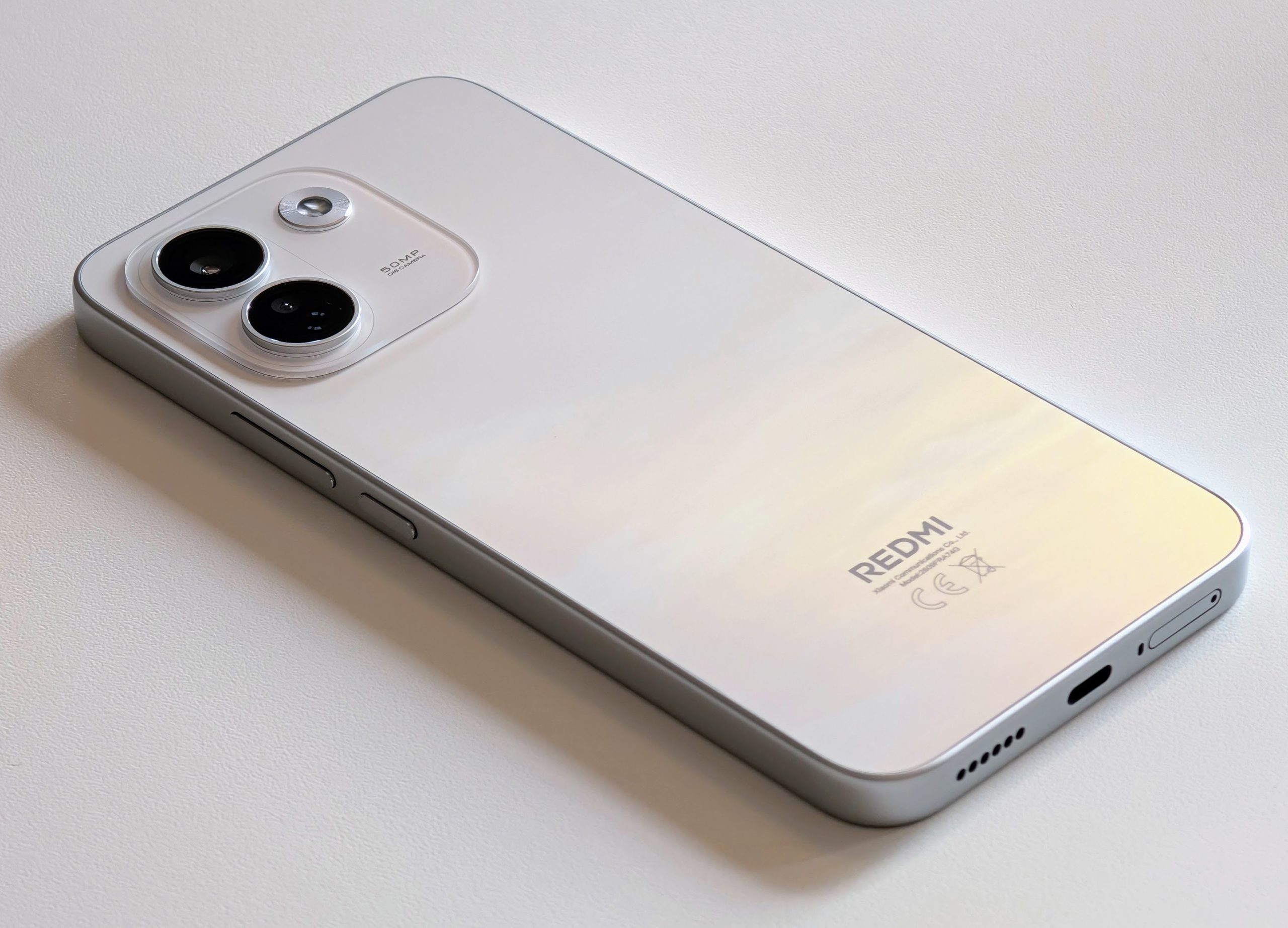
The first thing we notice is that Xiaomi has switched to a completely flat screen. On the Note 15 Pro+, the edges were slightly curved, and even then, we noted that we prefer a flat panel. Now we have one, and we really like it. The phone looks sleeker and feels more purposeful.
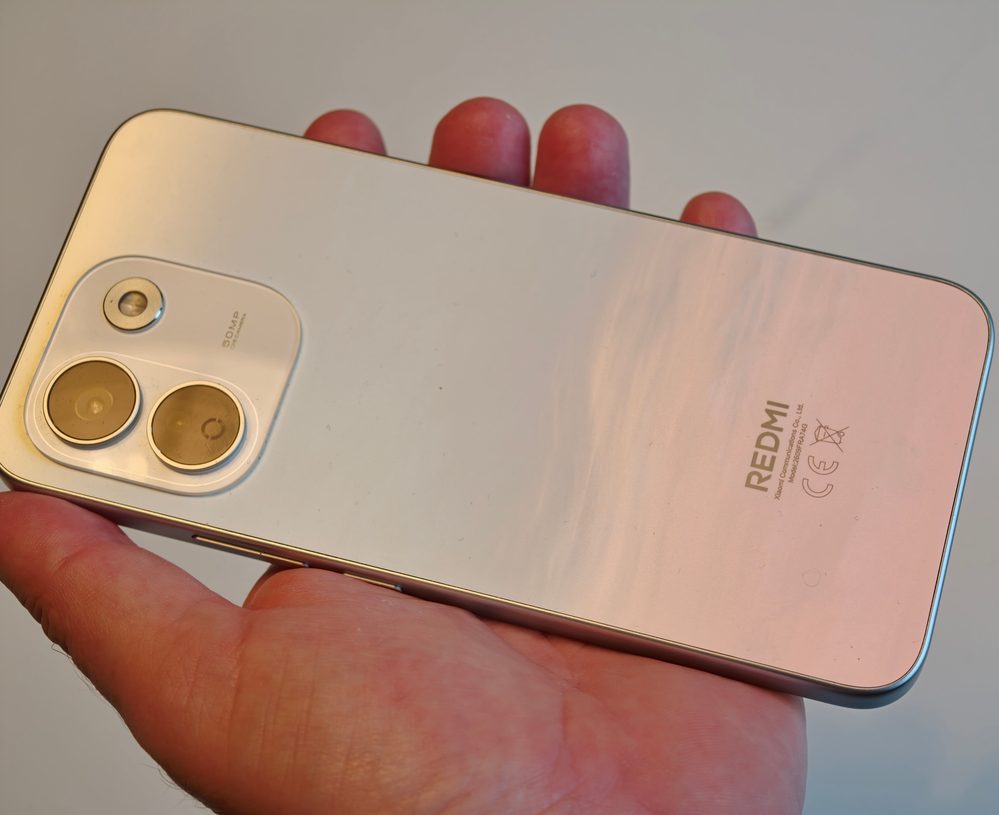
We tested the Cloud Blush color, which resembles mother-of-pearl and is quite attractive. Additionally, the back is photochromic, meaning it shifts from white to a warmer tone in sunlight. The phone is also available in black and green.
There is, however, a “but.” While the Note 15 Pro+ had a back with a leather texture that provided a steady grip, the Note 17 Pro Max is significantly more slippery. We are back to roughly the same level as the Redmi Note 14 Pro+, which we described as being as slippery as a bar of soap. The phone easily slides out of the hand, and at 225 grams with a 6.83-inch screen, it is a large device. A case is recommended—and as usual, Xiaomi includes one in the box, which is always appreciated.
The build quality feels solid. The phone is IP66 and IP68 rated, meaning it can withstand both powerful water jets and being submerged in water. According to Xiaomi, it can last 72 hours at a depth of 2 meters. The front is protected by Gorilla Glass Victus 2, and the phone is certified for drops from 3 meters onto a granite surface—half a meter more than its predecessor. Not something we dared to test this time either.
Screen
The screen is a 6.83-inch AMOLED panel with 1.5K resolution (2772 x 1280 pixels) and a 120 Hz refresh rate. The size and resolution are identical to the predecessor, but the peak brightness has been increased from 3,200 to 3,500 nits. This peak value is only reached in small areas during HDR content; in standard High Brightness Mode, it sits at 2,000 nits. This is more than enough, and we had no issues reading the screen outdoors.
The PWM dimming runs at 3,840 Hz, and the panel is certified by TÜV Rheinland for low blue light and flicker-free operation, which is beneficial for those with sensitive eyes. Wet Touch 2.0 remains, so the screen works even with wet fingers or raindrops on the glass. And as with previous models, it comes with a pre-applied screen protector.
Performance and Software
This is where it gets interesting. The Note 15 Pro+ featured a Snapdragon 7s Gen 4, while the Note 17 Pro Max has a Snapdragon 6 Gen 5. The number in the name has gone down, and the chipset is built on the older Cortex-A78 and Cortex-A55 cores. This led us to wonder if the new phone is actually slower than the old one, so we ran Geekbench 7 on both.
The results are mixed. In single-core, the Note 17 Pro Max scored 916 points compared to 974 for the Note 15 Pro+, which is about 6 percent lower. In multi-core, the situation is reversed: 3,184 against 2,777, an increase of about 15 percent. So, it’s not a downgrade, but it’s not a significant upgrade either.
Where the difference is actually noticeable is the storage. The Note 15 Pro+ had UFS 2.2 and reached 1,095 MB/s in sequential read speed in AnTuTu’s storage test. The Note 17 Pro Max reaches 2,190 MB/s—twice as fast—and the write speed has increased from 1,041 to 2,155 MB/s. Random read and write speeds are also roughly twice as fast. This is a clear improvement that proves useful when installing large apps or moving files.
In daily use, it runs okay. The interface is fluid, and social media, video, and simpler games work without issues. Occasionally, it may stutter or lag, and heavier games require lower graphics settings. If performance is a priority for you, the Poco X8 Pro Max is a much better choice in the same price range, as it features a flagship-class chipset.
The test unit has 8 GB of RAM. Xiaomi markets up to 16 GB with memory expansion, but this relies on using storage space as virtual memory and is not the same as physical RAM.
The phone ships with HyperOS 3 based on Android 16. Just like with the Note 15 Pro+, we are getting last year’s Android version, since Android 17 is already out. Xiaomi promises four OS updates, but the first one is used just to catch up. However, six years of security updates is decent.
As is typical for Redmi, there are quite a few pre-installed apps and games. Most can be uninstalled, but one shouldn’t have to start by cleaning up a brand-new phone.
Battery and Charging
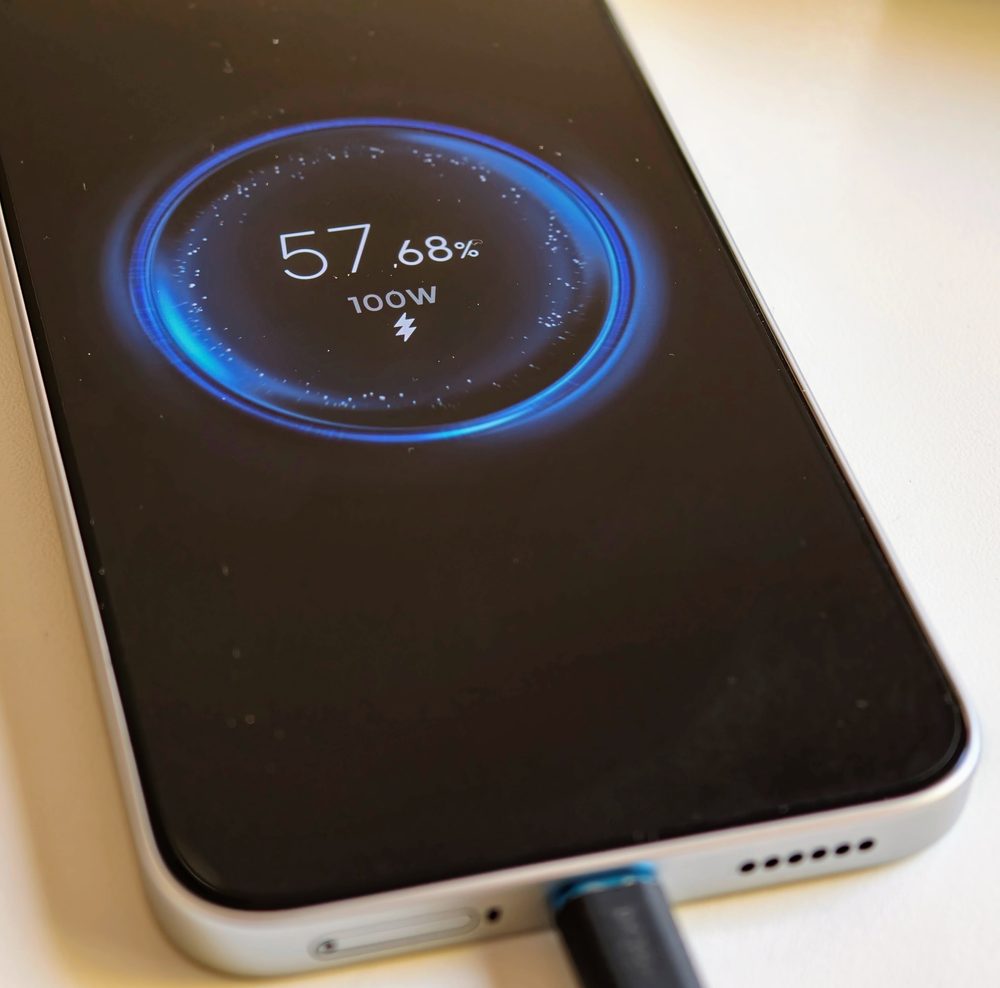
This is the phone’s greatest strength. The 9,210 mAh battery is the largest Xiaomi has made to date and is based on silicon-carbon technology. It is 2,710 mAh larger than the Note 15 Pro+ and 710 mAh larger than the Poco X8 Pro Max. Battery life is excellent. During the test period, we easily managed two days on a single charge, and with lighter use, a third day is within reach.
Charging is handled via 100W HyperCharge, and as usual, the charger is not included. However, the phone supports PD charging, and with our office Anker Prime charger, we reached 80W. This is a significant improvement over the Note 15 Pro+, which rarely exceeded 35W with the same charger. Charging is fast, which is necessary with a battery this size.
Reverse wired charging has been increased from 22.5 to 27W, so the phone works well as a power bank for headphones or a friend’s phone. Wireless charging is still missing.
Xiaomi states that the battery should maintain at least 80 percent capacity after 1,000 charging cycles.
Camera
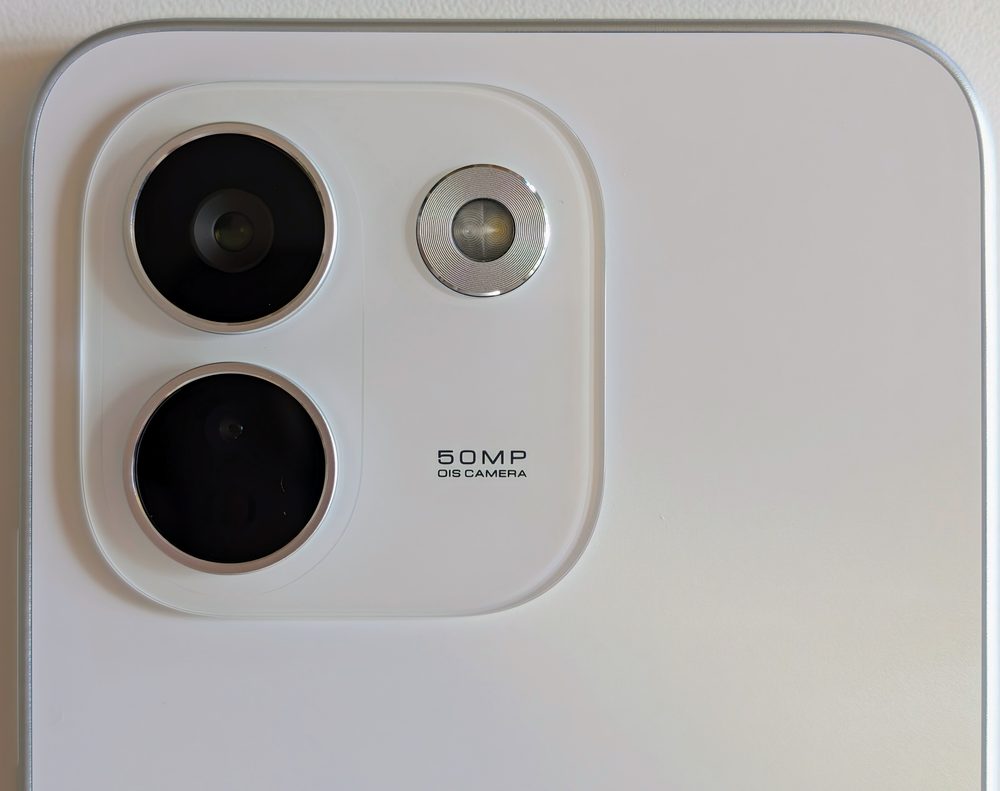
Here, Xiaomi has taken a step back, at least on paper. The Note 15 Pro+ featured a 200 MP main camera with a large 1/1.4-inch sensor. The Note 17 Pro Max has 50 MP with a 1/1.56-inch sensor, an f/1.8 aperture, and optical image stabilization. The sensor is thus both smaller and lower resolution. The ultra-wide angle is still 8 MP, and a telephoto lens is still missing. The selfie camera is 32 MP.


In daylight, images from the main camera are sharp with good colors, and portraits have natural skin tones. Digital 2x zoom provides a usable result, but beyond that, the lack of a telephoto lens becomes apparent and details quickly blur. At dusk, the main camera performs reasonably well, but in very low light, the images become softer.


The ultra-wide angle is the phone’s weakest link. It lacks autofocus, details are blurry, and it gets noisy in poor light. It’s sufficient in good light, but nothing more.
Video can be recorded at up to 4K at 30 frames per second with both the main and front cameras. 4K at 60 frames per second is completely missing, and the ultra-wide angle maxes out at 1080p. There is also a dual video mode, where the front and rear cameras record simultaneously.
Conclusion
The Redmi Note 17 Pro Max is an attractive phone. The completely flat screen is an improvement, Cloud Blush is one of the nicest colors we’ve seen on a Redmi, and the battery life is excellent. Charging is fast, the phone is water and drop resistant, and the storage is twice as fast as its predecessor.
The problem is that it barely feels like an upgrade. The processor is roughly as fast as in the Note 15 Pro+, the main camera has a smaller sensor with lower resolution, and a telephoto lens is still missing. Furthermore, the back is slippery, and the phone once again ships with last year’s Android.
Then there’s the price. The recommended price is 6,490 SEK for 8 / 256 GB. That is more than both the Note 15 Pro+ and the Poco X8 Pro Max, both of which can currently be found for well under 6,000 SEK.
The Redmi Note 17 Pro Max is a good phone, and for those who primarily want long battery life and a device that can handle some abuse, it’s a solid purchase. But when the predecessor is nearly as good in most aspects and the Poco X8 Pro Max is significantly faster—both for less money—it becomes difficult to justify.
Xiaomi sent a review unit for this test. Senders of material have no editorial influence on our tests; we always write independently with our readers and consumers in focus.
How we rate products at SensesReview Highlights: Q&A
How long does the battery last on the Redmi Note 17 Pro Max?
The Xiaomi Redmi Note 17 Pro Max features a 9,210 mAh battery that easily lasts two days on a single charge. With lighter use, it can reach a third day.
Does the phone survive water exposure and drops?
It is IP66 and IP68 rated, lasting up to 72 hours at a depth of 2 meters. It is also certified for drops from 3 meters onto granite and uses Gorilla Glass Victus 2.
How powerful is the processor for gaming and daily use?
The Snapdragon 6 Gen 5 chip handles daily tasks, social media, and simple games fluidly, though heavier games require lower graphics settings and minor stutters can occur.
Does it come with a charger in the box?
A charger is not included in the box. The phone supports 100W HyperCharge and reached 80W with a third-party Power Delivery charger.
How good are the cameras?
The 50 MP main camera produces sharp daylight photos, but low-light shots are softer. The 8 MP ultra-wide lens lacks autofocus and produces noisy, blurry images in poor light.