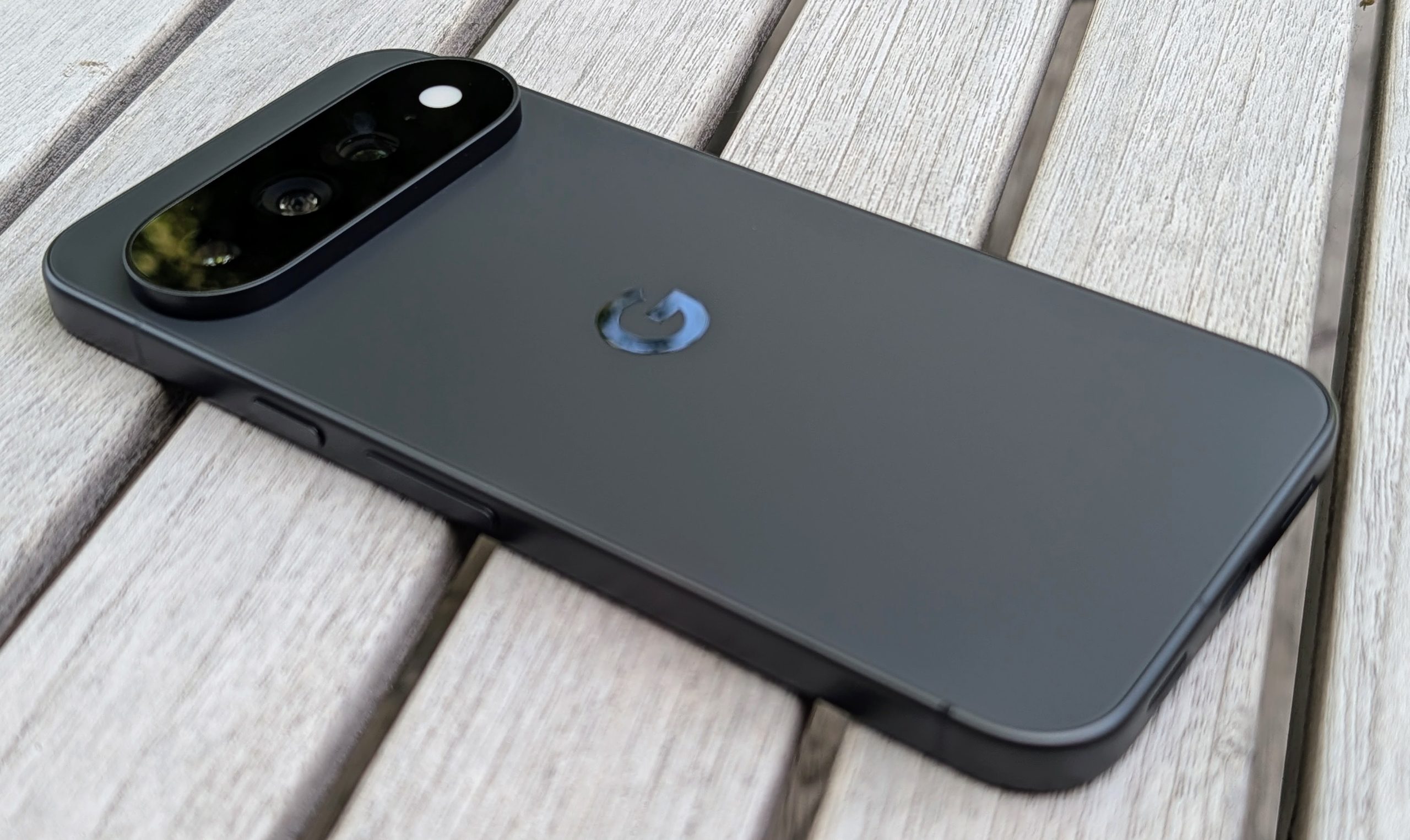

TL;DR
The Google Pixel 11 Pro XL is a flagship phone priced at 16,490 kr. It delivers clean software with seven years of updates, improved battery life, and faster night photography. However, the base model drops to 12 GB of RAM, regional restrictions limit many AI features, and it offers few visible upgrades over its predecessor. It suits users upgrading from older phones.
What do you do when the predecessor already got most things right? Not much, judging by the Google Pixel 11 Pro XL. A new processor (Tensor G6), a telephoto camera that finally handles portraits, a couple of new AI modes in the camera, and a small LED that has taken the place of the thermometer. The screen, form factor, and camera setup are otherwise largely the same as last year’s.
At the same time, the price has climbed and the entry-level model has received less RAM than its predecessor. Is a refinement of details enough when the price grows by 1,500 kronor? We are going to find out!
Design and Build Quality
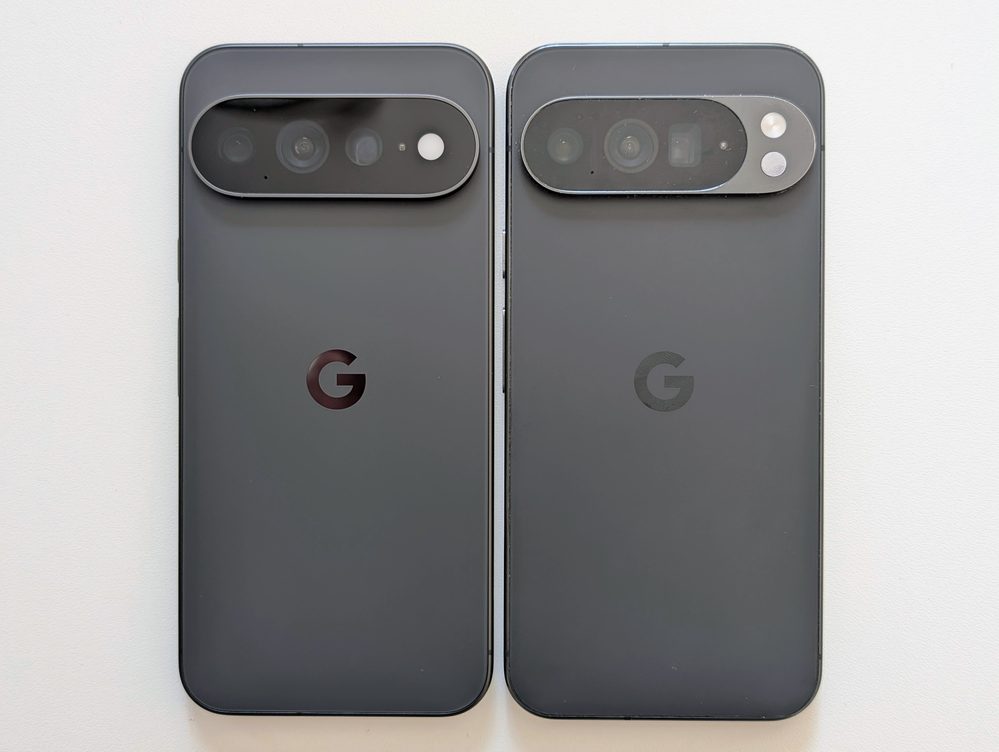
6.8 inches, 162.7 x 76.5 x 8.5 millimeters, and 226 grams. Aluminum frame made of 100 percent recycled aluminum, Gorilla Glass Victus 2 on both the front and back, IP68. The camera bar that runs across the back remains and sits just as securely as before. If you hold the Pixel 10 & 11 next to each other, you have to look closely to see which is which.
The build quality is excellent. No creaking, no gaps, and the phone feels heavier in the hand than the weight suggests in a way that I like. Google says the new glass is twice as scratch-resistant thanks to a coating located between the glass and the oleophobic surface. After the test period, I have no scratches on the screen, but it has also never been in the same pocket as my keys.
The Thermometer is Gone, Enter HiLight
The temperature sensor that arrived with the Pixel 8 Pro and stayed for three generations has been removed. In its place in the camera bar now sits HiLight, a small, colorful LED. It lights up when someone calls, and you can assign selected contacts their own color so you can see who it is without turning the phone over. This works in Google’s phone app and in WhatsApp. The diode also pulses when Gemini is listening, thinking, and responding, so you can see where the assistant is in the process without looking at the screen.
It works well, but it adds absolutely nothing. For me, it landed in the “fun gimmick” category. Color-coding per contact is the only thing with practical value, and support is limited to a couple of apps. The thermometer was certainly also an odd feature, but it at least added something.
Screen
The panel is a 6.8-inch LTPO OLED at 1,344 x 2,992 pixels, 486 pixels per inch, with a refresh rate from 1 to 120 Hz. LTPO works truly dynamically here. Static content drops to 1 Hz, video locks to the frame rate, and browsing fluctuates between roughly 30 and 120 Hz.
Google specifies up to 3,600 nits peak, up from 3,300 last year. In practice, I see no difference compared to the Pixel 10 Pro XL. The screen is very bright and fully readable in direct sunlight—that’s not the problem—but the promised upgrade isn’t noticeable in everyday life. What Google still doesn’t have is an anti-reflective coating of the kind Samsung and Apple put on their top models, and that is more noticeable than a few hundred nits more or less. Facing a bright sky, it reflects more than the Galaxy S26 Ultra.
Performance
Tensor G6 has been rebuilt core for core. The fastest core has jumped two Arm generations, the mid-cores one, and the two slowest slots are now the same core as the mid-cores but clocked lower. The graphics unit has simply been clocked up, from 1,100 to 1,286 MHz.
In daily use, this is excellent. Everything is fast, the interface is smooth, apps open instantly, and the heavier AI functions do their job without you having to sit and wait. It is not a phone that feels slow, ever.
Synthetic benchmarks are another story. It does not impress here, and phones we have tested with Snapdragon 8 Elite Gen 5, such as the Oppo Find X9 Ultra and Xiaomi 17 Ultra, are well ahead. Sustained performance, however, is in good order. Running the same graphics test twenty times in a row, performance lands at about three-quarters of the peak score, which is completely normal.
What stings the most is not found in the chip. The 256 GB entry-level model has 12 GB of RAM, down from 16 GB in its predecessor. If you want 16 GB, you have to go up to 512 GB and pay 1,500 kronor more. Reducing memory in a flagship phone while the price goes up is a strange decision, especially when a large part of the selling point is AI features that run locally and that you should be able to keep the phone for many years to come.
Software and AI
Android 17 with seven years of system updates, security updates, and Pixel Drops. The interface is clean, fast, and free from bloatware, and it is one of the best reasons to buy a Pixel.
Google promises plenty of AI features, but then comes the Swedish reality, and there we start with the best. The “Rambler” feature is built into the keyboard and is available in Swedish from day one. You press the microphone in any text field and just talk, and the phone doesn’t transcribe what you say word for word but cleans it up at the same time. All the “uhs” and hesitations disappear, punctuation ends up where it should, and a longer argument is structured instead of becoming one single long sentence. You can also say what should be changed in the text that is already there, shorten a paragraph, or change the tone, without touching the keyboard. An absolutely excellent feature that works in Swedish.
Proactive Assistance with Magic Cue version two and Magic Save, which saves information from apps you visit, is available in eight countries. Sweden is not one of them. Gemini Automations, which books tables or shops for you in the chat, is US-exclusive at launch. Call Screen and Hold For Me are still missing here. Live Translate translates text and calls in Swedish but does not dub media, where Swedish is not included. The lack of support for Swedish or features being completely missing in Sweden is a recurring theme for many of the functions.
This is no small thing. A large part of what Google highlights when marketing the phone cannot be used from a Swedish account, and you should know that before paying flagship prices.
And then one thing that is easy to miss in the fine print. Only six months of Google AI Pro is included with the purchase. In the two previous generations, twelve months were included, and those phones were also cheaper. You are thus paying more for the phone and getting half the subscription.
Battery and Charging
5,115 mAh, marginally less than in the predecessor, and yet it lasts longer. The chip is more efficient and it shows. Getting through a day with heavy use is no problem.
The phone handles wired charging up to 45 W. Google states up to 75 percent in half an hour, and that is roughly correct, but only with the right charger. The phone wants a charger that can deliver 21 volts. Many chargers labeled 45 W peak at 11 volts, some newer ones at 16, and then you never get the promised speeds. With the right charger, I reach just over 40 percent in fifteen minutes and around 70 in half an hour, full in just over an hour. With the wrong charger ( = most chargers), the pace is practically halved.
Wirelessly, it charges at up to 25 W according to Qi2.2, and the magnets are built-in so that Pixelsnap accessories attach directly without a case. If you want to protect the battery, there is both a hard 80 percent limit and adaptive charging, and when the limit is reached, the phone only draws the power it needs to run itself instead of continuing to charge.
Camera
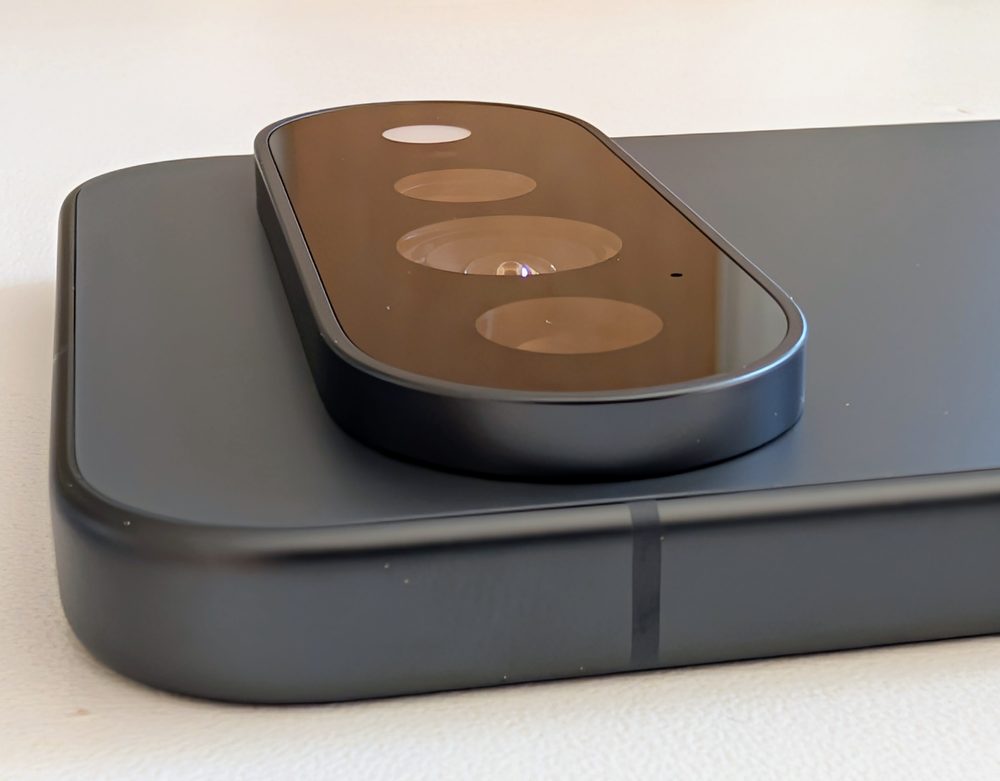
The main camera is 50 MP with f/1.68 and a 1/1.3-inch sensor, the ultra-wide angle is 48 MP with f/1.7, autofocus and macro, and the telephoto is 48 MP with f/2.8 and 5x optical range on a 1/1.95-inch sensor. On the front is 42 MP with f/2.2 and autofocus. The updates compared to the predecessor are marginal on paper, and there is no major difference in the images.
A nice new feature is that you can finally shoot portraits with the 5x telephoto. That is the focal length you want for portraits, and the fact that it was previously locked to shorter distances has annoyed me for several generations.


Night mode is the other one. Instant Night Sight is significantly faster than before, the shutter speed is shorter, and you don’t have to stand still and wait in the same way. In very low light, I get details that the predecessor missed, and above all, I avoid those seconds of hesitation before the image is taken.








Pro Zoom goes up to 120x and uses AI to fill in what the optics don’t capture. It’s okay. Text becomes readable and signs can be deciphered, but it is clearly visible that the images are constructed. Surfaces become too smooth, edges too clean, and some details are simply made up. At the same time, the differences from the last generation are very small except in the most extreme modes.
Magic Capture is the phone’s major camera news. You record a sequence, and the phone then selects the best still images from it. You can change the zoom level during recording and take manual photos in the middle of the session, and it works in both portrait and landscape orientation. Fun feature, and it hits the mark surprisingly often on moving subjects. But I am doubtful about how much it will be used in practice. It requires you to remember to turn it on before the moment occurs, and you lose some of the control.
Video is recorded in up to 4K at 60 frames per second, and Video Boost remains for those who want to spend time on post-processing in the cloud. Stabilization is good and audio pickup is clean in normal environments.
Sound and Connectivity
Stereo sound is built from two different speakers. At the bottom sits a proper speaker; at the top, the earpiece speaker does double duty, and it lacks the extra sound opening that some competitors add. This is audible in that the channels are not perfectly balanced. Otherwise, it sounds good. It gets loud, the bass is there, and vocals are clear.
The NFC antenna is located at the top of the phone, which may require some getting used to at payment terminals. In Sweden, you get both eSIM and a physical SIM card; eSIM-only still only applies to the American model.
Conclusion
The Google Pixel 11 Pro XL is an absolutely excellent phone. It is well-built, the software is the cleanest in the Android camp, the update promise is best-in-class, the battery life is better than last year, the performance is sufficient for everything, and the camera is still among the most reliable available. Portraits at 5x and the faster Night mode are real improvements that are noticeable in everyday life.
But there is very little that distinguishes it from its predecessor. The screen upgrade is not visible, the thermometer has been replaced by an LED that is nice but quite pointless, and the entry-level model has received less RAM than the one it replaces. Synthetic benchmarks show that other flagships are faster. A large part of the AI features Google sells the phone on cannot be used in Sweden.
Then there’s the price. 16,490 kronor for 256 GB and 17,990 kronor for the 512 GB variant with 16 GB of RAM. That is 1,500 kronor more than the Pixel 10 Pro XL cost at launch, and that does something to how you view the phone. Add to that that the included AI subscription has been halved from twelve to six months, so you pay more for the phone and get less on two points simultaneously. Pixel has long been the smart choice for those who wanted the best camera and the best software without paying an absolute premium. That description no longer fits. This is a flagship phone at a flagship price, and it should be judged accordingly.
If you are currently using a Pixel 10 Pro XL or Pixel 9 Pro XL, there is no reason to switch. If you are coming from an older model, the step is larger, and then this is a phone that will last for seven years and is among the best you can buy.
How we rate products at SensesReview Highlights: Q&A
Is it worth upgrading from recent Pixel models?
Users of the Google Pixel 11 Pro XL predecessor models, such as the Pixel 10 Pro XL or Pixel 9 Pro XL, have no reason to switch because the upgrades are very small.
How fast does the battery charge?
Wired charging reaches up to 45 W with a 21-volt charger, achieving about 70 percent in 30 minutes and a full charge in just over an hour. With most standard chargers, speeds are halved.
What improvements were made to the cameras?
The camera setup adds 5x telephoto portrait shooting and a significantly faster Instant Night Sight mode. It also includes Magic Capture for selecting still photos from video sequences.
Do all advertised AI features work in Sweden?
No. While the Swedish Rambler keyboard tool works, several features such as Gemini Automations, Magic Cue version two, Magic Save, Call Screen, and Hold For Me are unavailable.
How does the Tensor G6 perform against competing chips?
Daily operation is smooth and fast with stable sustained output, but synthetic benchmark results fall behind devices using the Snapdragon 8 Elite Gen 5.