
TL;DR
Marsupilami 2: Salsa Palombia is a platforming video game sequel featuring three playable characters. It delivers detailed graphics, easy-to-learn controls, clever level design, and strong music. It falls short during boss fights, which suffer from repetitive mechanics, and early stage music is weaker. It works very well for both adults and children, though players who lose interest quickly from repetitive encounter patterns may want to skip it.
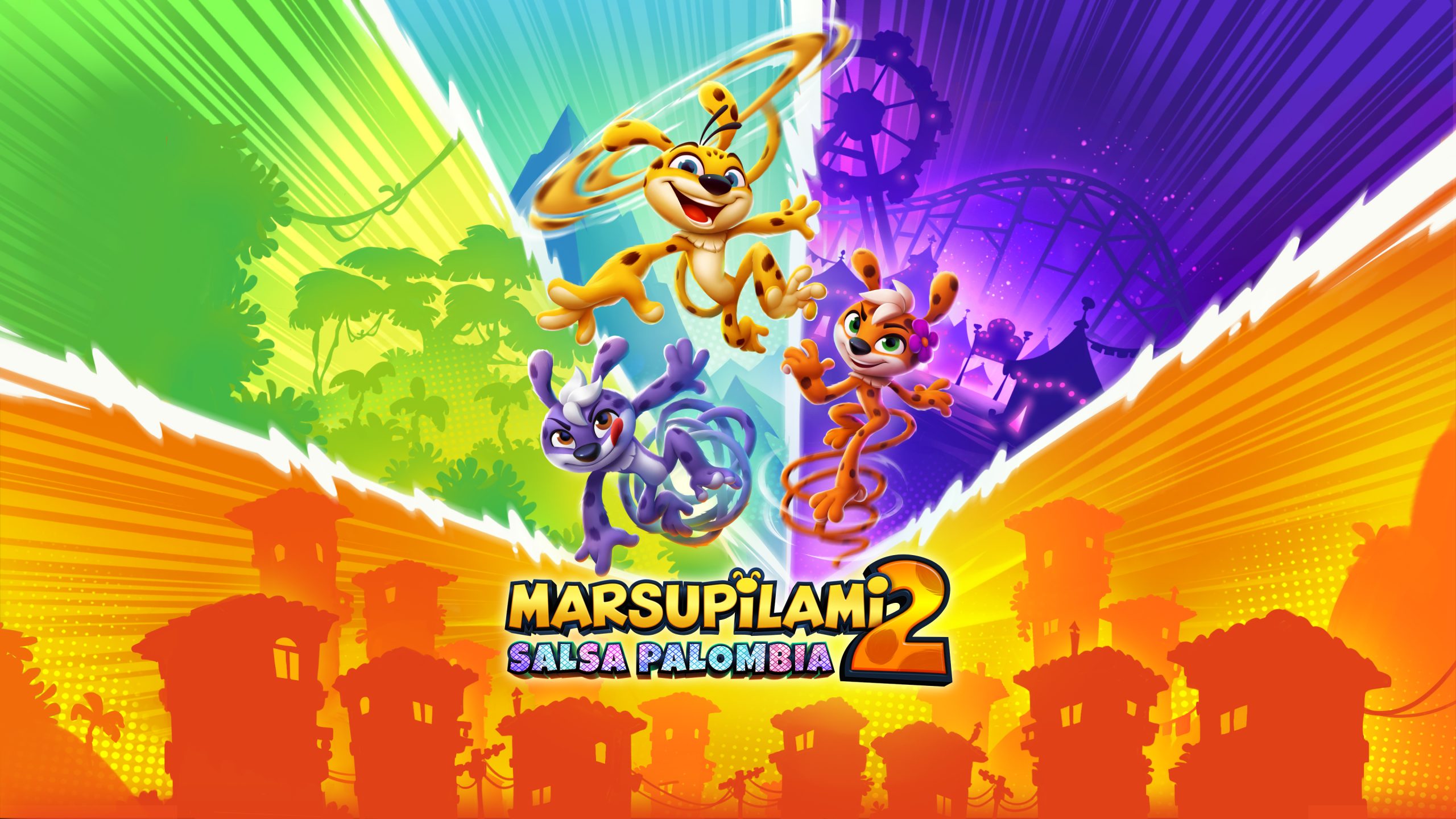
Marsupilami 2: Salsa Palombia is about a disaster that has erupted in Palombia. Animals are dancing wildly, environments are collapsing, and mysterious creatures are fueling the chaos with their frenetic music. To restore order, we must take control of Twister, Hope, and Punch. Three Marsupilamis, each with their own unique abilities and playstyles. Now it is up to these three young Marsupilamis to stop the rhythm before it consumes everything.
Marsupilami – from comic book to game
My first contact with the mythical creature Marsupilami was through the Franco-Belgian comic book Spirou, created by André Franquin. The series didn’t primarily focus on Marsupilami, as it appeared as a supporting character. The comic book debuted as many as 74 years ago, but the character lives on. As recently as last year (2025), a new film was released—not about Spirou, but about Marsupilami itself. So, what makes this character so interesting? Its most important attribute is its tail, which it can use for all sorts of amazing things. It can use it as a boxing glove, swing from it, and hop on it like a pogo stick. It’s easy to see why the character is a perfect fit for a video game.
The sequel Marsupilami 2 – Salsa Palombia
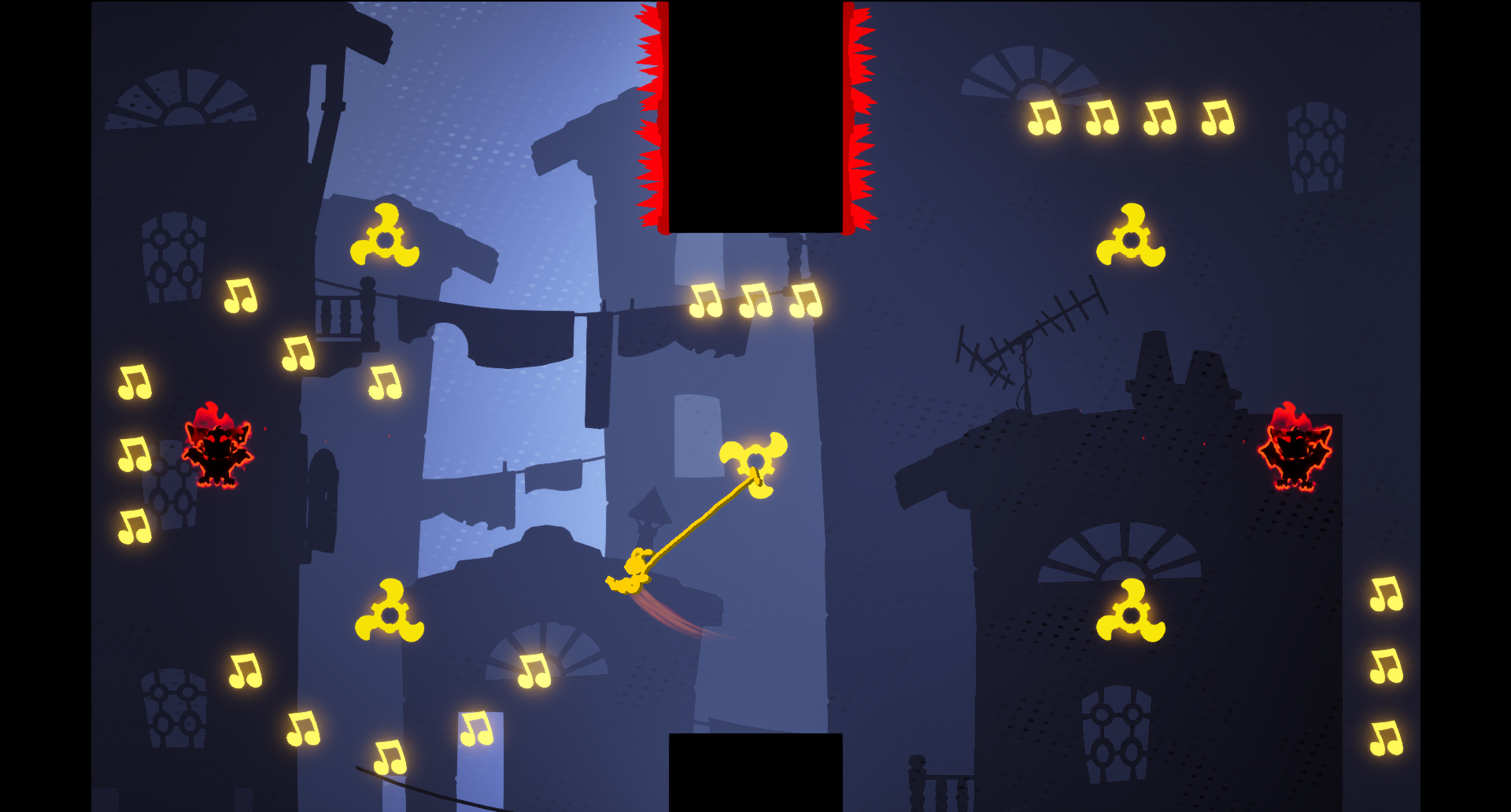
Marsupilami 2: Salsa Palombia is, as the title suggests, a sequel to Marsupilami: Hoobadventure!, which was released five years ago. I haven’t played the first one, but I read that you play as three different characters there as well. Twister darts through the air with a fast, controlled glide; Hope performs a spin jump that provides both height and momentum; and Punch turns into a ball, bounces along, and can smash through obstacles and enemies. On each level, you have access to two of them, and you can switch whenever you like. Certain sections can only be completed by specific characters, so if you get stuck, you just switch to the other one and try again.
Graphics, controls, and difficulty
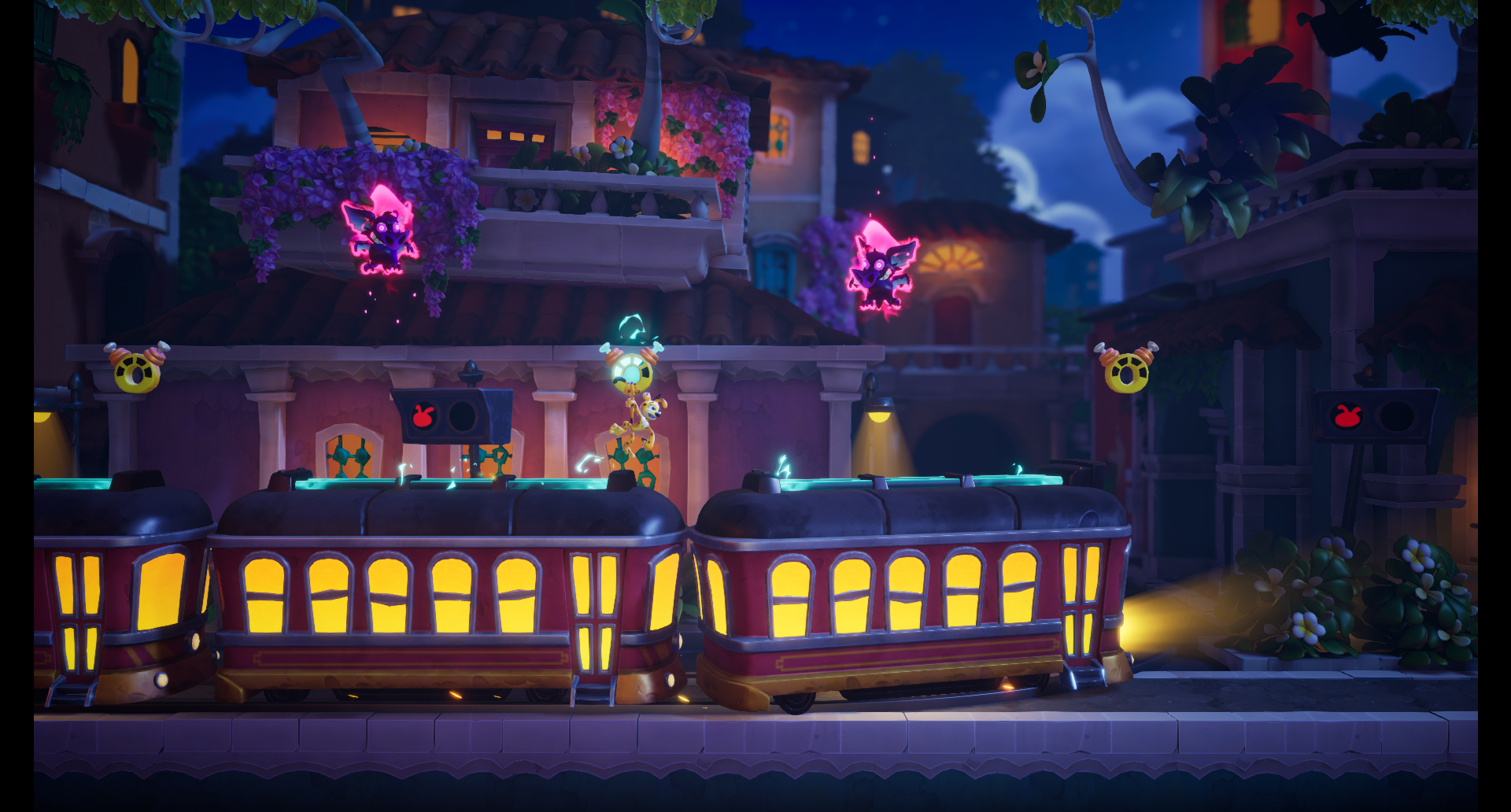
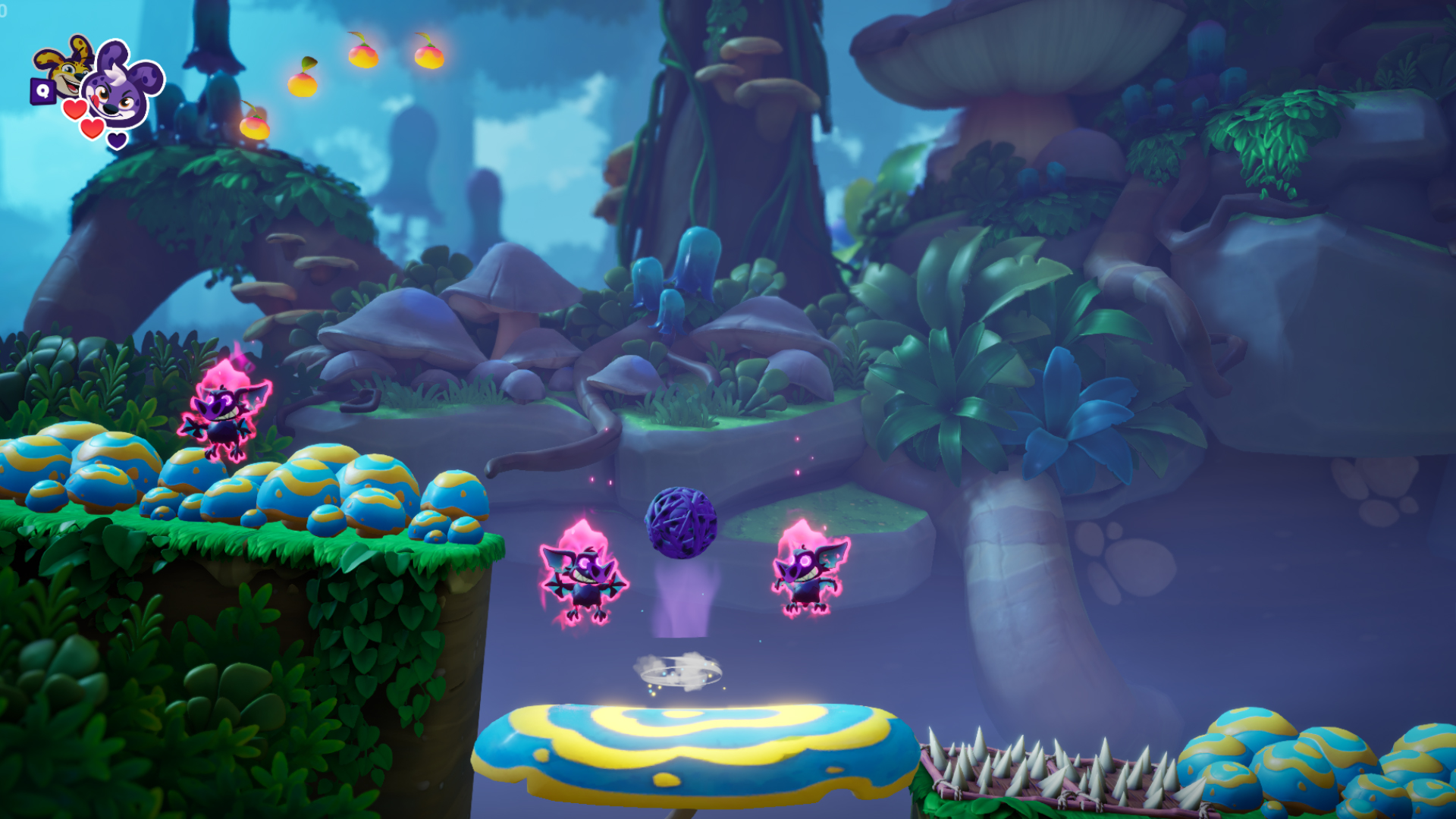
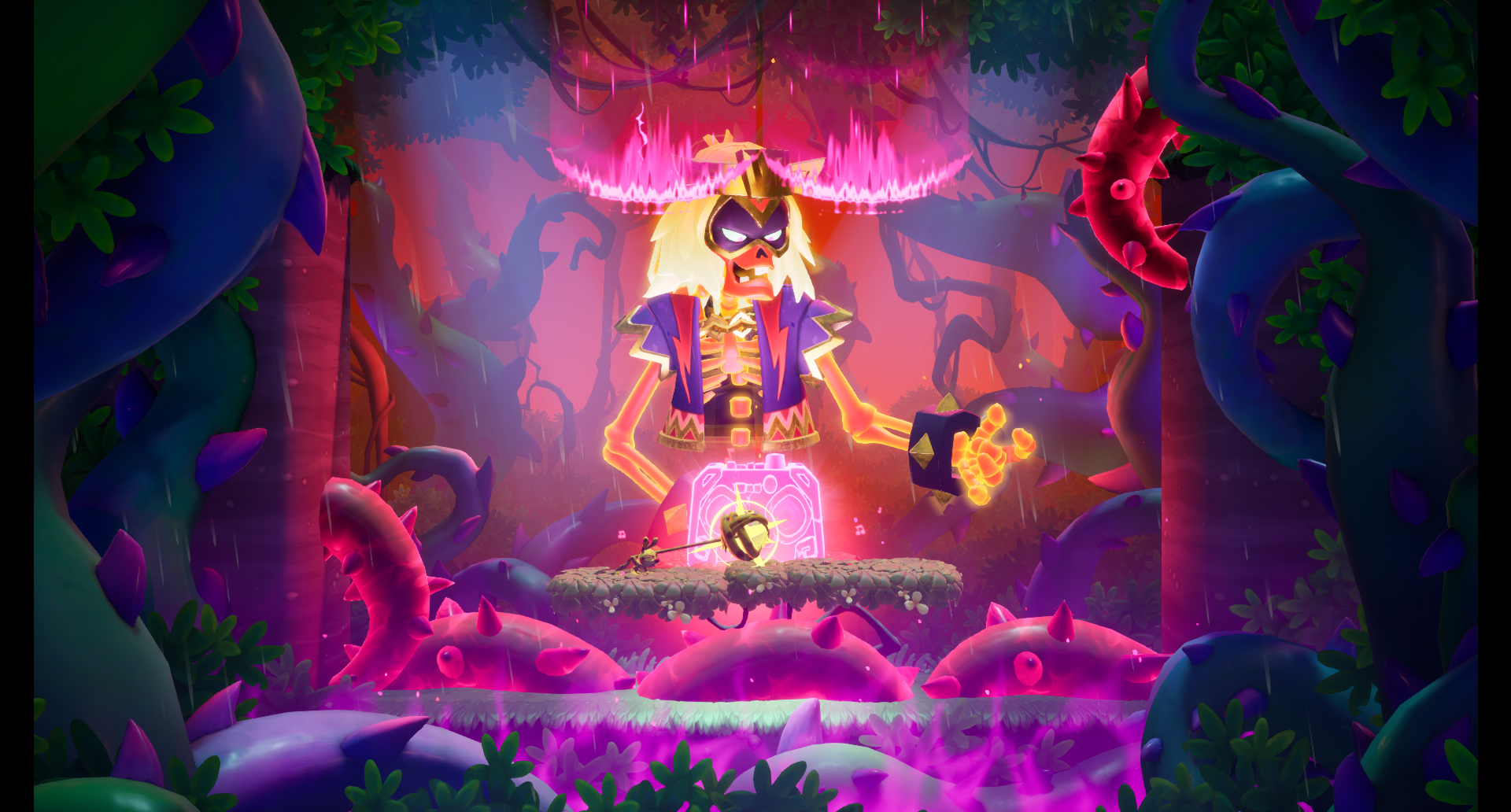
The graphics are wonderfully well-made and fun, with plenty of detail, and the levels are clever and enjoyable. The controls are easy to learn, and while the levels start off very simple, they become increasingly tricky. There are three different difficulty levels. On the easiest setting, you can never die unless you fall down a hole. On the middle difficulty, you have three hearts, and on the hardest, you have two. When you die, you restart from the checkpoint. You have infinite lives, so the only consequence is having to replay from the checkpoint. More on this a bit further down. The body’s reward system is firing on all cylinders when you play this game—the music, graphics, and humor are all top-notch. Time flies by, and I realized that the thirty minutes I intended to play had turned into four hours. There are many levels, and just when I thought I was nearing the end, I hadn’t even unlocked half of them.
Secrets and extra modes
There are also plenty of secrets to find, special dojos, and a salsa mode where you earn points as long as you can maintain a streak without taking damage or dying. This gives the game enormous replay value. Since I haven’t played the first game, I can’t say if this is better, worse, or more of the same, but I would guess that the salsa mode is unique to the sequel.
Influence from other games
Marsupilami 2: Salsa Palombia borrows quite liberally from other games. You run like Sonic, jump like Mario, and the ending feels very similar to Fruit Ninja. But even though the similarities are striking, I still think the developers have made it their own. For example, the punching ball effect the Marsupilami uses when fighting other creatures is taken exactly from the comic book.
Infinite lives – a pro or con?
One thing that eventually felt like a bit of an issue is that you have infinite lives. There’s never really a stop; you just keep trying a level over and over, and the only natural end point is when you complete the level or turn it off. That said, you can change the difficulty at any time, so when I got tired of a level, I chose the easiest setting and could then be hit as many times as I wanted to get through.
The music grows with the game
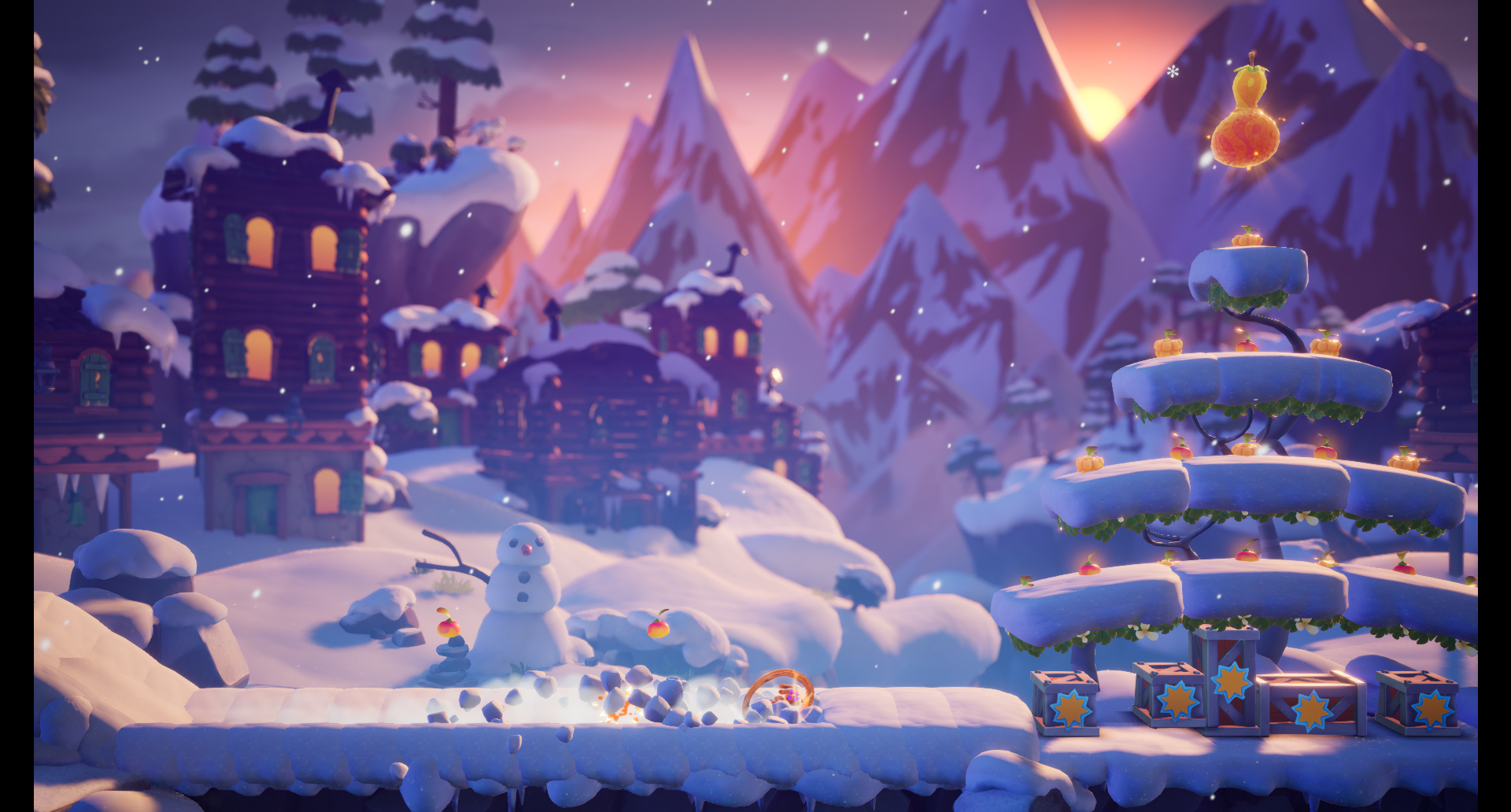
Music is a huge part of the game, and in one of the earliest levels, the music wasn’t particularly good, but the further into the game you get, the better it becomes. One track on a snow level is so good that I’d want it in my playlist.
Boss fights – repetitive obstacles
Personally, I have a very hard time with repetitive game mechanics, and the boss fights suffer from this, which is a shame since everything else in the game has such a great flow. There’s something about it that makes me lose interest extremely quickly.
Summary
In summary, I was very surprised by how incredibly fun I found Marsupilami 2: Salsa Palombia to be, and it quickly climbed my list of favorite games. The music, the rhythm, and the clever levels are consistently just the right amount of challenging and fun. If you get stuck, it’s always possible to move forward by changing the difficulty or simply switching characters. In this way, it works very well for both adults and children. The game is also much larger than I expected and therefore offers great value for money. Thus, the rating can be nothing other than a must-play, and I am now very keen to pick up the first game to see if it’s as much fun as the sequel.
Microïds sent a review code for this test. The provider of the material has no editorial influence on our tests.
Review Highlights: Q&A
How do the playable characters work in the game?
In Marsupilami 2: Salsa Palombia, you control Twister, Hope, and Punch, who each have unique abilities like gliding, spin jumping, or smashing through obstacles. You have access to two characters per level and can switch between them at any time.
How does the difficulty system work?
There are three difficulty settings that you can change at any time. On the easiest setting, you only die from falling into holes, while the middle and hardest settings give you three and two hearts respectively. You always have infinite lives and restart from checkpoints.
What extra modes and secrets are available?
The game includes hidden secrets, special dojos, and a salsa mode where you score points by maintaining a streak without taking damage or dying.
What are the boss fights like?
Boss fights suffer from repetitive mechanics, which break the otherwise great flow of the game and can cause a rapid loss of interest.