
TL;DR
The Earfun Wave Pro X is a pair of over-ear headphones priced at 129 USD that offers excellent comfort, broad codec support, effective low-frequency noise cancellation, and a highly customizable equalizer. However, the highest fixed noise-canceling level creates an uncomfortable ear pressure when walking, fast charging delivers less playtime than claimed, and there is no IP rating. It suits budget-conscious listeners seeking long battery life and strong noise canceling.
Does a pair of over-ear headphones with good noise canceling have to break the bank? EarFun clearly doesn’t think so. Wave Pro X is their new flagship model, and as usual with EarFun, a lot is promised for the money. How about: dual coaxial drivers, eight microphones, LDAC, aptX Lossless, Bluetooth 6.0, Auracast, physical buttons, and 50 hours of playtime with noise canceling turned on. All at a price point just over a thousand SEK.
The question, of course, is how much of that holds up in practice. Let’s find out!
Design, Comfort, and Case
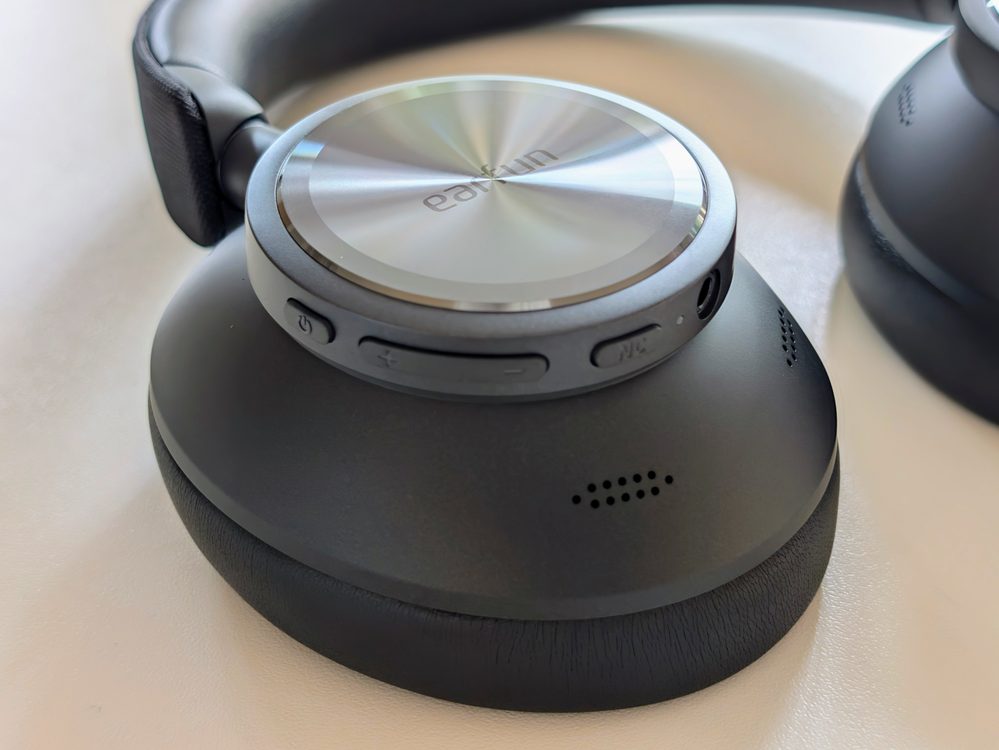
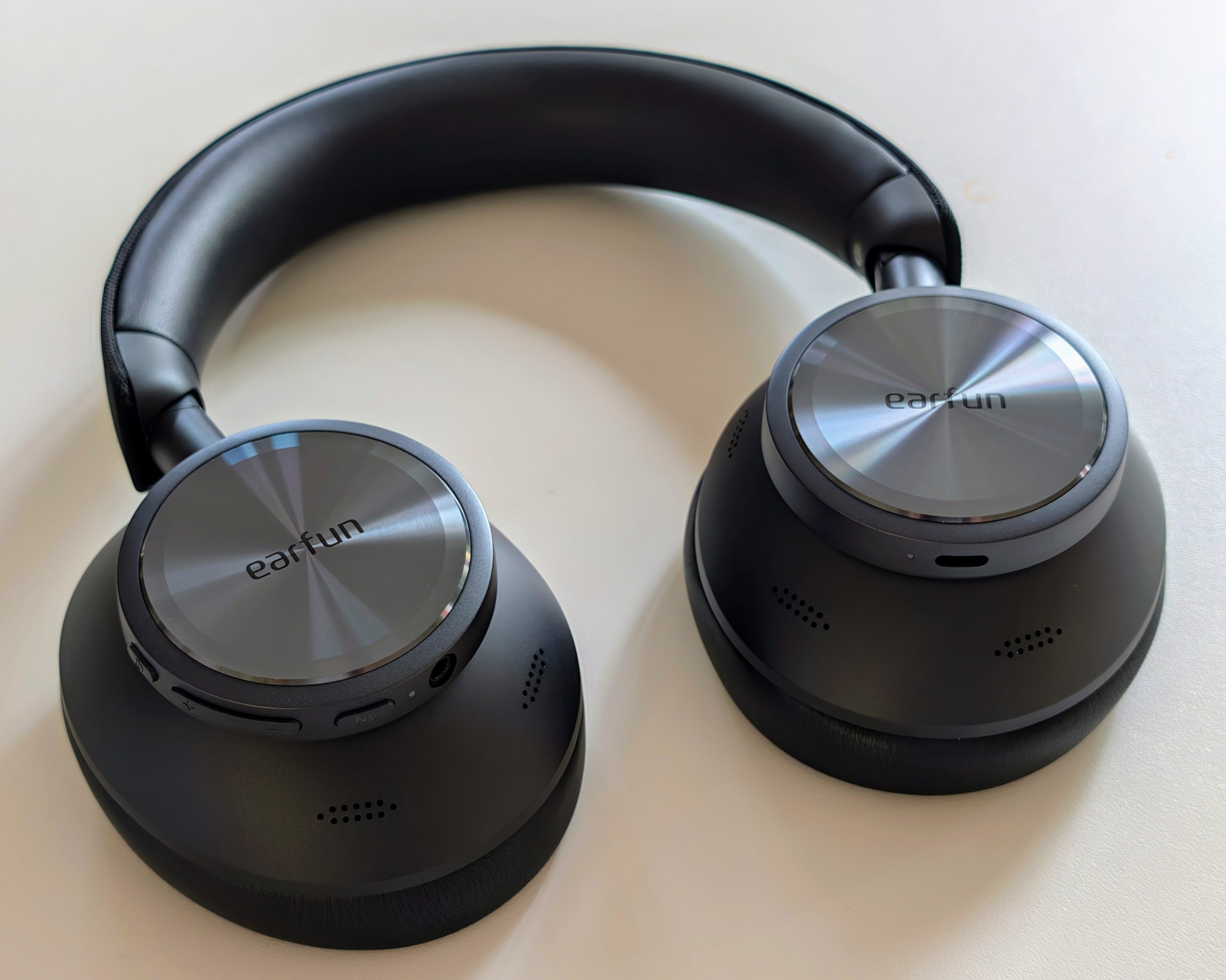
Wave Pro X weighs 259 grams and measures 188 x 168.3 x 86.7 millimeters. The headband is covered in fabric, the cushions are made of synthetic leather, and the earcups are angled twelve degrees inward to follow the shape of the ear. It’s well-executed. Wave Pro X looks more expensive than it is, and it does so without directly mimicking any other manufacturer.
The fit is the best physical aspect of these headphones. The clamping force is just right, the cushions are deep enough, and I’ve worn them for hours without needing to adjust them. The headband adjusts in discrete steps rather than being stepless, which means you can find your preferred setting instantly.
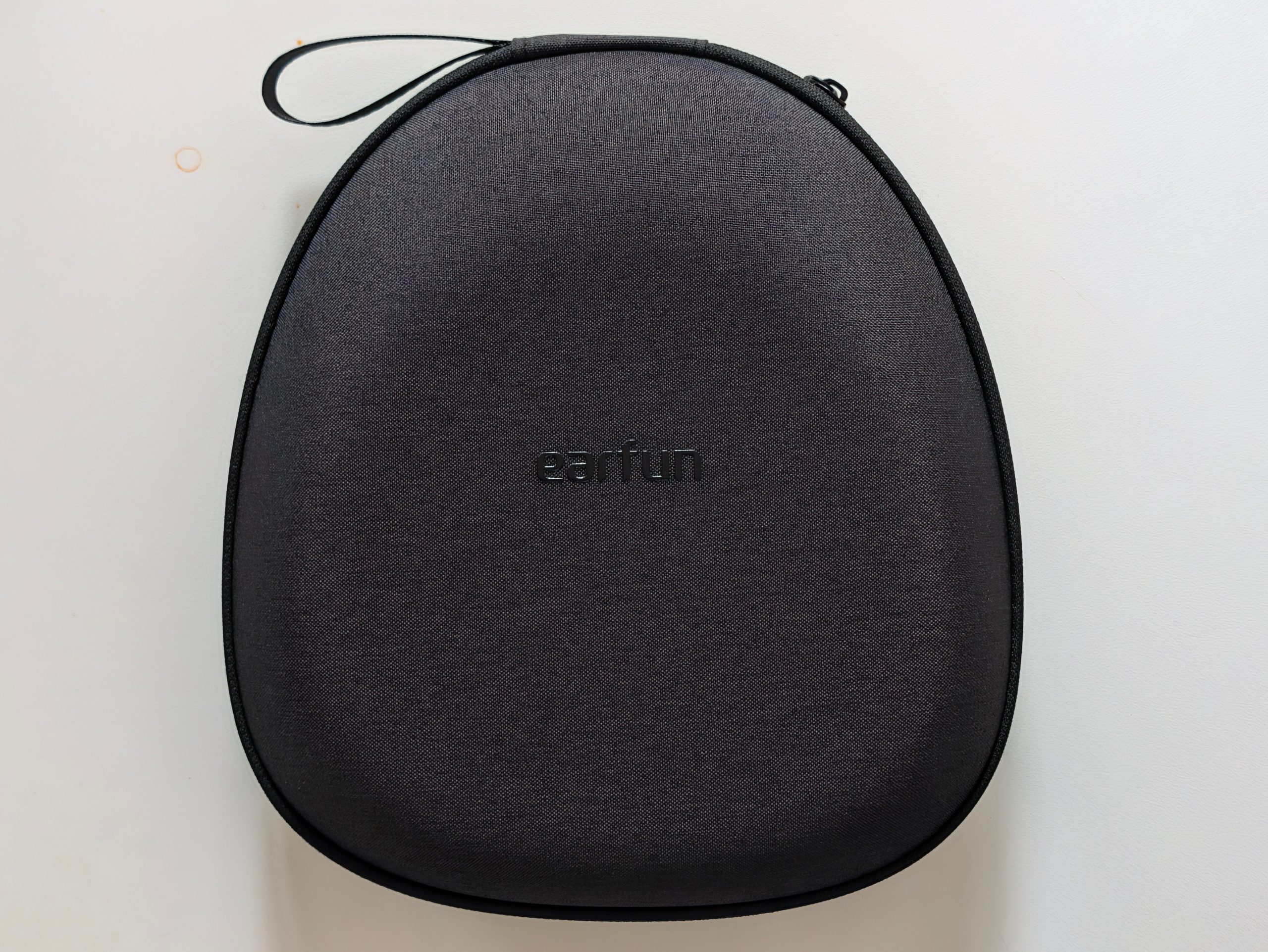
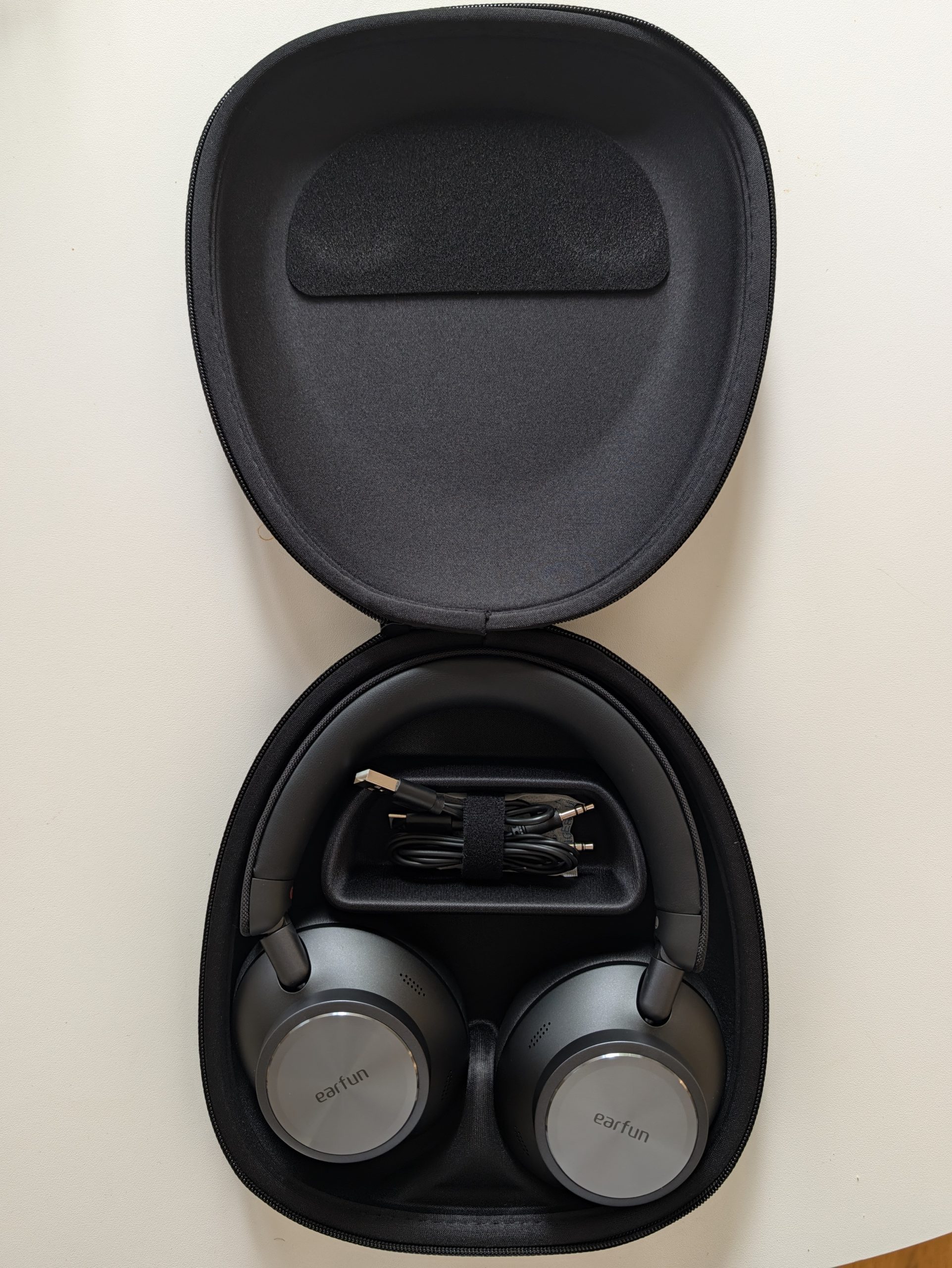
Included in the box are a hard case, a USB-A to USB-C cable, a 3.5 mm cable, and a manual. The case deserves its own paragraph. The earcups lay flat instead of folding inward, resulting in a case that is wide but very thin—exactly the shape that fits well in a backpack or a laptop bag. The fact that it’s included is a real plus, as in this price range, a hard case is often an accessory you have to buy separately.
There is no IP rating, so Wave Pro X is not designed for rain or sweaty workouts.
Four physical buttons are located on the right earcup: power, volume up, volume down, and a button for noise canceling. All except the power button can be reconfigured in the app.
Sound Quality
In each earcup, two drivers are mounted on the same axis: a 40 mm driver for bass and midrange, and a small 10 mm driver that handles only the treble. EarFun calls this DCAA, and the idea is that the treble driver doesn’t have to reproduce bass, allowing it to perform more cleanly.
Whether it’s specifically this design doing the work, I’ll leave unsaid. But they sound good—really good for the money.
We start with James Blake – Limit to your love, and what immediately stands out is the control. The bass goes deep and has plenty of punch, but it never overflows. It doesn’t muddy the midrange, which often happens in this price range where the low end is frequently boosted just to impress. The midrange is the best part of the soundstage; voices sound natural and have weight.
But—and there is a but—the vocals are a notch too far back in the default profile. Switching to something more vocal-driven, you notice a lack of presence in the lower treble, while cymbals can get a bit too much edge at high volumes. It’s not a major issue, as it can be corrected in the app, which we’ll get to shortly.
The soundstage is more intimate than expansive. You feel close to the band rather than in a concert hall, but instruments are clearly placed and it never feels cluttered. They work surprisingly well for movies and games, largely because they can play very loud without sounding strained.
One more thing worth knowing: the bass increases noticeably when you turn off noise canceling. If you want a fuller sound, the ANC button should be your first stop rather than the equalizer.
The App and the Equalizer
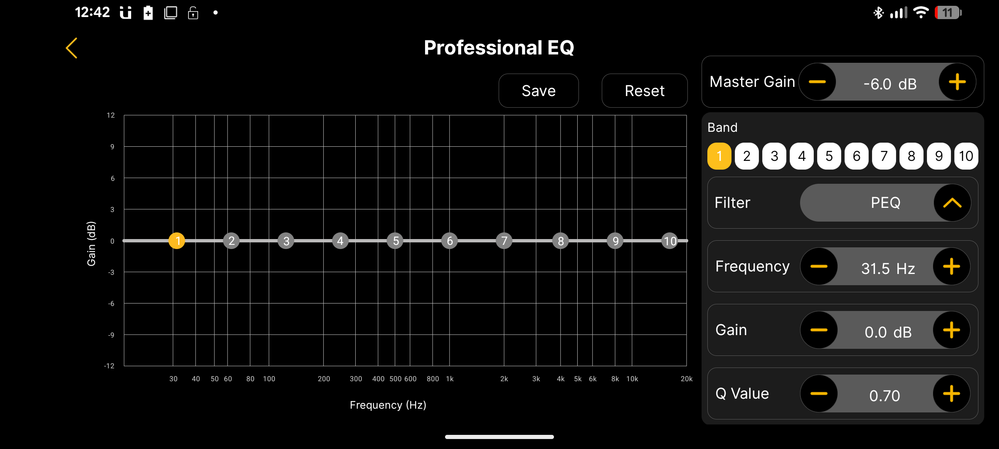
What I felt was missing in the sound can be fixed in the EarFun Audio app, and it’s actually quite good.
In addition to the standard presets, there is a mode called “Personalized Sound,” where you listen to two variations at a time and choose which you think sounds better. After a few minutes, the app builds a sound profile for you. This works well, but the really useful feature is one level up. “Professional EQ” is a significantly more advanced ten-band equalizer. Here, you don’t just move sliders up and down; you decide exactly which frequency each band should work on, how much it should boost or cut, and how wide the adjustment (Q-factor) should be.
Here, you can boost vocals exactly where they need it and simultaneously remove sharpness higher up, and the headphones handle the boost without sounding muddy. After ten minutes of tweaking, they sound significantly better than they did out of the box.
Otherwise, there are features for automatic power-off, volume limits, and firmware updates. Updates are coming frequently right now; the advanced equalizer only appeared about a week after launch.
Noise Canceling
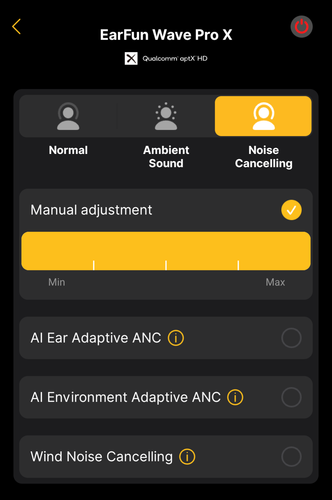
This is the feature EarFun markets most aggressively, and for once, it holds up. Wave Pro X uses six of its eight microphones for noise cancellation.
In the app, modes are organized under three tabs: “Normal,” “Ambient Sound,” and “Noise Cancelling.” Selecting noise canceling gives you a “Manual adjustment” slider ranging from Min to Max in four steps. Below that are three toggles: “AI Ear Adaptive ANC,” “AI Environment Adaptive ANC,” and “Wind Noise Cancelling.”
The wind mode is the only one of the three whose name clearly describes its function, and EarFun is also honest about the trade-off: turning it on makes the noise cancellation less effective. This is reasonable, but worth knowing before leaving it on by default.
The two adaptive modes are harder to decipher. I checked the explanations in the app, and they say the same thing. “AI Ear Adaptive ANC” reads the ambient noise and how the headphones fit on your head, adjusting the attenuation accordingly. “AI Environment Adaptive ANC” reads the ambient noise and how the headphones fit on your head, adjusting the attenuation accordingly. The difference between them is unclear, and I can’t hear a difference either. If one exists, it is so subtle that it would require very specific sounds and conditions to perceive. Choose whichever you like; the effect is the same.
The attenuation is excellent for this price range and is closer to much more expensive headphones than it ought to be. Low-frequency noise is where it shines. The subway car, the engine noise on a bus, the hum of an office fan—all of that disappears almost entirely. Voices in the room are also dampened, but they can still be heard, which is where the difference from absolute flagship models becomes apparent. They pull ahead in the midrange, not the low end.
Then there is the one thing that bothers me. With the slider set to Max—the highest fixed level without any adaptive mode enabled—I feel a pressure in my ears when I move. The pressure changes with every step I take, as if it’s pumping in time with my stride, and it’s uncomfortable enough that I wanted to address it. The solution turned out to be simple: turn on one of the adaptive modes. Then it disappears completely, and the attenuation remains almost as good. The fact that the highest fixed level behaves this way is still worth knowing before buying, and I hope EarFun addresses it in a firmware update.
A small detail I like: noise canceling works even when the headphones are connected via cable. On a flight, where you are often restricted to the armrest jack, this is a real advantage. However, the headphones must be powered on and charged for audio to pass through in wired mode.
The transparency mode is unusually good. It sounds natural rather than like microphone hiss; surrounding voices come through clearly, and you can leave it on for long periods without fatigue. It can be set to automatically lower media volume when activated, making it easy to have a short conversation without removing the headphones.
Call Quality
Two of the eight microphones are dedicated to calls. In quiet and normally noisy environments, Wave Pro X handles calls without issue; the voice comes through clearly and naturally, and the person on the other end hears no significant compression. In very noisy environments, you have to raise your voice a bit, and performance drops in a headwind. This is about what one can expect, and it’s better than your average pair of over-ear headphones.
Connections and Codecs
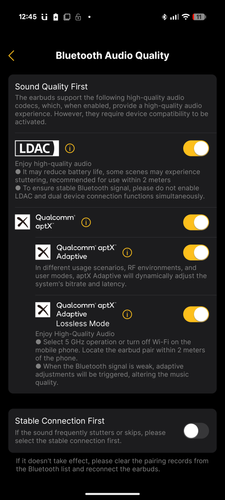
As usual with EarFun, this is where Wave Pro X stands out most. Bluetooth 6.0, and a list that looks like this: SBC, AAC, aptX, aptX HD, aptX Adaptive, aptX Lossless, LDAC, and LC3. This is broader codec support than many headphones offer, regardless of price point.
What you actually get, however, depends on your phone. I connected to a Google Pixel 11 Pro XL. There, five choices appeared for “Bluetooth Audio Codec”: SBC, AAC, aptX, aptX-HD, and LDAC.
aptX Adaptive and aptX Lossless do not appear in the list, which is due to the phone and not the headphones. They require a source with Snapdragon Sound, which Pixel phones do not have. On iPhone, you are limited to AAC as usual.
The connection is stable. I haven’t had any dropouts, and LDAC maintains a high bitrate without stuttering.
Multipoint is called “Dual Device Connection” in the app and is turned off by default. If you turn it on, the headphones connect to two devices simultaneously, but you must first manually turn off LDAC. The two cannot be active at the same time, and the app warns that dual connection can cost battery life and cause audio glitches. This same limitation is common on many headphones, but it’s still a choice you’re forced to make: high-resolution audio from one device, or two devices with a lower-quality codec.
A game mode is available in the app that reduces latency to around 50 milliseconds.
Battery Life
EarFun claims 90 hours without noise canceling and 50 hours with it. That sounds overambitious but holds up surprisingly well. These are headphones you will charge very rarely if you are a normal user.
A full charge takes two hours. Fast charging is supposed to provide ten hours of playtime from a fifteen-minute charge, but in practice, I saw less than that. Significantly less. Expect closer to 4-5 hours of playtime. It doesn’t matter much when the base battery life is this good, but the figure is optimistic.
Conclusion
EarFun Wave Pro X gets most things right. It fits great, it looks good, it sounds very good after a quick trip to the equalizer, the noise canceling is in a class it doesn’t really belong in, the transparency mode is better than that of many more expensive headphones, and battery life is practically a non-issue. Add to that codec support that is unrivaled in this price range, noise canceling that works even over cable, physical buttons, and an equalizer that you can actually do something with, and the list of pros grows long.
The objections are few and minor. The pressure in the highest fixed ANC level when moving is the only thing that really bothers me, and it disappears as soon as you switch to an adaptive mode. Otherwise: no wear sensor, no IP rating, and fast charging that promises more than it delivers.
The recommended price is $129.99, but during the launch, the price is $104 if you use the code EFWPXPR1, and at that sum, the decision becomes quite easy. It’s a lot of headphone for the money, which is exactly what one expects from EarFun.
If the highest noise canceling level had behaved like the adaptive mode and if there were an IP rating, it would have scored even higher. As it stands, it’s a very strong eight and an easy recommendation.
EarFun sent review samples for this test. Senders of material have no editorial influence on our tests; we always write independently with you, the readers and consumers, in focus.
How we rate products at Senses
Review Highlights: Q&A
How effective is the active noise cancellation on the Earfun Wave Pro X?
The Earfun Wave Pro X excels at dampening low-frequency sounds like bus engines and subway cars using six microphones. The highest fixed level causes ear pressure while walking, but switching to an adaptive mode resolves this.
What is the actual battery life and charging performance?
The headphones deliver close to the claimed 50 hours of playback with noise canceling on and 90 hours with it off. A full charge takes two hours, while a 15-minute quick charge provides about 4 to 5 hours of playtime.
Can I use LDAC and multipoint connection at the same time?
No. Connecting to two devices simultaneously requires manually disabling LDAC in the companion app first.
Are the headphones safe to use in the rain or during workouts?
No, there is no IP rating, meaning the headphones are not designed for rain or sweaty workouts.
Does active noise canceling work when using a wired connection?
Yes, noise canceling works over the 3.5 mm cable connection, but the headphones must be powered on and charged for audio to pass through.