
TL;DR
The Legend of Zelda: Ocarina of Time is a faithful remake of the 1998 classic adventure. It excels with beautiful visual design, exceptional lighting, grand orchestral music, voiced cutscenes, and responsive controls. However, combat is very easy and areas like Hyrule Town miss opportunities for expansion. It suits players seeking a traditional, puzzle-driven adventure, while those wanting difficult combat or substantial new content should skip it.
It is impossible, at least for yours truly, to write this review without a wave of nostalgia washing over me. I believe this is true for the vast majority of us who have tried to summarize what this modern experience surrounding one of the most significant video games ever is all about. What it means.
Because regardless of whether one tries (which one obviously cannot or even should do), it is totally pointless to try to disconnect all the emotions gathered over the years for the original. 1998 was 28 years ago. Let that sink in… 28 long years. No matter how old, or young, one was then—it is almost as if half a lifetime has passed. Personally, I was 18 years old and in my second year of high school. On the bus ride home with the Nintendo 64 game in my hand, I was probably more nervous than I had ever been regarding the release of a new game.
I choose to write “probably.” Because as much as one wants to hold onto those memories of when we experienced The Legend of Zelda: Ocarina of Time for the first time—they are, after all, just memories. They have changed. They have faded. They might even have disappeared entirely, and all we have are reconstructions. What we want and hope for them to be. Had I known that 28 years later I would be playing a remake that would also be reviewed, I would have told my 18-year-old self to write down what I thought about every single aspect of the game. At the same time, there is something incredibly beautiful in exactly that; that it is, precisely, a distant memory. We have created our own mythology around it all, which is the first proof that this was something greater than “just” a game.
So here we are. 28 years passed. We are adults now. Some of us might even be old.
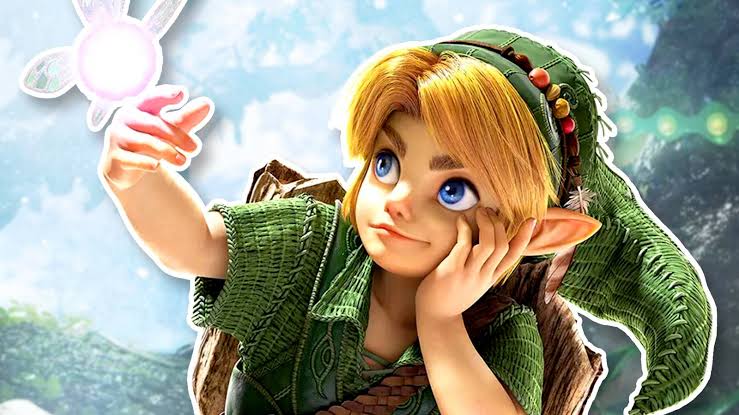
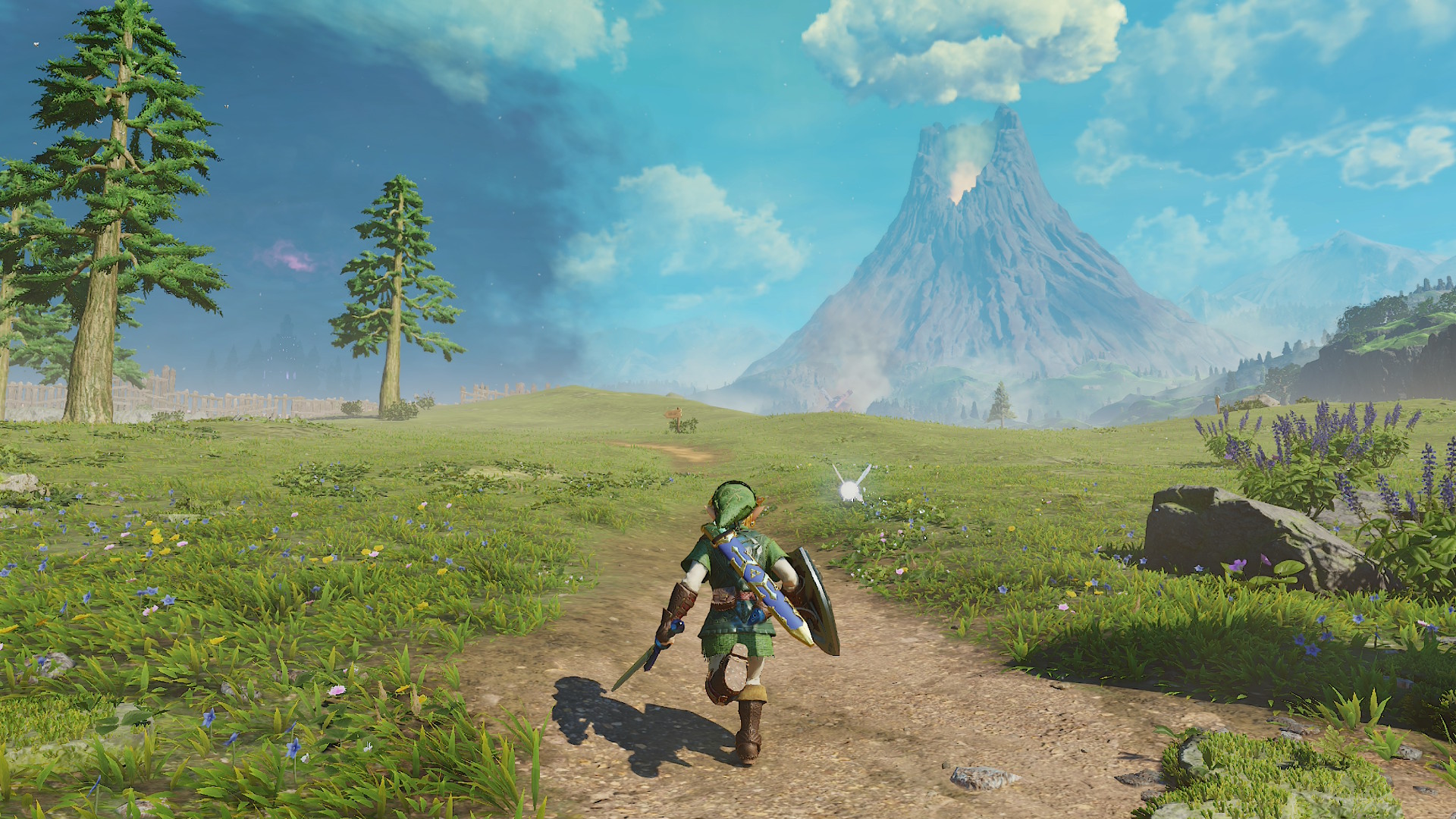
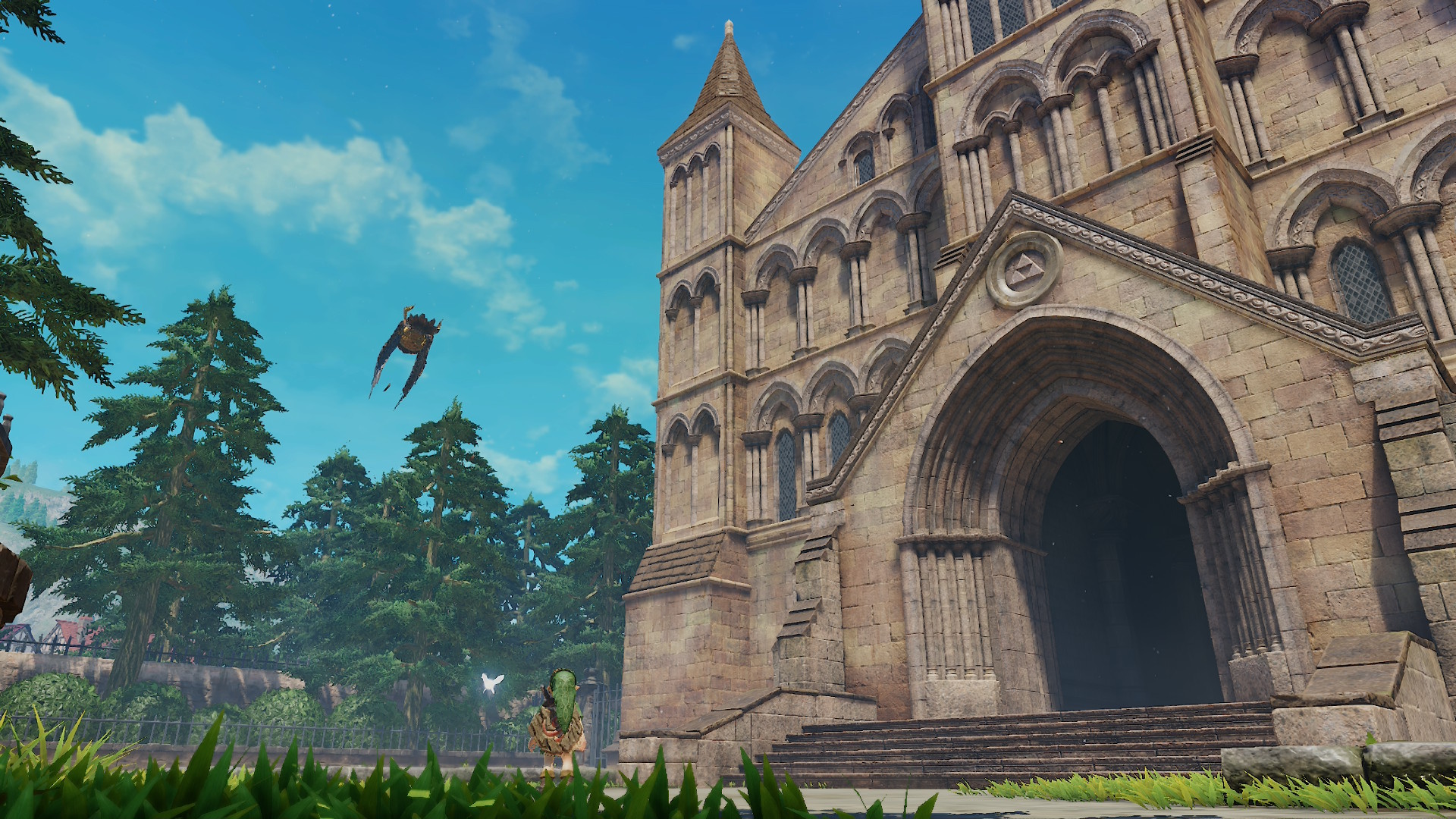
Something that quickly becomes clear is how faithful Nintendo actually is to the critically acclaimed original game. An adventure that many still consider to be the series’ greatest moment. Certainly, there are small changes here and a good number of modern improvements. Link can jump, for example! But for the most part, this is primarily a visual upgrade. That in itself, however, makes this edition of Zelda: Ocarina of Time still feel like a partially new, but above all entirely modern, game. I was quite sold on its design from the very first glance. Granted, there is a certain gloss, a kind of plasticity if you will, that feels a bit misplaced, especially in the facial features of some characters. But from the moment Link steps out into Kokiri Forest, to the first encounter with the Deku Tree, and then an hour later running freely across the vast Hyrule Field—you realize what a visually accomplished experience Nintendo is allowing us to take part in. It is quite simply incredibly handsome.
But we will return to that specific part a bit more. Because there is an important thing to linger on a bit longer and touch upon more. If you are familiar with the original like yours truly, you notice pretty quickly that much also happens by pure reflex. It feels almost a bit scary how well I navigate through the game’s temples, how a key is where I remember it being, and how I don’t need to take any significant amount of time to figure out how to solve puzzles or defeat any of the game’s bosses. In other games, I might have called this a bit too easy and predictable. But it is not this new version’s fault at all that I am familiar with this version of Hyrule and its secrets and know what to do beforehand. However, it also shines a light on one of the few critical points I actually have against this. It is a bit too easy. Or, if I am to be really harsh—very much too easy when it comes to the challenge. The updated controls with their responsiveness and smoothness obviously contribute to this as well. But then I think that the Zelda games have never really been about a major challenge when it comes to combat. There is so much else to be entertained by than for it to have to be difficult.
The second criticism—because it’s best to handle these two minor dampeners on this overall joyful experience directly—is that I find myself wishing that Nintendo could have developed certain areas just a little bit more. I think they made exactly the right choice not to reshape Link’s journey in a Square Enix fashion like they did with their Final Fantasy VII. But I find myself thinking of what Capcom did with, for example, Resident Evil 2. How it still felt enormously faithful to the original but was also perfectly reworked in certain environments. I would have liked to see Nintendo emulate at least a bit of that.
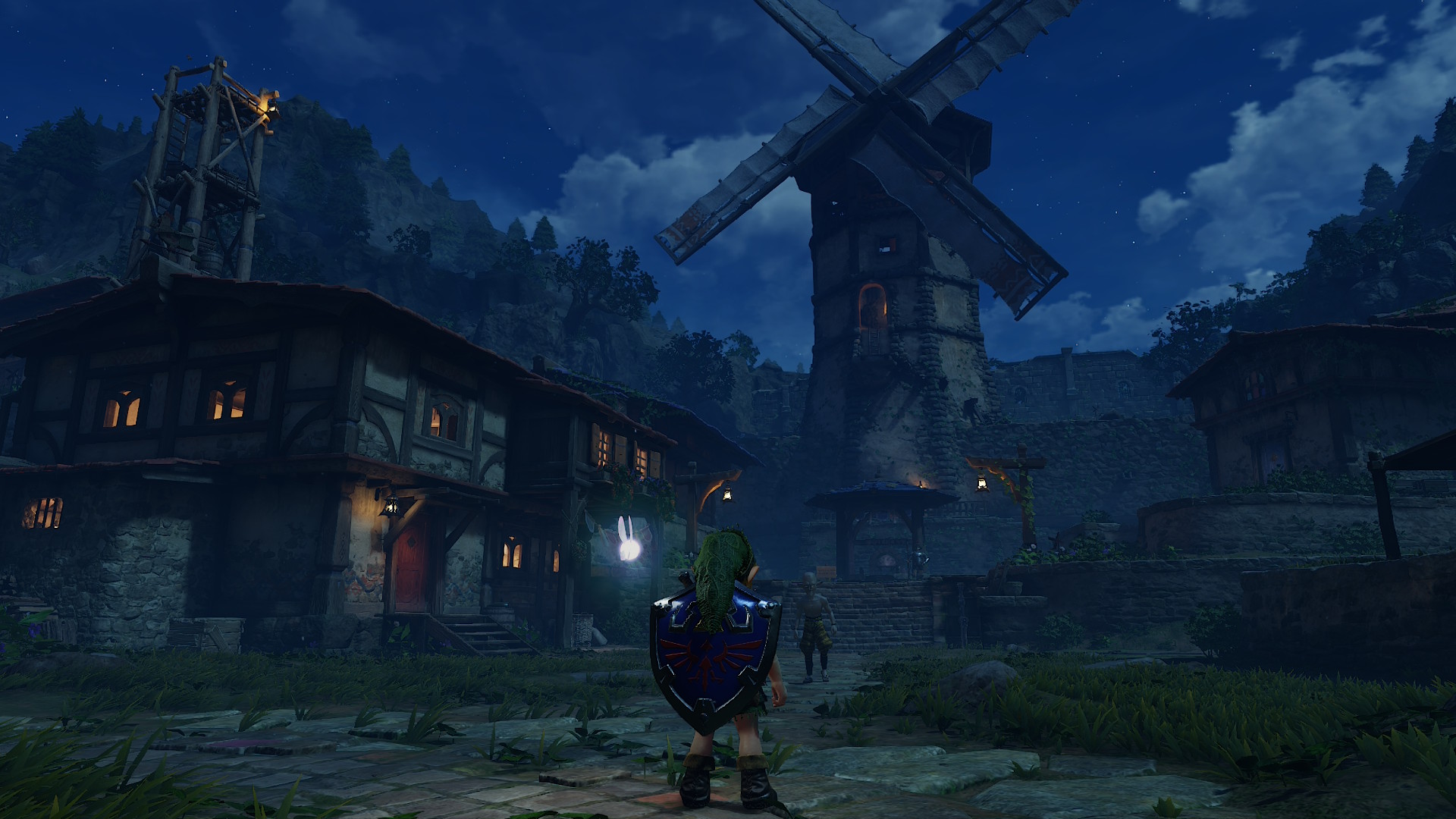
Fairly early in the adventure, there is one specific area where I think they could have done this—and that is in Hyrule Town. Certainly, the visual update makes the city significantly nicer and more lively. But running across its square and down two back alleys and realizing you’ve seen everything feels a bit too empty. Especially when you then see from a distance that the city, in reality, is meant to give the impression of being significantly larger. What are currently backdrops could quite simply have become part of the area to explore. For in the same way that they have made a more seamless transition to Lon Lon Ranch, for example, I would have liked to see things acting as backdrops become part of a slightly more expanded Hyrule.
It is, however, quite nice that Hyrule Field has the size it has—I don’t need a massive open world in this game, but there is something about the city specifically that would have been so well-suited for just a slight expansion. It would have been enough to give me something a little new to discover in the form of a few buildings, an extra mini-game in a building, or something similar. If one wants to be really critical, which is of course part of a review too, one can actually complain a bit that Nintendo plays it quite safe throughout the experience. Fortunately, this feeling does not arise very often because they have truly done a herculean effort with so much.
I touched on it almost immediately. But the game really is absolutely adorable. The finest compliment one can probably give, and I have seen several people do so during these days since it was released, is that it looks like you remember it when it first came out. It is such a fantastic modern visual recreation regarding so incredibly much. Details, vistas, the lighting (seriously, Nintendo is in a class above most others here) but also how things have been given life. Granted, the game’s temples still largely consist of quite many empty and bare rooms that you move through quickly. But small details still make them exciting to explore, and walls and their textures give each location a clearer, distinct atmosphere. One of the game’s later temples (I won’t reveal which one) absolutely ascends several levels thanks to the atmosphere it has. The views over Hyrule are at times completely matchless, and the dream of a next main game in the Zelda series that resembles this graphically has only grown larger and larger for every second I have spent with this remake.
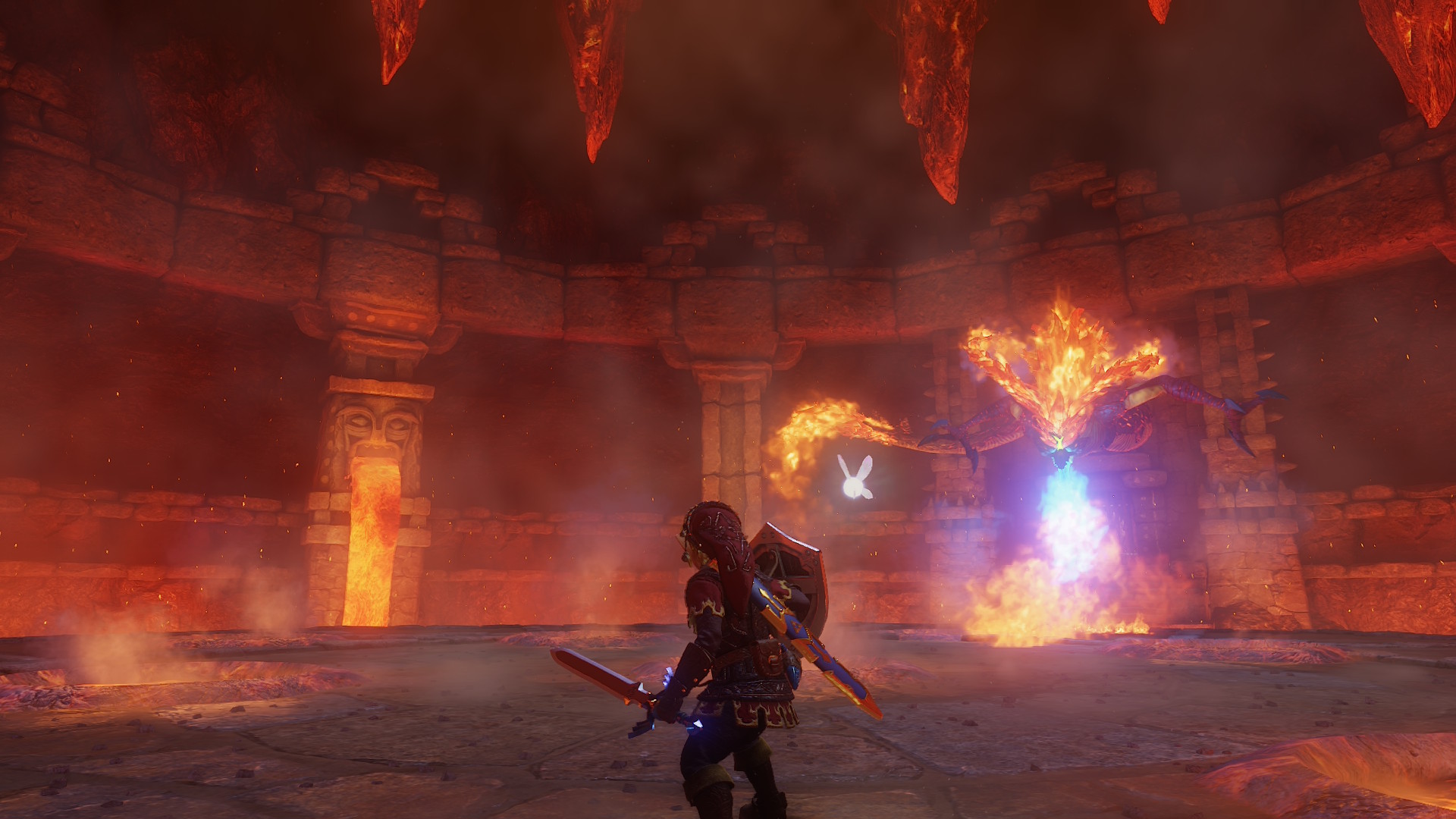
It might feel boring to point out that the visuals are the greatest draw. But for me, it has primarily been about getting to see so much of what I remembered and loved in something that is, to say the least, more pleasant for my eyes. In direct comparisons, it is clear that Zelda: Ocarina of Time was absolutely something matchless technically for its time. But that style of graphics has also aged enormously. When I showed my dear mother a comparison, she points out that the original looks flickering and stuttery—completely unaware that she is describing it perfectly even though she doesn’t know the technical terms. Now I get to experience the same adventure in something that in some places is so adorably beautiful that I have at times repeatedly dropped my jaw. We are in the year 2026, so of course we are spoiled with enormously good-looking games, and if you put this next to technical graphical wonders like Horizon: Forbidden West or Ghost of Yotei one thing quickly becomes clear: Ocarina of Time is more about design, and more specifically in how that design feels like pure magic. How it largely looks and is experienced like a fairytale. The visuals impress, absolutely, but in a completely different way than in the other mentioned titles. Which is an enormous strength in itself and makes it unique.
Added to this is also perhaps gaming history’s best and most grand soundtrack. After the rather understated melodies and soundscapes in Zelda: Breath of the Wild and Zelda: Tears of the Kingdom , it is incredibly liberating with something significantly more bombastic. The familiar but also partially new orchestral pieces are completely fantastic. Given how much the game thematically leans on music specifically, it is of course wonderful that the music takes the front seat and that they also sound better than ever. Added to this are also cutscenes with voice actors. Link is silent as usual, but the fact that other characters have been given voices does a lot for the experience. For my part, I chose, of course, Japanese ones—but that is obviously just a matter of taste. Speaking of the cutscenes, these also feel incredibly much more engaging and tell this story in an even better way.
Given the game’s title and what the game then largely revolves around regarding time—there is also a sort of beautiful underlying meaning regarding so much of this experience. For just as Link then travels seven years forward and grows up, it feels in some way natural that it is specifically Zelda: Ocarina of Time that now, after all these years, is the game that Nintendo gives us anew. There are some aspects here regarding this that I think are important to touch upon. Something that in several ways still proves what significance this has gained as a game over time.
Because the time perspective itself makes it interesting regarding this entire game series. In 1998, this was of course everything we could have dreamed of. A step into 3D that was completely monumental. But since then, we have of course had a number of new games in the series. Some more loved than others. For one who thinks the latest “Zelda Open World” games are magical, there is still something comforting in this being more “classic.” I am not the one who will claim that “This is how I actually wish my Zelda to be.” Because I love the open worlds. Incredibly much. I also have no real problem with weapons that break or more compact Shrines with small puzzles instead of traditional clever classic temples. All that new stuff we have received is just as much Zelda for me as this once was.
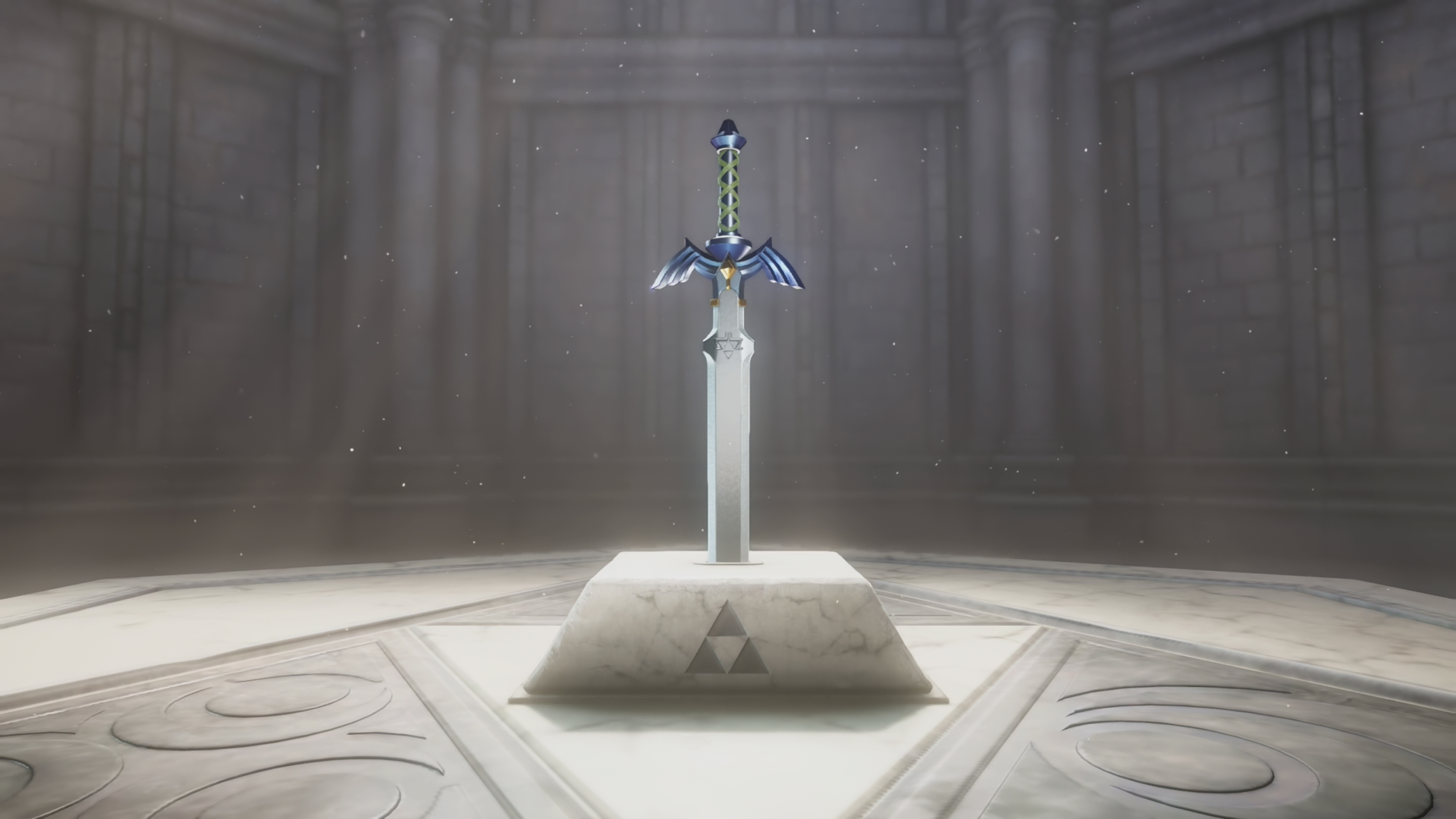
What I can say, however, is that what Zelda: Ocarina of Time offers, the more traditional approach if you will, is at least as fantastic. I love its well-designed puzzles, hunting for keys, solving riddles, and finding a specific item for the particular temple I am in. I love that it is more linear in both how you progress through the game and in how its story is presented. I think this series has always managed to vary and complement such things in an absolutely perfect way, and even though Zelda: Ocarina of Time is obviously an immortal classic—I also hold several new games in the series just as high. What becomes clearest here for my own part is not which concept works best for the game series as a whole. Rather, it is that Ocarina of Time as a game—it works exactly as well now as it did then—before those other experiences had even arrived.
Because then it becomes clear that it is not just about nostalgia. It is obviously impossible to ignore how complete this actually is as a pure adventure game. It scales down so much of this game series’ absolute core to something so enormously appealing and fundamentally quite simple. This also makes it so enormously fun to play. Some might have already glanced at the rating below and thought, “No no, you’re wrong. This game is definitely a perfect score”—and yes, I agree. As a gaming experience, it definitely is. It was then and it is now. There is not much, if anything, that feels out of place or actually bad at all. Experiencing this is absolutely fantastic. The only reason I am not giving it the highest rating is really only because I would have wished that as a remake it was slightly expanded. Not much, but still a little bit.
In the winter of 1998, everything really revolved around The Legend of Zelda: Ocarina of Time for my part. I counted down the days before release by changing the background on the family computer every day during the last months. I nervously awaited the review in the gaming magazine Super Play, and when the game arrived, my brother and I sat and played it for over twelve hours without interruption. I knew that millions of other players worldwide were doing the same thing. But their experiences were not shared with me at all back then. For better or worse. The world looked completely different then than it does today. Social media obviously didn’t exist, and what others thought about the game only really became clear several years later when one understood the impact it actually had. When things turn into history.
Now it is enough for me to start my phone and open any form of social media to take part in everyone’s experience with this game. On my console, the friend list is full of people sitting and playing it. Some for the first time and some anew. It is also somewhere here that I become aware of two strong things that make this experience a little extra powerful. Into something very special.
This is then some players’ first proper encounter with Link, Zelda, and Ganon. They climb up Death Mountain toward Goron City, they follow the music through the Lost Woods, and they get to ride across Hyrule Field on Epona—for the very first time. They do all those things that I also once did for the first time. The second thing is that it has been many years since I saw a world of players unite like this around something. The closest comparison I can recall is actually how Animal Crossing: New Horizons had a similar impact during Covid. When it felt like everyone gathered around one and the same experience.
These things in themselves, but above all how fantastic The Legend of Zelda: Ocarina of Time is as a game, are all components in themselves that prove what an incredible masterpiece it truly is.
How it became timeless then, 28 years ago—and how this magical recreation will become so for a new generation.
Review Highlights: Q&A
What kind of visual improvements does the remake offer?
The Legend of Zelda: Ocarina of Time provides an adorable fairytale aesthetic with class-leading lighting, refined environmental textures, and expansive vistas, despite some plasticity in certain character faces.
Does the remake add voice acting and new music?
Yes. Cutscenes feature voiced characters, with the option for Japanese voice acting while Link remains silent, accompanied by bombastic orchestral arrangements of the classic soundtrack.
How difficult is the gameplay?
The challenge is very easy. Smooth and responsive controls combined with familiar temple puzzles and boss patterns mean navigating obstacles requires little effort.
Are there new areas to explore in Hyrule?
No. The environments closely replicate the original layouts, leaving areas like Hyrule Town feeling somewhat small and empty without expanded buildings or extra mini-games.