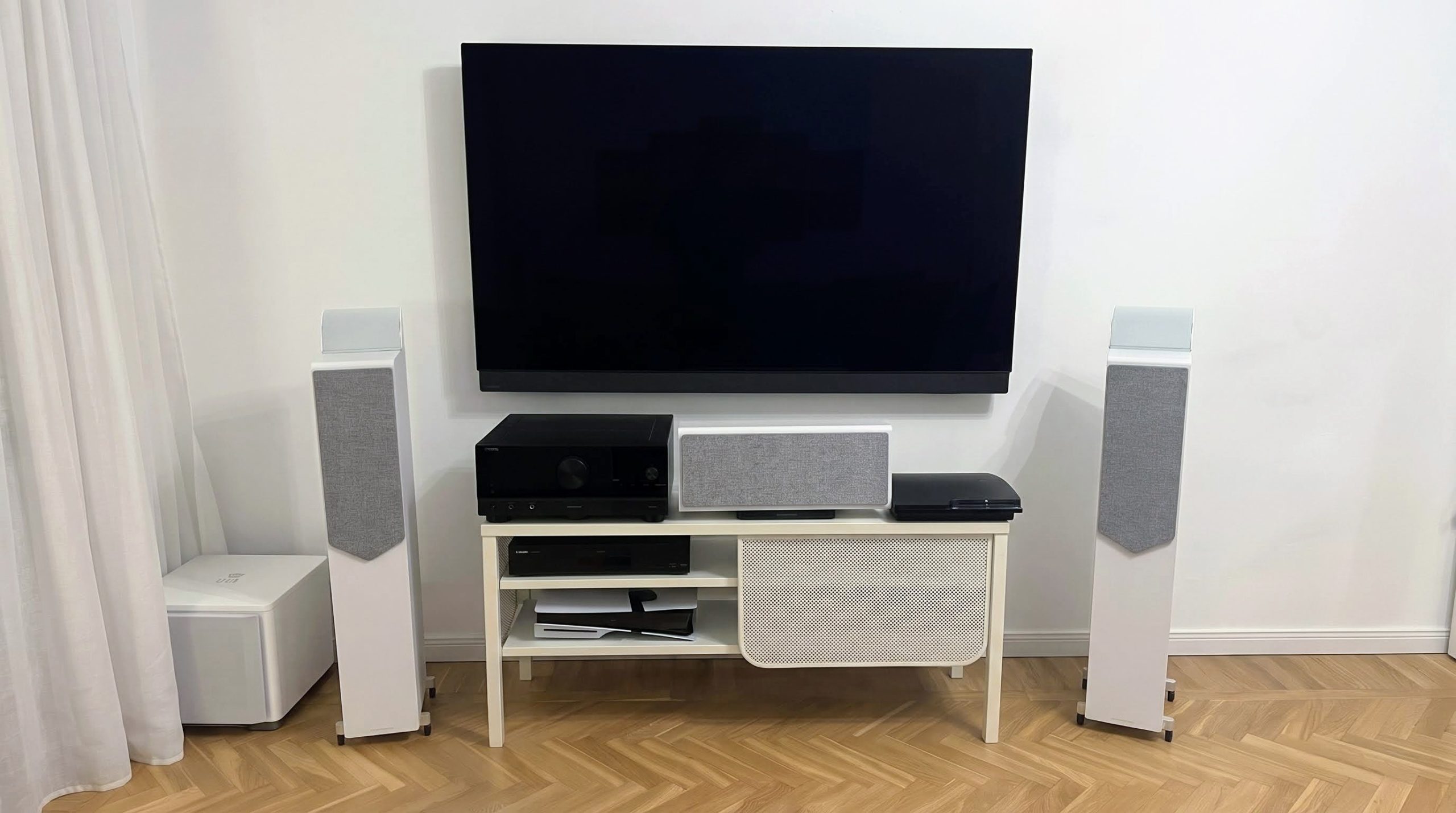

TL;DR
The 307, 309, 100 och HT1003/mkII from Acoustic Energy + REL is a 34,000 kr surround speaker system. It excels at fast, detailed playback, clear dialogue, and tight bass. However, the speakers demand a powerful amplifier, the subwoofer lacks app control and DSP, and its Auto Standby mode fails to wake reliably. It suits movie and music enthusiasts with high-current receivers.
We humans may be visual beings above all else – impressions we take in through our eyes activate about half of the brain’s cortex and up to 125 million receptors in our eyes, where we also have the majority of our sensory receptors in general. And no one can deny the pleasure of experiencing a movie, a TV series, or a really good game on an excellent home cinema image, such as Panasonic OLED flagships, preferably in as large a screen size as is physically possible. But, as I have pointed out before, sound is the largest part of an audiovisual experience (George Lucas says “over 50%”, some media researchers say up to 70%). Why so? Well, while images are processed via the brain and we primarily understand what we see, sound hacks our intellectual gatekeeper and goes straight into our nervous system and thus our emotions. This is why we can experience sound so strongly; tears or goosebumps from beautiful music, or complete anger at a persistent, annoying noise. Certainly, we can be moved by a beautiful, painted work of art, but it is primarily information and observations like “oh, how detailed or lifelike this is…” that produce that effect. Sound, on the other hand, is emotional and psychological. If we add a faint, rhythmic thumping or a creaking sound in the dark room we are in, our body reacts immediately with fear or tension – long before we have time to think. Sound dictates how we should feel about what we see.
To experience great sound we need, in addition to hearing ears, a transmitter of the sound. Headphones are a popular product category with a wide range of uses both on the go and to avoid disturbing those around us. But – let’s be honest – nothing beats a real speaker setup in a home cinema system that hits you right in the chest with sound waves that can even make your pant legs flap from the bass! (yes, my neighbors love me!)
For several years, we at senses have been very pleased with the Canadian Paradigm which we have used as reference sound here at the office. And even if development in speakers does not move at the same, breakneck pace as other tech and electronics, it doesn’t stand completely still either. New designs and smarter, better components are constantly being developed. Today’s review is a home cinema package from the venerable British brand Acoustic Energy with a subwoofer from their compatriots REL Acoustics.
Is this the best home cinema sound you can get today for under 35,000 SEK?
Warmth, clarity, and punch
The Paradigm speakers we have used as references until now came in a piano white finish once upon a time. Over the years, this has unfortunately yellowed – something we couldn’t have known at the time we wrote the test. This admittedly does not affect the function, they still sound just as good, but when you choose white, you often have an interior design thought behind the color choice, and when the speakers yellow to varying degrees, the impression naturally becomes somewhat more withered. Acoustic Energy (hereafter AE) also offers their speakers in piano white, in addition to piano black and the – slightly more expensive – walnut color choice. And this is in a different, more matte color technique than Paradigm. It’s a stylish set of speakers we’re talking about here (we again chose to test in white):
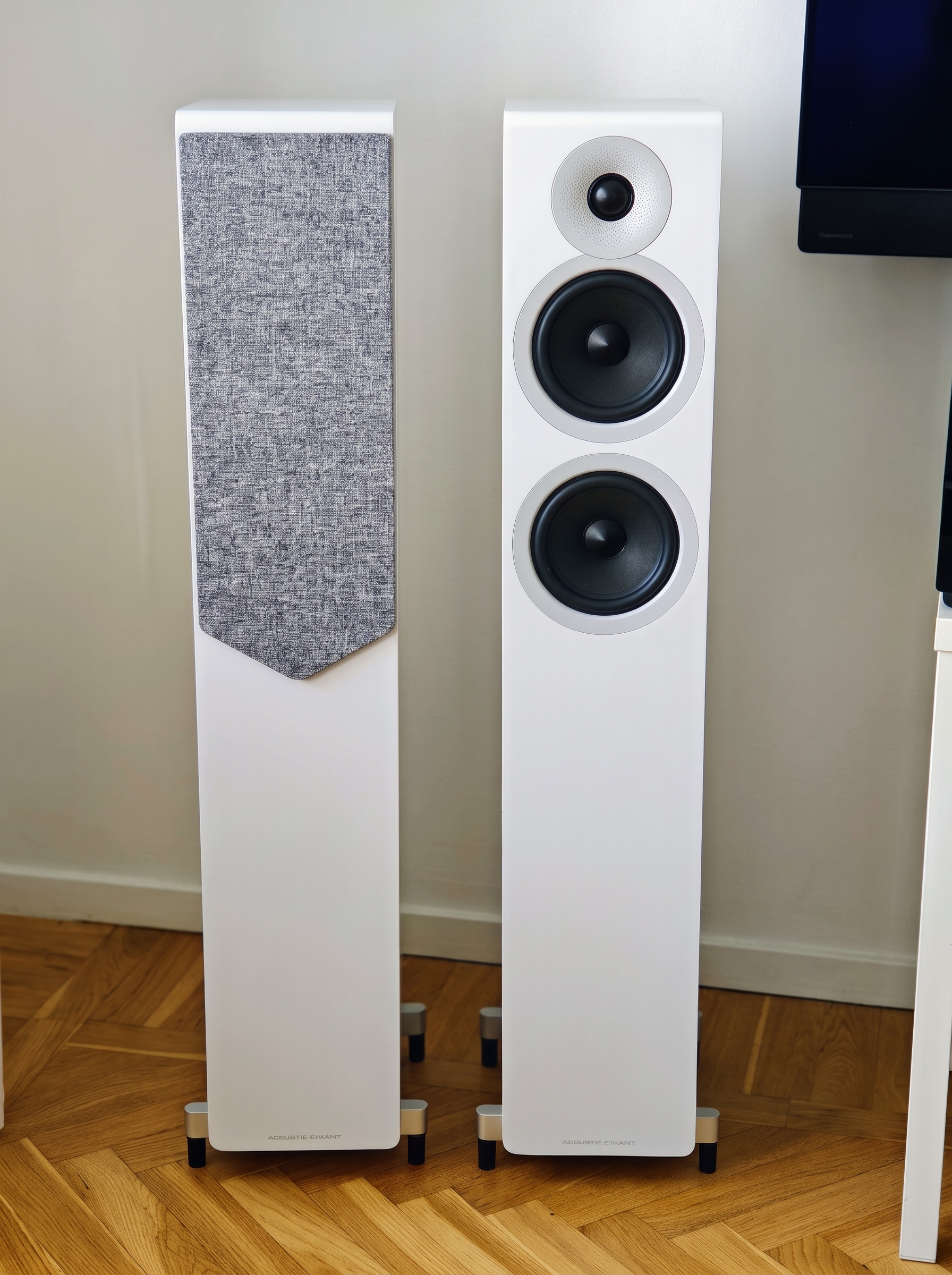
The AE309 Fronts
All speakers from AE are generally slightly to much smaller and slimmer than their Paradigm counterparts. The fronts, AE309, feel almost majestic in their rounded yet minimalist clean form factor, with grey speaker grilles that are easily removed and attached thanks to magnets. Our suggestion – if you don’t have children or pets that might crush the brittle speaker cones – is that you protect them for everyday use but remove the grille when watching movies and listening to music, to get that little extra level of detail. They cost a bit more, even adjusted for inflation since 2019, compared to the fronts from Paradigm – 16,000 SEK per pair, versus 10,000 then and about 8,500 for Paradigm today. But there is also an audible difference in sound reproduction. AE309 delivers exceptional speed and timing, with razor-sharp transitions that make them fantastically detailed for acoustic music, jazz, and audiophile listening in stereo. They require a bit more muscle from your amplifier, but if the resources are there, they take good advantage of them (we still use Yamaha AVENTAGE RX-A6A as a reference). The midrange is neutral and well-balanced. The heavy, internally mass-loaded MDF cabinet construction provides impressive depth and extremely well-controlled bass that goes all the way down to 33 Hz in the updated Mk2 version. Paradigm 6000F on the other hand plays slightly louder, is significantly easier to drive on simpler amplifiers, and may suit those who want to fill a large room with movie sound at a more attractive price.
But overall, the AE309 is undoubtedly worth the higher price tag they command.
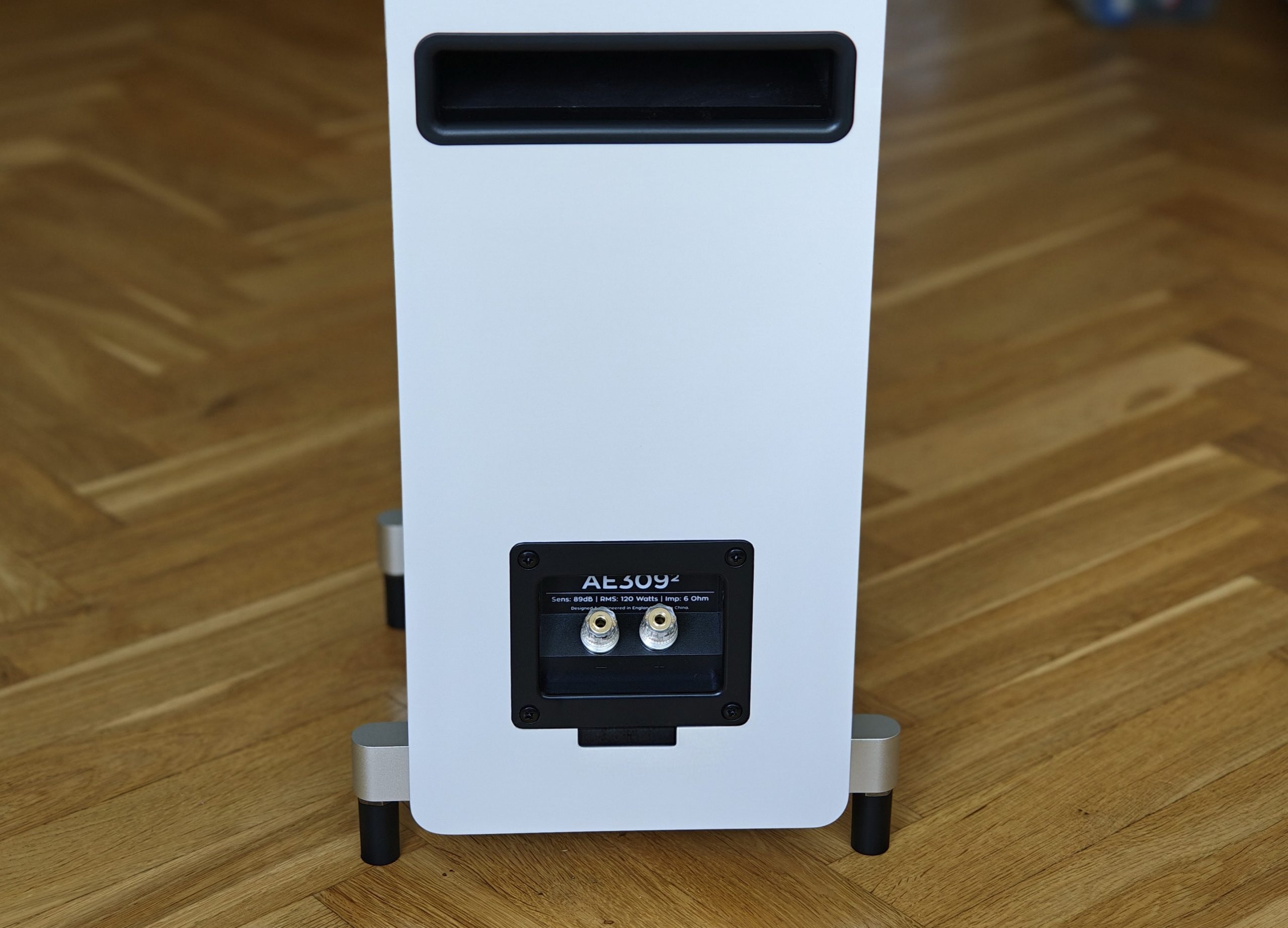
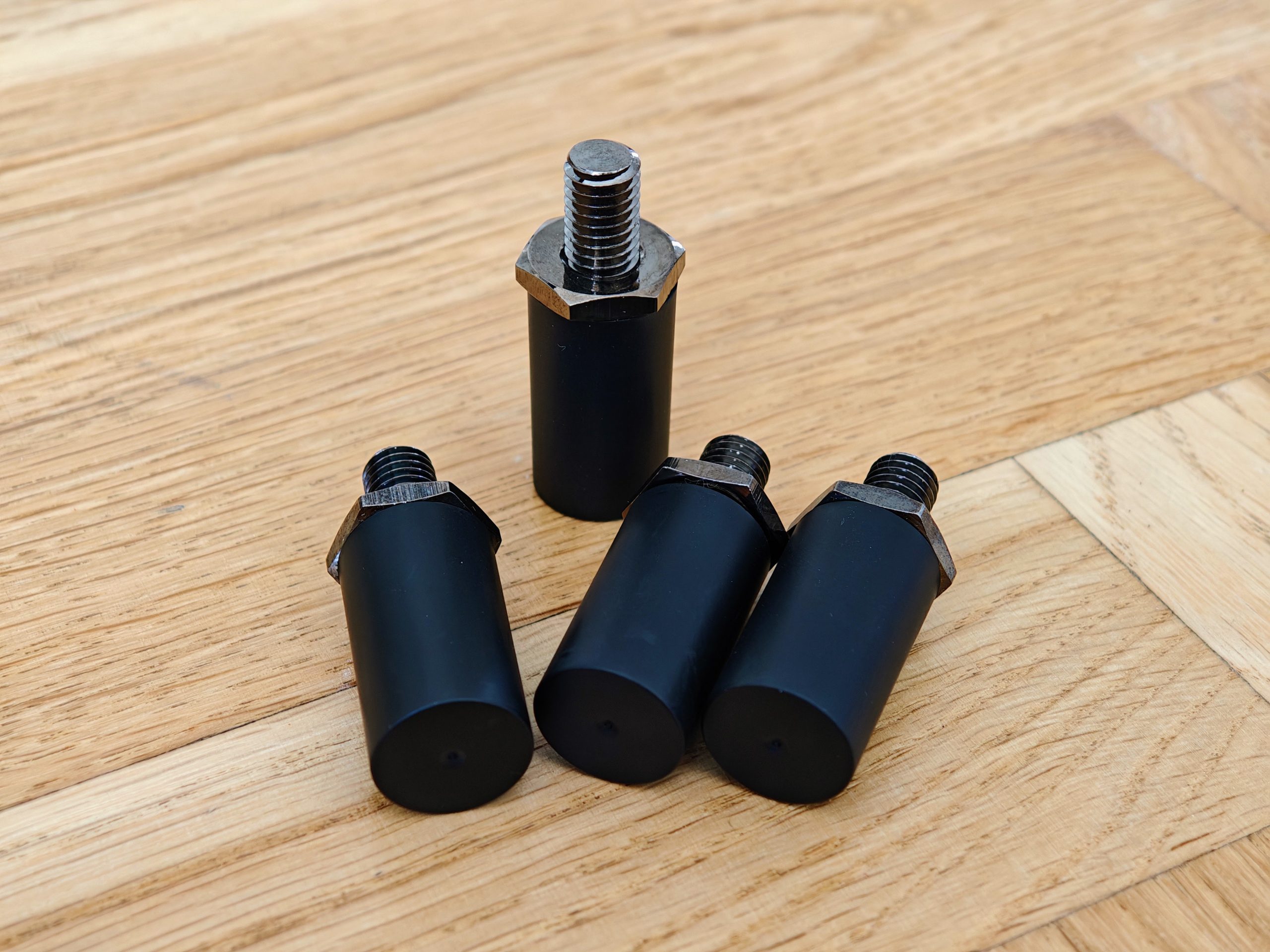
There are also style points for the fact that the AE309 is delivered with foam plugs (if you are forced to place them near a wall) as well as “spikes,” which in this case are nice, wide speaker feet that won’t damage your parquet floor.
The AE307 Center
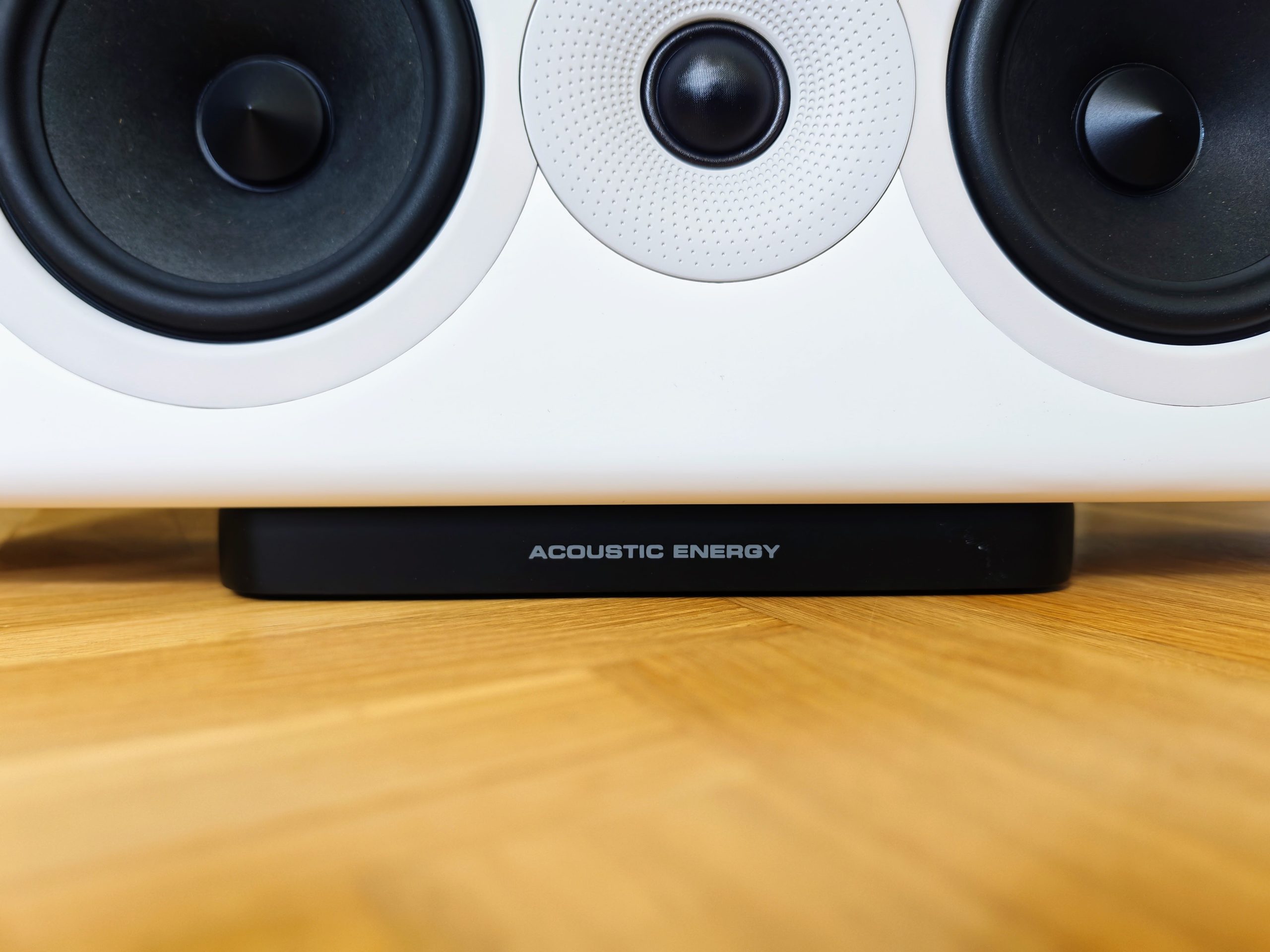
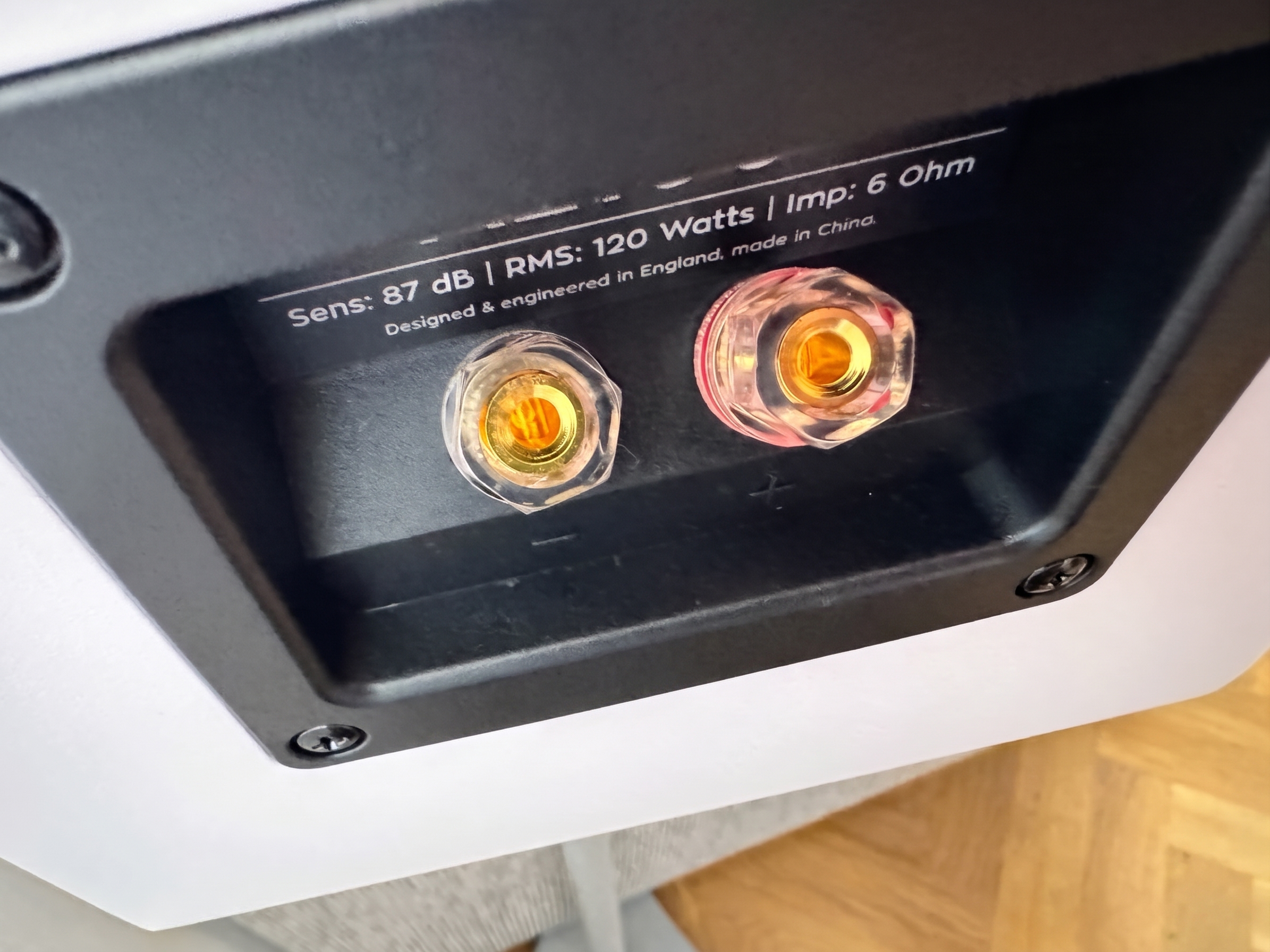
Even the center AE307 is slimmed down and much thinner than what one is normally used to, obviously intended to be easily wall-mounted (mounting kit included) if the conditions are right, but can just as easily be placed on a stand (the stand costs about 600 SEK extra) and placed against a surface. Dialogue is usually what most people are “bothered” by in the mixing of home cinema movies – that it can become boxy, muddy, or disappear into sound effects and background music. It is therefore gratifying to immediately note that speech generally sits like a crisp layer of frosting on top of the audio mix with the AE309. Even on a sound mix of lower quality, such as Netflix’s stream of Hayao Miyazaki’s classic Laputa (Castle in the Sky), we are embraced by the music and sound effects, while not a syllable of the dialogue is lost (even on the Swedish dub, which usually tends to be simpler). Once again, the focus is on lifelike reproduction and timbre matching. The dual 130 mm ceramic aluminum bass drivers (the same material as in the AE309) provide an extremely clean and neutral character, which still feels “fun” to listen to. The bass digs down to an impressive 42 Hz, giving male voices a natural, undistorted chest resonance without becoming “boxy.” This center also requires a good, high-current receiver to truly bloom (89 dB sensitivity at 6 ohms). Acoustic Energy has a technology they call WDT (Wide Dispersion Technology) which can be described as a waveguide around the tweeter. This technology explains why the sweet spot on the sofa becomes so wide and why the dialogue holds together so well throughout the room.
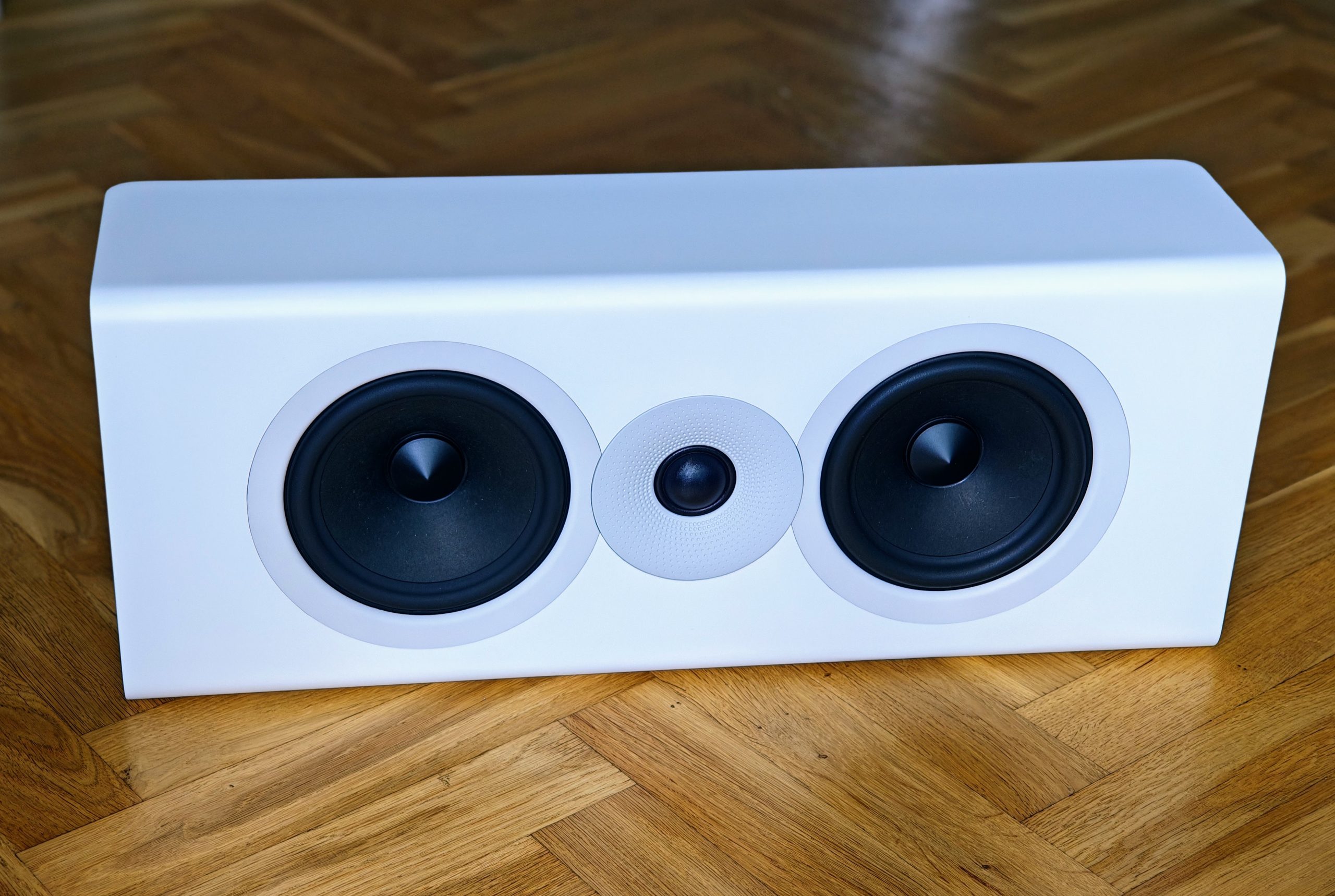
If we compare it with the Paradigm Monitor SE 2000C, which costs about half as much today (2,200 SEK vs 4,200 SEK for the AE307), it is once again volume and the fact that they are easier to drive that stand out in their favor.
But in terms of pure sound, the AE307 is easily worth the extra money here as well.
The AE100 Surround Speakers
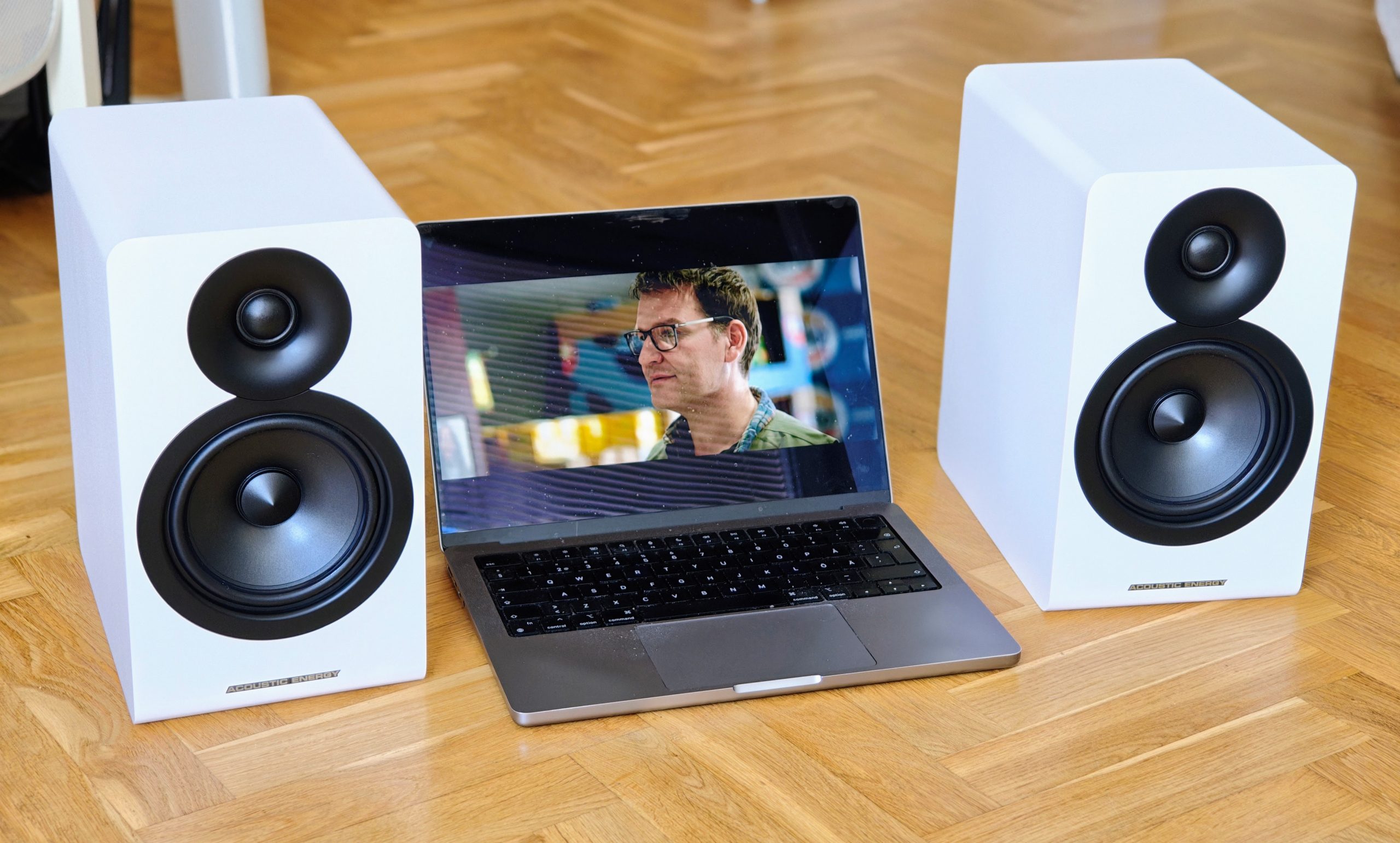
AE100 are actually standard studio monitors (or stand-mount/bookshelf speakers if you prefer those terms) and not necessarily “surround speakers.” Surrounds are often a place where you can save on the budget as these channels tend to be used more sparingly (if at all) in many surround sound mixes. If you have a small, compact amplifier and a tidy desk, you can actually use the AE100 as computer speakers to play sound, if you want to rise above the plastic-fantastic level found in most speaker brands aimed at computer use (the main drawback, however, is that these are passive). For 3,700 SEK a pair, we should compare them against our old references, the Paradigm Monitor SE Atom, which are at almost the same level (3,000 SEK). Here, there is very little difference in price, but the difference is (almost) the greatest: here, musicality, warmth, and rhythmic timing are in focus. With its paper cone and fabric dome, the AE100 delivers an organic, pleasant, and remarkably full sound that you can listen to for hours without listening fatigue. They are fantastic at highlighting the warmth in acoustic guitars, jazz, and voices. The slot-shaped bass port also allows the speaker to be placed relatively close to a back wall and still deliver an impressive, well-controlled bass down toward 51 Hz. The sound mix in the Super Mario Galaxy movie felt so alive, engaging, and immersive when the AE100 was in place! Paradigm Monitor SE Atom are certainly snappy and easy to drive, but they lack that power and clear definition that a powerful amp can provide together with these pairs of speakers.
The Subwoofer – REL HT1003 mkII
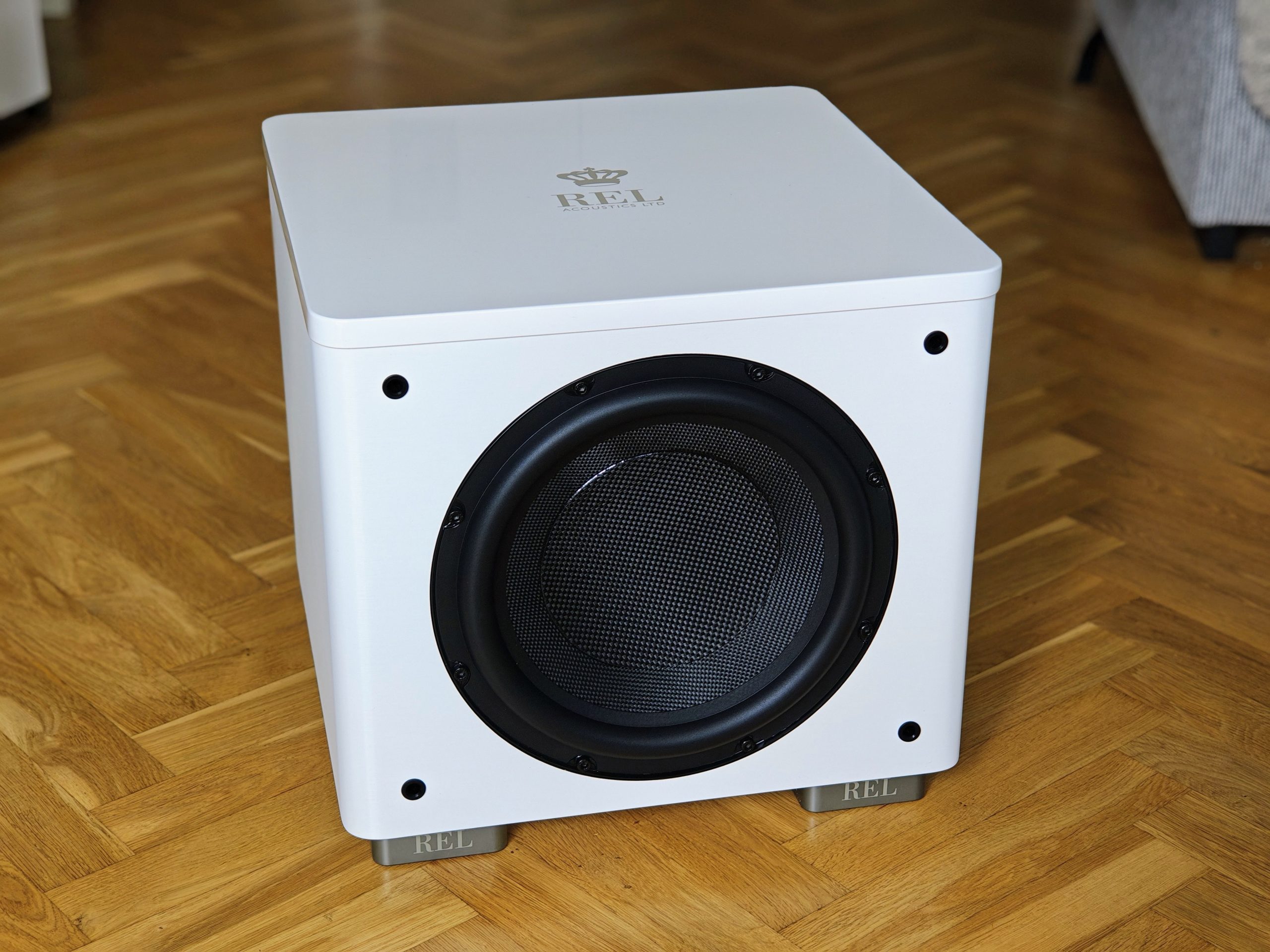
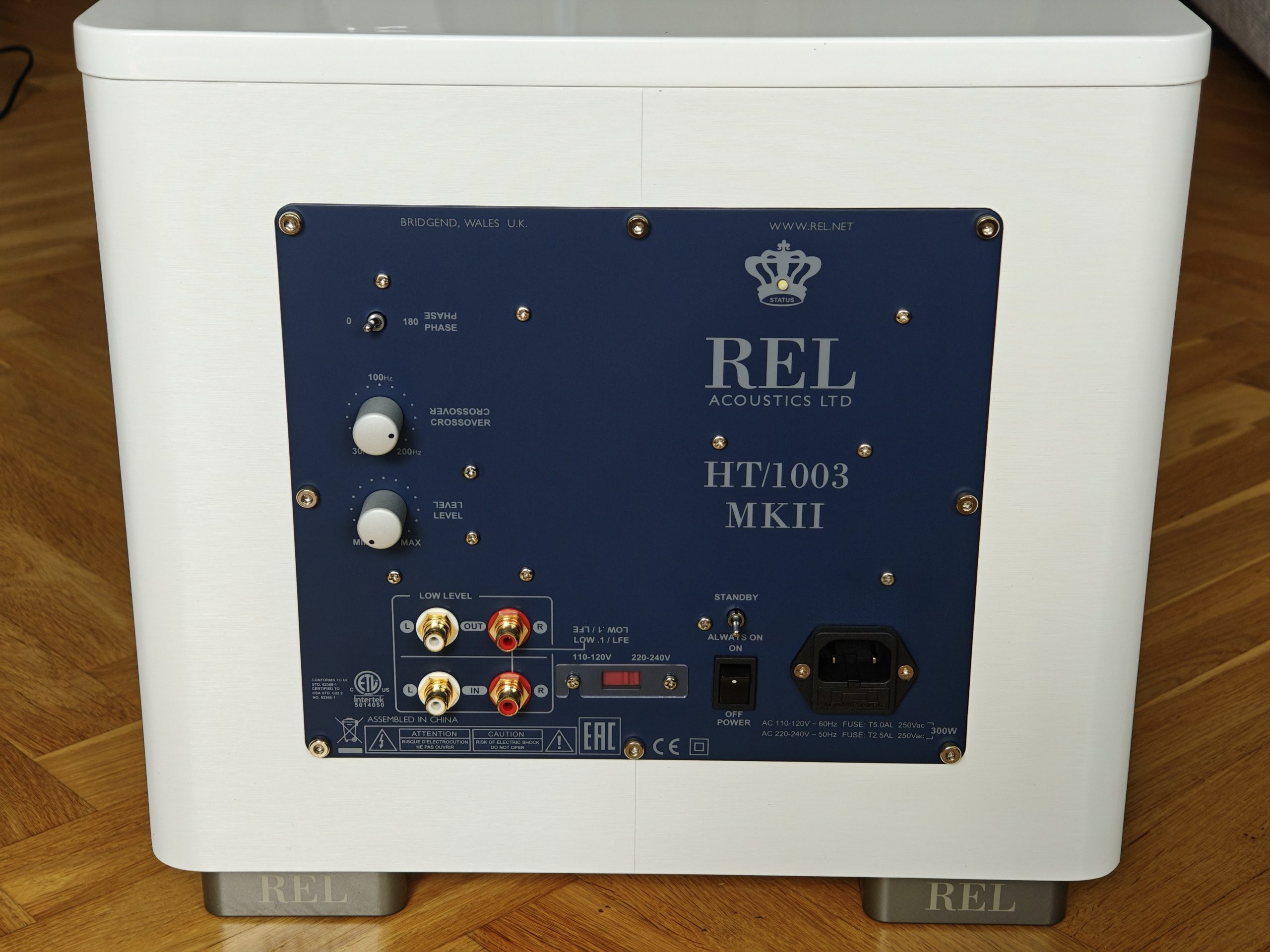
Perhaps the biggest difference in cinema sound, however, is found when we get down to the subwoofer. While the Paradigm Defiance V10 was certainly a giant of a piece that could dig impressively deep and could be easily adjusted via an app, the REL Acoustics HT/1003 MKII is almost a dwarf in size comparison. However, it comes in piano white lacquer which is so appealing. The model designation HT stands for Home Theater, which implies it was created specifically for home cinema experiences, but don’t count out this little powder keg because of its size – there are resources here and things have happened! The sealed cabinet and the super-light CarbonGlas driver mean that the subwoofer is brutally fast and snappy in its strikes. It starts and stops on a dime (though it is recommended that you leave it set to Always On; the Auto Standby mode that is supposed to wake it when needed did not work well at all for us in practice). This makes it extremely easy to integrate with snappy stand-mount or floorstanding speakers to build a seamless soundstage where the bass never lags behind the music or movie sound. It also lacks DSP (digital signal processing), which means zero signal delay. There is no app here to measure and set the sound level; instead, it’s classic knob-turning for things like cross-over. You can advantageously set the crossover to maximum here, so you can set the crossover on the amplifier instead with higher precision. On the receiver, you should then set all speakers to “Small” with a crossover at 80 Hz (or 60 Hz for AE309). This relieves the drivers and minimizes distortion at high volumes, providing more precision. The Paradigm Defiance V10 could rumble on, move more air, and is somewhat easier to set up in complex rooms (thanks to ARC, which can counteract standing waves that cause listening fatigue). But as a home cinema experience, REL’s little box is magical in the opening scenes of, for example, Dune 2 or Blade Runner 2049 on UHD with Dolby Atmos.
The price today is approximately 10,000 for the REL and 5,990 for Paradigm’s sub. The REL is perhaps not objectively 50% better for the price, but it is still the single component that feels like one of the largest, audible upgrades and thus worth every penny it asks for.
Summary: Acoustic Energy + REL – Best home cinema sound under 35,000 SEK?
It is truly uplifting to sit on the sofa and enjoy the combination of Acoustic Energy’s 300 series, together with the 100 series and REL’s HT1003. This is that kind of warm, genuine, and engaging sound that really elevates the experience of both high-quality music and what you see on your display source, whether it’s a cool video game, an epic movie, or a gripping TV series. When you can get this combination for under 35,000 SEK (33,900 at the time of writing to be exact), the package feels hard to beat. Yes, it is 10,000 SEK more than the Paradigm package was seven years ago, but at the same time, prices have increased on everything and the sound quality is simultaneously a significant upgrade, even if the Paradigm setup sounded very good for the money too (a setup you can get for just under 20,000 SEK today).
Budget naturally decides in the end at what level one can afford to land, and expectations must also be adjusted accordingly – AE + REL may not sound 50% better than Paradigm, but it is still a clear quality boost in the sound on all fronts, a boost that once heard makes you not want to go back to anything else again. Yes, you can nitpick and say that in theory, for example, the timbre matching between the AE300 series (fronts and center) with ceramic aluminum membranes and aluminum tweeters – which gives a very specific, fast, and slightly “metallically clean” sound signature – and the AE100 surround speakers – which use paper cones and soft fabric tweeters – is not 100% exactly the same timbre, nuance, or tonal color. And those who prioritize “pant-flapping bass” might get more air moved by a larger subwoofer in a large room than with the REL HT1003 (personally, I prefer better sound rather than physical rumble; you can always add butt-kickers if you love to feel the vibrations). You also need some muscle in your amplifier to drive all this optimally, but my thought is that you probably already have that hardware if you are looking at speakers in this price range. All this, however, is looking for small faults with a magnifying glass on the margins. 34,000 SEK is certainly a sum, but considering this is a sound system you will easily be able to keep for 10-15 years, the cost per year is not unreasonable for the quality you get for the film, TV, and gaming experiences you might use daily. And from someone who goes to many cinemas around Stockholm’s largest auditoriums – this sounds just as good as or even better than several of them, in terms of pure sound quality (the size of the room and the screen at home is something you can’t do much about).
For me, this becomes a clear must-have and the new reference sound at senses.se. I’m already looking forward to sitting down with the next movie or video game, or perhaps taking a quiet Friday night with a Japanese whiskey, enjoying my favorite playlist on Spotify.
Great sound is great emotion.
Footnote: To get Dolby Atmos sound, (at least) two extra speakers are also required for “height” channels (5.1.2). We have chosen to install these as upfiring speakers and they are thus the same speakers as in the previous package, Cornered Audio Ci2, a model that has unfortunately been discontinued, but equivalents should be available for around 2,000 SEK.
Hifi-Agenten sent review units for this test. Senders of material have no editorial influence on our tests; we always write independently with you, the readers and consumers, in focus.
Review Highlights: Q&A
What kind of receiver or amplifier is needed to power this system?
The Acoustic Energy + REL 307, 309, 100 och HT1003/mkII package requires a powerful, high-current amplifier to perform optimally. The AE307 center speaker, for example, has an 89 dB sensitivity at 6 ohms, and the passive AE100 surround speakers need proper amplification to deliver their full dynamics.
How well does the AE307 center speaker reproduce movie dialogue?
Dialogue remains crisp and distinct even on lower-quality audio streams. Equipped with twin 130 mm ceramic aluminum drivers reaching down to 42 Hz and Wide Dispersion Technology around the tweeter, it keeps speech intelligible across a broad seating area.
Does the REL HT1003 mkII subwoofer have an app or automatic setup?
The subwoofer has no mobile app or digital signal processing. Settings such as crossover are adjusted using physical rear knobs, and using the receiver's bass management is recommended. Additionally, leaving the power set to Always On is advised because the Auto Standby feature fails to wake reliably.
Does the system support Dolby Atmos directly out of the box?
This setup does not include dedicated height channels for Dolby Atmos. Achieving a 5.1.2 Atmos layout requires adding at least two extra height or upfiring speakers.