TL;DR
The Hunger Games: Sunrise on the Reaping is a prequel film following young Haymitch Abernathy during the second Quarter Quell. The story delivers engaging entertainment, strong leading acting from Joseph Zada, and a dark, sad narrative. However, it copies past series formulas, tones down the violence, and suffers from poor CGI animals and overacted characters. Devoted series fans will love it, while viewers previously lukewarm on the franchise will find it merely okay.
Hunger Games. This phenomenon based on the books by Suzanne Collins. I remember liking the first movie when it came out in 2012. But something was missing. For one, the acting was mediocre, and I was likely bothered by it being dark and brutal—yet still censored for the sake of the age rating. I’m not saying it has to be super bloody, but it can take away a certain edge. Gary Ross directed the first one. Francis Lawrence, who is behind Constantine (which is supposed to get a sequel!), has directed the following five. The new one, Hunger Games: Sunshine on the Reaping is, just like the last movie The Ballad of Songbirds & Snakes (which I remember very little of), a prequel.
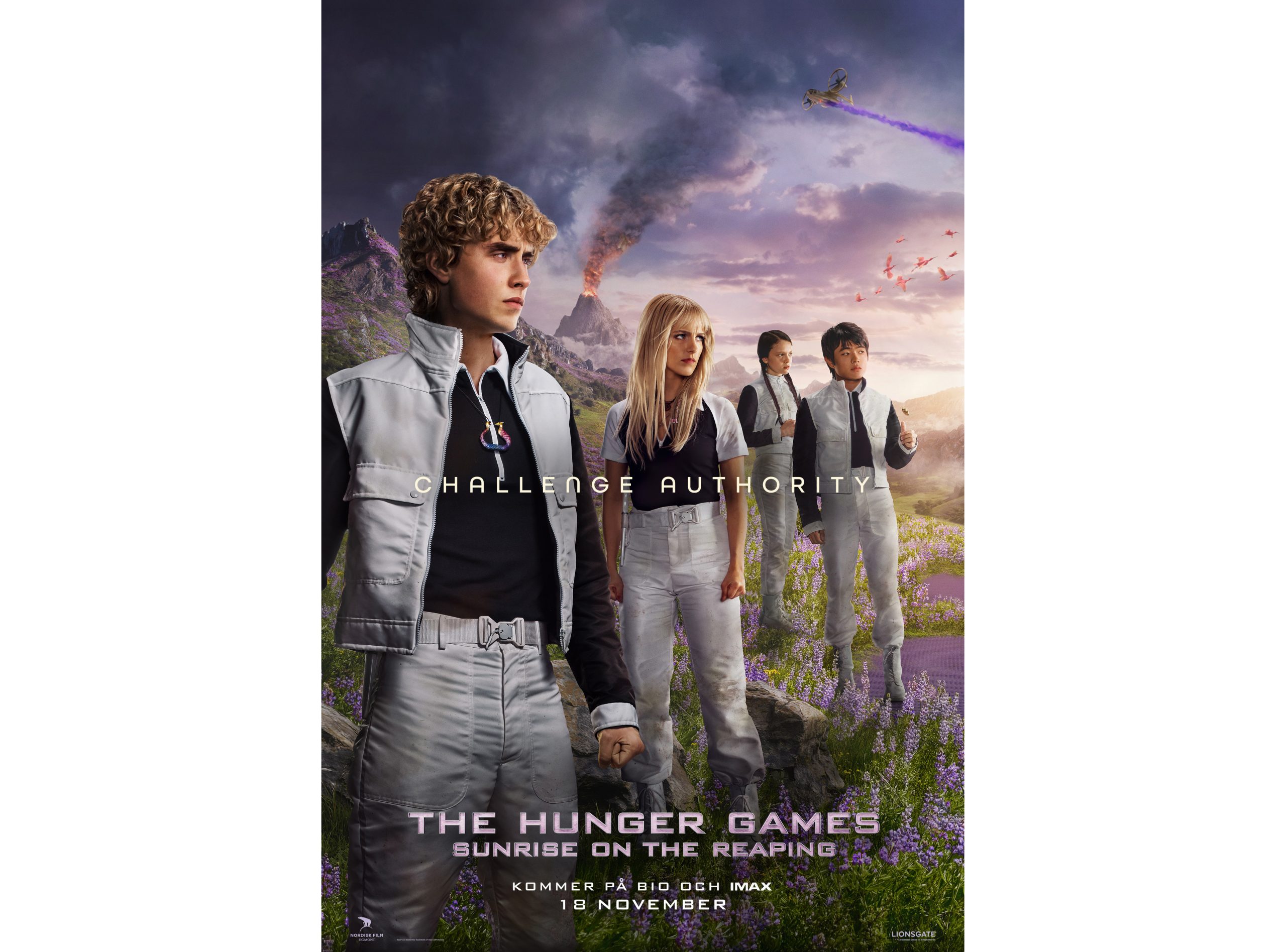
Plot: We follow sixteen-year-old Haymitch Abernathy from District 12—Katniss and Peeta’s future mentor. The story begins on the morning of the reaping for the 50th Hunger Games, also known as the second Quarter Quell: the biggest games to date, with twice as many tributes. The plot takes place in Panem 24 years before the events of Katniss Everdeen’s original trilogy. We follow Haymitch into the arena, where he forms an unexpected alliance with Maysilee Donner, the other tribute from District 12, and joins a group determined to challenge the Capitol’s power under President Snow. As the competition progresses, Haymitch risks everything to overthrow the games from within the arena, thereby sowing the seeds of the rebellion that will change Panem forever.

I mentioned that Lawrence directed the last five, meaning all except the original. I have fluctuated a bit in my opinion. I like the core idea; they are well-made and have many good ingredients, yet I have felt that something was missing in all of them. Possibly one of the Mockingjay films was a notch better than the previous ones. For one thing, I haven’t quite been able to let go of the fact that they are quite toned down, even though I know and understand the reason. It makes it feel a bit too tame. Like watching a slasher where all the brutality happens off-screen. No, not quite, but I think you understand. But there is something with the pacing too. I seem to recall that the first movie felt a bit too drawn out at times. That is the case here as well, even if the tempo is mostly high. But we’ll get back to that.
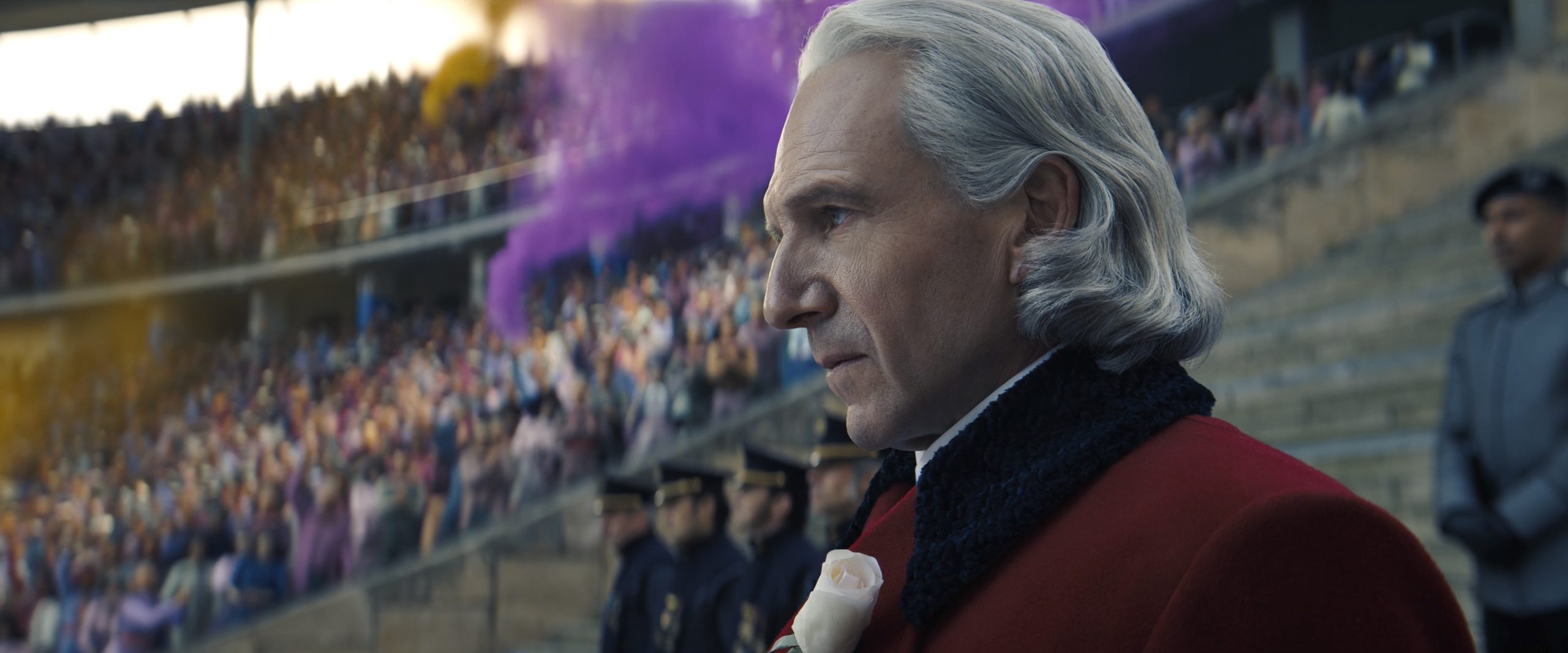
The cast includes Joseph Zada, Ralph Fiennes, Jesse Plemons, Elle Fanning, Glenn Close, Kieran Culkin—and our own Edvin Ryding in a small, slightly silly role. This is my first acquaintance with Joseph Zada. He plays the role of the young Haymitch very well. But is he really supposed to be sixteen? He looks more like twenty, but that is a detail I can live with. The acting is generally good. But I can be annoyed by all the extravagant, colorful characters we encounter behind the production. I understand the thought behind it, but it becomes so overacted and silly that I’m almost sitting there feeling embarrassed. In this case, it mainly concerns Glenn Close and Billy Porter’s characters, where it feels like they are going all out with absolutely everything. Some might like it. Me? Too grumpy.
What about the plot and everything around it? I’ll start by saying that there is nothing wrong with the pacing, even if I never think it becomes truly super exciting. But the reason for that is simple. If I had been younger, or if this had been my first Hunger Games movie, I would likely have felt very differently. The problem here is that the concept is reused almost to the letter. The buildup with the selection of participants, tearful goodbyes, the preparations, the presentation of obvious antagonists—and the fight. Okay. Here they make some deviations that I won’t go into to avoid spoilers, but there is still far too much that feels familiar. Almost generic. It is still engaging and interesting—and it doesn’t feel quite as long as it is—nearly two hours and forty minutes, so to a large extent it still works in terms of entertainment. We don’t really have time to get to know some characters we are expected to care for. At the same time, I like the chaos and the fact that anyone can actually die. Some of the death scenes, however, feel a bit too similar.
But as mentioned. There isn’t much new under the sun and even if they manage some differences, it’s a bit boring that there is—so—much copy-pasting. But Haymitch’s fate is anything but happy. It’s dark and sad and still works well as a prequel. One small minus, which I seem to recall from previous films, is occasionally terrible CGI. I’m surprised by how some expensive productions manage to get it really right while others, like this one, don’t at all. This concerns both certain environments that feel plasticky—but primarily the animals appearing in the game. Rabbits, birds, deer—it shouldn’t be very difficult to make them feel a bit more realistic. But enough whining about that. Even if much feels familiar, it works relatively well. I would like to summarize it like this: If you love Hunger Games, you will almost certainly love Sunrise on the Reaping. If you, like me, think the films in the series fluctuate between okay and good, that is probably where you will land.
Review Highlights: Q&A
What is the premise of this film?
Set 24 years before Katniss Everdeen's story, The Hunger Games: Sunrise on the Reaping follows sixteen-year-old Haymitch Abernathy as he enters the 50th Hunger Games and tries to overthrow the competition from inside the arena.
How long is the movie and how does it feel?
The film runs for nearly two hours and forty minutes, but it largely works in terms of entertainment and does not feel quite as long as its runtime.
How is the acting in the film?
Joseph Zada performs very well as Haymitch Abernathy, but the portrayals of extravagant characters by Glenn Close and Billy Porter come across as overacted and silly.
How do the visual effects hold up?
The visual effects are occasionally terrible, featuring plasticky environments and unrealistically rendered arena animals like rabbits, birds, and deer.