TL;DR
Beyerdynamic's new Amiron 100 aims to be a more budget-friendly in-ear headphone compared to the excellent Amiron 300. While it offers a punchy bass and a rich mid-range suitable for casual listening, it falls short in several areas. Key compromises include limited codec support (no LDAC), less customizable controls, and significantly weaker active noise cancellation. The sound profile can also be fatiguing during extended use. If your budget allows, the Amiron 300's superior audio quality, features, and overall performance justify the higher price. Read on to discover exactly where the Amiron 100 falls short and if it's still worth considering.
In July, we tested Beyerdynamic Amiron 300 and found that the company has learned a lot since the Free Byrd kicked off their in-ear journey. The Amiron 300 was just a notch away from perfection, impressing in terms of sound, controls, and comfort. A truly great pair of earbuds without any obvious weaknesses whatsoever. At launch, they cost around 2,900 SEK, placing them just below headphones like the Technics EAH-AZ100 or EAH-AZ80.
And much like Technics, Beyerdynamic offers a more affordable variant that doesn’t pack as much finesse and performance: the Beyerdynamic Amiron 100. And if there is one thing we enjoy here at senses.se, it is comparing the flagship to the leisure craft. So, let’s dive into the differences between Beyerdynamic’s two in-ear models and see if the 1,000 SEK price difference is worth it.

(Photo: senses.se)
First Impressions: Beyerdynamic Amiron 100
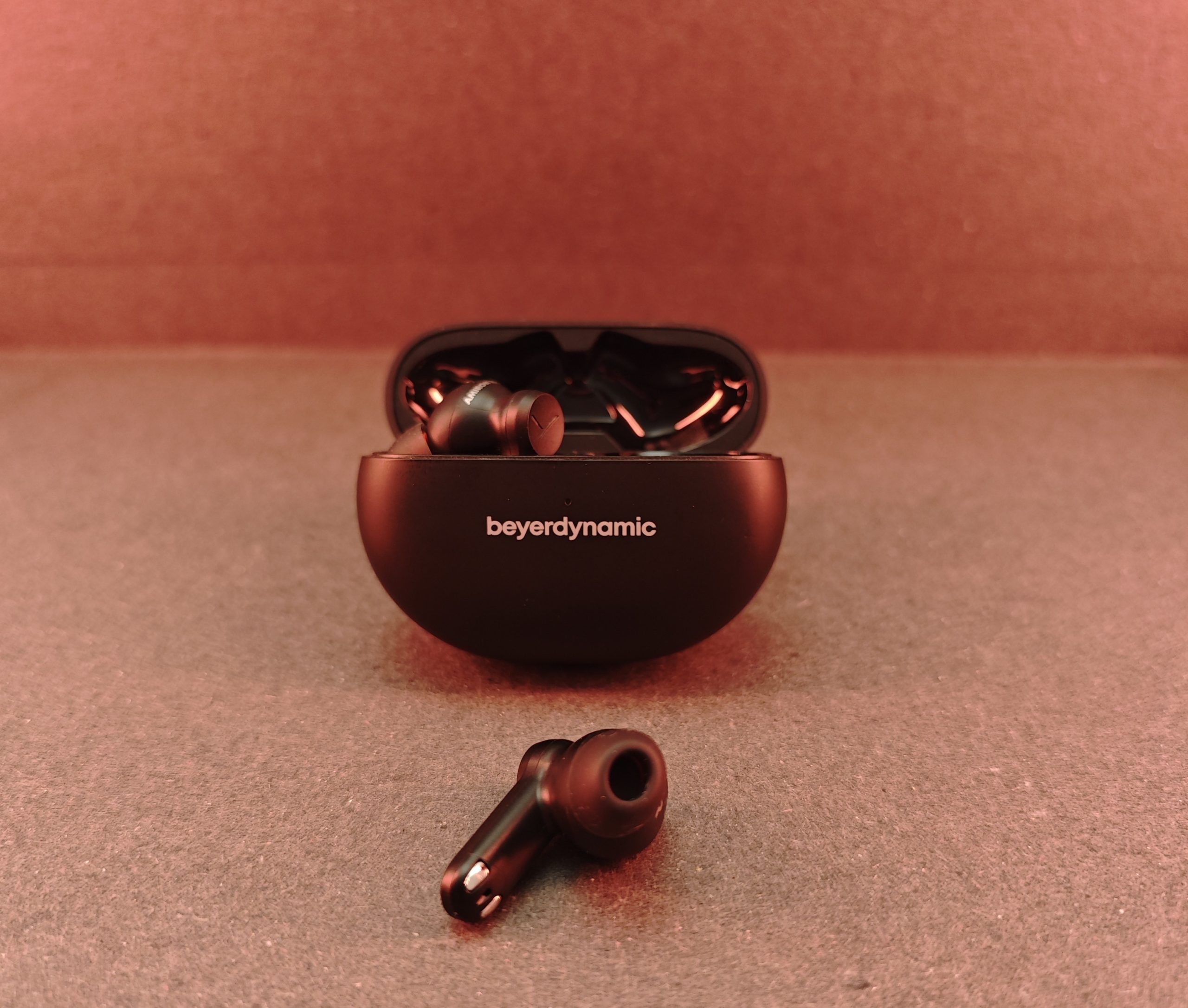
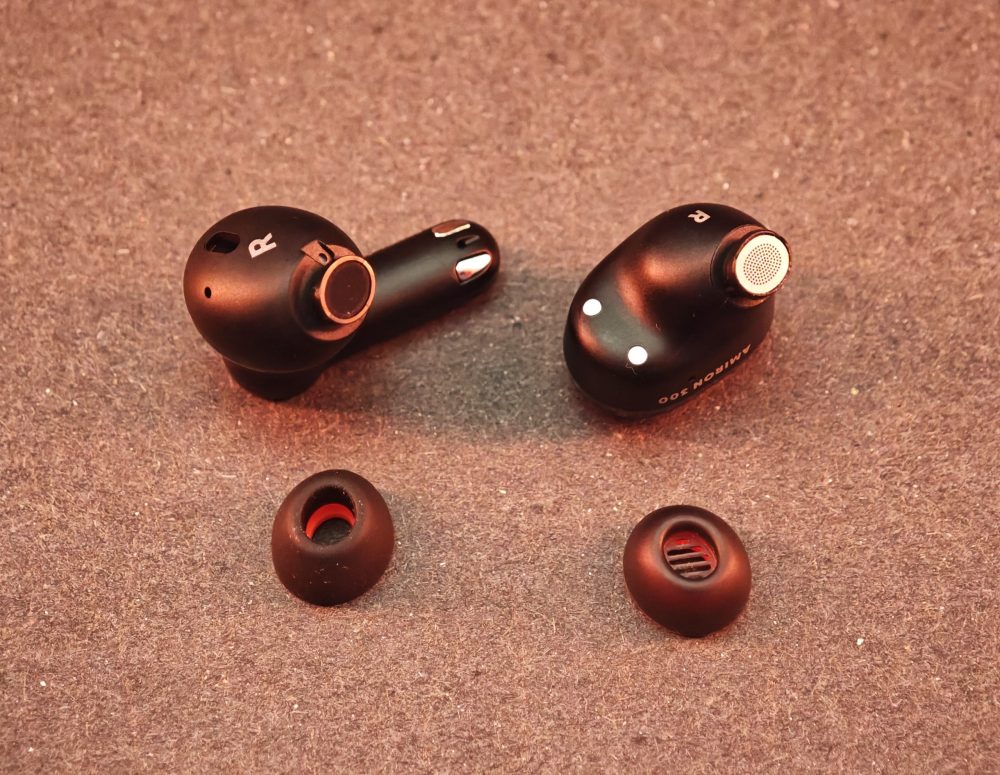
For some reason, Beyerdynamic has chosen to give the Amiron 100 a case that in no way resembles the Amiron 300, in either feel or shape. Not even the logo was allowed to grace the cheaper model. The design of the earbuds also more closely resembles a pair of Anker Soundcore Liberty 4 NC or a pair of AirPods. The LED, which Beyerdynamic elegantly tucked away on the back of the Amiron 300, is located on the front here, which might be considered more traditional. They pair quickly and easily, and then we’re good to go. After the earbuds have updated to the latest version, we curiously open the app to see if it feels familiar.
(Photo: senses.se)
Software Differences
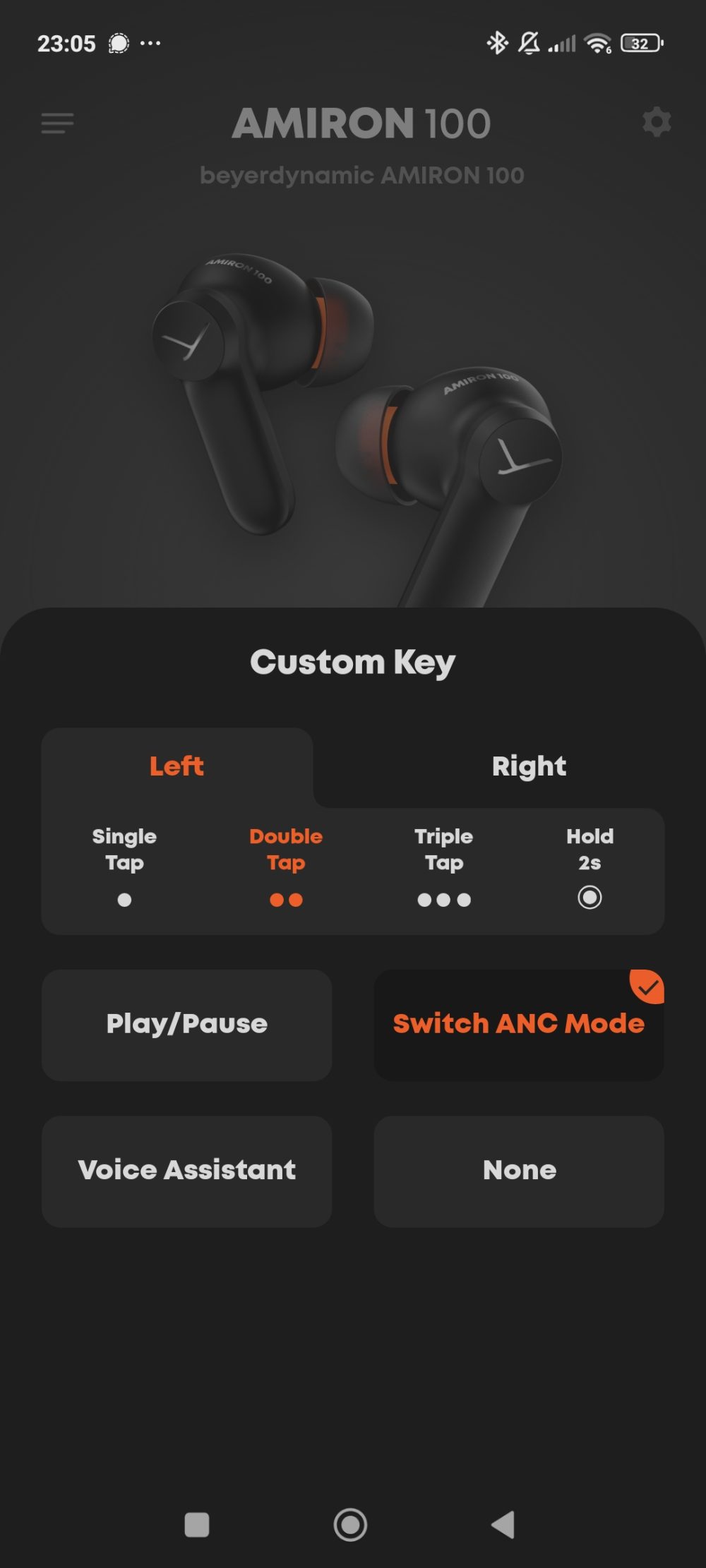
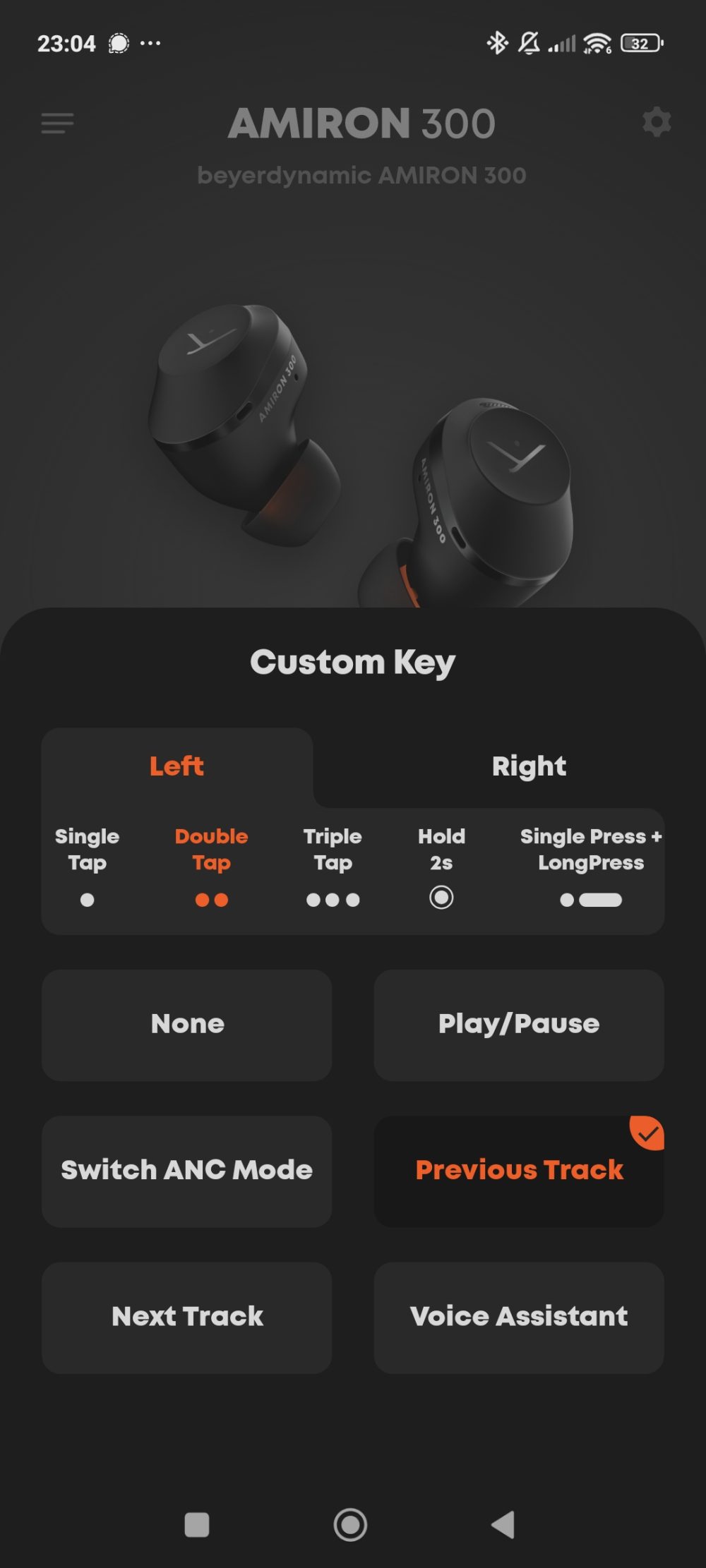
For the most part, things are familiar, but as we start going through the various features, we find differences immediately. To begin with, the ability to customize the controls is limited, and for some reason, Beyerdynamic has chosen to reshuffle what the different buttons can do. For example, you can no longer set a double-click to skip tracks and must opt for triple-click instead. You also lose access to “single tap + long press,” but we can accept that; some differences are to be expected. What’s worse, however, is that the included codecs are limited to AAC (max 320kbps) and SBC (max 328kbps). In other words, LDAC (max 990kbps and 24-bit/96kHz) has been completely removed—something even Technics’ most affordable model, the EAH-AZ40M2 , didn’t do. And there is no mention of either aptX (max 352kbps) or aptX HD (576kbps). There’s no doubt this makes a difference, but it depends on the circumstances, so we’ll get back to that in the sound experience section.
Hardware Differences
With the Amiron 100, you get slightly lower battery life, but a two-hour difference isn’t particularly noticeable. They are also a few grams lighter and, like the Amiron 300, can be charged wirelessly. However, the frequency range sees a significant cut, spanning 20 – 20,000 Hz compared to 20 – 40,000 Hz. This limitation affects the dynamics. One of the main reasons why a frequency range exceeding the human ear’s hearing capacity is preferred is that headphone drivers tend to distort frequencies near their maximum capacity. By having a higher capacity, this distortion is pushed far beyond the audible range. But as always, the overall soundscape depends on several other factors combined. And for the average listener, the Amiron 100’s frequency range is perfectly adequate.
(Photo: senses.se)
The Sound Experience – Beyerdynamic Amiron 100
The sound is powerful with good bass response, and the rich midrange that can be heard in Daft Punk – Get Lucky comes through with the desired impact. To get a side-by-side comparison, we connected both pairs of earbuds to a Xiaomi 14 Ultra and activated Low Latency mode on both (while disabling LDAC on the Amiron 300, which we already know makes a big difference). The result is that the Amiron 100’s sound profile stands out—but not necessarily in a good way. It feels pushed to the limit and very intense. Nuances and dynamics feel constantly cranked up, unlike the Amiron 300, which provides a nuanced, balanced, honest, and restrained soundscape—when called for.
The powerful sound profile of the Amiron 100 is impactful for a while. Eventually, however, the flaws show through, and the constant “full throttle” approach becomes a bit tiresome. On the other hand, this isn’t noticeable in all genres. Tracks like Trevor Guthrie – This is what it feels like fare well, as does Alok – Headlights. But Alan Jackson – Drive or Apparat – Goodbye feel thin and lack a more developed midrange alongside the limited dynamics. This also affects the soundstage width. So, side-by-side, there is no doubt that if sound is the priority, the Amiron 300 is worth the extra money.
(Photo: senses.se)
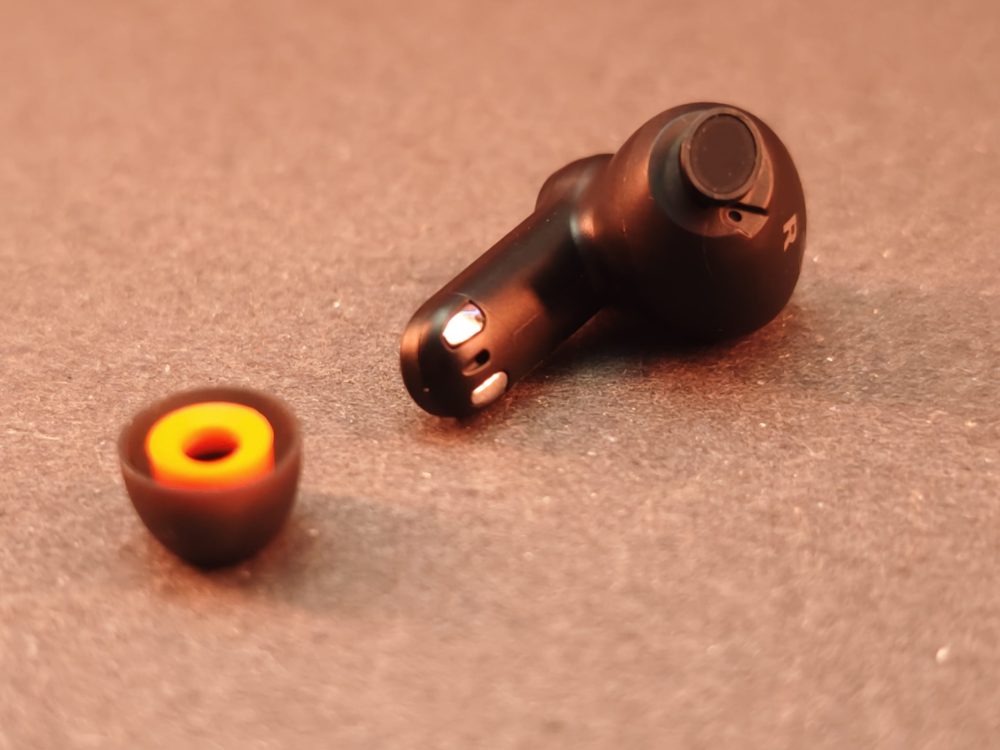
A final part of the sound experience is the noise cancellation, and here too, the Amiron 100 falls short. Unfortunately, it falls quite short; when commuting on the subway, for instance, you find yourself unsure if it’s even activated. A lot leaks through, and perhaps this is also due to the fit. The large bulb right by the ear tip prevents you from adjusting it to a perfect position in the ear, as you can with the Amiron 300.
The Verdict – Beyerdynamic Amiron 100
The average listener will be satisfied with the Amiron 100 and its powerful sound profile. However, it requires some tolerance for the relatively weak noise cancellation, and expectations for great dynamics or nuance should be kept low. But as for punch—you certainly get that.

(Photo: senses.se)
The Amiron 100 has been priced at around 1,500 SEK since mid-August (at the time of writing, Black Friday is in full swing, so they are currently available for around 1,000 SEK), while the Amiron 300 has stayed around 2,000 SEK during the same period. So, we are currently looking at a price difference of about 500 SEK. If you are already prepared to pay 1,500 SEK for the Amiron 100, we recommend that you actually pay the difference and aim for the Amiron 300 instead. The Amiron 100 is simply too expensive for what you get. The Amiron 300 is largely without weaknesses, is better in every way, and also received a 9/10 in its own review here on senses.se—which is not particularly common.
We all have different budgets, of course, and if your limit is 1,500 SEK, there are other strong candidates, such as the EarFun Air Pro 4+ for 750 SEK using senses.se’s own link, or the Anker Soundcore Liberty 4 NC, which may be a year or so old but currently costs about 700 SEK. It becomes difficult to recommend the Amiron 100 under the premises described above, despite the Beyerdynamic name on the case. And perhaps there’s a reason why the logo wasn’t included.
Beyerdynamic sent review samples for this test. The provider of the material has no editorial influence on our tests; we always write independently with our readers and consumers in focus.
Review Highlights: Q&A
What are the main differences between the Amiron 100 and 300?
The 100 lacks LDAC, has weaker ANC, and lower battery life.
Which Bluetooth codecs are supported by the Amiron 100?
It supports AAC and SBC, but lacks LDAC and aptX.
Is the active noise cancellation effective?
No, it is relatively weak and lets a lot of noise through.
How does the sound quality compare to the flagship model?
It is powerful but lacks the 300's nuance and dynamics.
Does the Amiron 100 support wireless charging?
Yes, the Amiron 100 case can be charged wirelessly.
How is the battery life compared to the Amiron 300?
It offers slightly lower battery life, about two hours less.
Is the Amiron 100 considered a good value for the price?
No, the reviewer recommends paying more for the Amiron 300.
Can you customize the touch controls in the app?
Customization is limited and lacks some gesture options.
