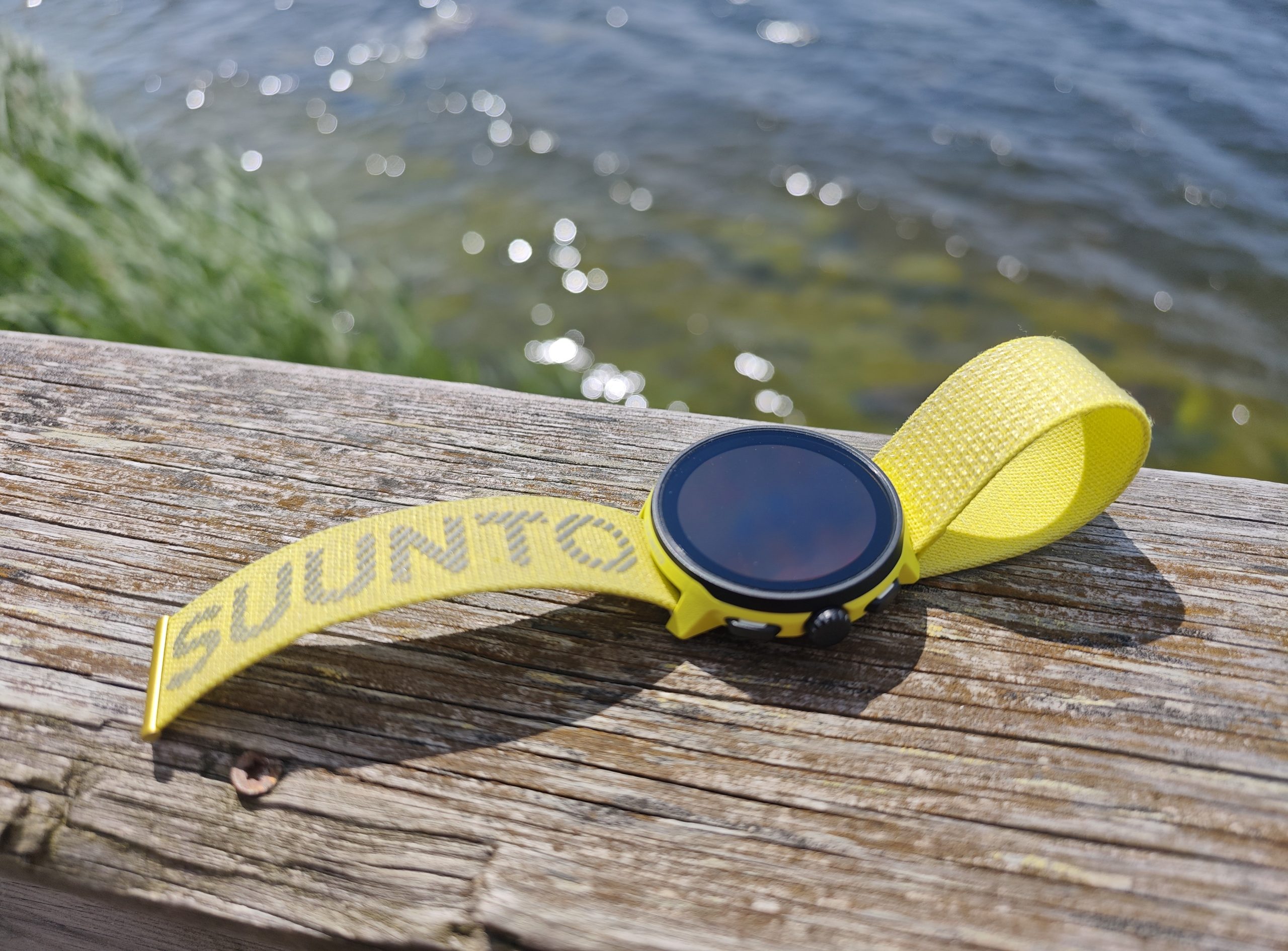

TL;DR
Suunto Run is a feature-rich training watch that excels in performance and value, despite its running-centric name. Boasting an impressive 5-6 day battery life, dual-frequency GPS for accurate tracking in any environment, and 34 versatile sports modes (including clever features like Ghost Runner and automatic anomaly detection), it's built for serious athletes. While it lacks WearOS and advanced smartwatch notifications, its comfortable design, focus on training data, and the comprehensive Suunto app make it a compelling option. Discover if its training prowess is the perfect fit for your active lifestyle!
In this review, the brand Suunto makes its debut here at senses.se. Suunto, as a brand, has a solid 85-year history as an adventure brand and is today largely associated with high-quality, fitness-focused smartwatches, diving products, headphones, and compasses. In 2022, Suunto was acquired by the Chinese company Liesheng, but production and brand management are still handled in Vantaa, Finland.
In this review, the focus is on the Suunto Run running watch. It is marketed as a running watch, and during our testing, we understood why. But that is far from everything the Suunto Run has to offer. The sheer number of measurement functions, training variations, and smart features for the adventurous user is extensive—calling it an understatement would be more accurate. However, it is not a smartwatch in the conventional sense. The Suunto Run does not run WearOS or any other operating system we are typically used to. It is geared toward training, and with several impressive technical specifications combined with excellent battery life and a plethora of training modes, it delivers exactly what it promises.
(Photo: senses.se)
An Introduction – Suunto Run
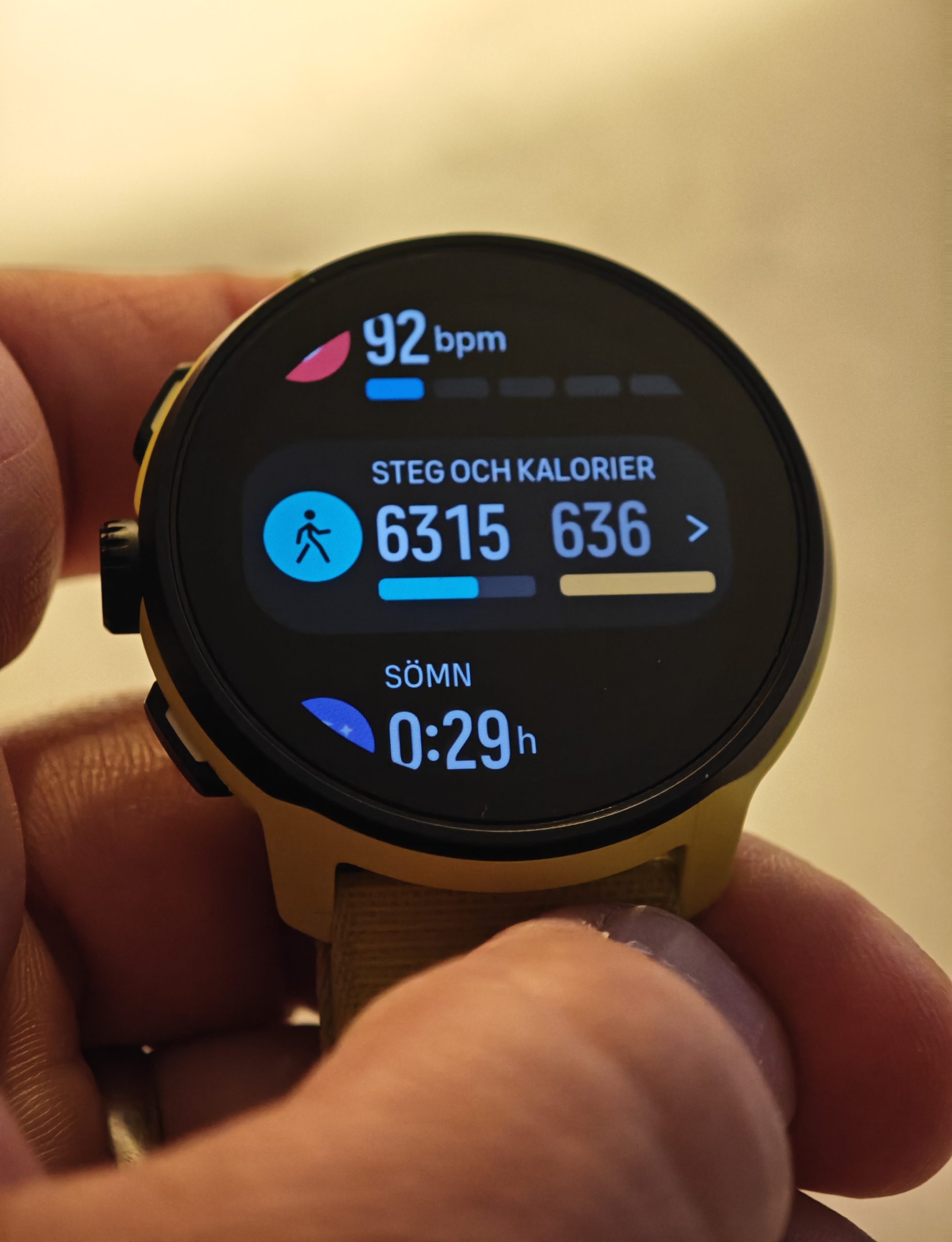
We’ll start with some specifications. During our test, the battery lasted about 5-6 days without using power-saving modes, which refers to normal use with measurements and logging roughly every other day. It comes with a rather mediocre charging dock with weak magnets, and it becomes a bit of a guessing game whether the watch has established contact. However, it does its job since you cannot charge the Suunto Run wirelessly. If you activate the battery saver mode, it naturally lasts much longer, but core functions disappear, and you’re left with something not far from a standard watch. It withstands temperatures between -22 and +55 degrees Celsius (which is within the standard range for high-end fitness watches) and is waterproof down to 50 meters. The screen is bright and clear (even through polarized sunglasses), and the lift-to-wake feature almost never misses a beat. This is particularly appreciated when cycling and you only have a few seconds to get an overview. For entertainment, when you want to leave your phone at home, you can load 4 GB of music and play it via Bluetooth to your favorite headphones.
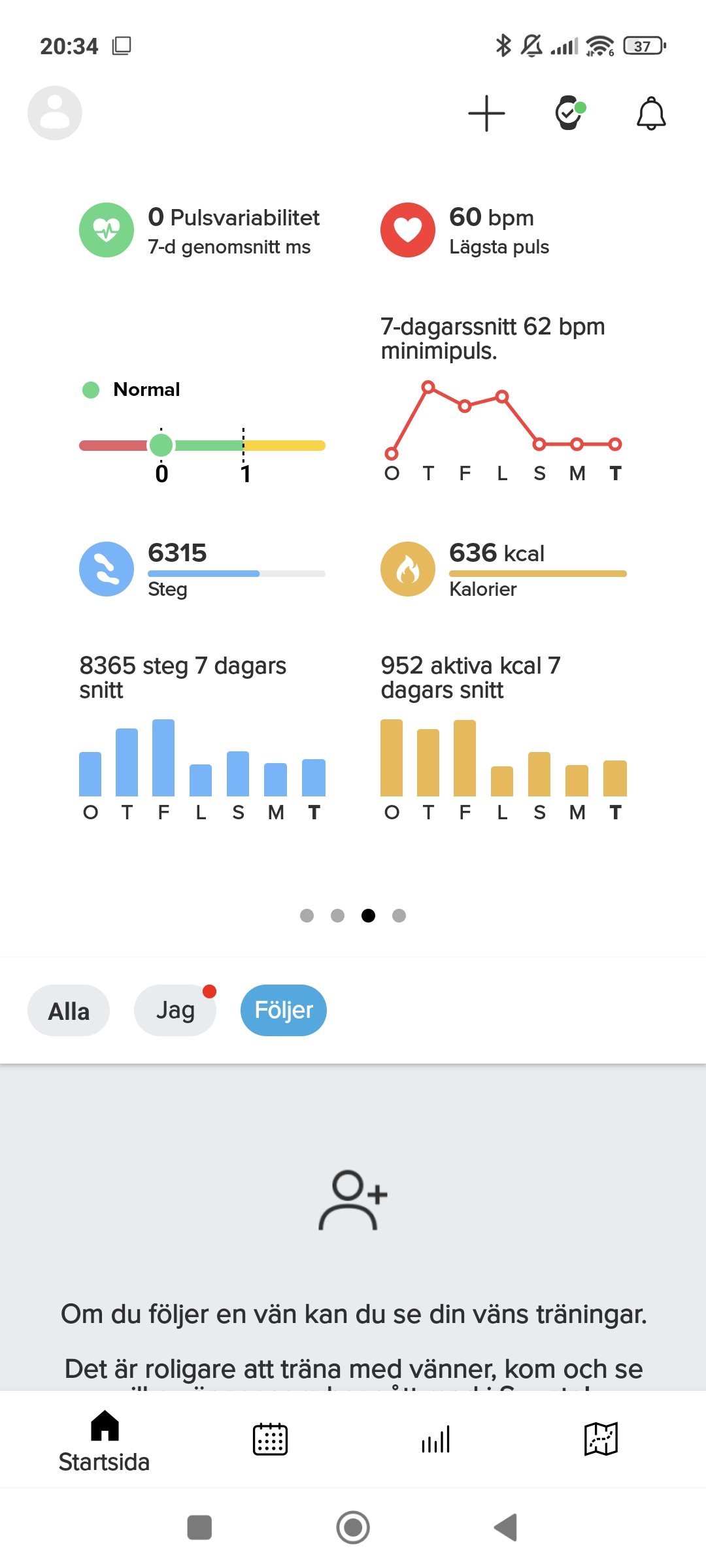
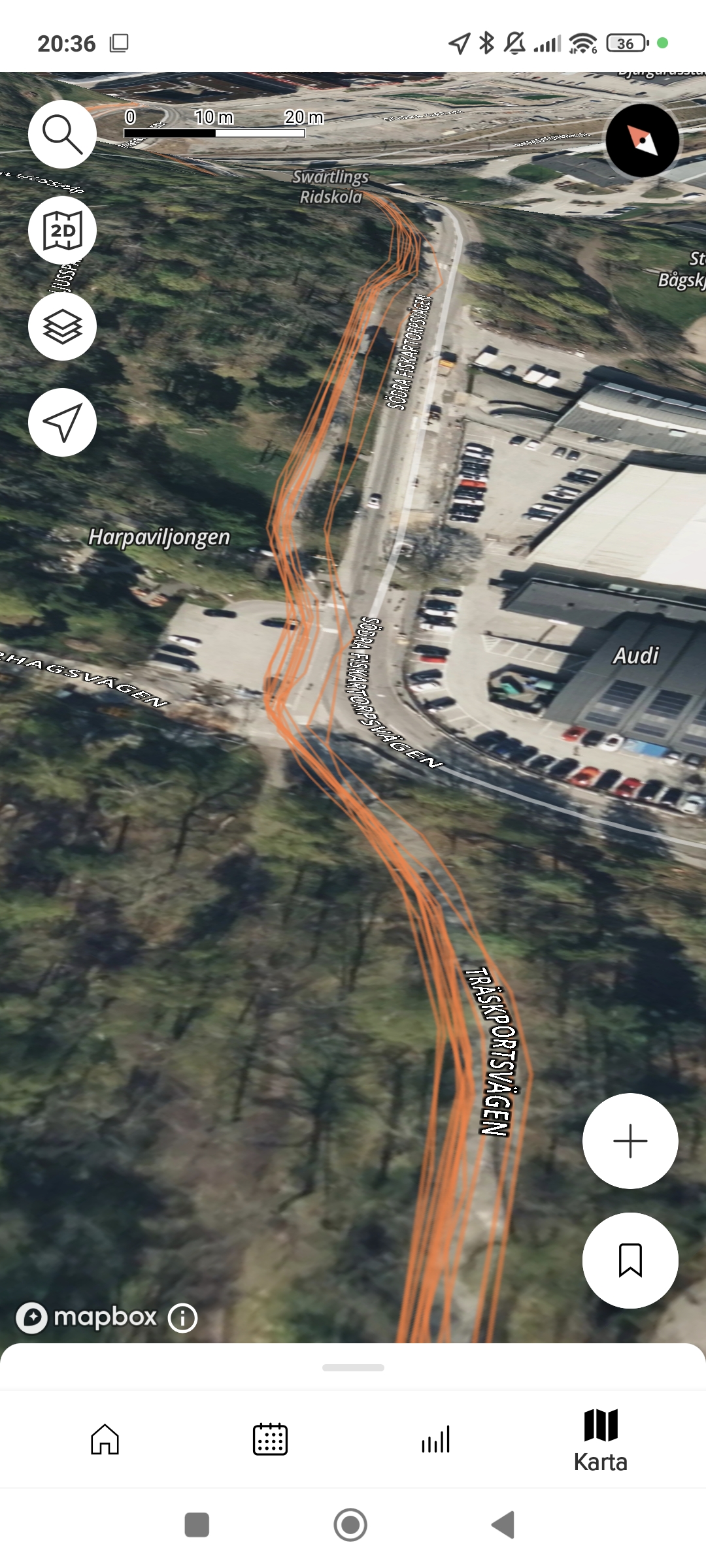
For navigation, it utilizes five geopositioning systems and dual-frequency GPS (which essentially means it uses both bands to correct each other). This is clearly noticeable in dense urban navigation, but above all, in how quickly it connects before a workout. It rarely takes more than five to ten seconds before you can head off. This detail might seem trivial, but few things are as annoying as standing around waiting for a connection when you’re ready to go. And, of course, you can measure your altitude, sleep quality, recovery needs, and stress levels. Heart rate is measured every five minutes by default and, naturally, continuously during training.
(Photo: senses.se)
Training Modes
Regarding training modes, there are 34 sports options, and we want to mention a few specific ones that we found particularly useful. We’ll start with Ghost Runner. This allows you to build programs to maintain the correct pace or, perhaps more commonly, to ensure you don’t push too hard on recovery days. Marathon mode, for example, provides information on your predicted finish time at your current pace over a given distance. This helps you maintain a steady pace throughout the race, avoiding starting too fast while letting you push yourself at the end. The Suunto Run also impresses in other aspects. For instance, by specifying which lane you are on (for track training), you can calibrate the watch so that after a couple of laps, it shows the exact distance based on your specific lane.
Finally, we’ve also noticed that it is smart without being asked. If you are out on a session (in this case, a bike ride) and, for example, hop on a commuter ferry and forget to stop the tracking, Suunto acts on its own. It doesn’t stop the timer, but it understands when you review your trip afterward that the ferry distance should be deducted. Elegant.
So, by now, it is likely clear that the Suunto Run is a formidable fitness watch, even for swimming and cycling, but what is it like to use?
(Photo: senses.se)
The Experience – Suunto Run
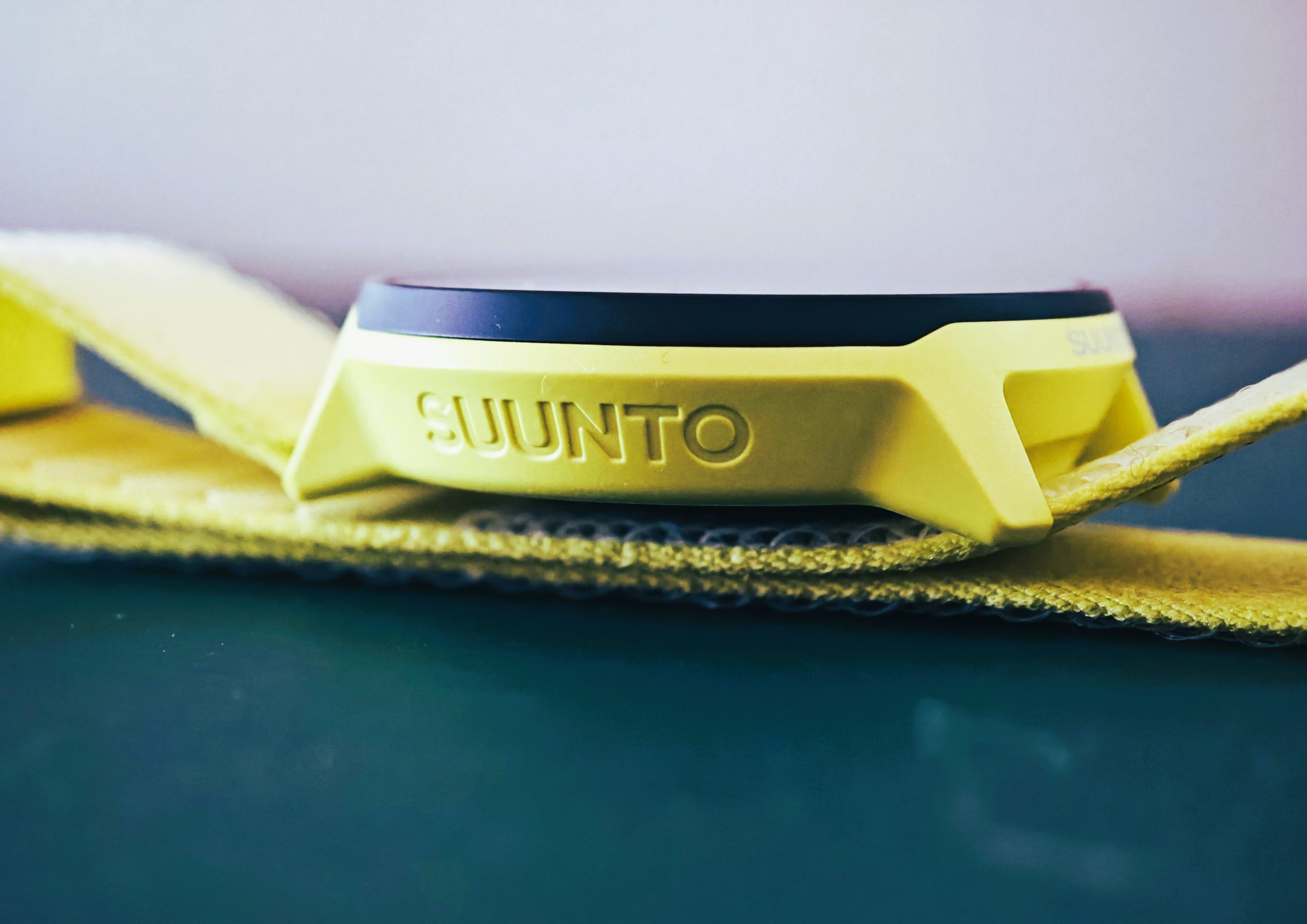
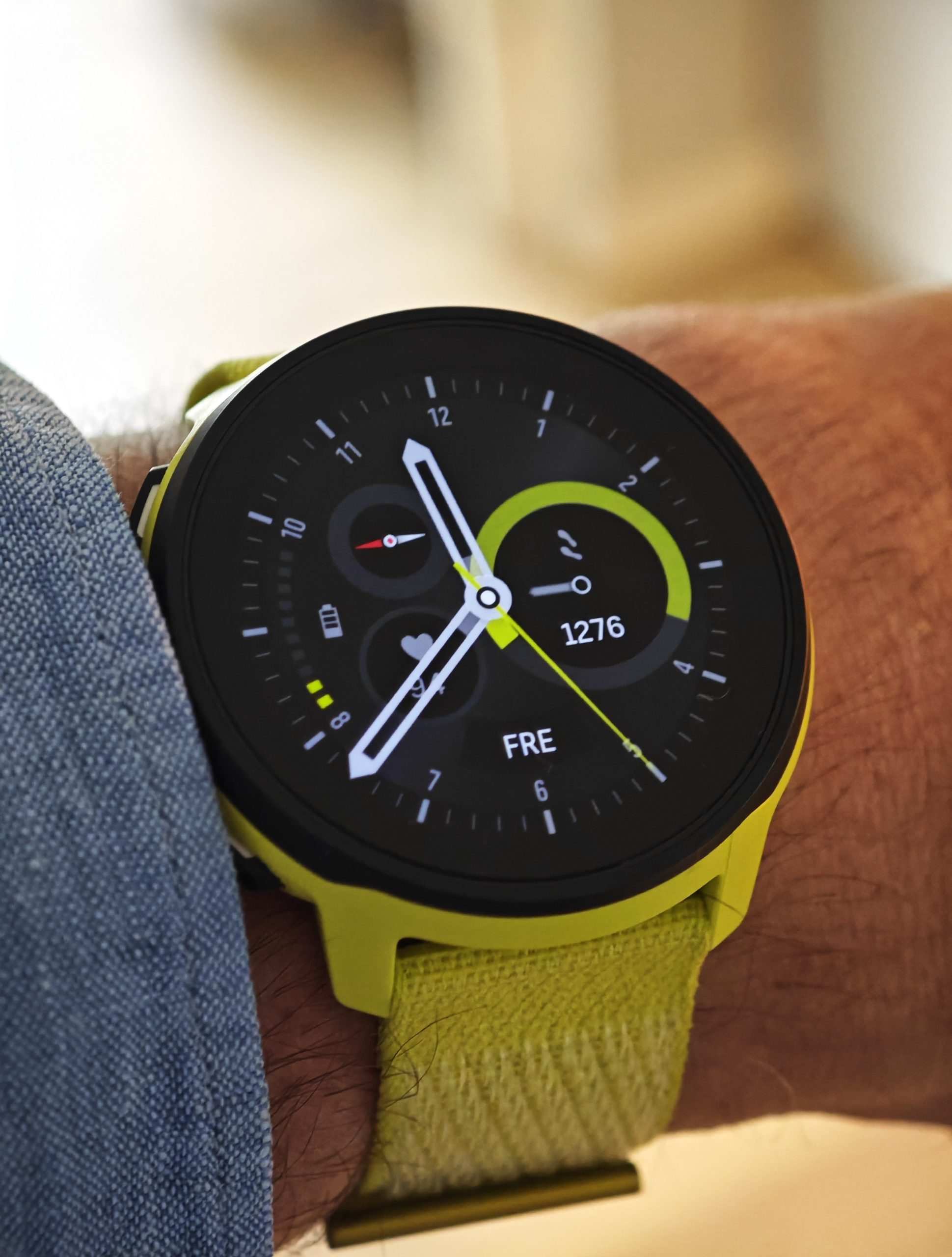
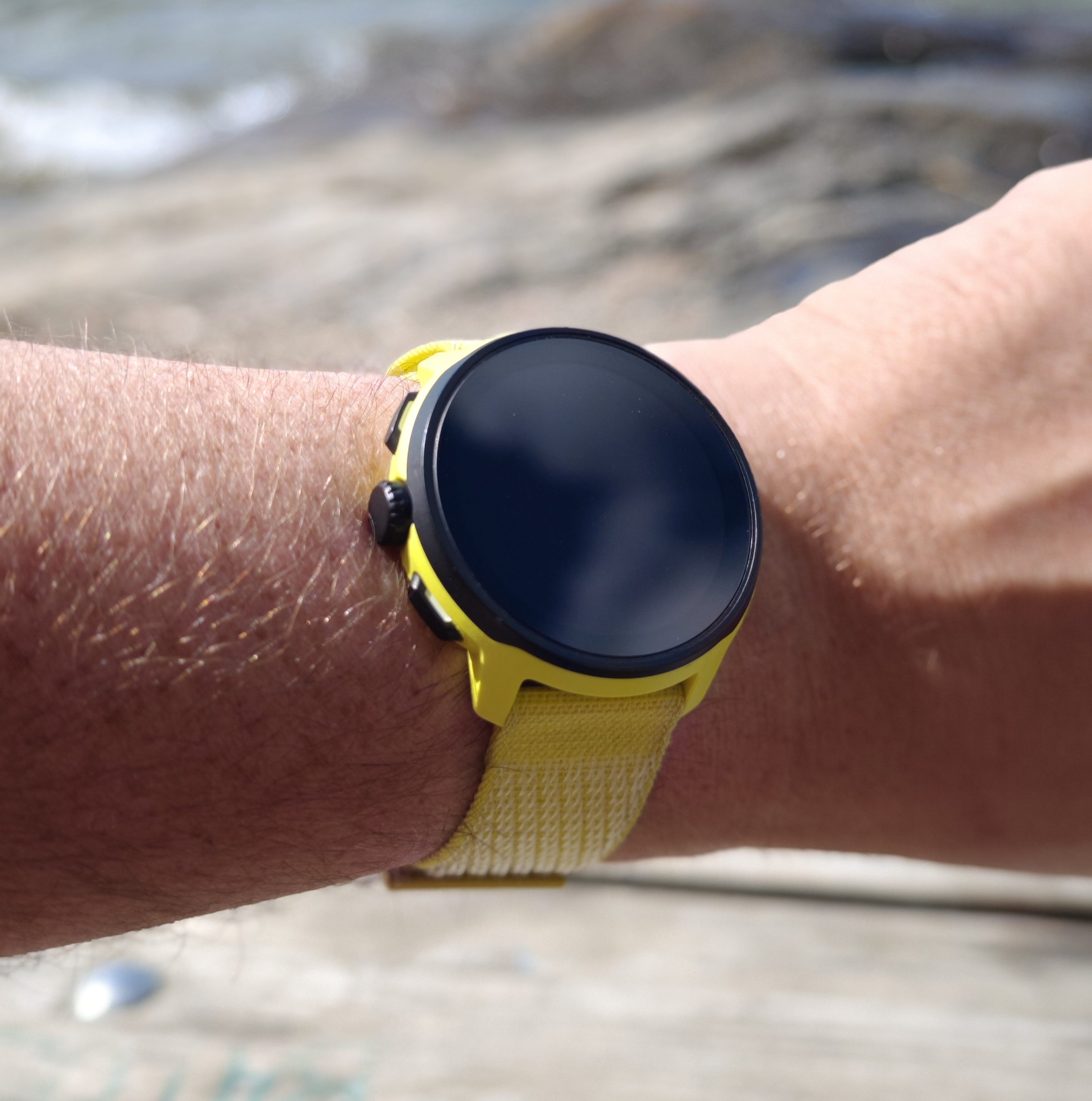
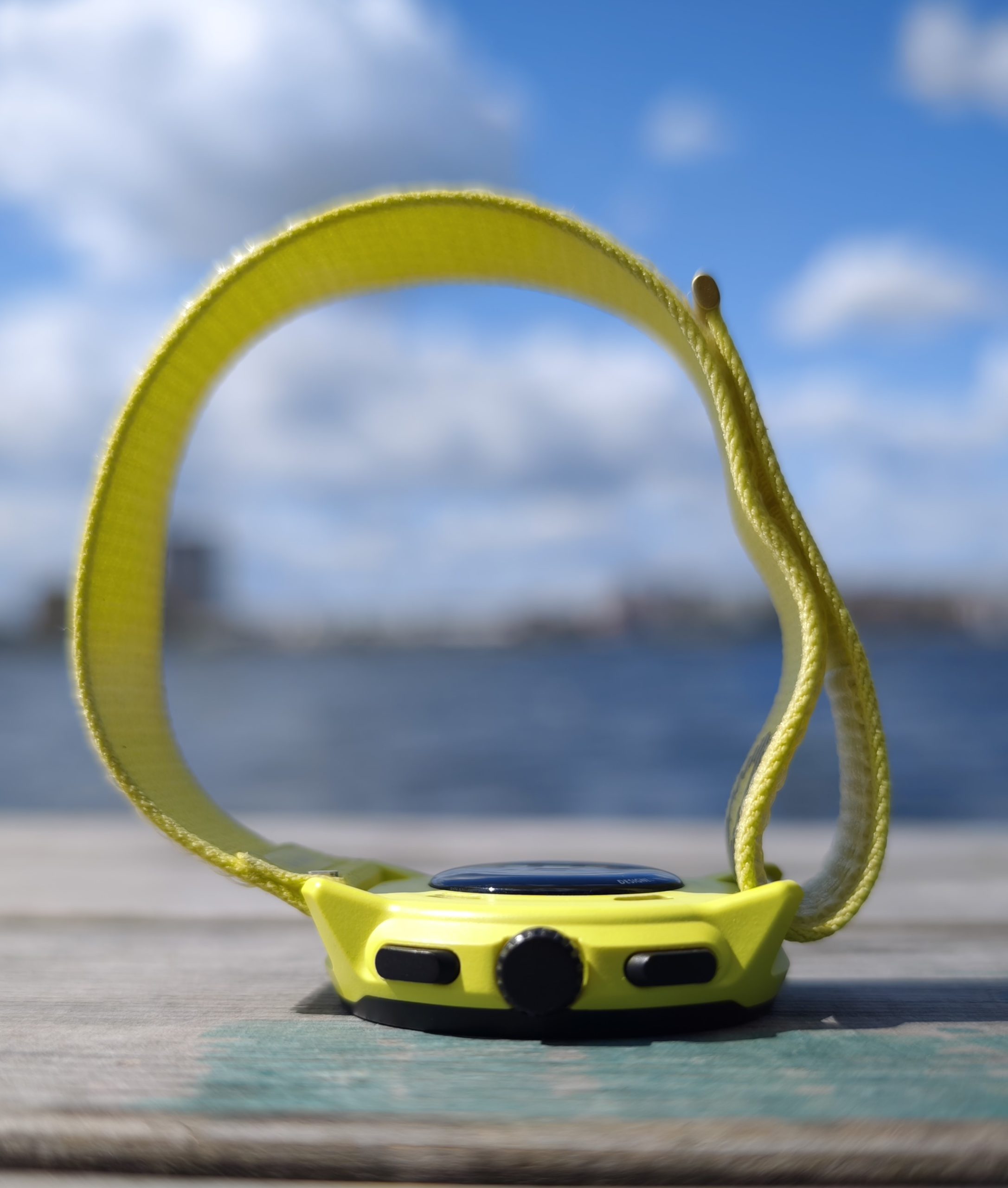
With its nylon strap and light weight of 36 grams (despite a steel case), the Suunto Run is exceptionally comfortable. You forget it’s on your arm, and despite its standard 11.5 mm thickness, the rounded edges ensure it doesn’t snag on shirts or jackets or become uncomfortable during the night. But its physical components aren’t its most appealing feature; it’s the underlying philosophy that training comes first. You are notified of incoming calls, messages, and other alerts, but you cannot reply or take action without taking out your phone. This creates a barrier just high enough to deal with them later. Training comes first. You are spared from choosing between an endless number of watch faces, different sounds, or which apps should be included. During workouts, you are continuously fed valuable information, and it is easy to switch views to access the data you are most interested in at the moment.
(Photo: senses.se)
(Photo: senses.se)
The Suunto App
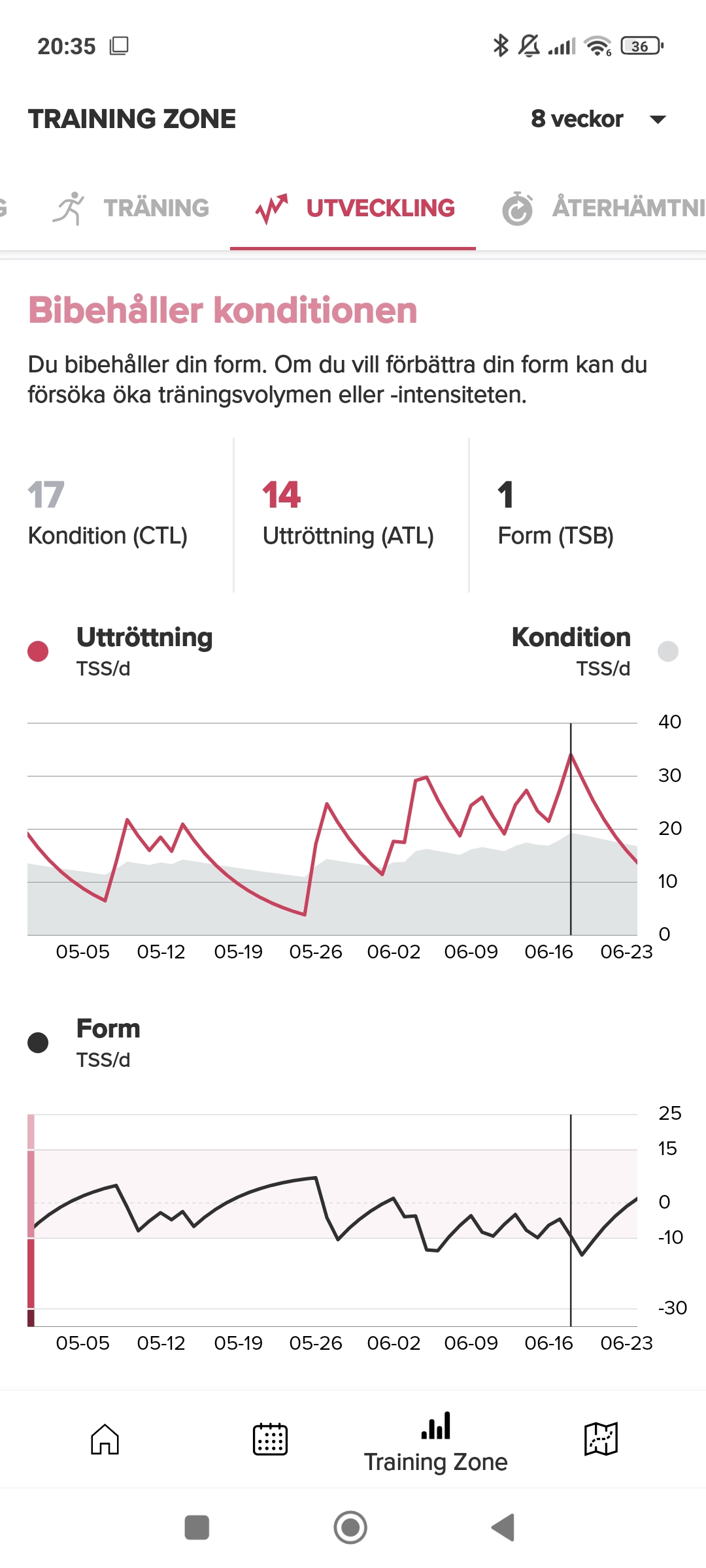
Your results are presented in all sorts of ways in Suunto’s own app. Small videos can be played where you can easily follow your heart rate and speed while identifying on the map which segments of your route were the most strenuous. This is just as interesting whether you’re on a bike or out for a run. During the test, we gained insights that were sometimes surprising—segments that didn’t initially seem like they would be the toughest and didn’t feel that way due to terrain or other factors. But after a brief analysis, it becomes clear where in the route you should put in a little extra effort.
Furthermore, we’d like to highlight that you can link information from many other apps, such as MI-fitness, and see all your progress and achievements collected in one place—even if you don’t have a Suunto product.
(Photo: senses.se)
Things We Don’t Like
There are a few quirks that we can’t get over after our time with the Suunto Run. The first is that there is no possibility of activating a screen lock unless a workout is active. This is annoying because it feels quite nice to take a shower with it and rinse the nylon strap after a session. Without a screen lock, the water hitting it triggers all sorts of actions, like starting a workout or changing various settings on its own. However, with a workout active, it is simple: a long press on the crown and the screen is locked. But without an active workout, the same maneuver takes you to settings. Frustrating.
Another irritating point is that if you clear notifications on the watch, the phone doesn’t update and vice versa, meaning you can have 40-50 unread notifications on the watch that you’ve already handled on your phone. Eventually, this is so distracting that you end up turning off all notifications except for incoming calls.
The media solution is a bit clunky due to the lack of apps like Spotify, where you could have downloaded music instead of moving it over manually. Furthermore, it’s not a given that everyone even has their music in MP3 format, which can make the feature unusable.
(Photo: senses.se)
The Bottom Line – Suunto Run
There is one thing we haven’t touched upon at all yet, and that’s the price. The Suunto Run carries many features found on fitness watches that typically cost 4,000 SEK and up. This makes it truly excellent value, as the Suunto Run costs just under 2,800 SEK. And sure, while the Suunto Run is focused on running, unless you are extremely specialized or at a very high level in your training and perhaps just want to track different types of exercise (swimming, gym, walking, cycling, or multisport), the Suunto Run handles it without much effort. It’s not just for running, but within the realm of running, it truly shines. This is especially true given its specialized features combined with its low weight, low price, and focus on training.
As we stated at the beginning, the Suunto Run delivers everything it promises with flying colors at a great price. And the parts it lacks, we don’t consider entirely negative; in some cases, it’s a help toward—and a way to avoid being distracted from—what it’s actually meant for: training!
Suunto sent review units for this test. Senders of materials have no editorial influence on our tests; we always write independently with our readers and consumers in focus.
Training Modes:
- RUNNING
- Running pace
- Snap to route
- Ghost runner
- Foot POD calibration
- Lap table in watch and Suunto app
- Average, max, lap pace in real time
- Interval guidance with pace/heart rate/distance for running
- SWIMMING
- Swimming pace and distance in pool
- Open water swimming distance
- Records heart rate during swimming
- Swimming time by pool length, split time, total
- Stroke rate, count, and style
- Stroke efficiency (SWOLF)
- Automatic intervals
- Lap table for intervals
- CYCLING
- Cycling speed
- Average speed in real time
- Interval guidance with power/speed/heart rate
- MULTISPORTS
- Multisport exercise summary in the watch
- Change sport mode during exercise
- Preconfigured multisport modes
- Post-analysis of multisport training adapted by sport
- SPORT MODES
- Customizable sport modes and displays
- Graphical display in sport modes
- The watch’s pre-set sport modes
Review Highlights: Q&A
How long does the battery last on a single charge?
Under normal use, the battery lasts approximately 5 to 6 days.
Is the Suunto Run waterproof?
Yes, it is waterproof and can be used at depths down to 50 meters.
Can I listen to music without my phone?
Yes, it has 4 GB of storage for MP3 files to play via Bluetooth.
Does it support apps like Spotify or WearOS?
No, it does not run WearOS and lacks third-party apps like Spotify.
How much does the watch weigh?
It is very lightweight, weighing only 36 grams despite its steel case.
Can I reply to text messages directly from the watch?
No, you can view notifications but cannot reply without your phone.
How accurate is the GPS tracking?
It uses five geopositioning systems and dual-frequency GPS for accuracy.
What is the retail price of the Suunto Run?
The Suunto Run is priced at just under 2,800 SEK.
