
TL;DR
The Skullcandy Crusher 1080 ANC wireless headphones cost 2,796 kr and excel with balanced Bose-tuned audio, customizable haptic bass, and effective TrueSpatial spatial audio. However, they weigh a heavy 374 grams with high clamping force and omit LDAC support. They suit listeners seeking extreme tactile bass alongside balanced sound rather than long-session comfort.
What comes to mind when you hear the name Skullcandy Crusher? For most, the answer is simple: bass. So much bass that your head vibrates. Skullcandy Crusher 1080 ANC is the new flagship model of the series, and this time Skullcandy has enlisted the help of Bose. The noise cancellation, sound tuning, and spatial audio come from them. Added to this is a promised 50-hour battery life with noise cancellation enabled, LE Audio, multipoint, and of course, the Crusher bass, where separate haptic elements provide bass that you feel rather than hear.
Bose under the hood and Crusher on the outside sounds like an unusual combination. Can a pair of Crushers be more than just a bass monster? We’re going to find out!
Design and Comfort
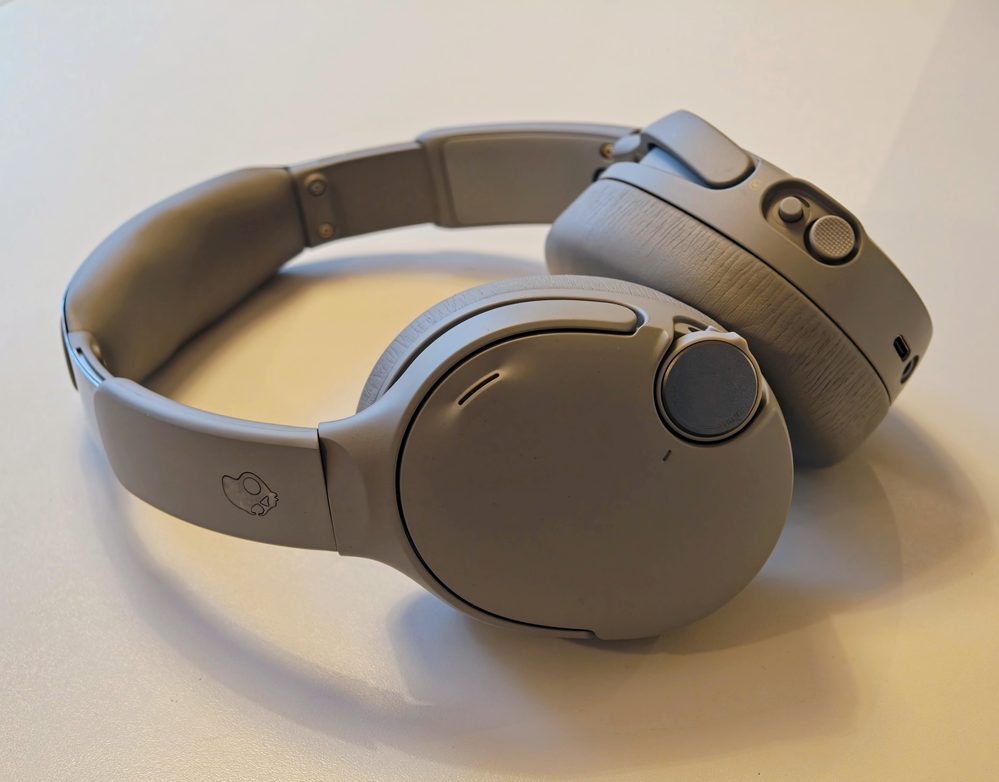
Crusher 1080 ANC looks exactly like a pair of Crushers should. The housing is plastic, and the headband features a metal component. The headphones feel sturdy but not premium.
The headphones weigh 374 grams, and it’s noticeable. That is heavy for a pair of wireless headphones. Furthermore, the ear cups are quite small, and the clamping force is significant. I have a fairly large head, and they are not entirely comfortable for me. After an hour or two, they start to press against the ears, and this becomes even more apparent with glasses on. With the recently tested Beyerdynamic Aventho Y, I could sit for hours without even thinking about the headphones. Here, I take them off much more often. This is likely less of an issue for those with a smaller head.
Included in the box are a 3.5 mm cable, a USB-C cable, and a cloth pouch. No hard case is included, which I would have liked to see in this price range.
Buttons and the Crusher Wheel
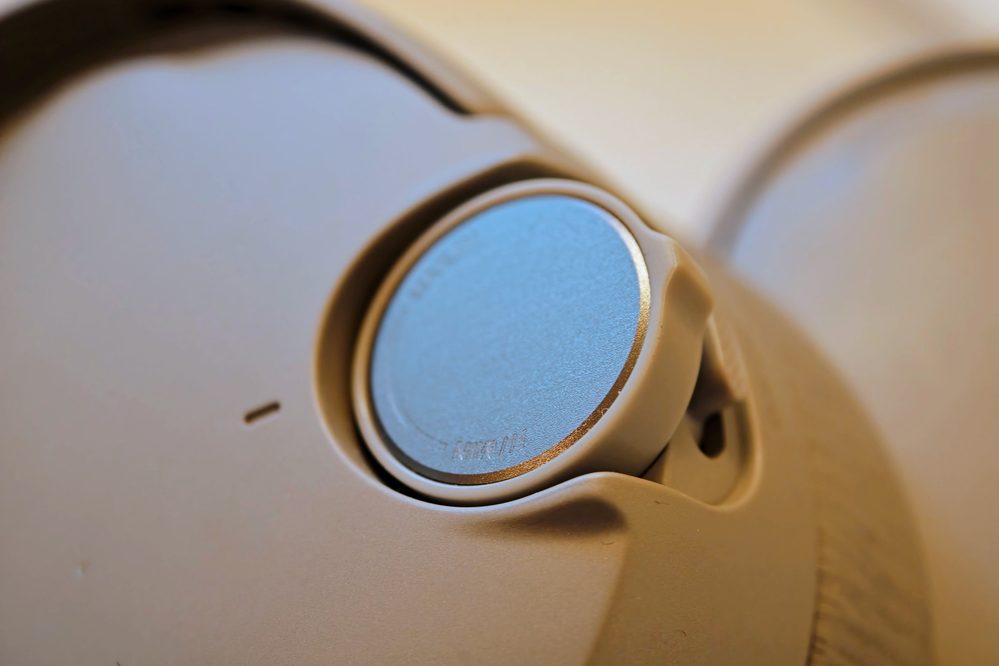
Crusher 1080 ANC is controlled with physical buttons, which is a good thing. You know exactly what you’re pressing and what will happen. The Crusher wheel rotates up to 120 degrees and controls the amount of haptic bass you receive. It’s quick and easy to adjust mid-song.
However, the wheel turns easily when the headphones are in a bag, so you might get a surprise the next time you put them on. Additionally, if you change the bass settings in the app, the physical position of the wheel no longer reflects the actual setting. If you touch the wheel again, it takes over control.
The Custom button can be configured in the app. A double-tap changes the Crusher profile (more on that below), and a long press on the center of the button toggles ear detection on and off.
Sound Quality
Each cup contains a 36 mm driver, in addition to the separate haptic bass drivers. The sound is tuned by Bose, and it shows.
This is the big surprise. With the Crusher wheel turned down, the headphones sound significantly more balanced than you might expect. Voices sound natural and clear, and there is plenty of detail. It sounds more like Bose than Skullcandy. Even in the default setting, the bass is full and defined, and the treble is lively. On some recordings, the treble can be a bit too prominent, but it’s rarely distracting.
So, it’s not just about bass. But you can certainly crank it up. Turning the wheel brings the rumble, and it’s a rumble that can be felt throughout your whole head. For hip-hop, electronic music, and action movies, it’s a lot of fun. Heads On The Wall with Rigs/Rome Streetz is a great example, where the bass goes from a clear punch to something that feels like an earthquake on your head if you turn it up to the max. For calmer music, I keep the wheel turned down, giving me a pair of headphones that are very pleasant to listen to.
The app features presets for Music, Podcast, and Movie, as well as a Custom mode where you can adjust the sound yourself across five bands. Movie mode boosts the midrange to make dialogue clearer. There is also Personal Sound, a hearing test that builds a sound profile based on your hearing. It makes a difference and is worth the few minutes it takes.
Crusher Profiles Made a Big Difference
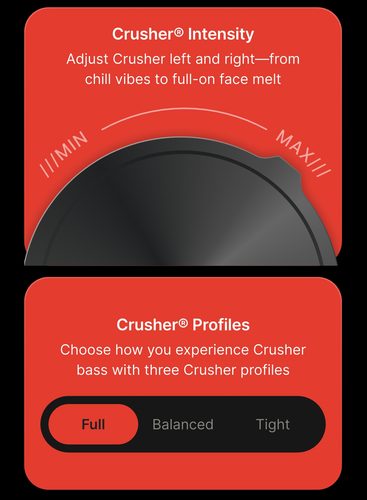
During my testing period, a firmware update was released that changed the headphones more than I had anticipated. The Crusher bass received three profiles that control how the haptic bass feels:
- Full: warm and full, closest to the classic Crusher feel
- Balanced: the standard mode
- Tight: faster and more focused
Before the update, the Crusher bass felt a bit conservative and only really came into its own when the volume was high. Now, the bass hits just as hard even at low volumes, and with the Full profile, that raw pressure associated with Crusher returns. Tight is better suited for music with fast basslines, where Full can become a bit muddy.
TrueSpatial
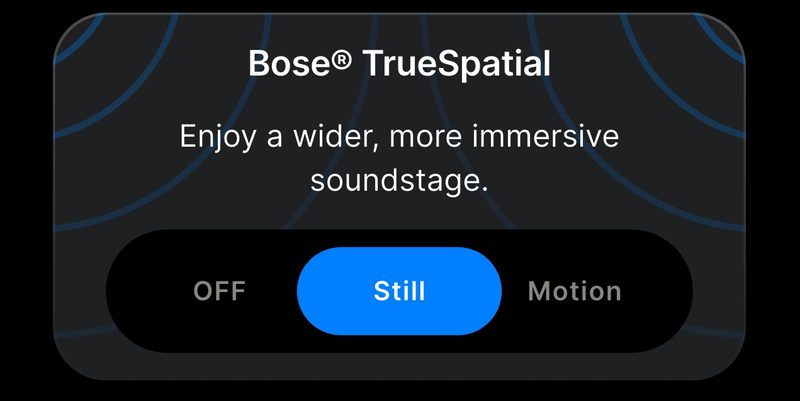
TrueSpatial is Bose’s spatial audio technology. It places the sound in front of you, much like a pair of speakers in a room, rather than inside your head. It doesn’t require music or movies mixed for Dolby Atmos; it works with anything played in stereo.
There are two modes. Still keeps the soundstage fixed in the room when you turn your head. Motion follows your head movement to provide a wider soundstage and is intended for when you are on the move. The mode is toggled with a press on the center of the joystick, and the feature is disabled by default.
This is the best spatial audio I have tested. Skullcandy recommends Still for movies and games, where it works very well. However, it works just as well for music. I found myself keeping it on and just listening several times. If you turn your head, the music stays in front of you, making it feel like you’re listening to a pair of speakers rather than headphones. It’s not a gimmick you try once and forget; it’s something I actually want to use.
Noise Cancellation
The noise cancellation comes from Bose and utilizes six microphones. It is adaptive and features three modes: Quiet, Aware, and Off.
Fan noise, office chatter, and the steady drone of a bus are significantly reduced. However, the deepest rumbles from trains and airplanes are let through more than I expected from Bose technology. Sony’s and Bose’s own flagship models dampen more. For commuting, it is quite sufficient, but those who fly often and want complete silence will find better options elsewhere.
The Aware transparency mode is good. Voices come through naturally, and it’s easy to hear an announcement or take a short call without removing the headphones.
Calls
Call quality is acceptable. In a quiet room, your voice sounds clear, but the microphones struggle with traffic and wind, and in rooms with a lot of echo, the other party will notice it. It’s fine for everyday calls at home or in the office, but those who talk on the phone a lot while on the move can find better call quality elsewhere.
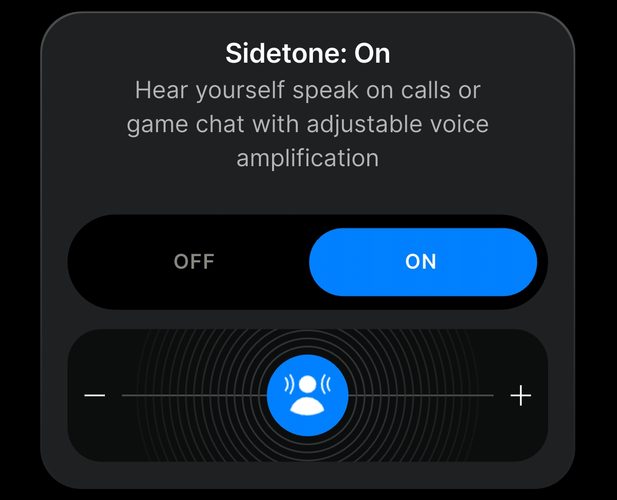
In the app, you can enable sidetone to hear your own voice in the headphones during calls, with adjustable levels. This works very well and makes talking feel more natural, avoiding the tendency to shout that often occurs with ANC headphones.
Connectivity and Codecs
The headphones feature Bluetooth 5.3 with multipoint, Google Fast Pair, and support for Google’s Find My Device. There is also support for LE Audio and Auracast. Codec support, however, is meager: SBC and AAC, as well as LC3 over LE Audio. There is no LDAC or aptX. For iPhone users, this doesn’t matter, but it would have been nice for Android.
Wired listening is also possible, either via 3.5 mm or USB-C. With 3.5 mm, both the Crusher bass and noise cancellation function as long as the headphones are powered on.
The headphones pause music when you take them off. Ear detection is disabled by default and is turned on with a long press on the Custom button. Initially, during my testing, the ear detection seemed to have a mind of its own and would pause just from adjusting the headphones, but it improved significantly after a firmware update.
Battery and Charging
Skullcandy promises 50 hours with noise cancellation on and 60 hours without. This aligns well with my experience. These are headphones you charge very rarely. Crusher bass, TrueSpatial, and high volume consume more power, so if you run everything at max, it will be shorter.
A full charge takes around 45 minutes, and ten minutes of charging provides about four hours of listening. With ear detection enabled, the headphones turn themselves off after 15 minutes if they are not in use.
Conclusion
Skullcandy Crusher 1080 ANC sounds better than you might expect. With the wheel turned down, the sound is balanced and detailed, and when you want bass, there is more than enough to go around. The Crusher profiles have turned the bass into something you actually want to use. TrueSpatial is the best spatial audio I have tested, even for music. Battery life is excellent, the physical buttons work well, and the noise cancellation does its job.
There are still some drawbacks. The headphones are very heavy, the ear cups are small, and the clamping force is significant—on a large head, it becomes uncomfortable during longer sessions. The noise cancellation doesn’t quite reach the level of the best in class, calls are merely acceptable, and LDAC is missing.
Then there’s the price. The recommended price is 2,796 SEK. This places them in a difficult position, as most things in this price range sound very good. For those who want both good sound and extreme, feelable bass, there is nothing else that does the same thing. However, those primarily looking for comfort for long listening sessions will get more for their money with the Beyerdynamic Aventho Y, which is also about a thousand kronor cheaper.
Skullcandy provided the review unit for this test. Senders of materials have no editorial influence on our tests; we always write independently with our readers and consumers in focus.
How we rate products at SensesReview Highlights: Q&A
How comfortable are the headphones for long listening sessions?
The Skullcandy Crusher 1080 ANC weighs 374 grams and features small ear cups with significant clamping force. After an hour or two, they start to press against the ears, which becomes especially noticeable with glasses or on larger heads.
How long does the battery last and how fast does it charge?
Battery life reaches 50 hours with noise cancellation enabled and 60 hours without. A full charge takes around 45 minutes, while a ten-minute quick charge provides about four hours of listening time.
How well does the active noise cancellation perform?
Noise cancellation reduces fan noise, office chatter, and bus drones well, but allows the deepest rumbles from trains and planes through. It works sufficiently for regular commuting, but dampens less than flagship models from Sony or Bose.
Which Bluetooth codecs and connection options are supported?
The headphones feature Bluetooth 5.3 with multipoint, LE Audio, and Auracast, but codec support is limited to SBC, AAC, and LC3. Wired listening is also available via the included 3.5 mm and USB-C cables.
How does the haptic Crusher bass work?
Separate haptic drivers deliver physical vibration controlled by a physical wheel that rotates up to 120 degrees. A firmware update provides three profiles—Full, Balanced, and Tight—allowing the haptic bass to hit hard even at low volumes.