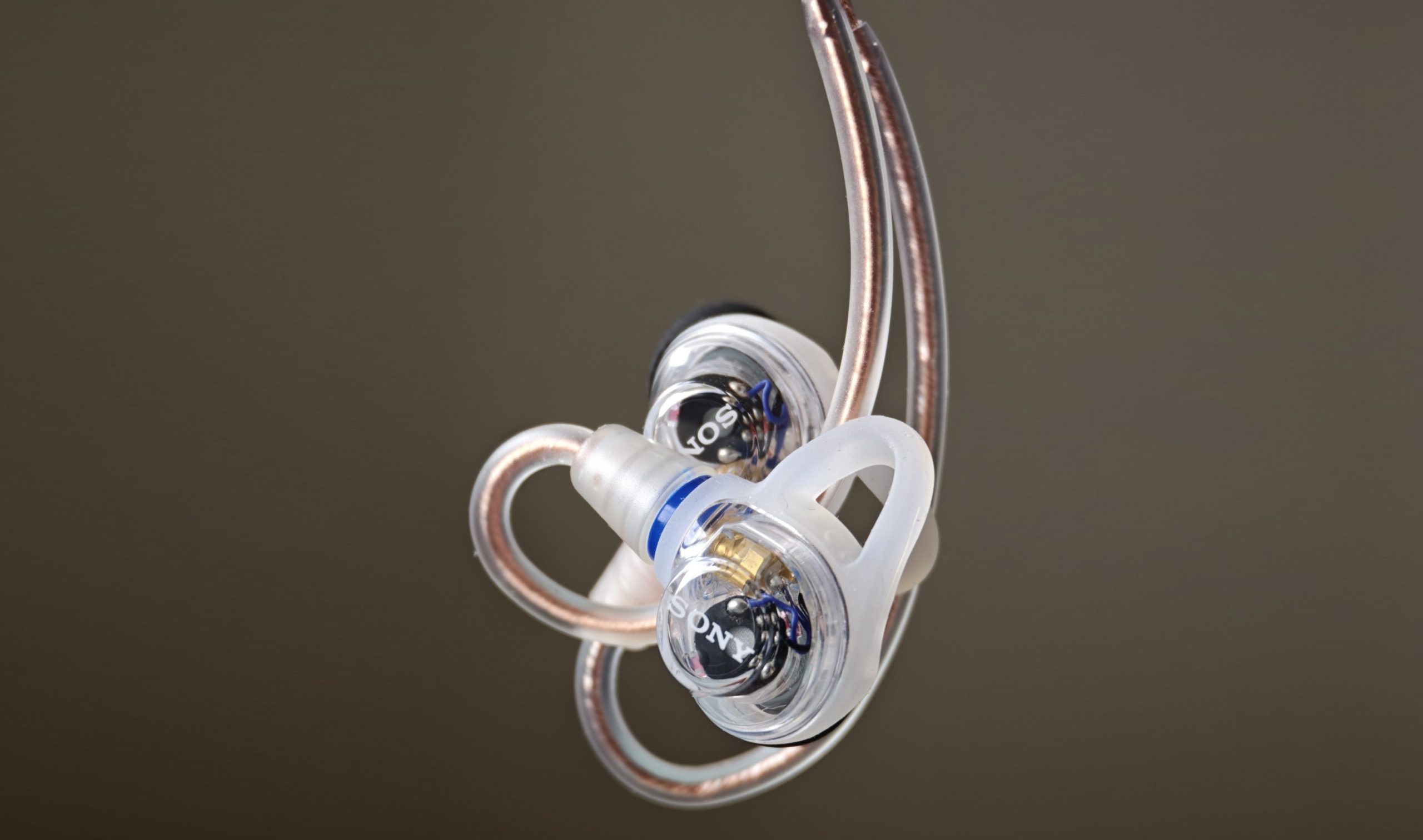

TL;DR
The Sony IER-M500 are lightweight wired monitoring earphones costing 1,300 kr that deliver clear, balanced audio, high comfort, and total passive isolation via memory foam tips. Their 5mm diaphragms produce low-volume bass that lacks power, and no 6.3mm adapter is included. They fit musicians for live performances, home studio users, and travelers wanting fatigue-free isolation.
We have previously tested two pairs of headphones from the Sony Professional line. First out was Sony MDR-M1, a pair of closed-back over-ear headphones that were comfortable, isolating, and sonically competent, aside from somewhat constricted higher frequencies. We then followed up with Sony MDR-MV1, a pair of open-back over-ear headphones with phenomenal sound, high comfort, and a neutral sound signature. We also perceived these as being slightly weak in the upper frequencies. What they had in common was that they were excellent for the studio, music production, mixing, and general listening. They also shared another trait: they were expensive. Especially the Sony MDR-MV1.
Sony now follows up in the same series with the SONY IER-M500. A pair of earphones that, compared to the previous models, are more aimed at musicians who require good monitoring without sound leakage, preferably with a low risk of them falling off, and a higher degree of isolation than their predecessors. The IER-M500 is also at a lower, more manageable price point. The genre has long been dominated by the classic Shure SE-215, and the design with a moldable ear hook is familiar. Contenders have appeared over the years, such as the Audio Technica ATH-E70, a pair of high-quality audiophile earphones through and through with the same setup but a significantly higher price tag. It is therefore interesting to see if Sony, which has impressed with many previous headphones, will do the same with the IER-M500.
Lightweight, good fit, and passive isolation
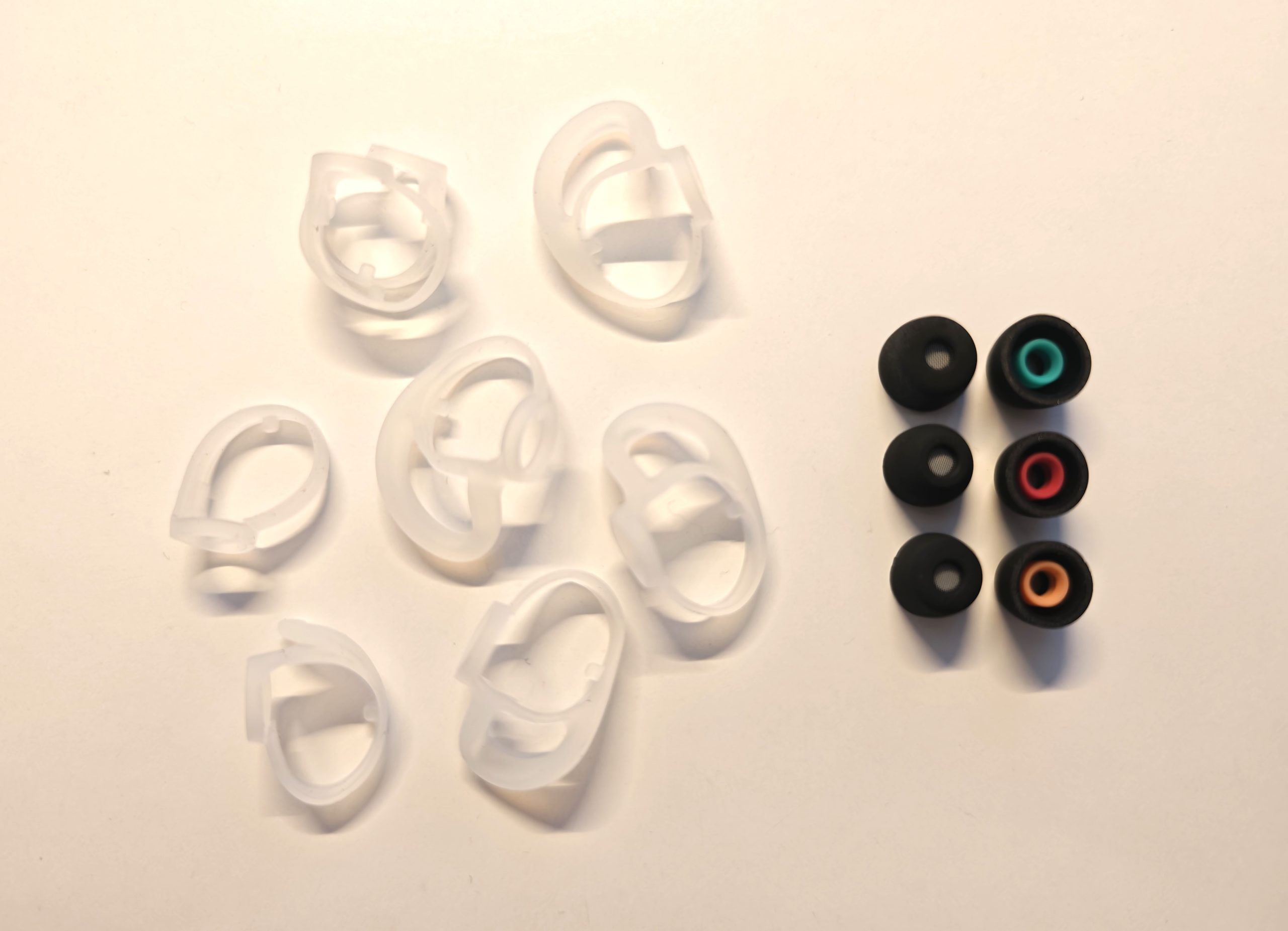
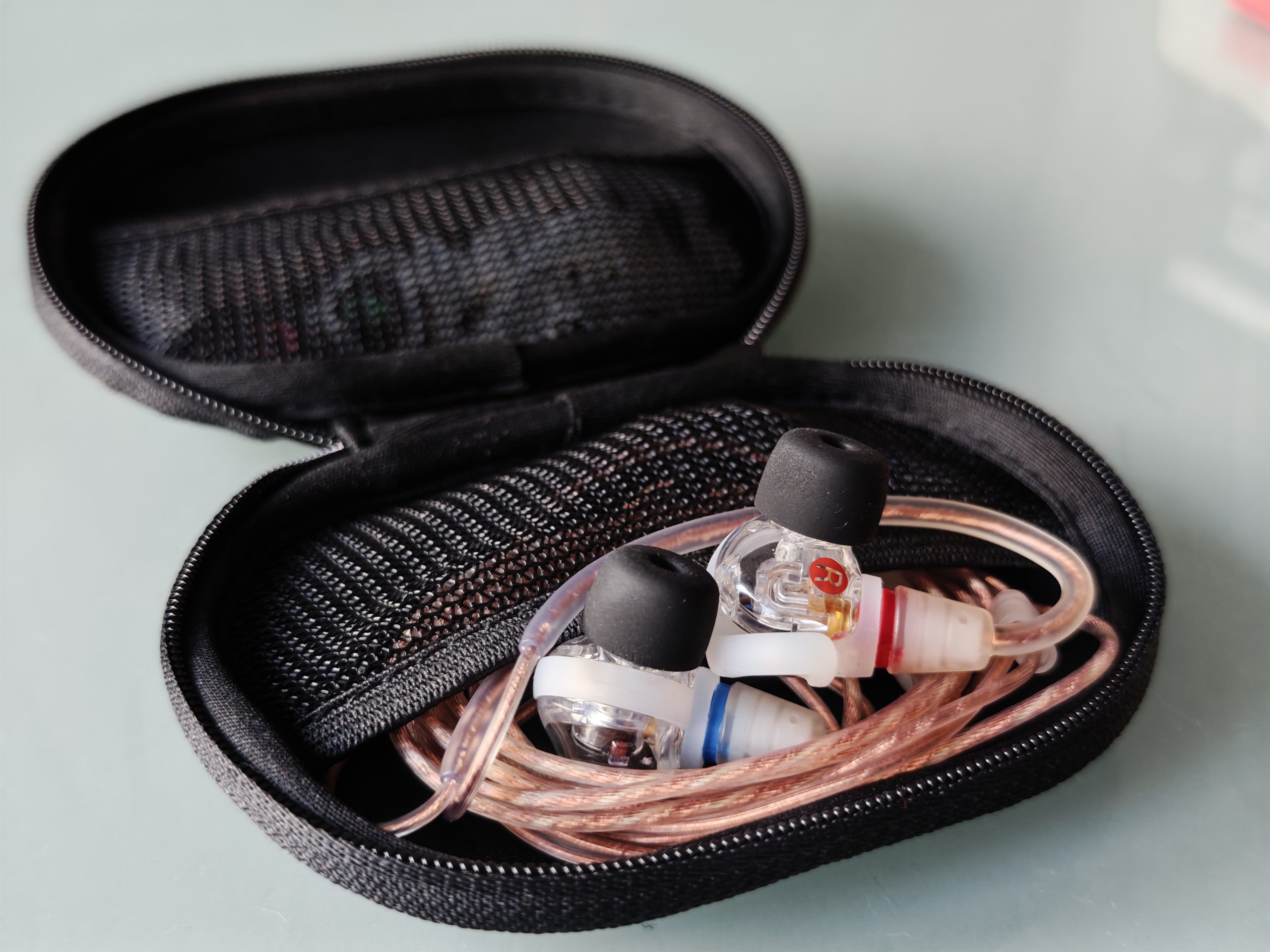
Were it not for the cable occasionally touching the neck (which it doesn’t if you route it down the back), it would be hard to remember that you are wearing them. They are incredibly lightweight, and the eartips are made entirely of memory foam, which makes the isolation total. As long as they are in the ears, they function like proper earplugs, and with music on, the outside world is largely gone. In addition to four sizes of memory foam tips, ear hooks for the inside of the ear from XS to XL are also included. This makes it possible to get them to fit the ear in great detail. And it makes a difference. We started by listening with the second-largest tip and then switched to the largest. The soundstage developed and emerged with a noticeable improvement. Accessories and earphones can be neatly stored in the included, appropriately sized case—a welcome addition that we missed with the other headphones in the series.
(Photo: sensese.se)
Even though the tips are memory foam, there is no feeling of tightness or any ache in the ear canals. They are comfortable for many hours, with the bonus that you avoid the ear fatigue that comes from active noise cancellation.
Technical details
Since the IER-M500 is wired, codecs are redundant; instead, a 3.5mm connection is required. If you want to use these with a mobile phone, there are many solutions, such as the Moondrop Echo-A, but what surprises us somewhat is that the IER-M500 comes without a 6.3mm adapter—a format that is, to say the least, common both in the music industry and among music creators. Both the MDR-M1 and MDR-MV1 included an adapter, and while it is certainly possible to buy an external one to solve the problem, it felt a bit disappointing not to be able to use the IER-M500 with an external audio interface using what is included in the box. (We tried using the MDR-M1 and MDR-MV1 adapter, which unfortunately had a loose connection).
(Photo: sensese.se)
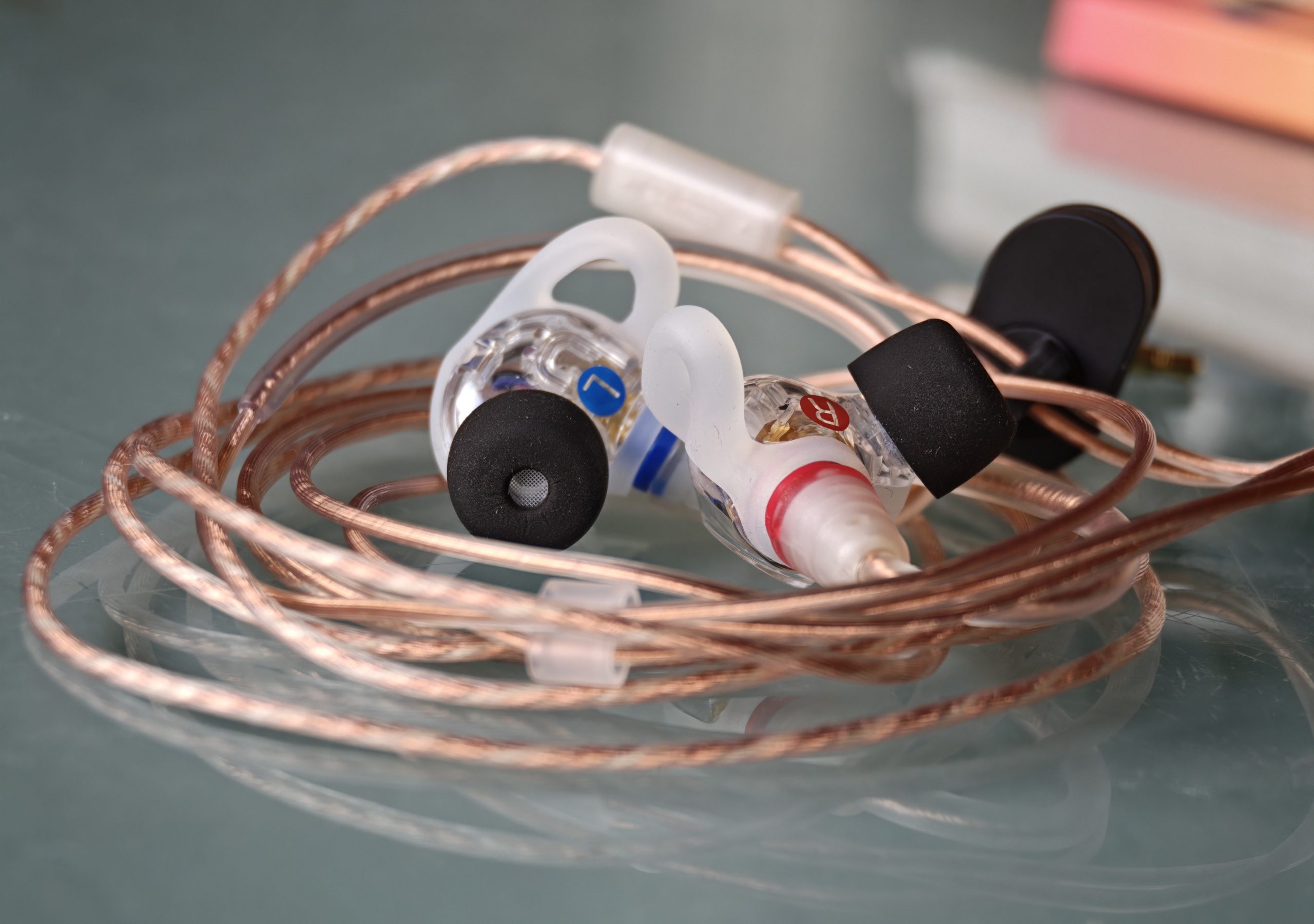
The earphones contain 5mm diaphragms, which is quite small compared to many in-ear headphones that in some cases reach as high as 15mm. This might also explain the soundstage’s only weakness, which we will return to below. The impedance is a negligible 16 ohms, and the frequency range extends between 10 – 40,000 Hz.
The Soundstage
Ironically, considering the MDR-M1 and MDR-MV1, the only weakness of the IER-M500 is the bass. The bass is competent, meaning it handles all the frequencies we have subjected it to, but it is low in volume. A suitable test track for bass capability is Pola & Bryson – Under. When the song gets going, the sub-bass goes down to the note D1 (which is approximately 36 Hz) and is often a good marker of the bass capability of a pair of headphones. It is heard steadily, so there is nothing wrong with the bass capability.
Otherwise, the soundstage is razor-sharp, clear, and balanced. Yosi Horikawa – Bump is a jumble of rhythms, effects, and frequencies, all represented clearly. Hans Zimmer – Buyer Beware is also represented just as clearly but lacks the expected power due to the low-set bass. The same goes for AIR – Casanova 70; the “cozy factor” disappears somewhat with the bass, even if the midrange does its part. At increased volume, it gets better; the bass cuts through somewhat, but in return, the upper registers become too strong and piercing. However, with the IER-M500, the overly bass-heavy Solar Fields – Sombrero becomes pleasantly balanced.
(Photo: sensese.se)
The Verdict – Sony IER-M500
Price-wise, the IER-M500 is around 1,300 SEK, which in context makes the earphones good value for money. The IER-M500 is not only good for live performances but is also a good complement to the home studio. They are also well-suited for flights, for example, with their excellent isolation instead of fatiguing noise cancellation. The range of accessories allows for good comfort, and although they require some form of 3.5mm input, that should hardly come as a surprise after purchase. However, the soundstage suffers from low-set volume (in the bass) and the lack of a 6.3mm adapter is annoying, which means the IER-M500 loses a few points on the rating scale.
Sony sent a review sample for this test. Senders of material have no editorial influence on our tests; we always write independently with you, the readers and consumers, in focus.
Review Highlights: Q&A
How effective is the passive noise isolation on these earphones?
The Sony IER-M500 earphones provide total isolation that functions like proper earplugs due to memory foam tips, blocking out the outside world without the fatigue caused by active noise cancellation.
How does the sound quality and bass perform?
The soundstage is clear, razor-sharp, and balanced across 10 to 40,000 Hz, though the bass is set low in volume and lacks power due to the small 5mm diaphragms.
What accessories are included in the package?
The package includes four sizes of memory foam tips, inner-ear hooks ranging from XS to XL, and a storage case, but it lacks a 6.3mm adapter.
What connection do these earphones require?
They feature a wired 3.5mm connection with an impedance of 16 ohms, requiring an external adapter if you need to connect them to a 6.3mm audio interface.
