
TL;DR
The Fairphone 6+ is a modular smartphone priced at 7,300 kr that excels in repairability, featuring 12 replaceable parts, a user-swappable battery, and software support until 2033. It falls short with slow 30W charging, no wireless charging, and occasional Bluetooth connection drops. It suits environmentally conscious buyers seeking a durable, easily serviceable device.
What is Fairphone?
When a manufacturer new to senses.se makes their debut on the site, we take the opportunity to give our readers a chance to get acquainted and perhaps discover a brand at the same time. In this test, the Dutch sustainability- and fairness-oriented company Fairphone makes its first impression. Formed in 2013 by Bas van Abel, Tessa Wernink, and Miquel Ballester with ethical considerations and an ambition to make as small an environmental impact as possible. Before its formation, Fairphone existed as a campaign to draw attention to unfair working conditions. The fundamental idea was to create a mobile phone where all included parts were manufactured fairly while also being modular to increase its lifespan. As an example, Fairphone has invested one million dollars since 2019 in bonuses to those who build the parts for their phones.
(Photo: Fairphone)
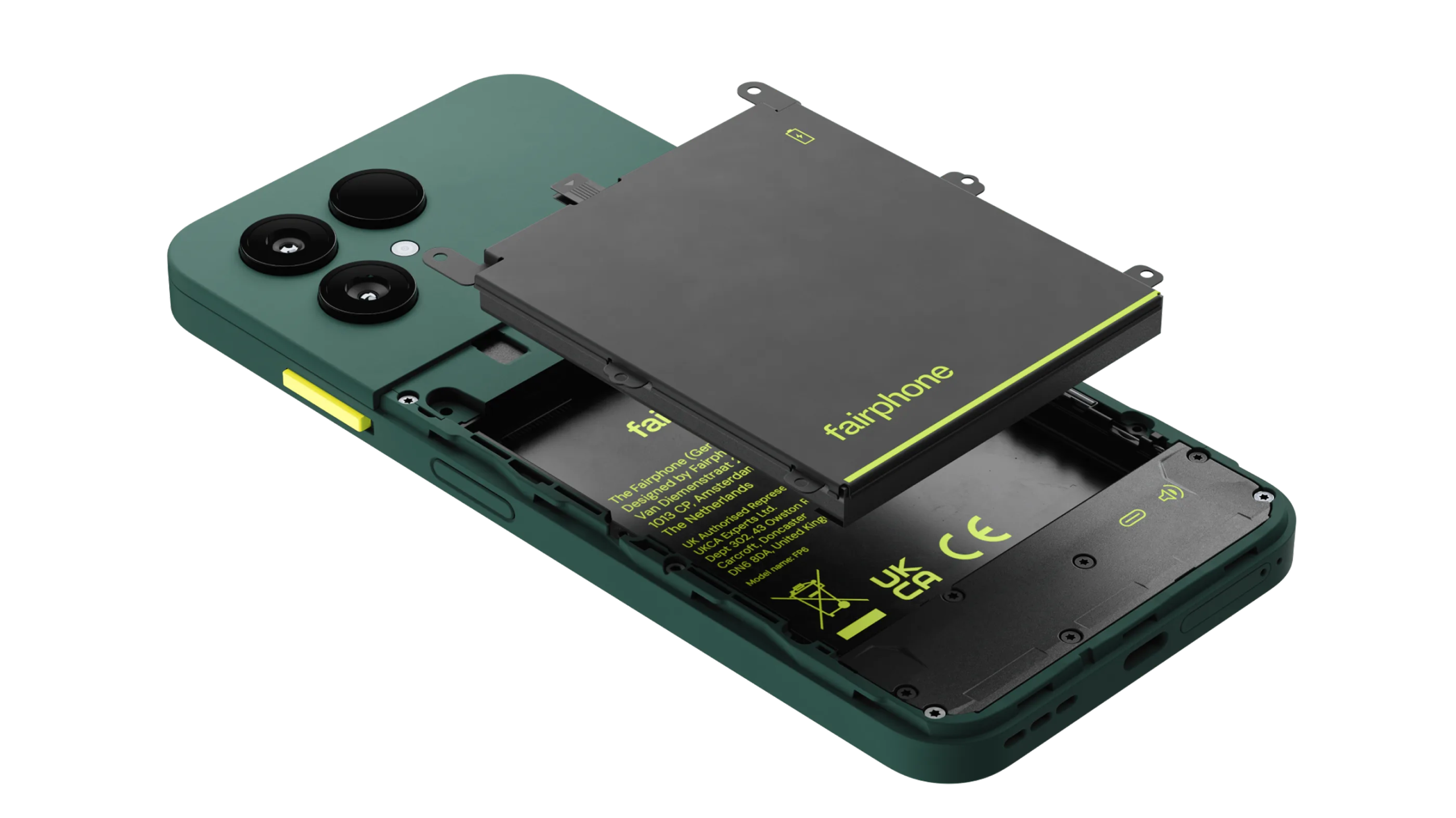
Fairphone 6+ is the company’s eighth phone where most things can be replaced for a relatively low cost, and you can change the battery yourself. Fairphone 6+ includes security and system updates until 2033, which in itself signals that the phone is meant to last a bit longer than many competitors. Price-wise, Fairphone positions itself relatively low compared to other brands, but they also don’t include the most cutting-edge hardware or technical features that can sometimes mean consumers opt out of the product, such as wireless charging. Thus, we have a good-hearted basic idea combined with longevity at a reasonably low price.
The question then naturally becomes; is Fairphone 6+ good?
A first impression – Fairphone 6+
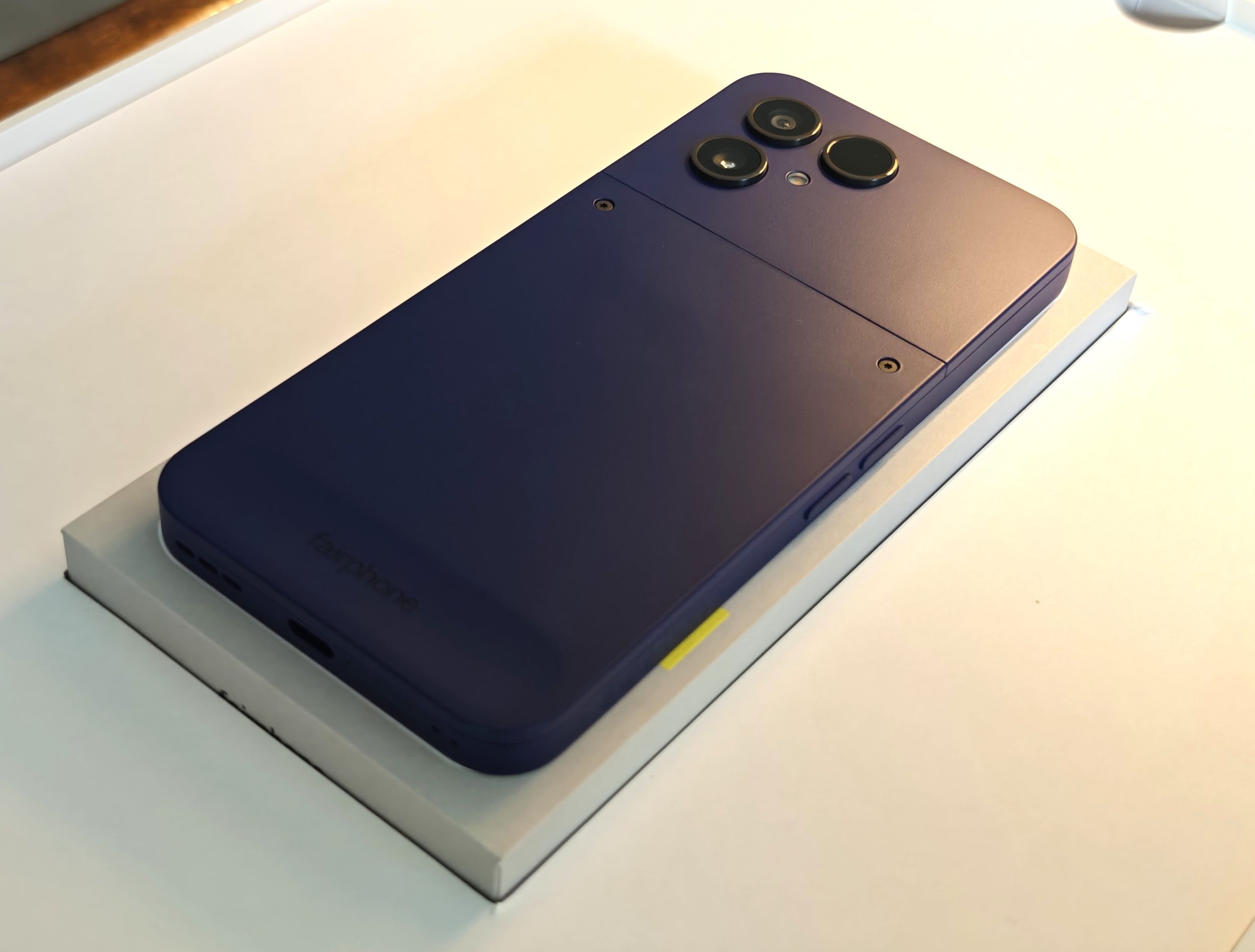
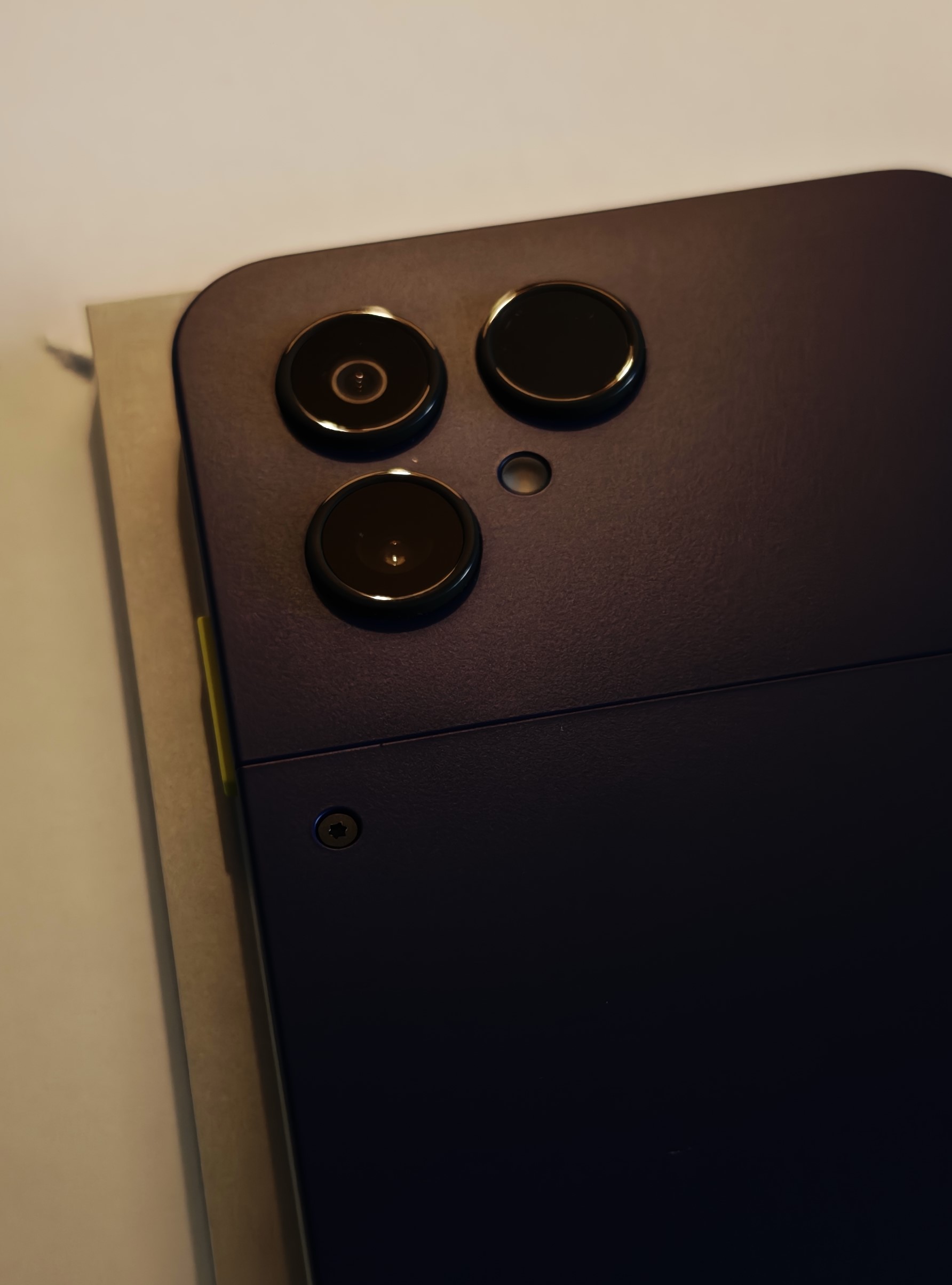
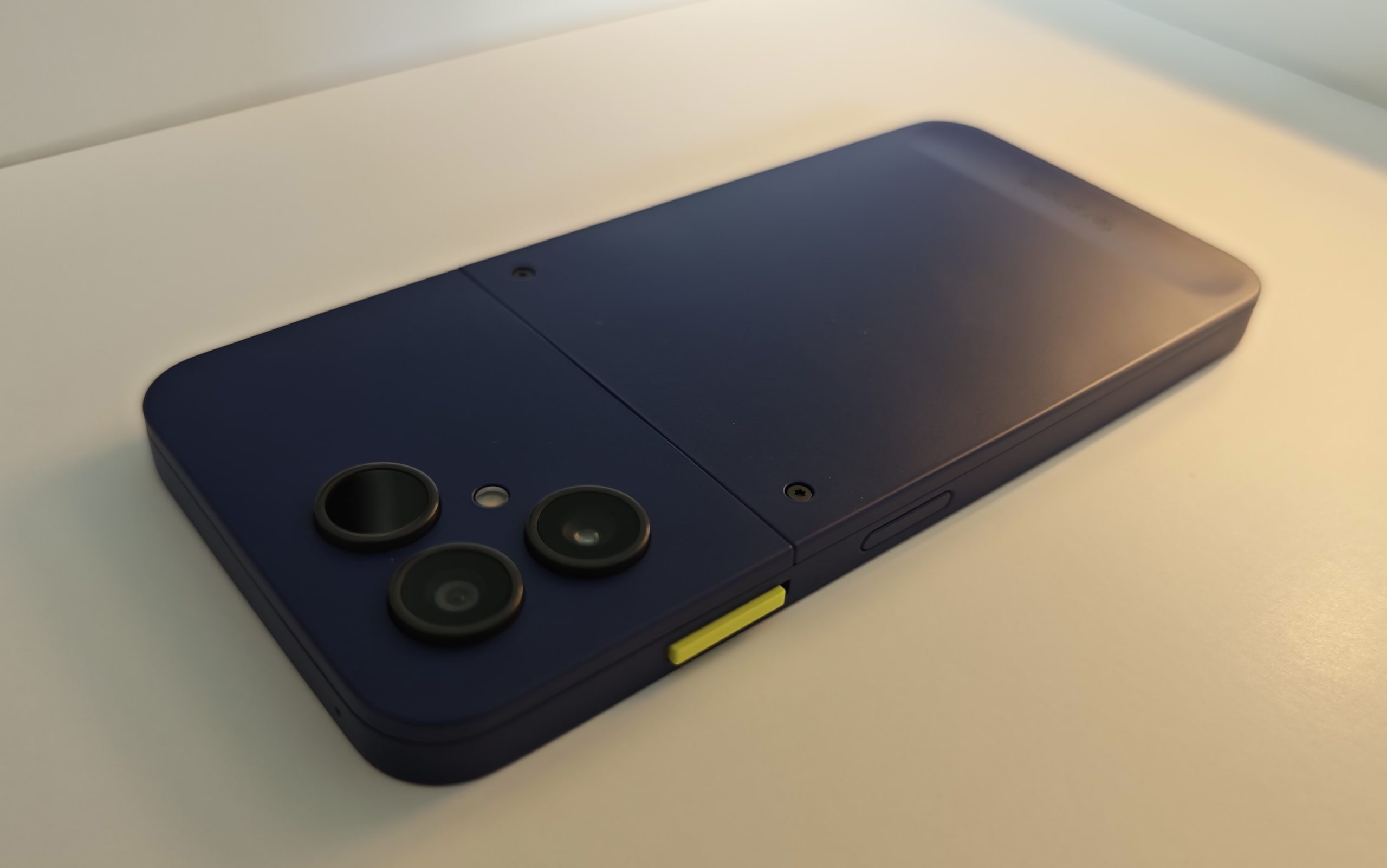
With its cobalt blue color and its high-vis yellow button on the side, the Fairphone 6+ gives a fresh and high-quality impression right out of the box. The two Torx screws on the back, used both to access the replaceable battery and to mount various accessories, are quite charming. We did wonder why they chose Torx instead of Hex (which might be slightly more common in a basic home toolbox). In any case, it quickly became clear that you should keep track of the small screwdriver (size T5) that comes with it, as the screws are so small that a standard set of Torx drivers won’t suffice.
(Photo: senses.se)
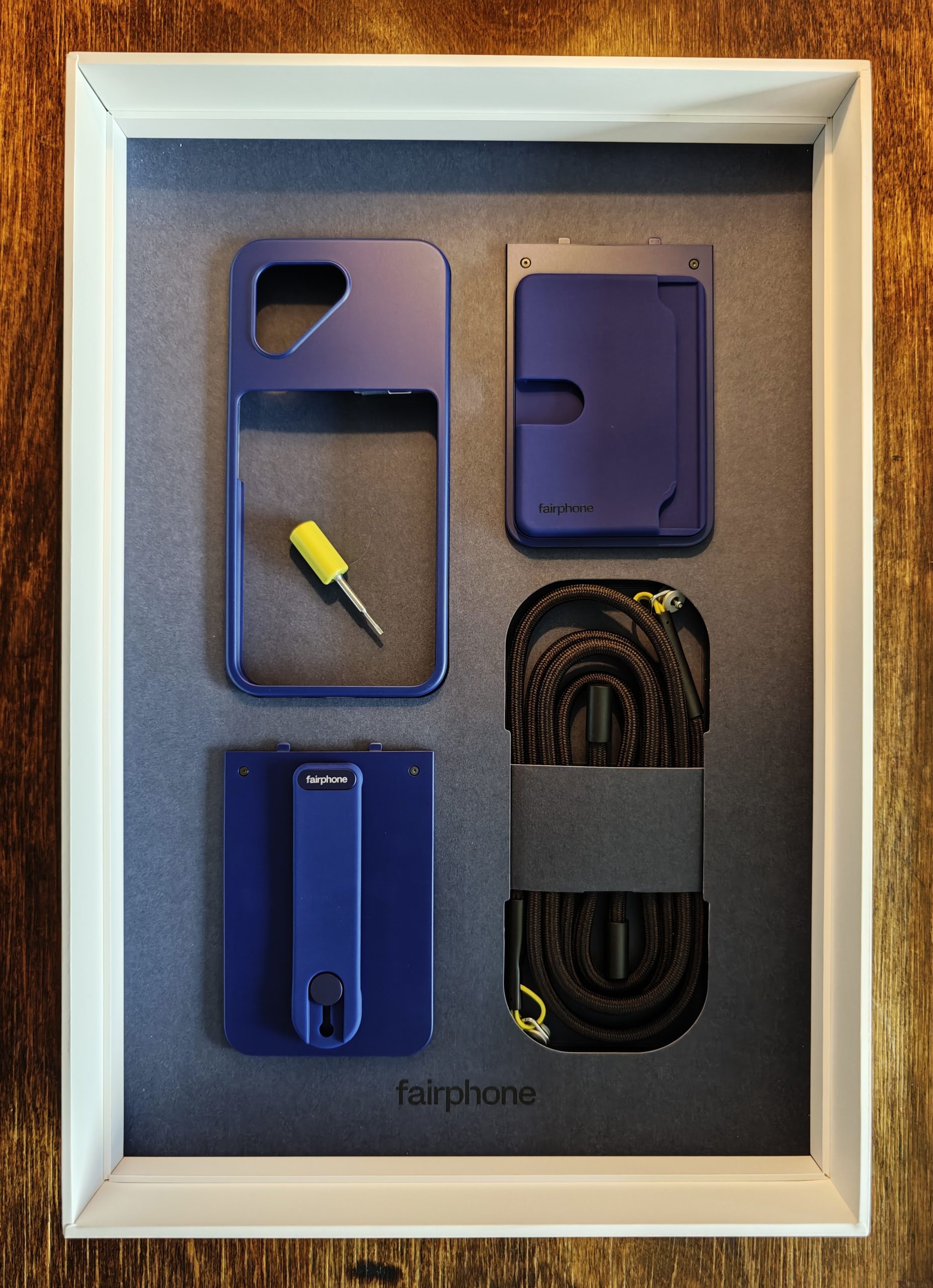
With its relatively compact dimensions (156.6 x 73.3 x 9.6 mm) and a pleasant weight of 193 grams, the phone rests comfortably in the hand. The shell is made of plastic but doesn’t feel budget. We had the chance to look at all the accessories you can mount on the back, which include a case, a card holder, a finger loop, and a longer strap so the phone can hang around either the neck or the waist. Much like a handbag, something Motorola also offered as an option with the Razr series. And as mentioned, everything is mounted with the Torx screwdriver, ensuring the variants stay securely in place. This also means you won’t be swapping the back on the bus. All accessories work well, and it obviously becomes a matter of taste what you choose to have on the back.
(Photo: senses.se)
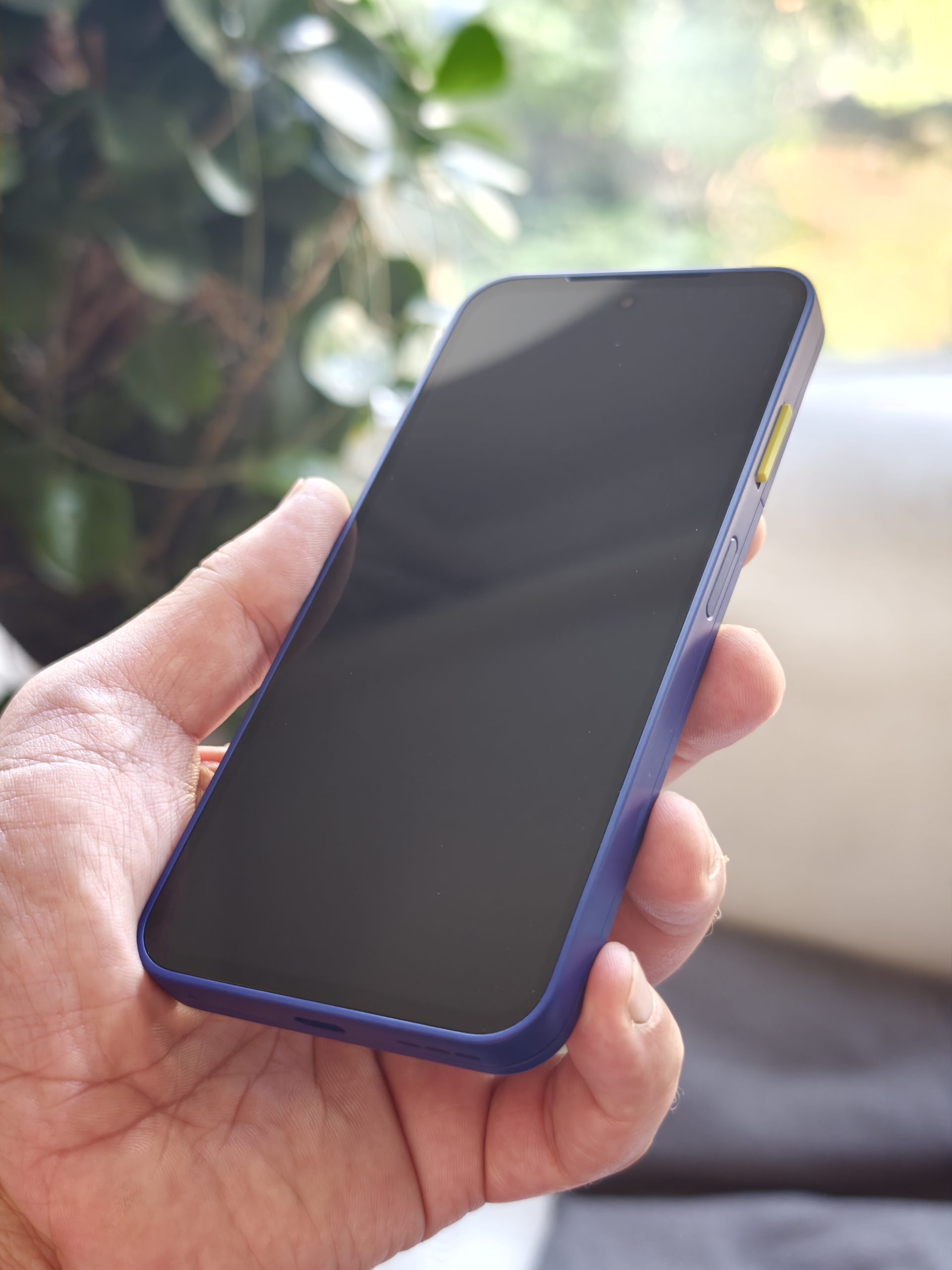
Fairphone 6+ has a somewhat more classic placement for its buttons: power/fingerprint reader on the right side. Just above it is the yellow button, which is a slider used to activate Fairphone Moments, which we will return to further down. On the left side are the volume up/down buttons, and of course, there are hidden combinations when different buttons are pressed simultaneously. The neat width combined with the well-placed buttons makes the Fairphone 6+ easy to navigate for both left- and right-handed users.
A brief technical overview
Fairphone 6+ is largely identical to its predecessor except for a negligible weight increase and a faster processor, as it has a Snapdragon® 7s Gen 4 under the hood. The screen is a 6.3-inch 120Hz OLED backed by a 4415 mAh battery. Fairphone states the battery should last for nearly 20 hours of talk time and 521 hours of standby. In any case, we can confirm that the phone easily lasts more than a day before needing to be charged. But as with everything, it depends on how it’s used. A disadvantage, for some at least, is that wireless charging is not supported and fast charging does not support more than 30W. But if you charge overnight and use a cable, this is not something you need to worry about.
Despite the Bluetooth version being 5.4 and Class 2, we have experienced some range issues. We tested several different headphones such as Jabra Elite 8 Active – Gen 2, Shokz Open Fit Pro or Technics EAH-AZ80, and the result was the same. On some occasions, it was enough for the phone to be in a trouser pocket for the signal to experience clear interference. But in some cases, even when the phone was in a backpack. The phone comes with 12GB of RAM and 256GB of internal memory, which can be expanded to 2TB with a memory card.
As for codecs, everything you could wish for is present (AAC, SBC, aptX Lossless are just a few examples); however, you’ll have to do without LDAC, Dolby Atmos, or a 3.5mm jack.
(Photo: senses.se)
The Camera
The main camera is a 50MP (F/1.88) with an underlying Sony LYTIA LYT-700C (IMX896) sensor. The camera can handle 2x optical zoom and 10x digital. Next to it sits a 13MP (F/2.2) wide-angle lens with an OmniVision OV13B10 sensor. Together, these create perfectly fine images, but the super-macro mode stands out slightly and manages to capture very small details at very close range. Now, the Fairphone 6+ is not a camera phone in the same sense as, for example, the Xiaomi 17 Ultra but you can take nice photos, and the camera is fast enough not to miss those unique moments. A double-click on the power button and the camera is running in a second (or just under). You can also film in 4K or get nice slow-motion videos in 720p (240fps).


Repairability
Now we come to one of the parts that makes Fairphone 6+ really interesting: the possibility to repair and replace parts that break. Besides the fact that you can easily—and we mean really easily—replace the battery, you will find a list on Fairphone’s website of the 12 spare parts that can be replaced. Prices are also listed there; for example, a new battery costs 40 euros, a new screen 90 euros, the main camera 70 euros, or why not a new SIM card holder for 8 euros. And for those wondering whether you risk the warranty by opening the phone, and thereby also temporarily breaking the IP55 rating, Fairphone has explicitly stated that this is not the case. So the promises Fairphone makes regarding sustainability are not just empty talk. And to that, we say bravo.
The Experience
So how does the Fairphone 6+ feel in everyday life? The general experience is that any shortcomings in hardware compared to flagships twice as expensive are not noticeable. Occasionally, if too much is running, for example, the transition when pulling down the top bar can feel a bit sluggish. But you can play games without any problems, and all everyday tasks are solved without any issues. The fingerprint reader reacts quickly, and it’s rare that it doesn’t succeed on the first attempt. The format—being slightly smaller than most phones today—is relaxing in itself. This, combined with how the buttons are placed, makes it very easy to operate the phone with one hand. Details such as being able to expand the storage space physically, run dual SIM cards, or e-SIM mean that the Fairphone 6+ actually has very few limitations. The only downside, which of course depends on what you’re used to, was the slow charging which required some planning.
But the feeling of carrying around a phone that, to a greater extent than many others, actually tries to make the world a little better, also partly excuses any flaws. But the Fairphone 6+ has one last card up its sleeve that we like, and that is Fairphone Moments.
Fairphone Moments
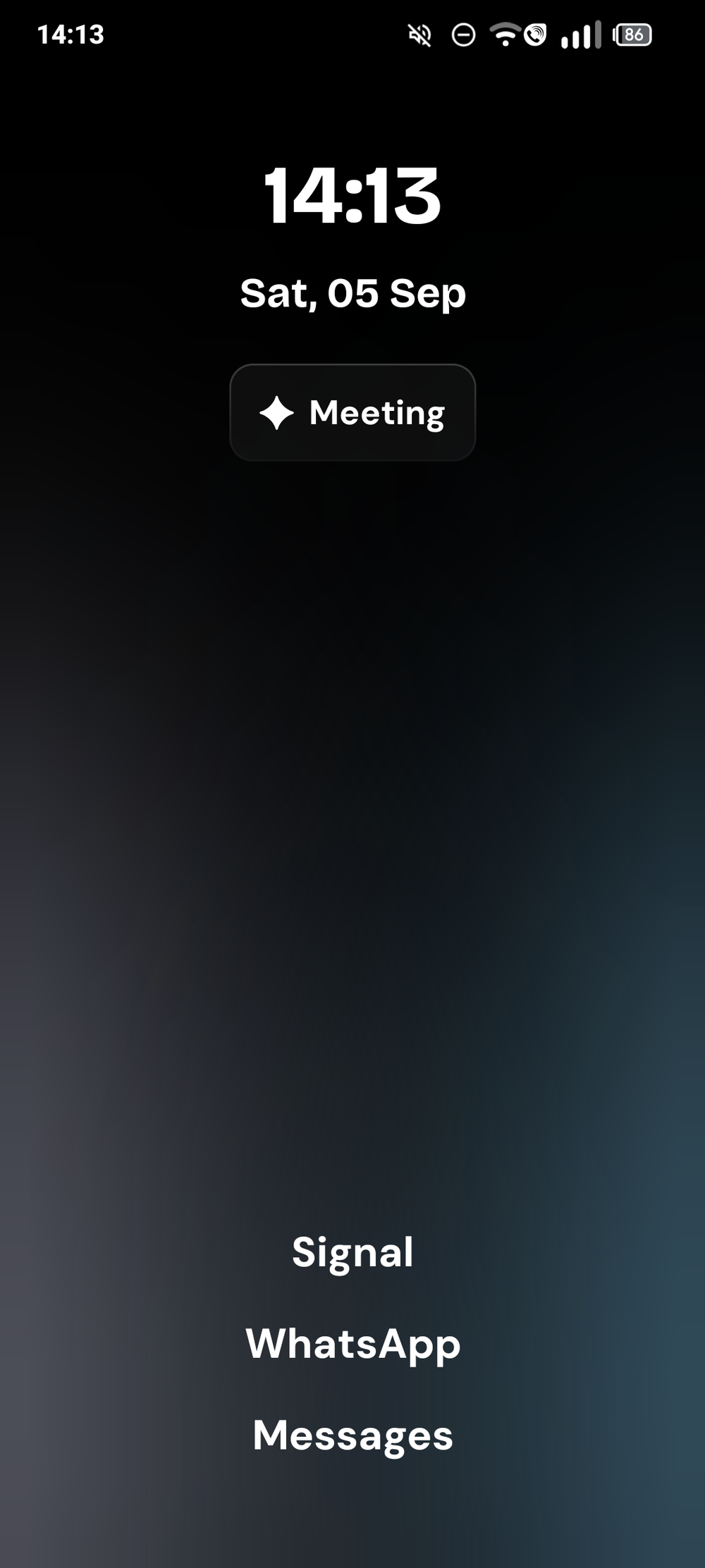
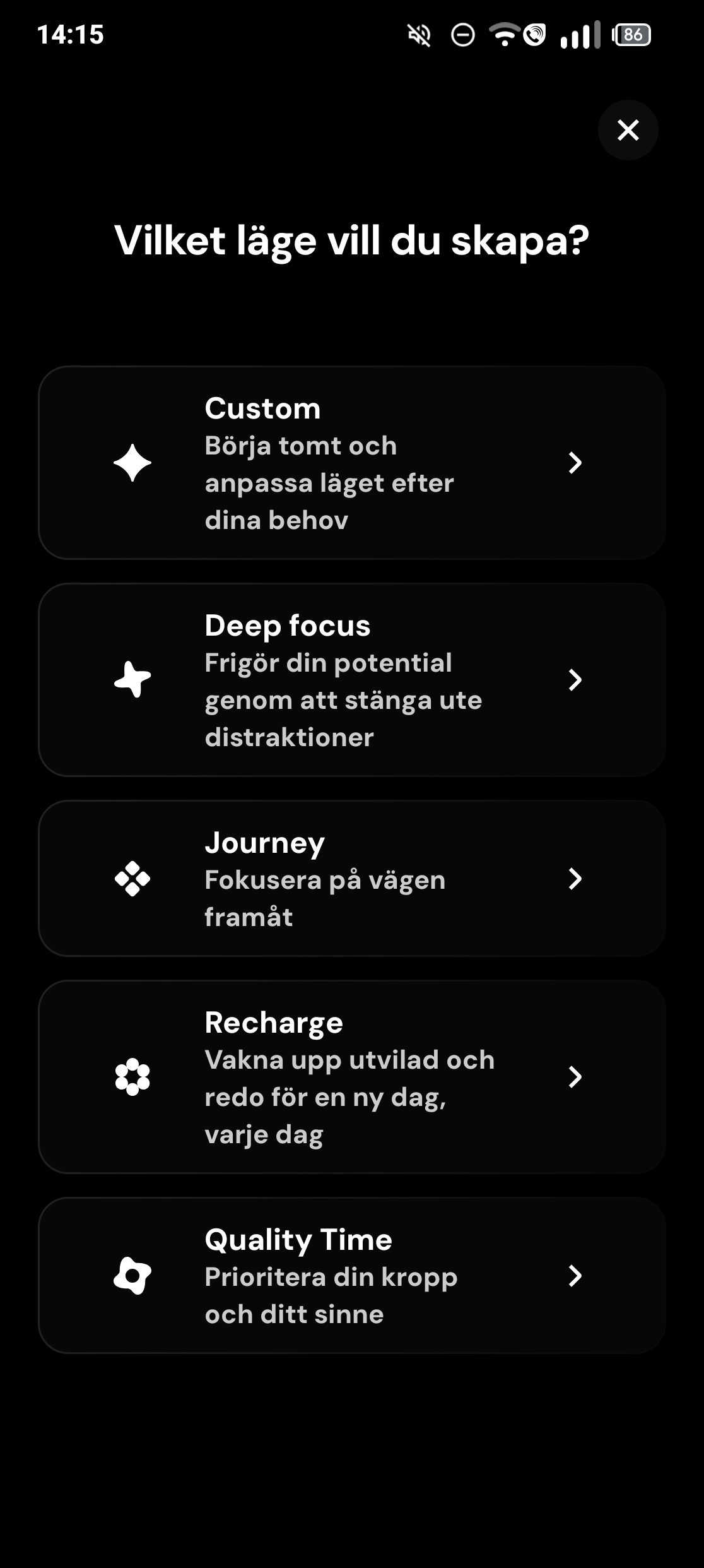
You access Fairphone Moments when you slide the yellow button downwards. Simply put, it’s a pause mode where you can choose access to a maximum of five apps. You can choose a background and decide if everything should be in black and white. Additionally, you set who can reach you, whether sound or vibration should be on, and how apps should notify you. We’ve seen the concept before, including from Motorola, but what makes Fairphone’s version extra clever is that you can create several modes to choose from. For example, evening mode, meeting, total “do not disturb,” or something in between. You choose for yourself and design it the way you want it. And every time you slide down the button, you can easily select which “moment” you want to start. Fairphone Moments is really useful and smart. We add another bravo.
(Photo: Fairphone)

(Photo: Fairphone)
(Photo: Fairphone)
The Bottom Line – Fairphone 6+
The only things we’ve really experienced as weaknesses are possibly the somewhat slow charging and the unstable Bluetooth connection. On paper, there shouldn’t be any issues, but nevertheless, we sometimes experienced disruptions. The lack of wireless charging may be a dealbreaker for some—for example, those who constantly charge in the car or on a charging stand—while for others, it’s less important. Many charge via cable at night, making this part hard to call a negative. But it is relatively common, while other models like the Nothing Phone (4a) Pro also lack it. Occasionally, the processor can’t quite keep up, but even there, it depends a bit on how you use the phone and what you’re used to.
The price for the Fairphone 6+ is just over 7,000 SEK, which puts it in the same price range as the aforementioned Nothing Phone (4a) Pro and Motorola Edge 50 Neo. The Fairphone 6+ is MIL-STD 810H certified but has a lower IP rating than the Edge 50 Neo. So these three are playing on roughly the same level.
(Photo: senses.se)
But Fairphone’s main concept—sustainability and fairness—is something they are alone in. And as a consumer, the possibility of replacing parts, repairing, and renewing the phone is a strong selling point. At least it should be. The only negative aspect from a future perspective is that the RAM is not expandable, which could potentially become a problem in the future. Especially given the intended long lifespan.
The Fairphone 6+ plus is, however, a truly successful example of how you can actually keep your phone for a long time and thus both save your own money and reduce your own impact on global resource consumption. Because the Fairphone 6+ handles everything a phone should, it looks good, and it doesn’t hurt that it also contributes to a better working climate for those who build it.
How we rate products at SensesReview Highlights: Q&A
Can I replace the battery and parts myself?
Yes, the Fairphone 6+ allows users to easily replace the battery and 12 different spare parts using the included size T5 Torx screwdriver. Opening the phone does not void the manufacturer warranty.
How long will the phone receive software updates?
Fairphone provides system and security updates for the device until 2033.
Does it support wireless charging or fast charging?
Wireless charging is not supported, and wired charging is limited to a maximum speed of 30W.
Can the internal storage be expanded?
The built-in 256GB storage can be expanded up to 2TB using a memory card.
Does the phone have a 3.5mm headphone jack?
No, it lacks a 3.5mm headphone jack, and it also does not support LDAC or Dolby Atmos.
