
TL;DR
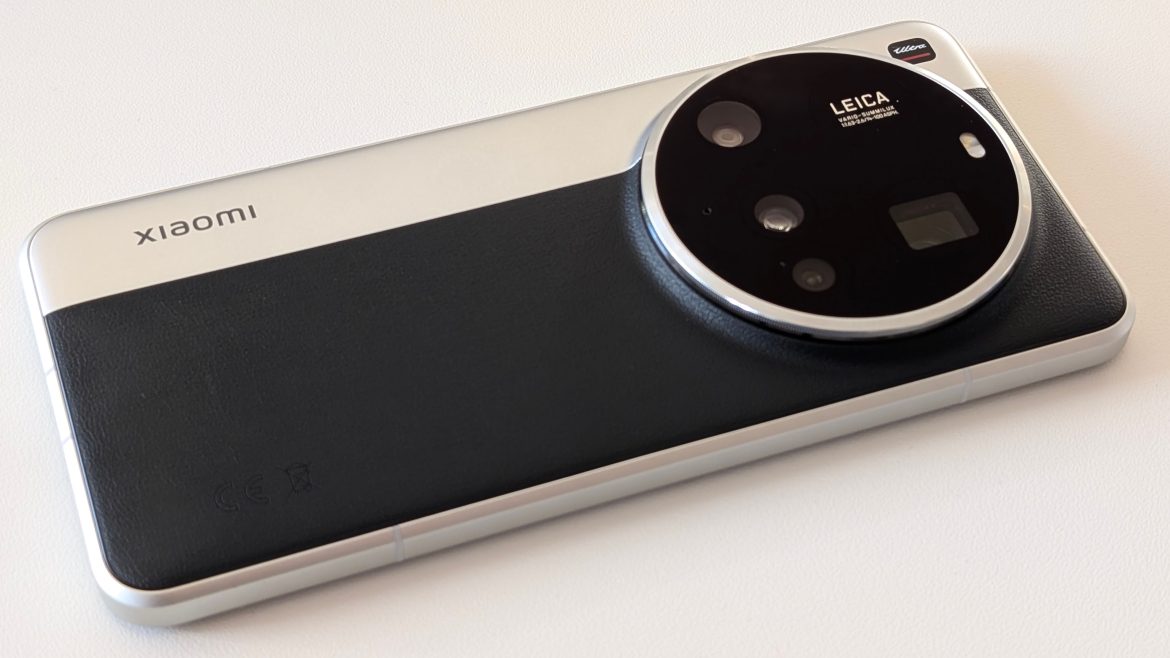
The Xiaomi 15 Ultra aims to be the ultimate camera phone, boasting a distinctive design and a truly impressive camera system, especially its 200MP 4.3x telephoto lens that rivals the best. It packs a powerful Snapdragon 8 Elite chip, a vibrant OLED display, and a large 5,410 mAh battery with fast charging. However, it stumbles slightly with some pre-installed bloatware, occasional ads, and AI features that lag behind competitors like Samsung. While its design is polarizing, the camera prowess is undeniable. Is this the new king of smartphone photography? Dive into the full review to find out!
Is it a phone, or is it a camera? No, it’s Xiaomi’s flagship, the Xiaomi 15 Ultra, which is about as much camera as it is phone. We have previously tested its predecessor, the Xiaomi 14 Ultra, which impressed us. We recently tested Samsung’s S25 Ultra, which we criticized for being “a bit boring” and lacking that “must-have” feeling. Is it the same with the Xiaomi 15 Ultra? We are going to find out!
First Impressions: Design / Build Quality
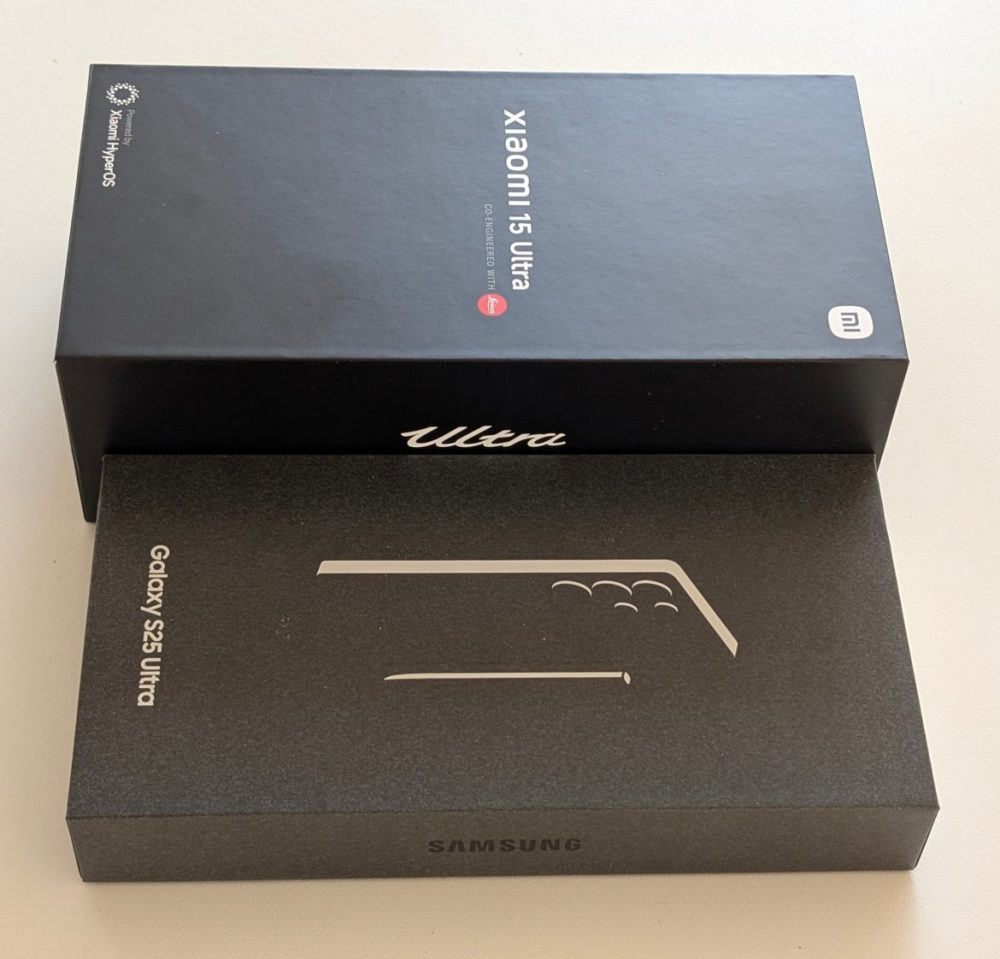
In the enormous box (certainly twice as large as the box for the Samsung S25 Ultra), there is a transparent protective case for the phone, a charging cable, and a minimal get-started guide. The size of the box serves no purpose other than to show that this is something big, as there is no other reason. As usual, no charger is included.
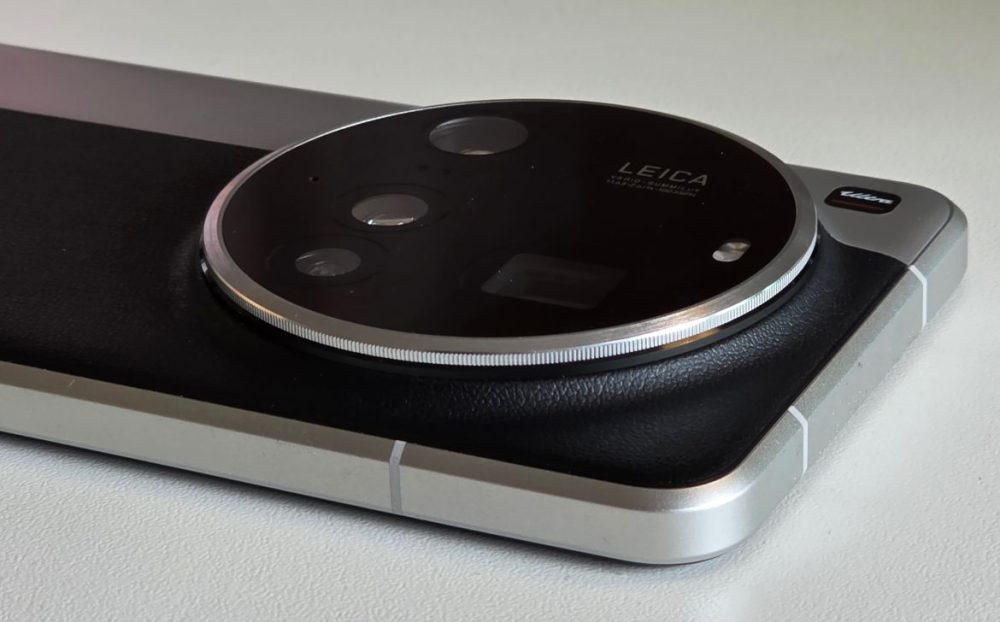
Of all the phones we have tested, we have never received as many comments about the appearance as we did with this one. With its distinct retro design and very prominent camera section, it draws attention. Whether you like it, or if it’s too much of a gimmick? Personally, I think it is exactly the right path for Xiaomi—a design that stands out a bit in the otherwise rather dull design landscape where everything looks roughly the same.
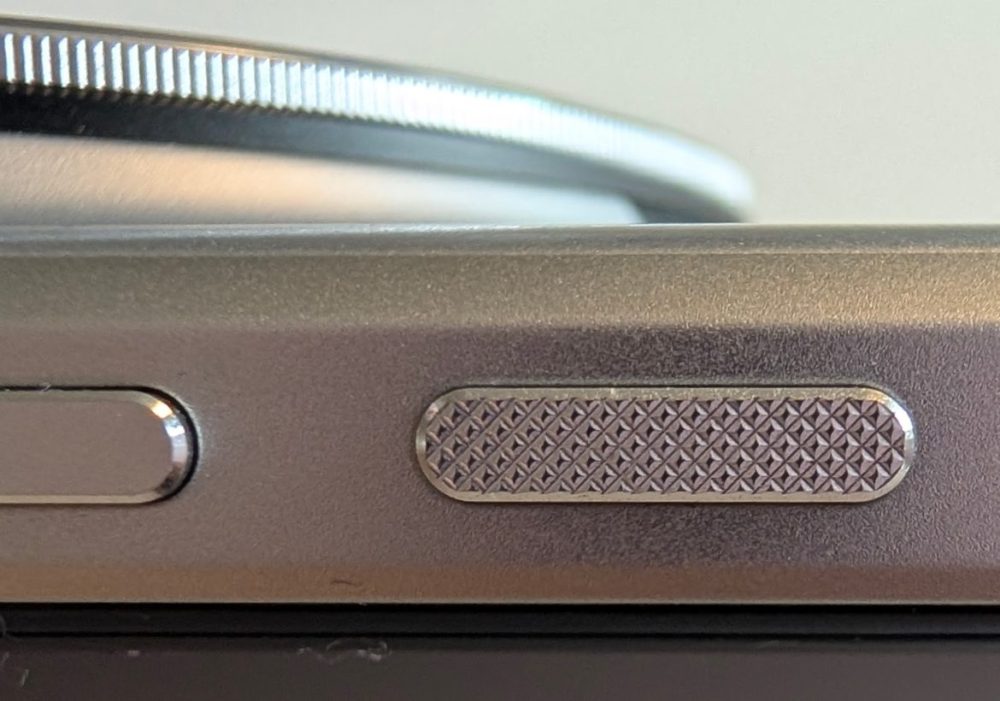
There is a lot in the design that is well-thought-out, such as the power button being “textured” so you immediately feel that you are pressing the right button. The build quality is also very good; everything feels very solid.
There is a factory-fitted screen protector on the screen upon delivery.
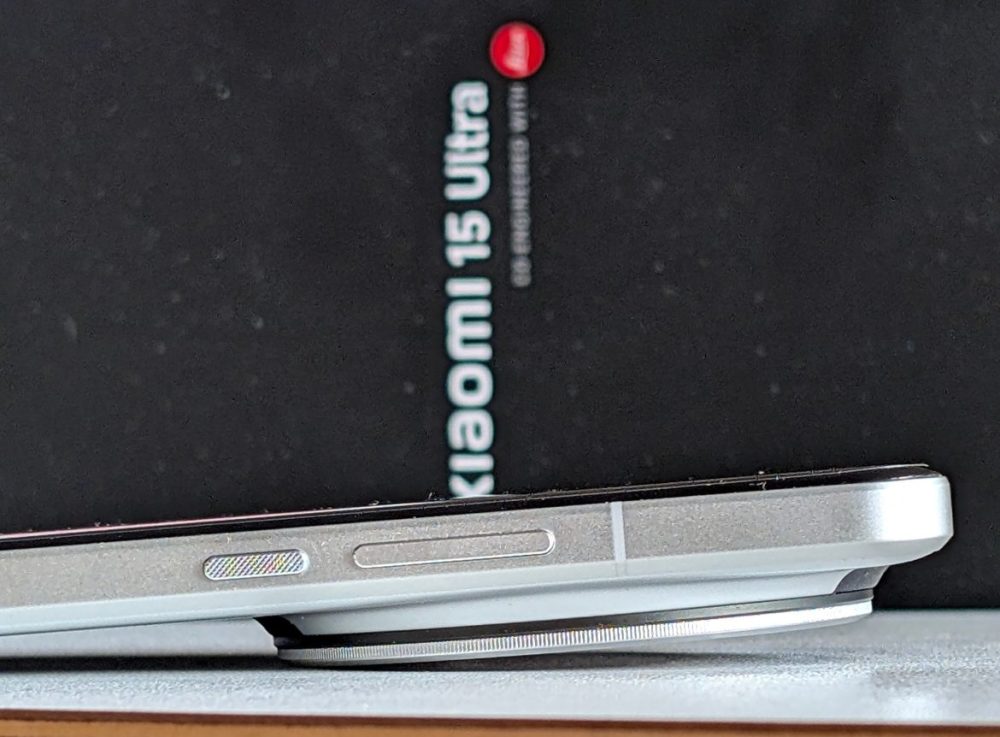
When the phone is lying down, it sits stable, and the camera section is so cleverly placed that there is no risk of scratching any of the lenses.
Screen
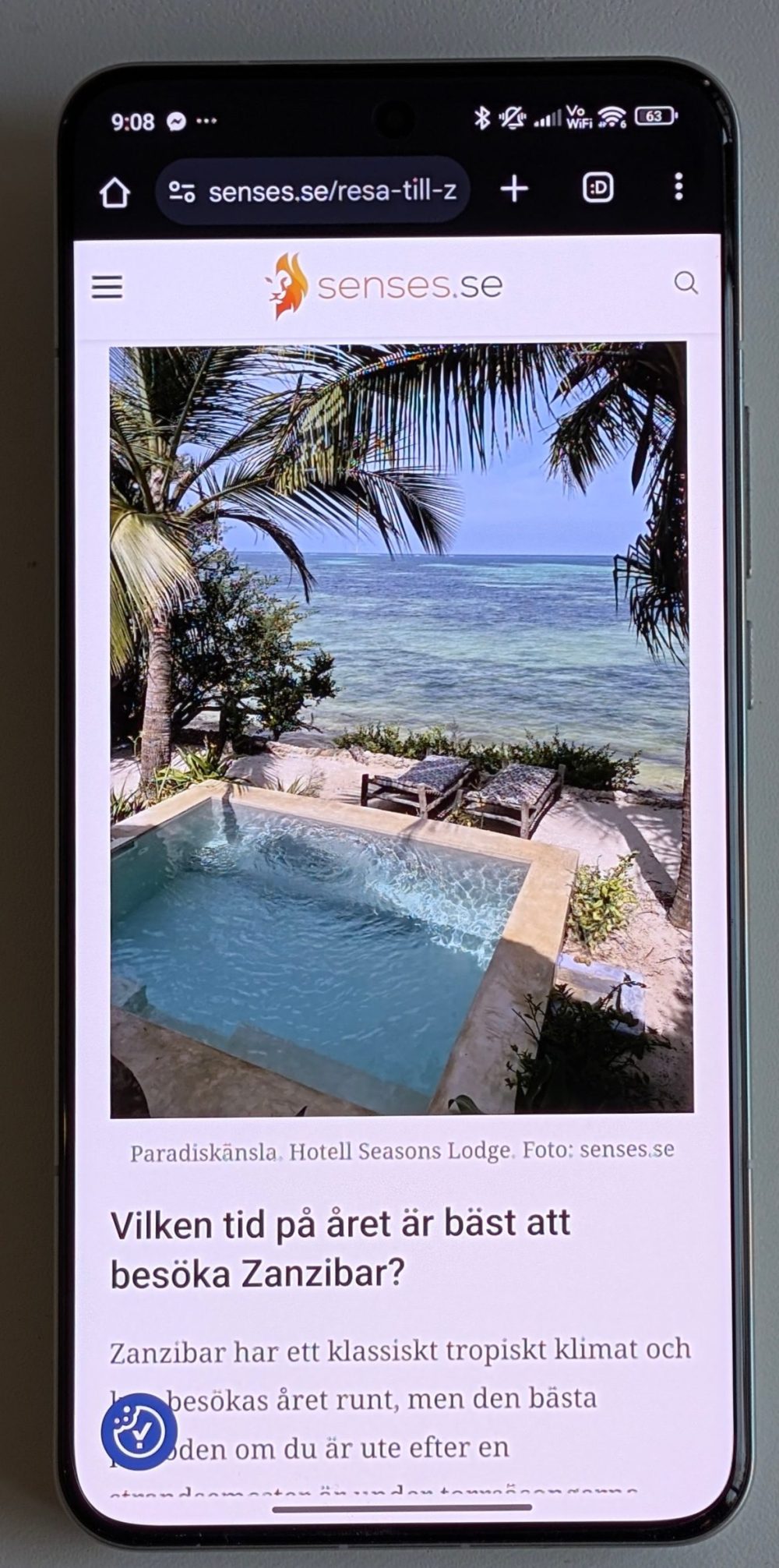
The Xiaomi 15 Ultra has a 6.73-inch QHD OLED screen with support for 1–120 Hz, HDR10+, and Dolby Vision.
The screen is not completely flat like on, for example, the Google Pixel 9 Pro XL, but it is very slightly curved at the edges. It looks nice, but we prefer completely flat screens. It reduces the risk of accidental touches at the edges and allows a screen protector to reach all the way out.

As usual with Xiaomi, you can choose to have a dynamic refresh rate that adapts, or you can choose a custom one and lock it at either 60 or 120 Hz.

You also have the option to run the screen in high resolution, or in a lower resolution to save battery. If you choose the higher resolution, you can also set it to downscale the resolution when the battery starts running low.
The screen is supposed to be able to go up to 3,200 nits, and in regular use, it is perceived as bright—perhaps not on the same level as the Google Pixel 9 Pro XL, but bright enough to be used outdoors in sunlight.
Battery and Charging
The Xiaomi 15 Ultra has a large battery with a capacity of 5,410 mAh. We like it when manufacturers include larger batteries; good battery life is an underrated feature. It can be charged via cable at up to 90 W, but that requires a specific charger from Xiaomi. Wirelessly, it handles up to 80 W, and here too, a specific Xiaomi charger is required. It supports reverse wireless charging, for example, if you need to charge your headphones or smartwatch, at up to 10 W.
Just like with the Google Pixel 9 Pro XL, it is quite picky about which chargers it will fast charge with. We tested a number of different chargers at the office and had difficulty exceeding 45 W, which is actually not too bad. That gives you about 60% in 30 minutes, and charging 0–100% then takes about 90 minutes. However, several chargers that fast charge other phones do not want to fast charge the Xiaomi 15 Ultra at all, instead stopping at around 25 W.
Battery life is really good, fully on par with the Samsung 25 Ultra; you have 20-40% battery left after a full day of use.
Performance
The Xiaomi 15 Ultra is powered, as it should be, by the sharpest hardware currently available in the Android world, namely Qualcomm’s Snapdragon 8 Elite (a bit of a truth with modification, as the Samsung S25 Ultra has a slightly overclocked version of the same chip).
Performance is, as expected, very good. We have read some reports about users experiencing the phone getting hot and either throttling performance or even closing apps. We have pushed the phone hard for a couple of weeks, and aside from the initial setup and several long benchmarks run in a row, we haven’t had any issues with heat generation. Nor have apps closed down. We noticed some performance throttling during longer benchmarks, but nothing we noticed during normal use.
Software / AI Features
The Xiaomi 15 Ultra ships with Android 15 and Xiaomi’s “skin” HyperOS, here in version 2. Xiaomi has promised four upcoming OS updates and six years of security updates. Not quite at the level of Google/Samsung, but still acceptable.
There are quite a few pre-installed apps—not quite as bad as with Xiaomi’s slightly cheaper phones like the Redmi Note 14 Pro+, but more than what you would expect on a flagship model.
Something extremely annoying is that advertising appeared as notifications a couple of times during the testing period.

The culprit was the pre-installed “Mi Web Browser” app, which occasionally sent notification spam. This was easily solved by not allowing it to send notifications, but it was still very annoying.

When it comes to AI, the phone naturally supports Gemini and Google’s Circle to Search. But there are also a number of other features. Unfortunately, Swedish is not supported (yet), and the rest of the functionality—such as using generative AI to alter images—is a couple of steps behind Google and especially Samsung, which excelled in that class with the Samsung S25 Ultra.
Camera
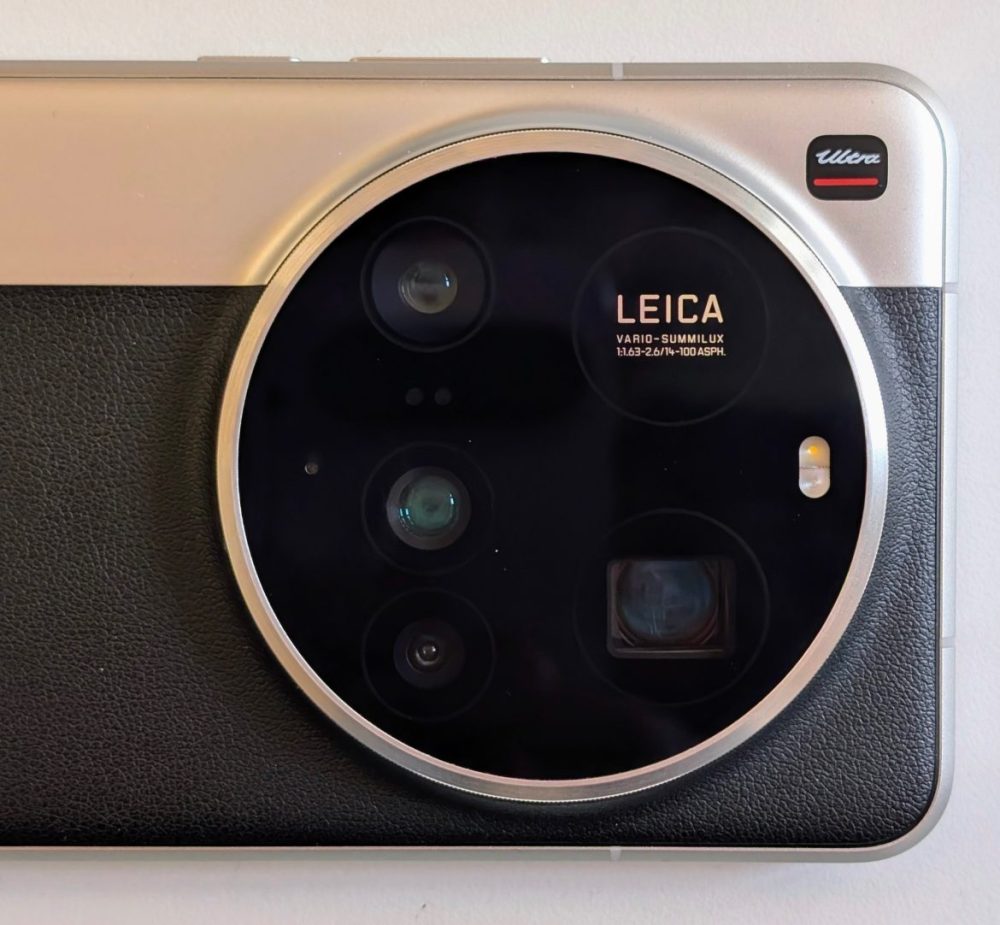
Now we come to the main event of the phone: the cameras. There are several. The main camera is 23 mm, f/1.63, and has a 1-inch 50 MP sensor. There are two telephoto lenses: one with 3x zoom (70 mm), f/1.8 with a 50 MP sensor, and one with 4.3x zoom (100 mm), f/2.6 with a 200 MP sensor. The ultra-wide angle is 14 mm, f/2.2 with a 50 MP sensor. The front camera has a 32 MP sensor and f/2.0.
We noticed immediately when we started taking photos with the phone that the star here is the 4.3x zoom with 200 MP. It takes incredibly good photos, and photos that we would normally have taken with the main camera, we now take with the telephoto lens instead, though we have to take a few steps back.
But we begin as always by going out during the day to compare how well the phone holds up against our camera phone reference, the Google Pixel 9 Pro XL.














As the images show, the Xiaomi 15 Ultra has no problem keeping up with the Pixel phone. We go out at night and repeat the same test.














Even here, it has no trouble measuring up to the Pixel phone—rather the opposite. It handles light sources better and generally takes better photos.
Below is another example of zoom under very poor lighting: first an image taken with the main camera, and then we zoom in 50x to see what the sign on the house wall says:


It doesn’t result in a particularly useful image, but it’s impressive how good it turns out, handheld under poor lighting.
As we mentioned earlier, the 4.3x camera is the star. Here are a couple of examples of photos taken with it:




There are, however, a couple of things that are not quite perfect. Sometimes the HDR function can “glitch” and make the images look very strange, and sometimes the exposure is completely wrong, making the images way too bright or too dark. Here is an example of an image that became much darker than it looked in reality:

Overall, it requires a bit more hands-on effort when photographing with the Xiaomi 15 Ultra than when using a Pixel or an iPhone. You might need to adjust the exposure slightly, or switch between 3x/4.3x to see what fits best for that specific moment, etc. But when you get it right, it’s very good.
Conclusion
When I tested the Samsung S25 Ultra a few weeks ago, I complained that it was boring and felt a bit too “business.” I don’t feel the same way here at all—rather the opposite, for better or worse. The software, and especially the AI functionality, is not at all on the same level as Samsung’s. There are ads in the interface, but at the same time, it has a lovely retro design. The camera is absolutely wonderful, even if it sometimes takes really poor pictures, but it is fun to use, and once you get it right, it turns out very well.
Performance is top-notch; it has 16 GB of RAM and 512 GB of storage space. The screen is really good. Then there is the matter of the price. The recommended price is 17,990 SEK, although it has been available for less during the launch weeks. It’s a lot of money, but at the same time, it’s a flagship with probably the best camera of any mobile phone currently on the market.
Xiaomi sent a test sample for this review. Senders of material have no editorial influence on our tests.
Review Highlights: Q&A
Does the Xiaomi 15 Ultra come with a charger?
No charger is included in the box, only a cable and a case.
Is the screen on the phone flat or curved?
The 6.73-inch OLED screen is very slightly curved at the edges.
What is the battery capacity and charging speed?
It has a 5,410 mAh battery and supports up to 90W wired charging.
How many years of software updates are promised?
Xiaomi promises four OS updates and six years of security updates.
Which specific camera is the star of the device?
The 200 MP telephoto lens with 4.3x zoom is the standout performer.
Are there any issues with the software experience?
Yes, it includes bloatware and occasional unwanted notification ads.
Does the phone support wireless charging?
Yes, it supports wireless charging at up to 80W with specific chargers.
What is the official retail price for this model?
The recommended retail price for the flagship phone is 17,990 SEK.