
TL;DR
RØDE has tackled the bulk of its previous systems with the ultra-compact Wireless Micro and Wireless Micro Camera Kit. Weighing just 12 grams, these featherweight transmitters deliver signature RØDE audio—crisp, focused, and speech-optimized—at less than half the price of key competitors. While they trade off internal memory and extreme range for portability, their plug-and-play simplicity and 21-hour total battery life make them a powerhouse for creators on the move. Whether you’re filming on a smartphone or a cinema camera, these kits offer professional sound for a pittance. However, there are a few design quirks regarding accessory storage and default settings you should know before clicking "buy." Is this the ultimate budget-friendly audio solution for your setup? Read the full review to see the performance tests for yourself.
This spring, I had the opportunity to test Wireless Pro from RØDE. I was impressed by several features, but there were also things that left something to be desired. Above all, the transmitters were large and clunky if used without a LAV microphone (lavalier), which meant they weighed down clothing and didn’t feel particularly streamlined.
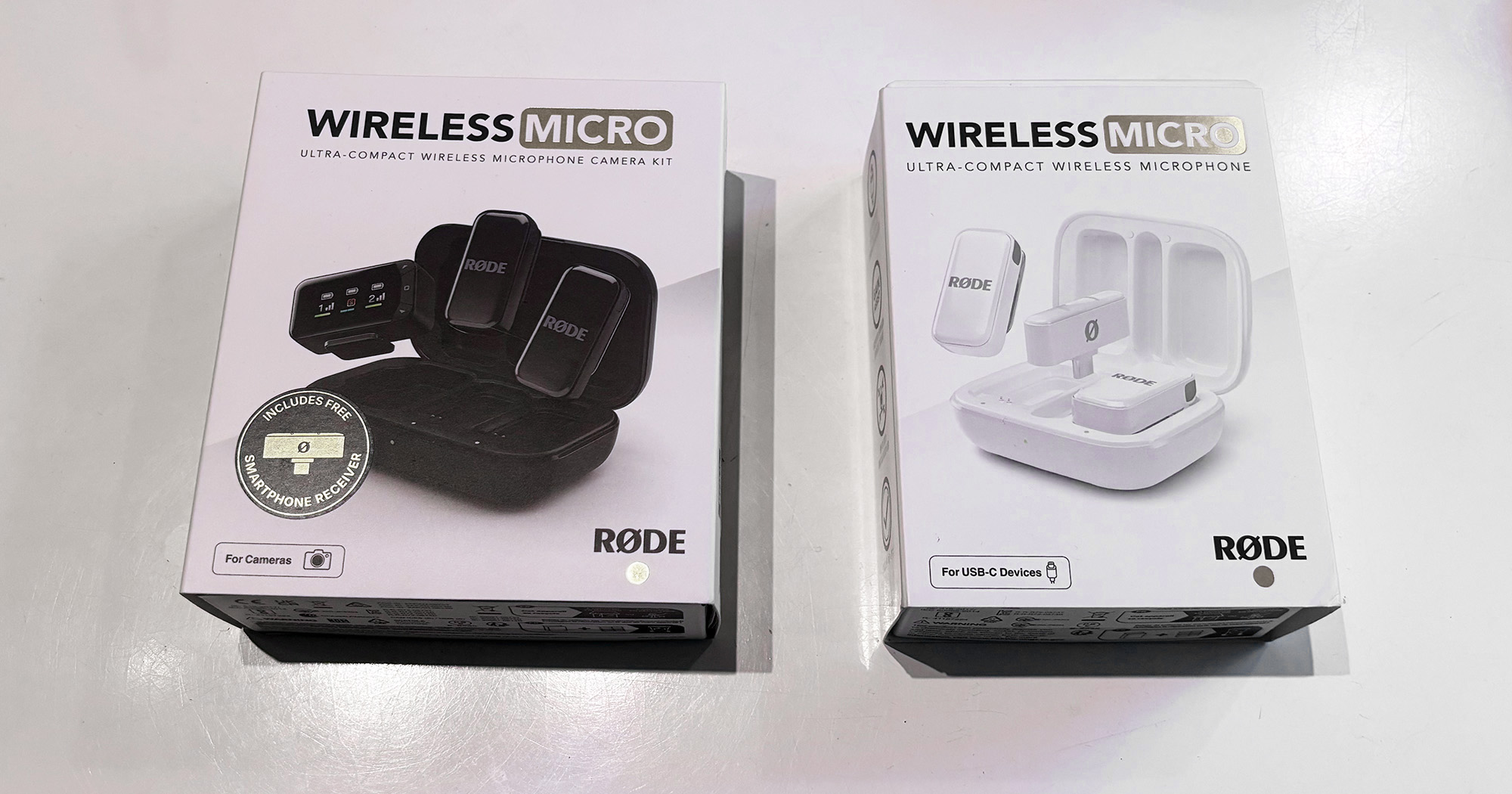
Now, I am instead sitting with two new versions of transmitters and receivers from RØDE: Wireless Micro and Wireless Micro Camera Kit. They are more or less identical in both design and performance, so two separate reviews felt unnecessary. It is more a matter of which one fits you best.
RØDE – Wireless Micro Camera Kit
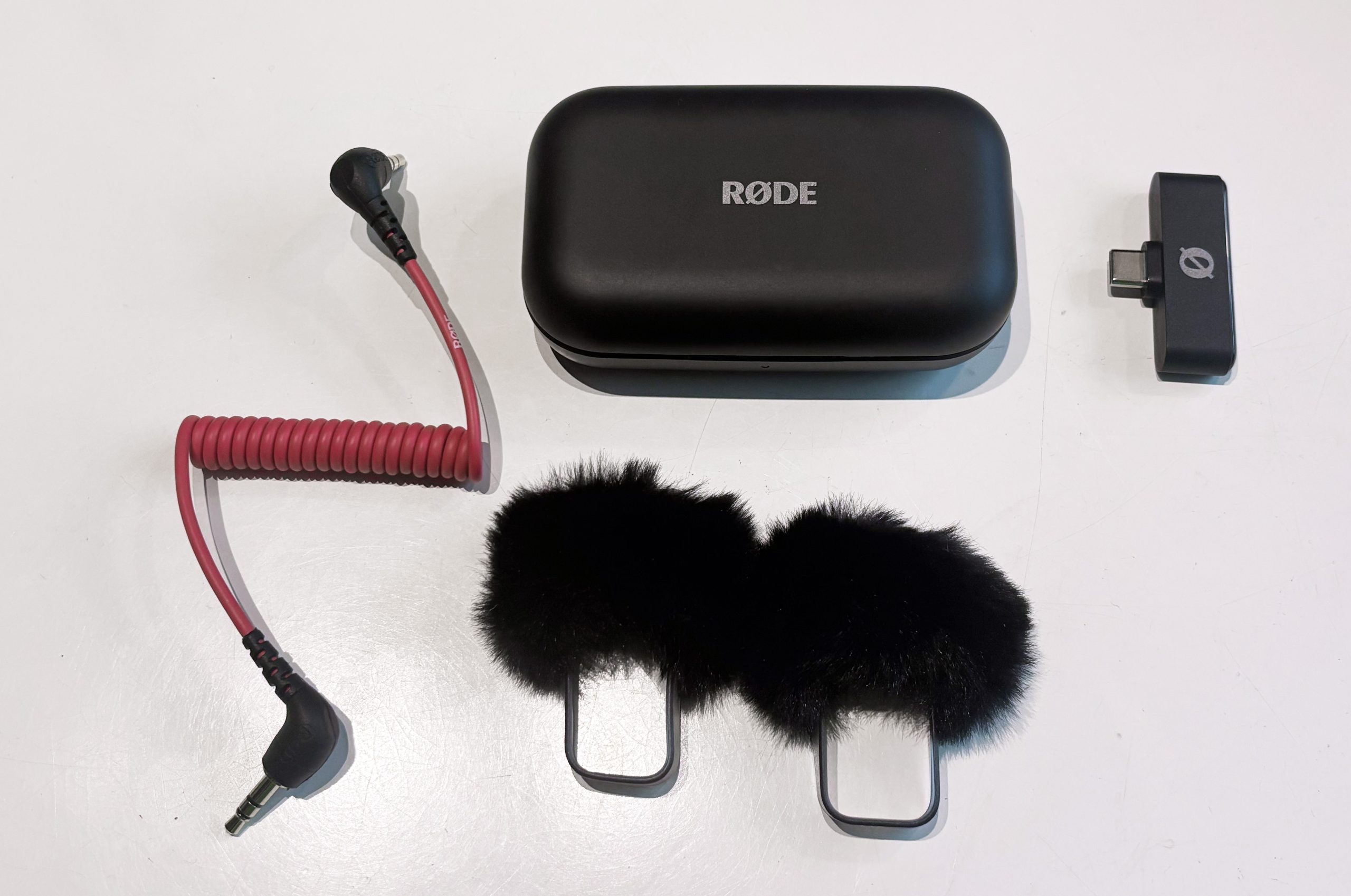
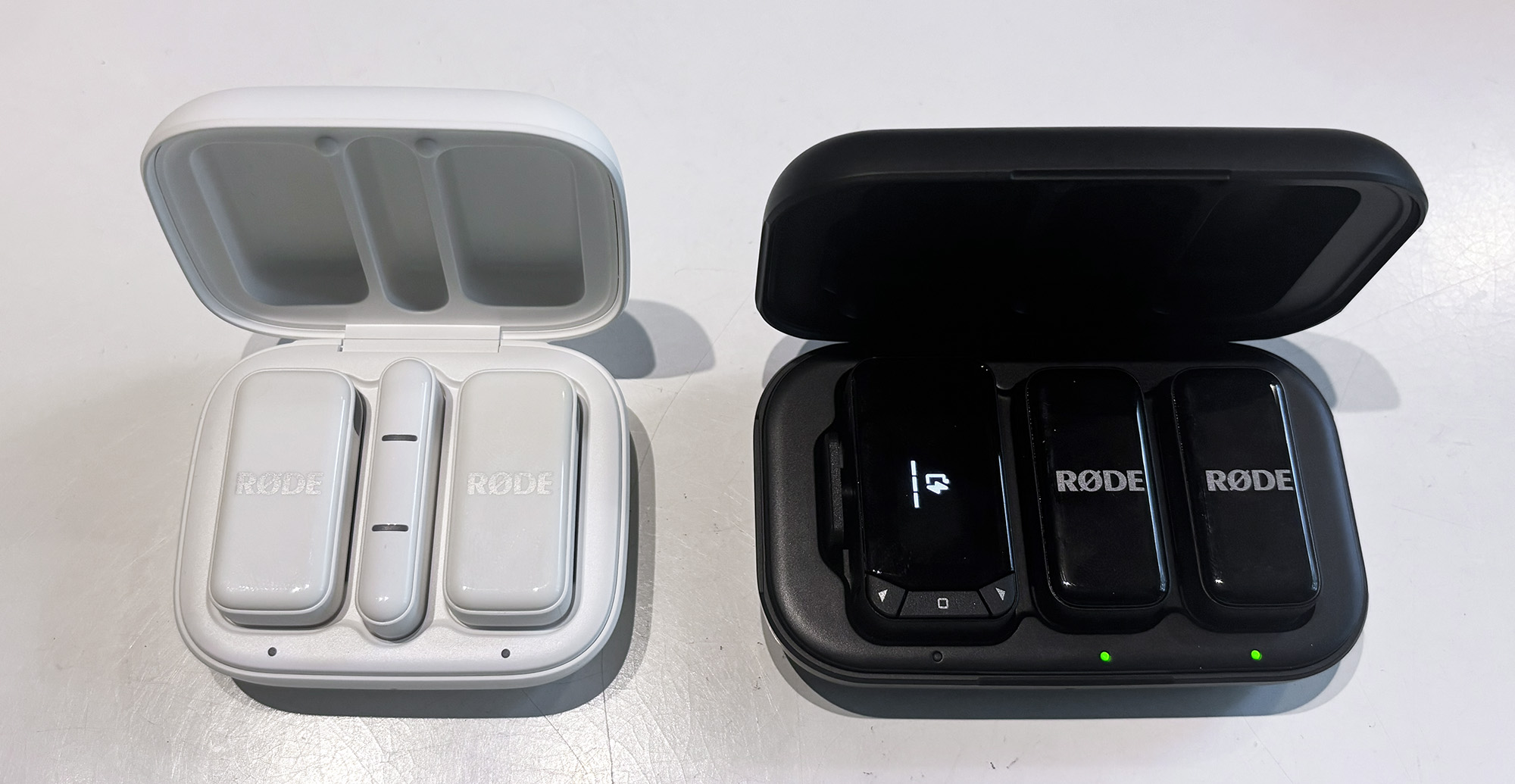
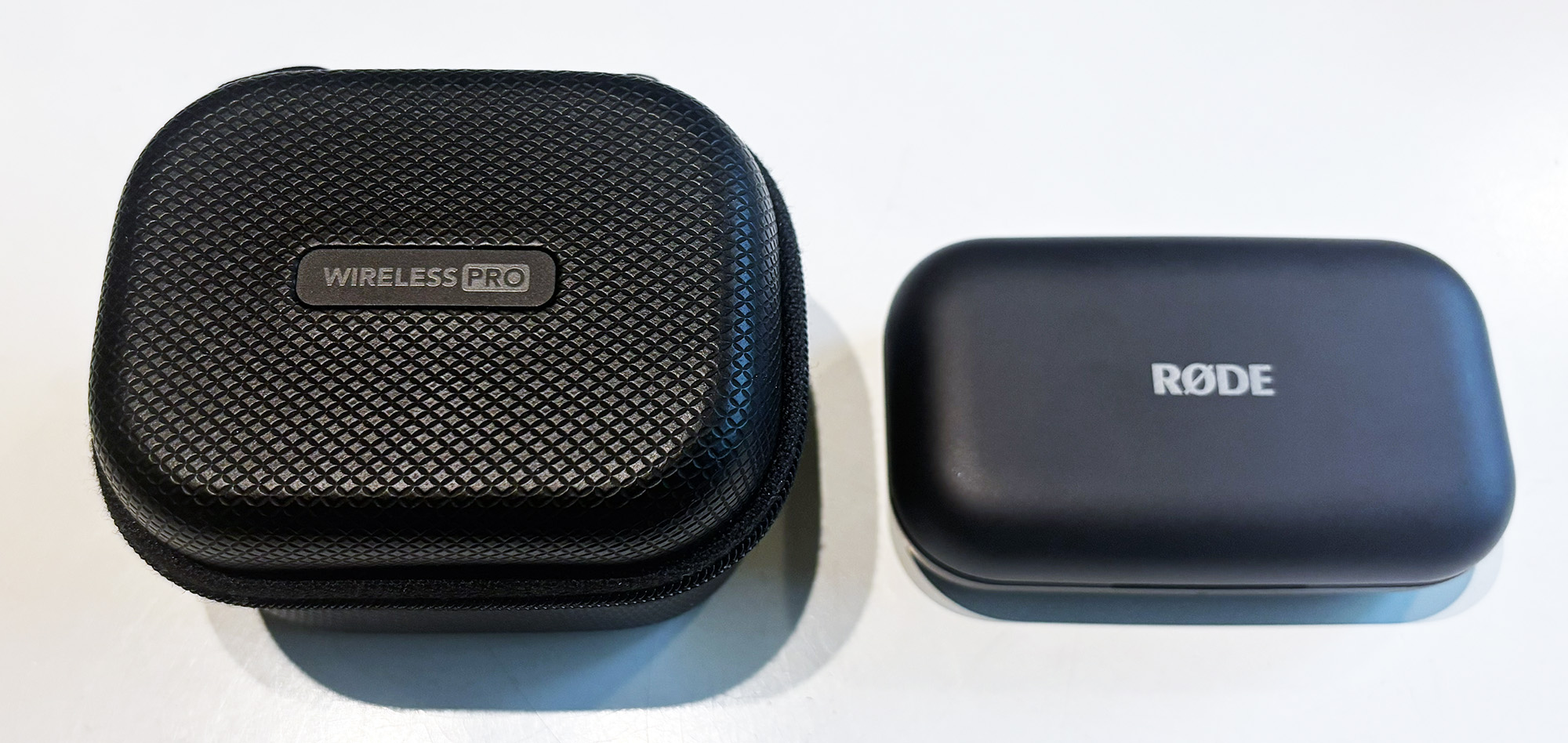
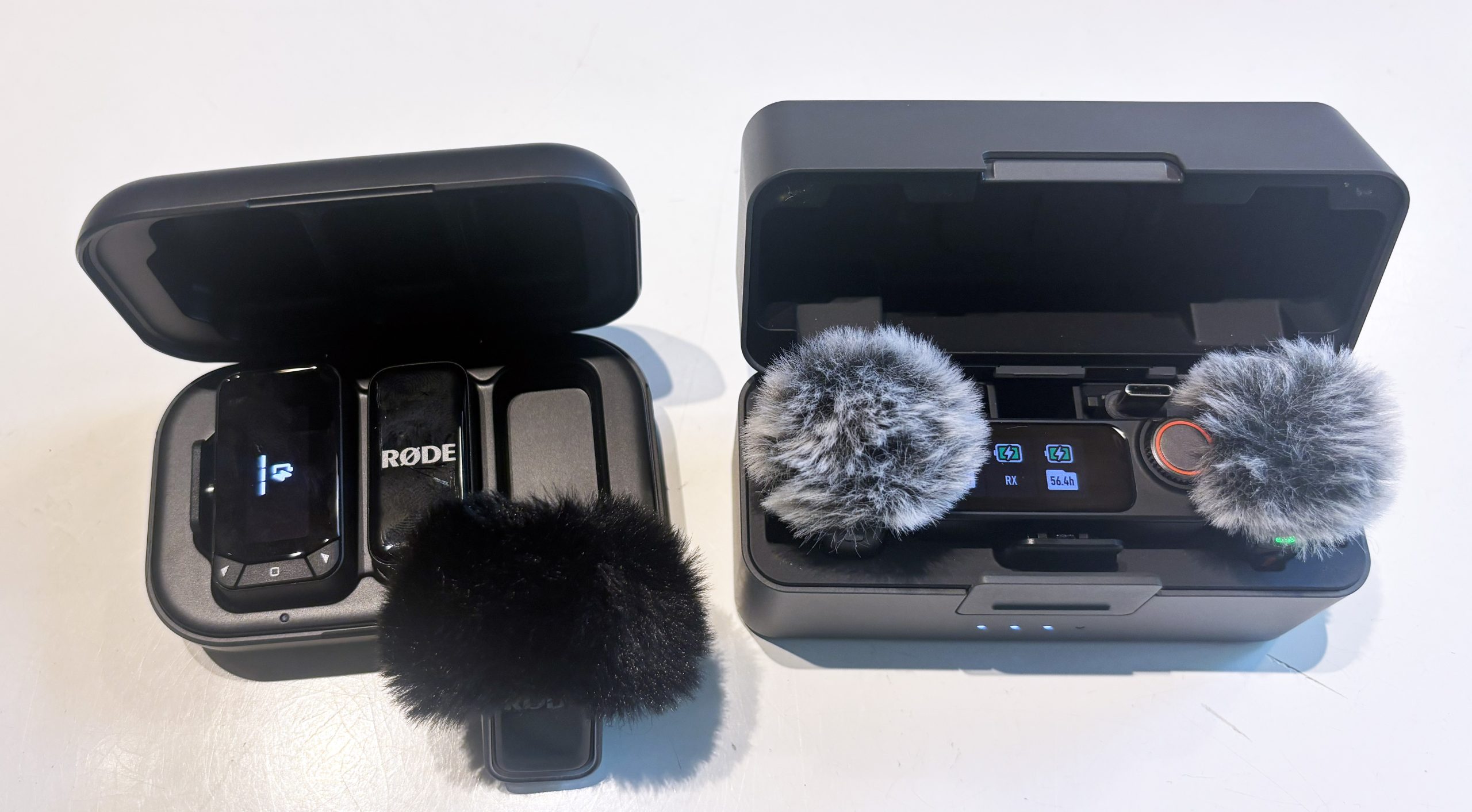
Wireless Micro Camera Kit is delivered in a small and handy case that doesn’t take up much space. The finish is matte and pleasant. When I open it, I find two microphones/transmitters and a receiver with a small but sharp screen. What does not fit in the case, however, is the cable for camera connection; it lies separately. The windscreens are also outside the case—more on this below.
I connect the receiver to my Blackmagic Pocket 6K with the included 3.5 mm cable. As soon as I take one of the microphones out of the case, they pair instantly. However, I see on the camera’s display that the sound from one microphone shows levels on both channels. This means the audio is “merged,” which is not what I want. In the receiver’s menu, I quickly find the setting for “split,” and now microphone one is recorded on the left channel and microphone two on the right. Perfect for post-production where levels can be adjusted separately.
It is not possible to change the recording level for each individual transmitter in the receiver, only a shared level. If you want to adjust individually, you have to do it in the camera. For me, this is not an issue since the Blackmagic 6K has good control over audio levels.
A very nice feature is that the receiver senses when the camera is turned on or off. If you turn off the camera, the receiver also shuts down and starts up again when the camera does. A really handy detail.
The box also includes a receiver for mobile phones, identical to the one included in the Wireless Micro system. It lacks its own battery and therefore does not need to be charged, but you have to carry it with you separately if you want to record audio to your phone instead of the camera.
RØDE – Wireless Micro
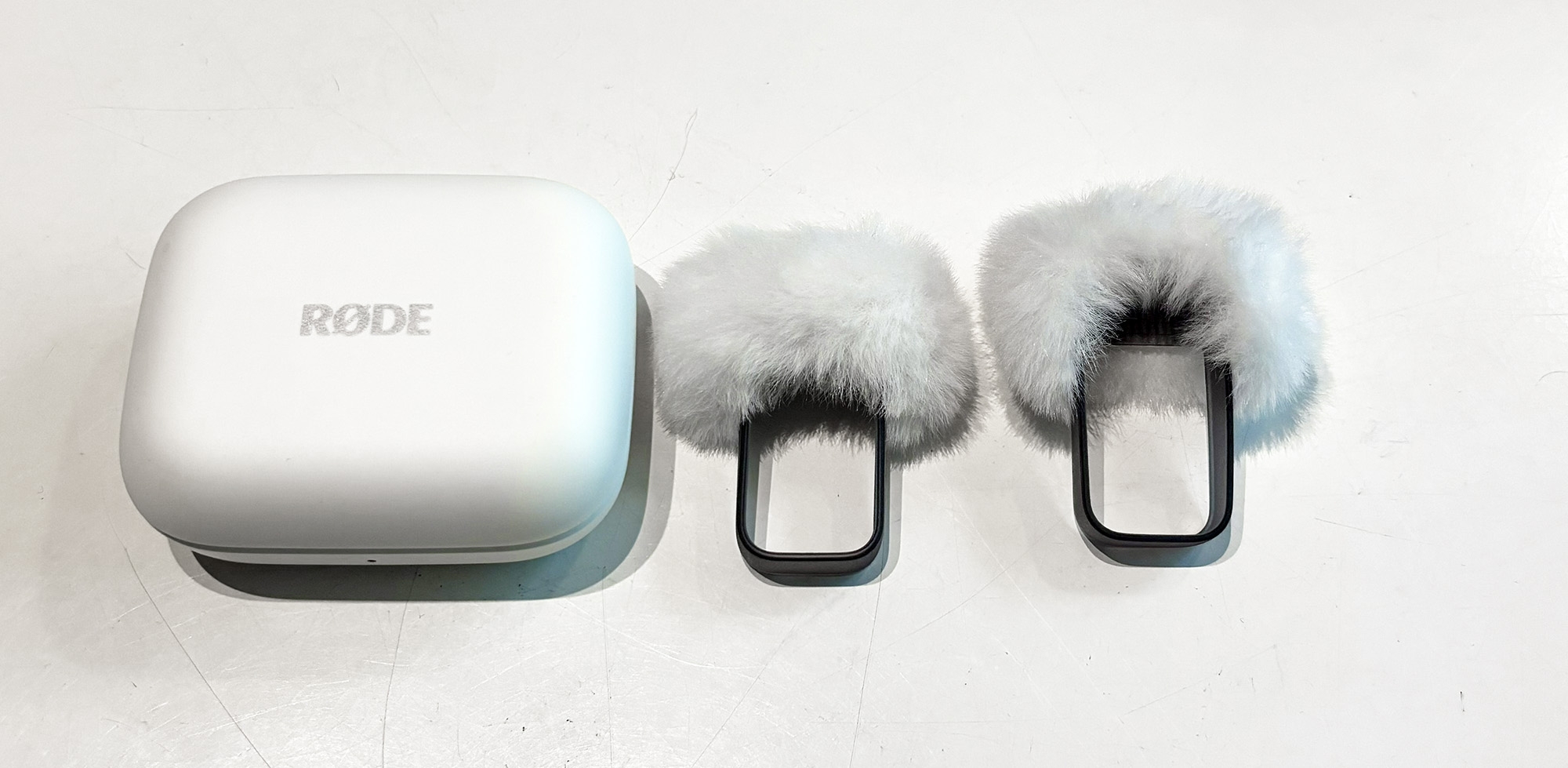
Wireless Micro is available in several colors, and for this test, I received the white version. The case is smaller than the Camera Kit version. Inside are a receiver and two microphones/transmitters. Just like in the Camera Kit, the windscreens do not fit in the case and must therefore be stored separately.
When I connect the receiver to the phone, the audio switches immediately to Wireless Micro without me needing to adjust any settings. However, the audio is also “merged” here, and since the receiver lacks a screen, I go into the RØDE Central app. It immediately finds the connected receiver, and there I can select ”Split.” It is also possible to activate noise reduction here. In the test below, I have it turned off, and yet the sound is crystal clear.
After recording a new clip, the audio is correctly divided into left and right channels. I understand why RØDE uses ”merged” as the default; most users will not post-process the audio but want a finished result immediately. But for those of us who work more technically, it’s just a matter of going into the menus.
Wireless Micro and Wireless Micro Camera Kit
The microphones weigh only 12 grams, which is four grams lighter than the competitor DJI Mic 3. They are also significantly smaller than the Wireless Pro version and a full 24 grams lighter. However, both Wireless Micro and Camera Kit lack internal memory, something that both Wireless Pro and DJI Mic 3 offer. If you lose connection, no audio is recorded.
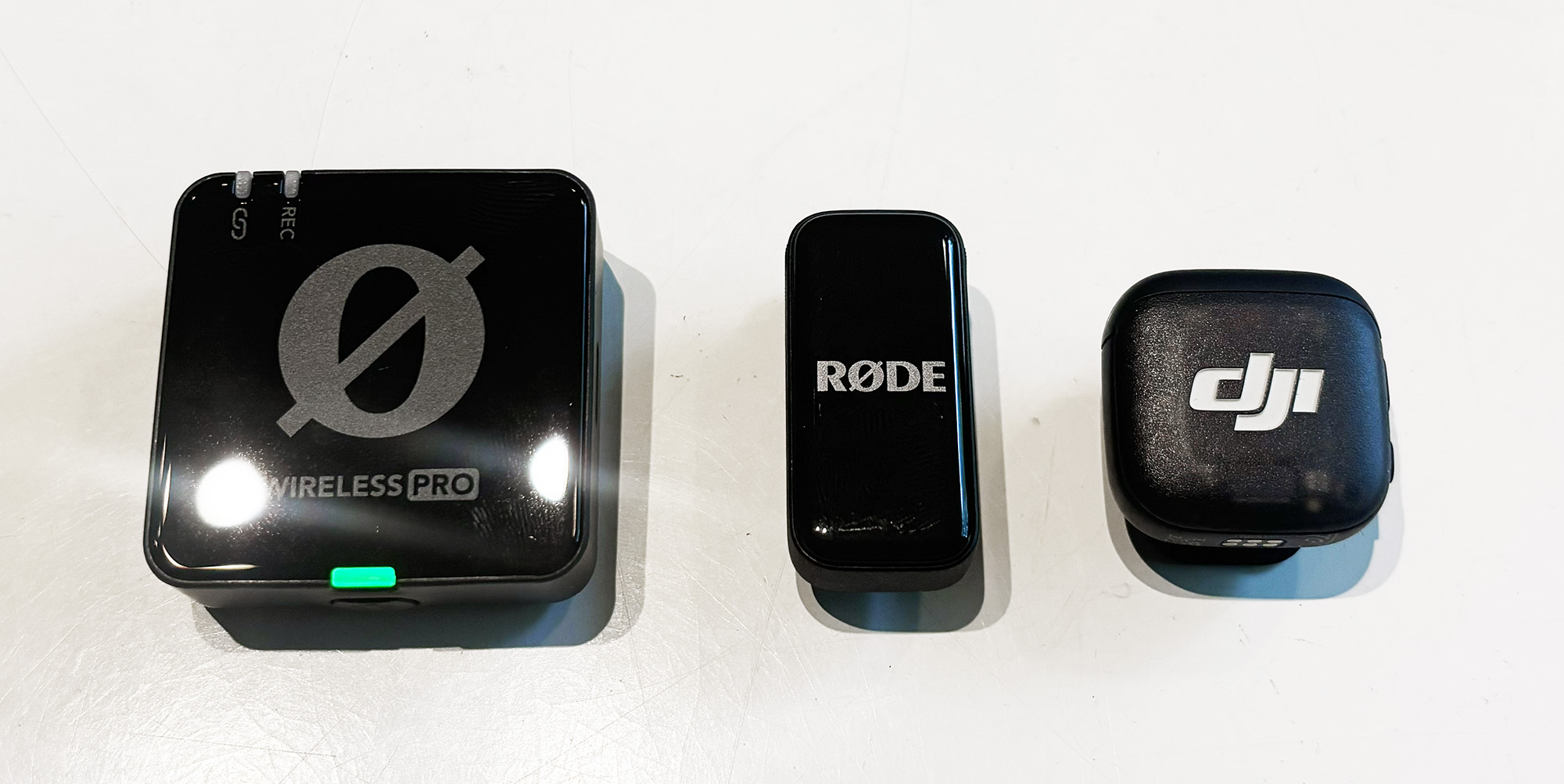
The range is also shorter than both Wireless Pro and DJI Mic 3. Wireless Micro stands at 100 meters, compared to 260 meters and up to 400 meters for the competitors.
Battery life is approximately seven hours, and the case provides two extra charges for a total of around 21 hours. This is impressive considering the size. The frequency range is between 20 Hz and 20 kHz, the same as the larger models.
When it comes to audio quality, RØDE as usual delivers superb quality. When I clip the microphone to my T-shirt and stand under the range hood, my voice comes through the noise with total clarity. The sound is tight, focused, and without distracting room reverb. It is clear that the microphones are optimized for speech.
Which version should you choose?
For my own part, I would choose the Camera Kit because I use several different camera systems in my productions. But if you only film with a mobile phone or tablet, Wireless Micro is the obvious choice.
There are, however, a few things that bother me. In the Camera Kit, I would have liked to see a solution where both the cable and the smartphone receiver fit in the case. Having at least the cable would have been a big plus. I can see myself in a hurry taking the case to another camera and forgetting the cable. The windscreens are also large and have an odd frame construction that makes them bulky. I will guaranteed lose these in a pocket.
Summary
I was initially inclined to give the same rating as Wireless Pro, but when I saw the price, everything changed. Wireless Micro costs around 1000 kr, and Wireless Micro Camera Kit around 1600 kr, so the most expensive version is less than half as expensive as DJI Mic 3.
You are getting an enormously powerful and simple system for your productions for a pittance, and considering how good the audio quality is, it is definitely an alternative.
The rating therefore becomes a “must-have” for those who want good sound on a budget but then must keep in mind the shorter range and the lack of internal memory. So, if that is something you can live with, this is definitely a product for you.
RØDE sent review units for this test. Senders of material have no editorial influence on our tests; we always write independently with you readers and consumers in focus.
Review Highlights: Q&A
How heavy are the transmitters?
Each microphone weighs a very light 12 grams.
What is the total battery life with the case?
It lasts 7 hours plus two charges for 21 total.
Is there an internal recording feature?
No, these models lack internal memory for audio.
Can the audio channels be recorded separately?
You can select split mode to record separate tracks.
What is the maximum wireless range?
The wireless range reaches up to 100 meters.
Which kit is recommended for smartphone users?
The Wireless Micro is best for mobile-only users.
Is the audio clear in noisy environments?
The sound is clear even with background noise.