
TL;DR
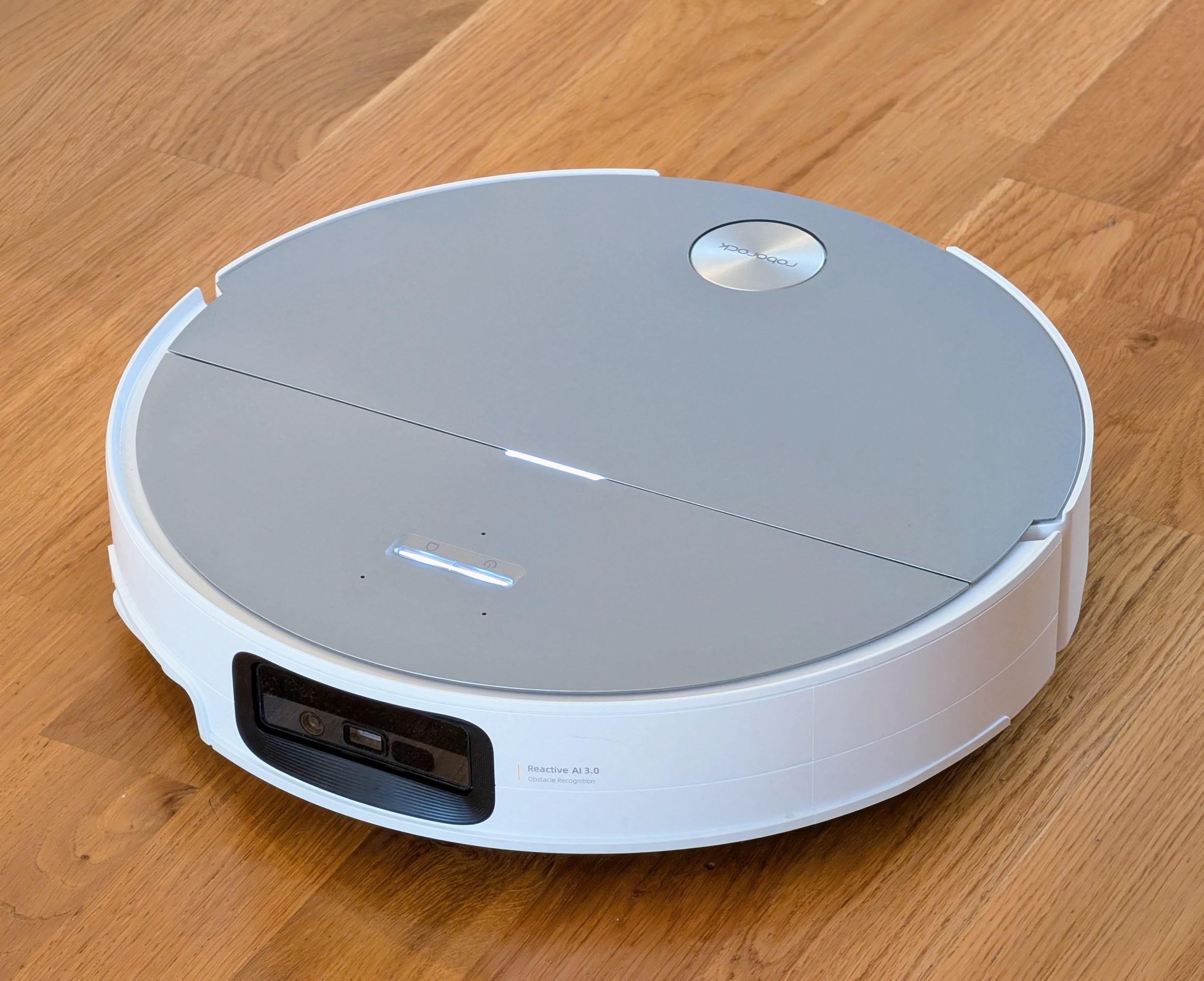
The Roborock Saros 20 Sonic is a powerhouse upgrade, setting a new benchmark for robotic cleaning. Its standout feature is a revolutionary D-shaped sonic mop that extends into corners and uses high-pressure vibration to scrub away stubborn stains. Boasting a massive 36,000 Pa suction and a tangle-free DuoDivide brush, it handles pet hair and carpets with ease. The innovative AdaptiLift chassis allows it to conquer high thresholds that stop other robots cold, while its ultra-slim profile glides under low furniture. While it faces minor software hurdles with multi-floor mapping, the fully automated 100°C self-cleaning dock ensures a nearly hands-off experience. Plus, the Complete package includes six months of consumables for added value. Is this the ultimate cleaning companion for your smart home? Read our full review to see how this flagship performs in a real-world home.
Roborock Saros 20 Sonic is the successor to Saros 10 which we tested last year and which then took over the throne on our reference list. Virtually everything has been improved since its predecessor, from suction power to how the mop functions. But is it just impressive specifications, or is it actually better? Let’s find out!
Incredibly good mop
Let me start with what is undoubtedly the best thing about the Saros 20 Sonic: namely, the mop. Instead of spinning mops, it features a wide, D-shaped plate that is pressed against the floor with significant pressure (Roborock specifies 14 N) and vibrates up to 4,000 times per minute.
Roborock has really improved the design since its predecessor, the Saros 10, whose simpler but similar mopping solution left a lot to be desired. Now, the entire plate can be extended sideways, allowing it to reach into corners and along baseboards in a way that round, spinning mops can only dream of.
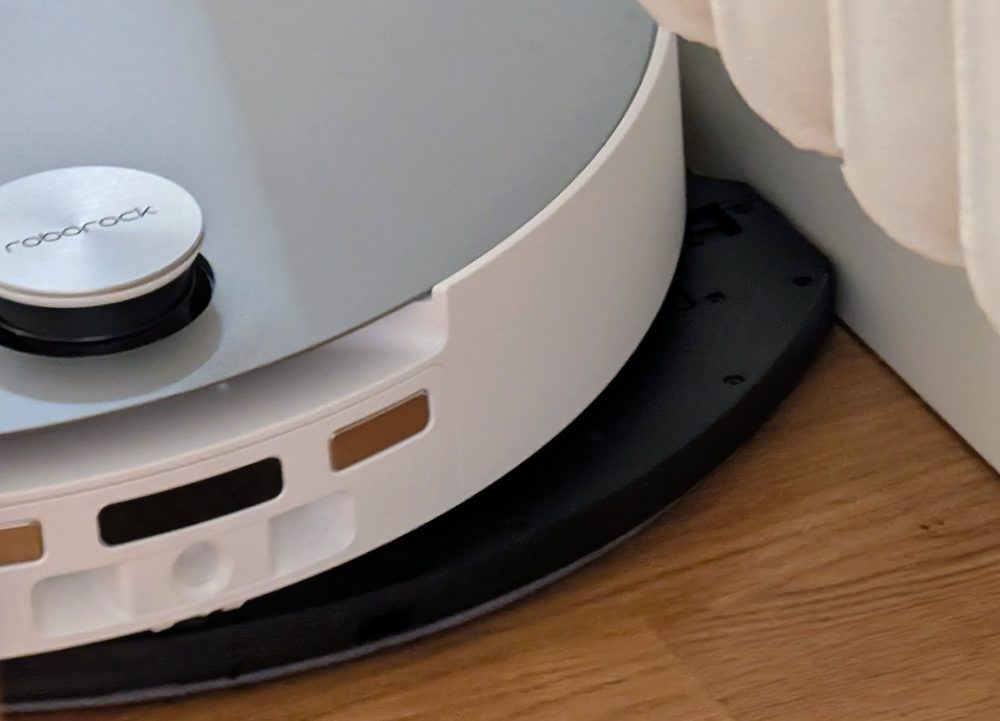
The result? During the first run, the mop removed basically everything. Only really ingrained, dried-on stains survive a single round and require the robot to go over the surface one more time. Everything else—everyday dirt, sticky messes, and splashes—disappears immediately. The fact that it also distributes water evenly and avoids those spiral streaks that multi-pad systems sometimes leave behind means the floor looks uniformly clean, all the way to the edges.
It is also smart that you can set the water volume and vibration completely independently of each other and save the settings per room. Use a little water and high vibration on delicate wooden floors, and full power in the bathroom. When the robot moves onto carpets, the mop is automatically left in the dock to avoid wetting the carpets.
Saros 20 Sonic has serious suction power
The suction power now reaches a full 36,000 Pa, which is a massive increase from the predecessor’s 22,000 Pa. This is noticeable primarily on carpets and large open floor surfaces, and it gets things clean.
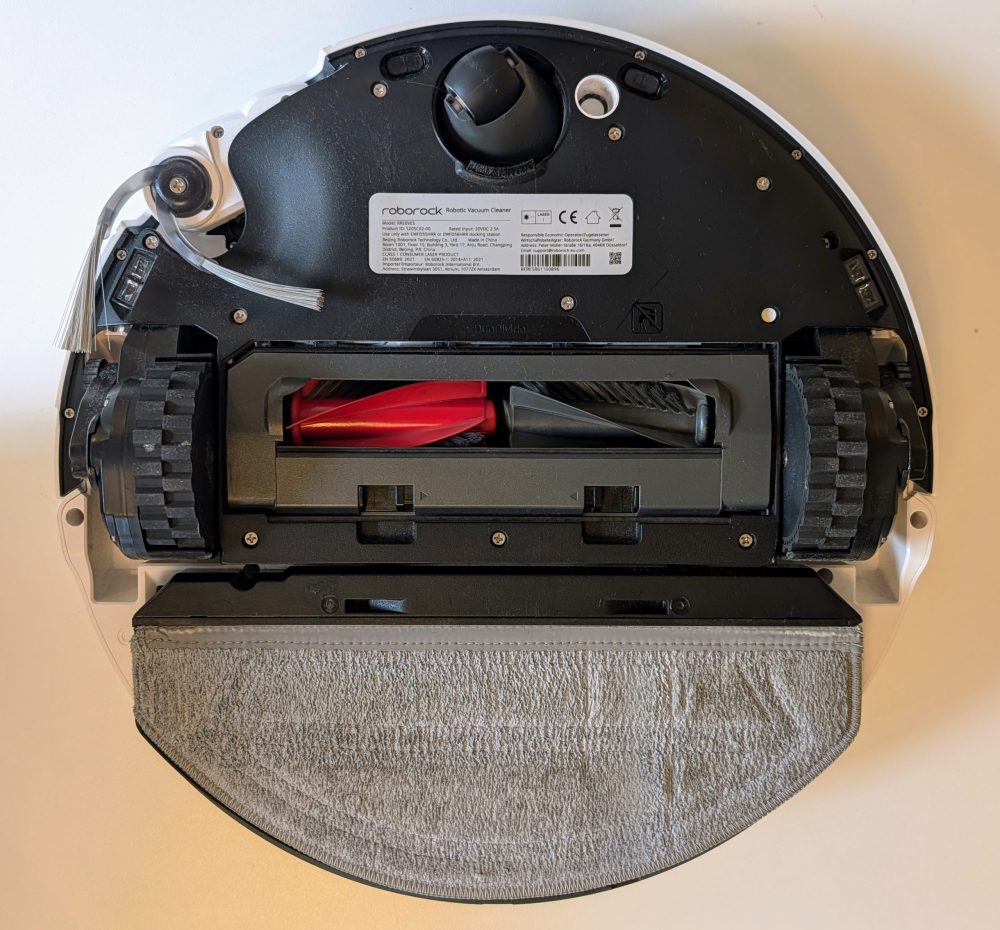
The underside is also worth mentioning. The main brush is split in two (Roborock calls it DuoDivide) and, together with the extendable side brush, it stays free from tangles. Those of us with long-haired family members, whether two- or four-legged, know how much time can otherwise be spent picking hair clumps out of a brush. I completely avoided that during the entire test period, and Roborock themselves claim it handles hairs up to 40 centimeters without getting stuck. This matches my experience.
Thresholds: it gets over them, but sometimes it has to struggle
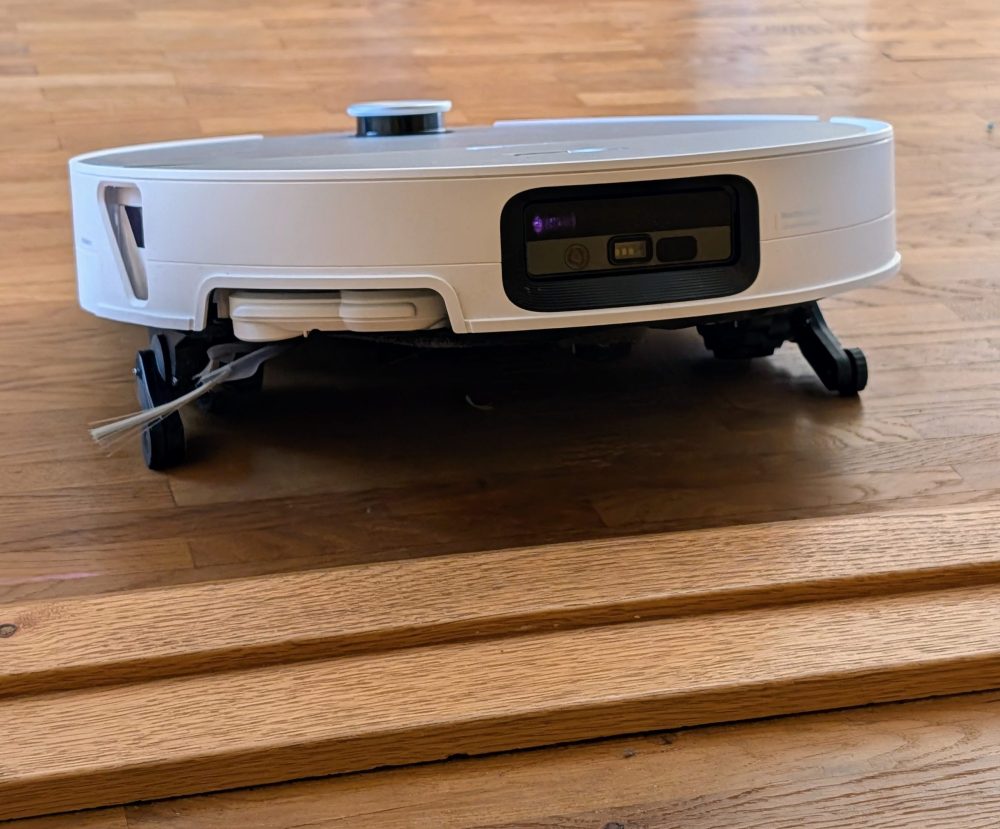
When the robot is faced with high and difficult thresholds, the new AdaptiLift chassis (version 3.0) is activated. Instead of getting stuck, the robot lifts its entire body from the floor. This means it should theoretically handle single thresholds up to 4.5 centimeters and double thresholds up to 8.8 centimeters (4.5 plus 4.3). Since the Saros 10 stopped at 3.5 centimeters, this is a significant improvement on paper.
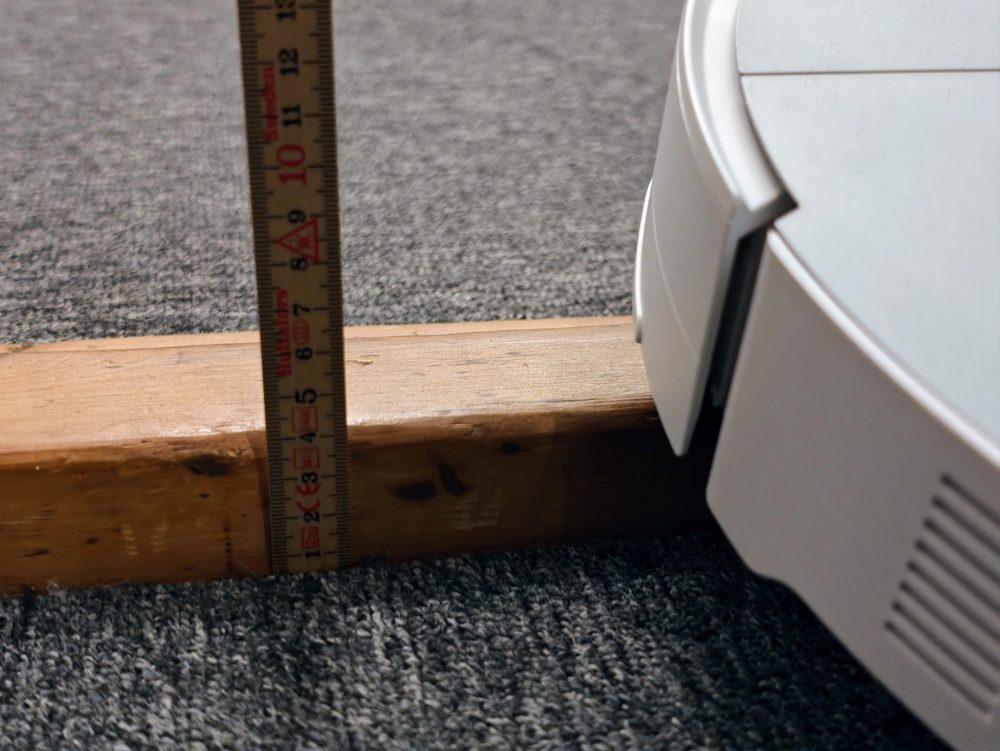
Thresholds over 4 cm are a challenge, and sure, it gets over them. But it really has to struggle sometimes. On a couple of occasions, I stood and watched as the robot backed up, took a run-up, crawled up a bit, slid down again, and tried once more. It could take two or three minutes (!) before it was finally over. It’s frustrating to watch, but it actually never gives up, and it never got stuck to the point where I had to rescue it. If you have a home with high or tricky thresholds, this is still one of the few robots that can get everywhere; it’s just not always very elegant. Here is a video where it tries for three minutes without giving up; it doesn’t look very smart, but it gets across.
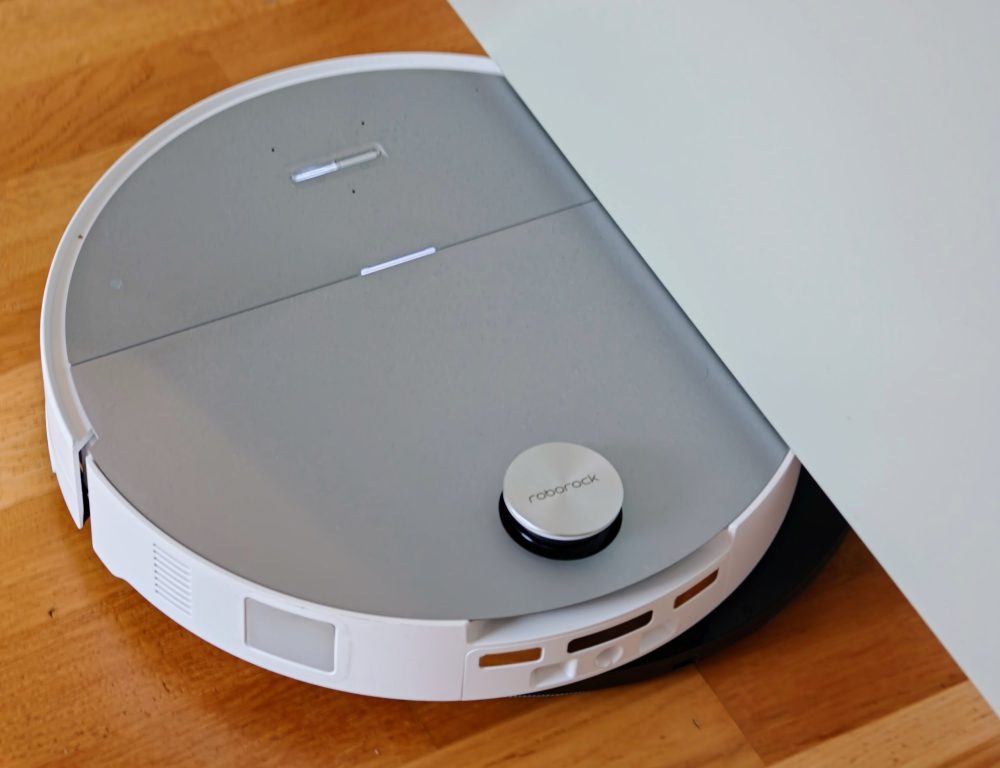
Thanks to the retractable LiDAR tower, it also maintains a very low profile—around 7.95 centimeters—and fits under furniture where other robots would hit the edge. If your sofas and beds have at least eight centimeters of clearance underneath, you’ll get those areas cleaned as well.
Obstacle recognition
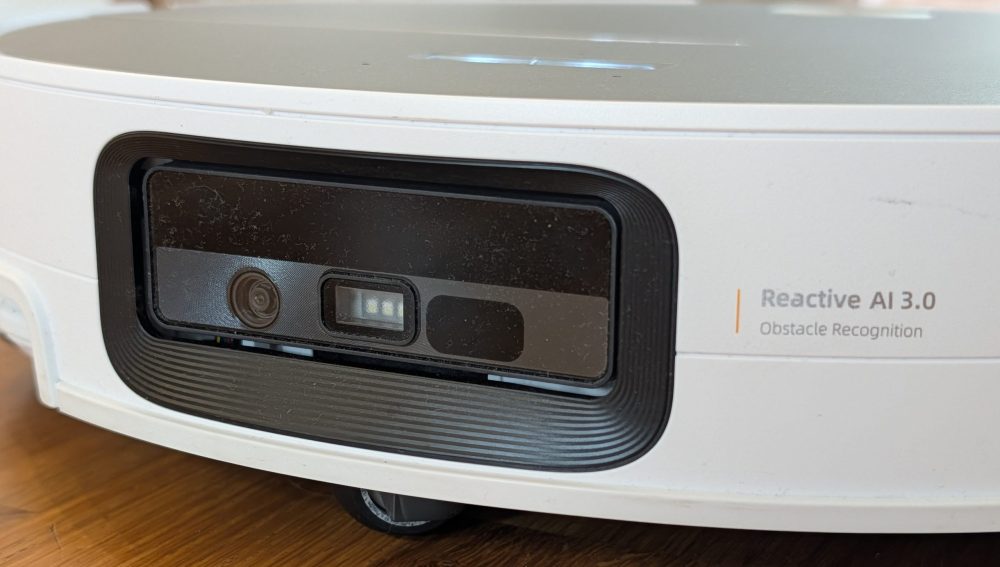
The mapping and navigation are handled by the robot using the retractable laser (LiDAR) I mentioned earlier. To detect and avoid obstacles along the way, it also features Roborock’s Reactive AI 3.0, which combines an RGB camera with projected light at the front and a side-facing sensor (VertiBeam) that keeps track of walls and furniture legs. On paper, it should recognize over 300 different types of objects and find everything from cables and chair legs to forgotten socks, and it can even drive behind curtains you have marked in the app.
My experience is that it works well. It hasn’t become tangled in cables once during the test, which anyone who has struggled with older robots knows is not a given. However, it is not completely flawless. On a few occasions, it interpreted the fringes of a rug as the surface being extra dirty and performed an extra pass right there—a bit unnecessary but hardly a major issue. Overall, the navigation feels secure and smart, and the robot quickly finds its way around the home.
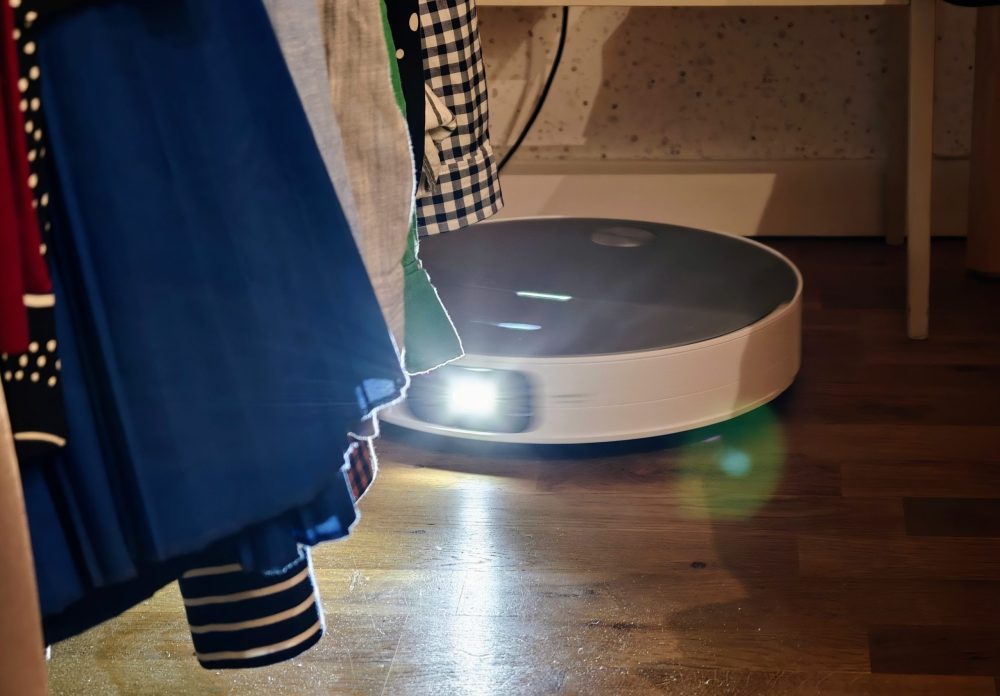
A small but nice detail is that the robot turns on a light at the front when driving in the dark, so the camera can see what is in front of it even when the lights in the room are off. Not only does it look cool as it glides through a darkened room, but it also means it cleans just as well in the evening as in the middle of the day.
The dock and the app
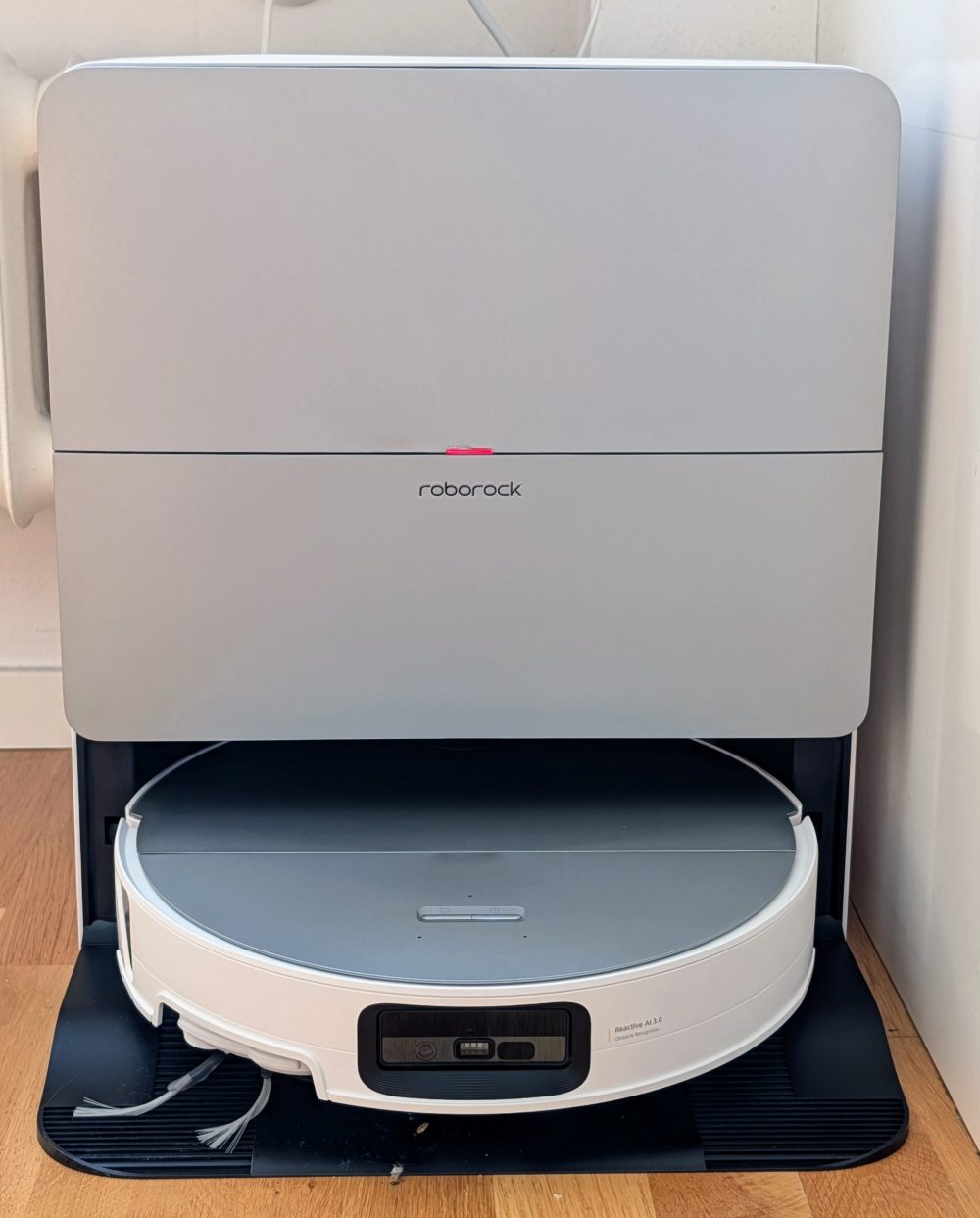
The dock, or “RockDock” as Roborock calls it, does most of the work for you. It washes the detached mop with water up to 100 degrees Celsius while the robot continues vacuuming in other rooms, then dries the mop with hot air and even dries the dust bag’s channels to prevent bad odors. This really works; anyone who has owned an older robot vacuum knows how extremely bad the dock and especially the dirty water container can smell—that problem simply doesn’t exist here.
It refills the cleaning solution itself, senses how dirty the mop is and performs an extra wash if needed, and the dust bag should last up to 65 days before needing a replacement. All of this works smoothly and almost silently, except for the emptying process, which is quite loud when it starts.
The app is generally good and easy to navigate, with automatic modes (SmartPlan) that learn the layout of your home, support for Matter, and built-in voice control. However, one thing that is not good is the handling of different floors. It becomes a bit messy and not entirely intuitive when managing multiple maps; the robot sometimes struggles to understand which floor it is on despite selecting a specific one in the app, so there is clearly room for Roborock to improve here.
What’s not so good?
Aside from how it handles multiple floors, there are two things in particular that lower the overall impression, one more serious than the other.
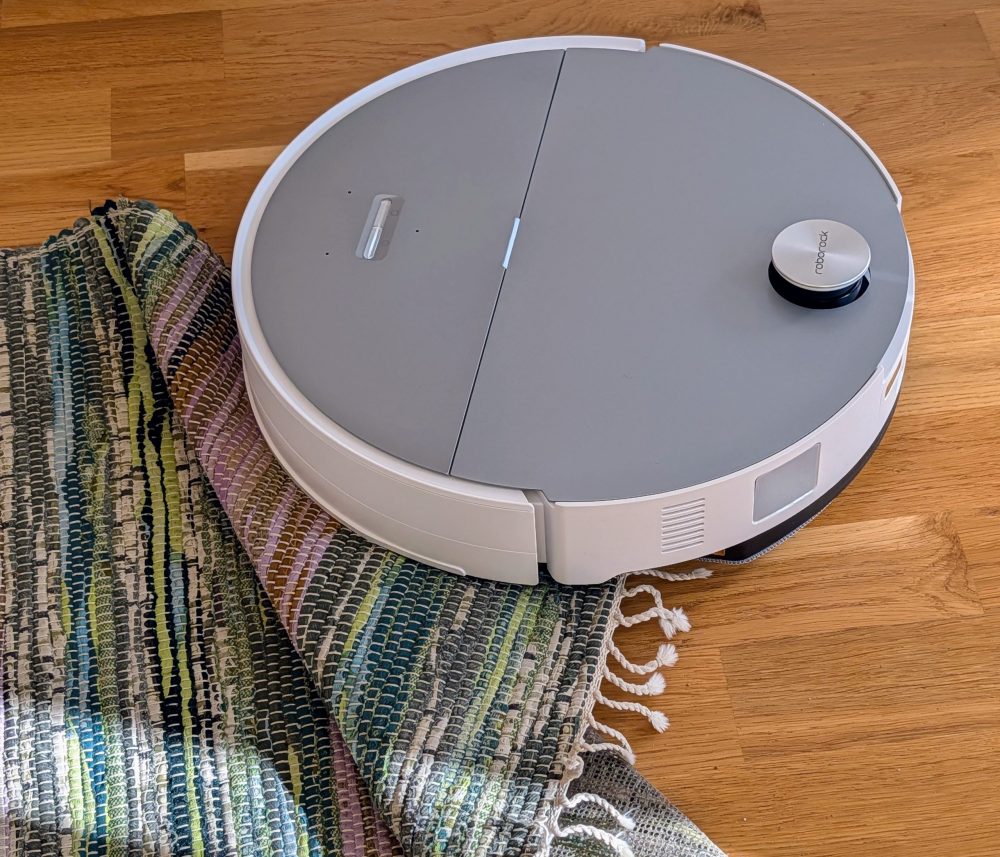
The minor problem first: the robot pushes thin rugs around in front of it. It should be said that this is not unique to this model—virtually all robot vacuums do this to some extent—but there is potential for improvement here.
The bigger problem involves a bug I encountered on several occasions. The robot simply failed to empty its dust container automatically in the dock, yet it continued to run its rounds anyway. This resulted in the robot’s internal container becoming completely overfilled, and since it couldn’t suck up any more dirt, it pushed all the debris around with the mop instead.
The really disappointing part is that the app didn’t say a word about it—no error message, nothing. I only discovered it when I came home to a floor that was anything but freshly cleaned. It could very well have been due to something as simple as a piece of debris, like a plastic fragment, blocking the emptying hole, but regardless of the cause, this is exactly the kind of thing the app should flag so the container can be emptied manually. Coming home to what you expect to be clean, only to realize it has actually become dirtier, is not fun.
Generous with consumables
One thing that deserves praise, however: the Complete version comes with six months’ worth of consumables included. This is something manufacturers are often surprisingly stingy with, despite the high price tag. Getting an extra brush, dust bags, filters, mop cloths, and cleaning solution directly in the box is much appreciated.
Conclusion
The Saros 20 Sonic Complete is a really, really good robot vacuum, and the mopping function is the best I have seen. It reaches into corners, removes basically everything on the first run, and leaves a uniformly clean floor behind. There is nothing wrong with the suction power, the brushes don’t tangle, and the dock mostly takes care of itself. It also gets over virtually any threshold, even if it sometimes has to work hard for a moment to succeed.
What prevents a perfect score is the somewhat messy handling of multiple floors, the fact that it still pushes thin rugs around, and above all, that emptying bug. The latter is likely a software issue that will hopefully be corrected, but right now it is a real weakness.
The recommended price of 15,990 kronor is undoubtedly a significant sum, even if at the time of testing it can be found for a much more reasonable 9,990 kronor at Elgiganten. But regardless of the price, you get one of the most complete machines on the market. The fact that Roborock includes six months’ worth of consumables is a very nice bonus, but what truly justifies the price tag is how it actually performs—especially if you have a home with difficult thresholds, mixed floor types, and low furniture to navigate.
Roborock provided the review unit for this test. The provider of the material has no editorial influence on our tests; we always write independently with our readers and consumers in focus.
How we rate products at SensesReview Highlights: Q&A
How does the mop reach corners and baseboards?
The entire D-shaped plate extends sideways to reach edges.
Is the brush effective against long hair?
Yes, the split DuoDivide brush stays free from tangles.
What is the maximum threshold height it can handle?
It manages single thresholds up to 4.5 centimeters high.
Can the vacuum fit under low sofas and beds?
Yes, its low 7.95cm profile fits under most furniture.
How does it protect carpets while mopping?
The mop is automatically left in the dock for carpets.
What extras come with the Complete version?
It includes six months of brushes, bags, and filters.