
TL;DR
Piece and Quiet: A Stained Glass Restoration is a first-person puzzle game centered on cleaning and placing 2,655 glass shards across six chapel windows. Its satisfying workflow and unlockable upgrades excel, but monotonous music, clumsy high-angle placement, and low replay value drag it down. It suits players seeking calm organization, while those wanting action or varied replays should pass.
After spending 26 hours in GTA VI I felt like I needed something completely different. Piece & Quiet: A Stained Glass Restoration is the exact opposite of everything called adrenaline rushes and heart-pumping action.
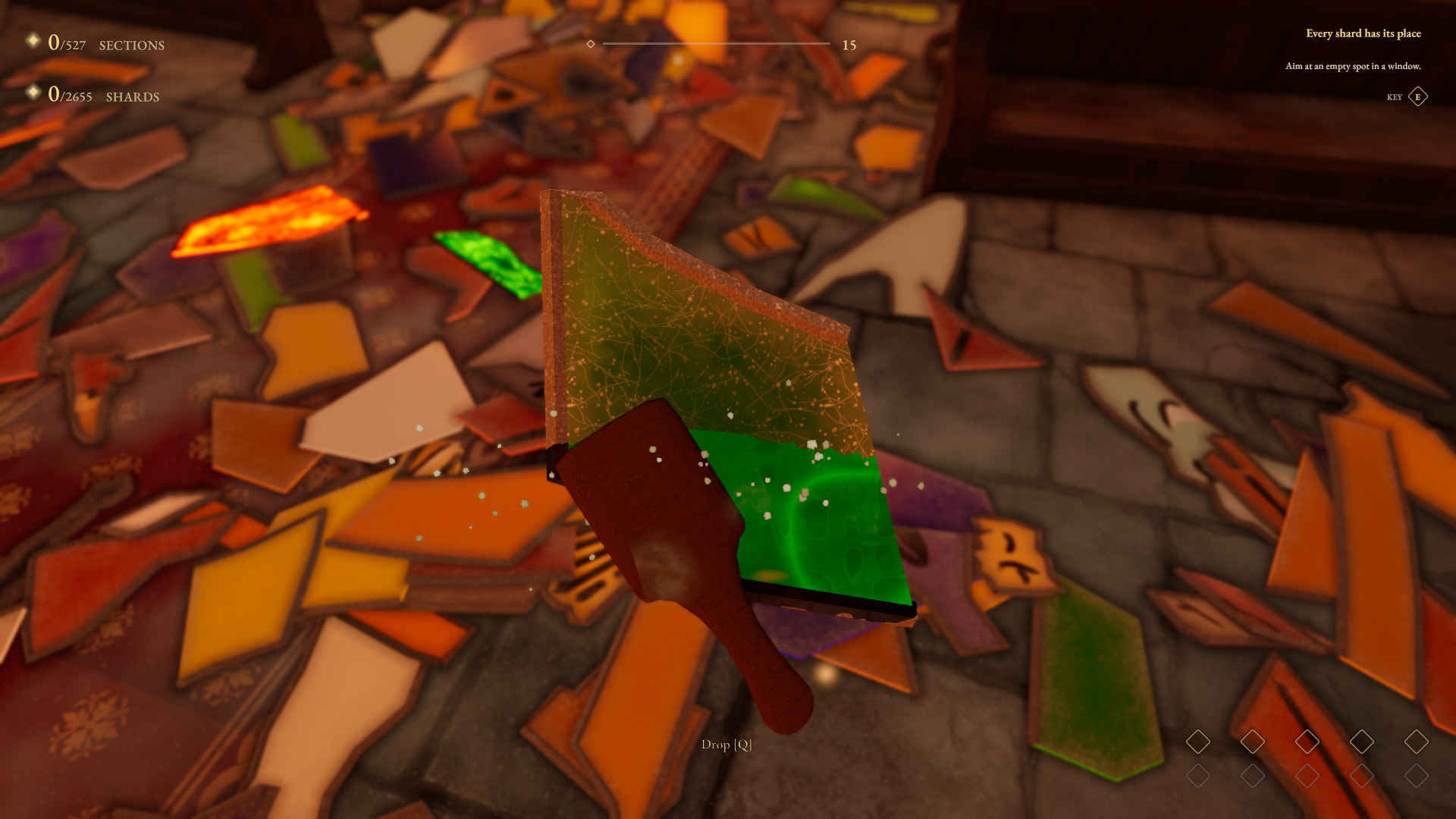
The game is played entirely from a first-person perspective and revolves around an unusually satisfying workflow. You walk around the chapel, pick up glass shards from the floor, brush away years of dust and dirt, examine their shape and color, and then try to determine where they belong. When you place a piece at the correct window, it clicks into place and automatically rotates correctly. If you have guessed wrong, it stays at the wrong angle until you pick it up again.
Restoring the chapel’s history
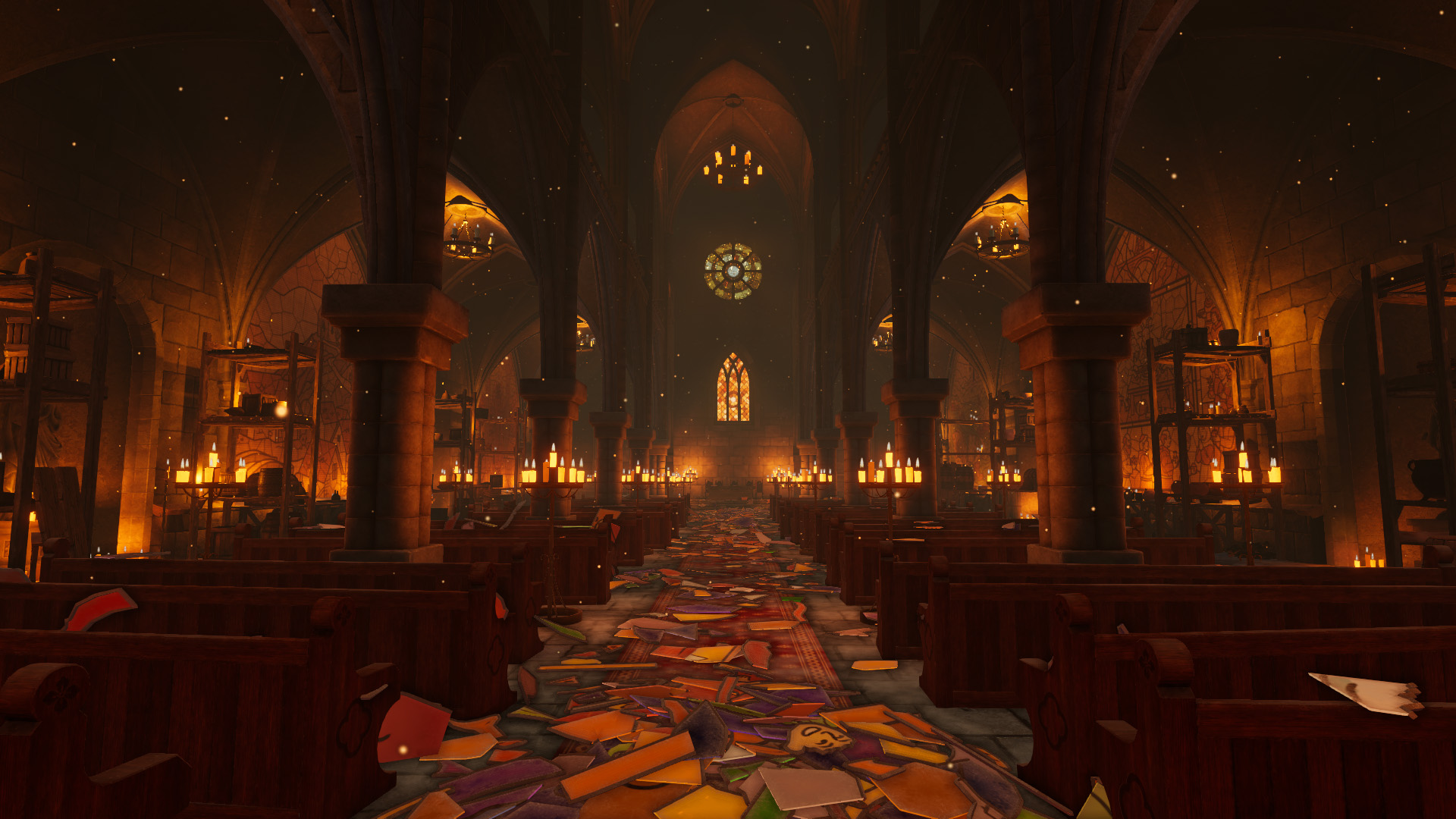
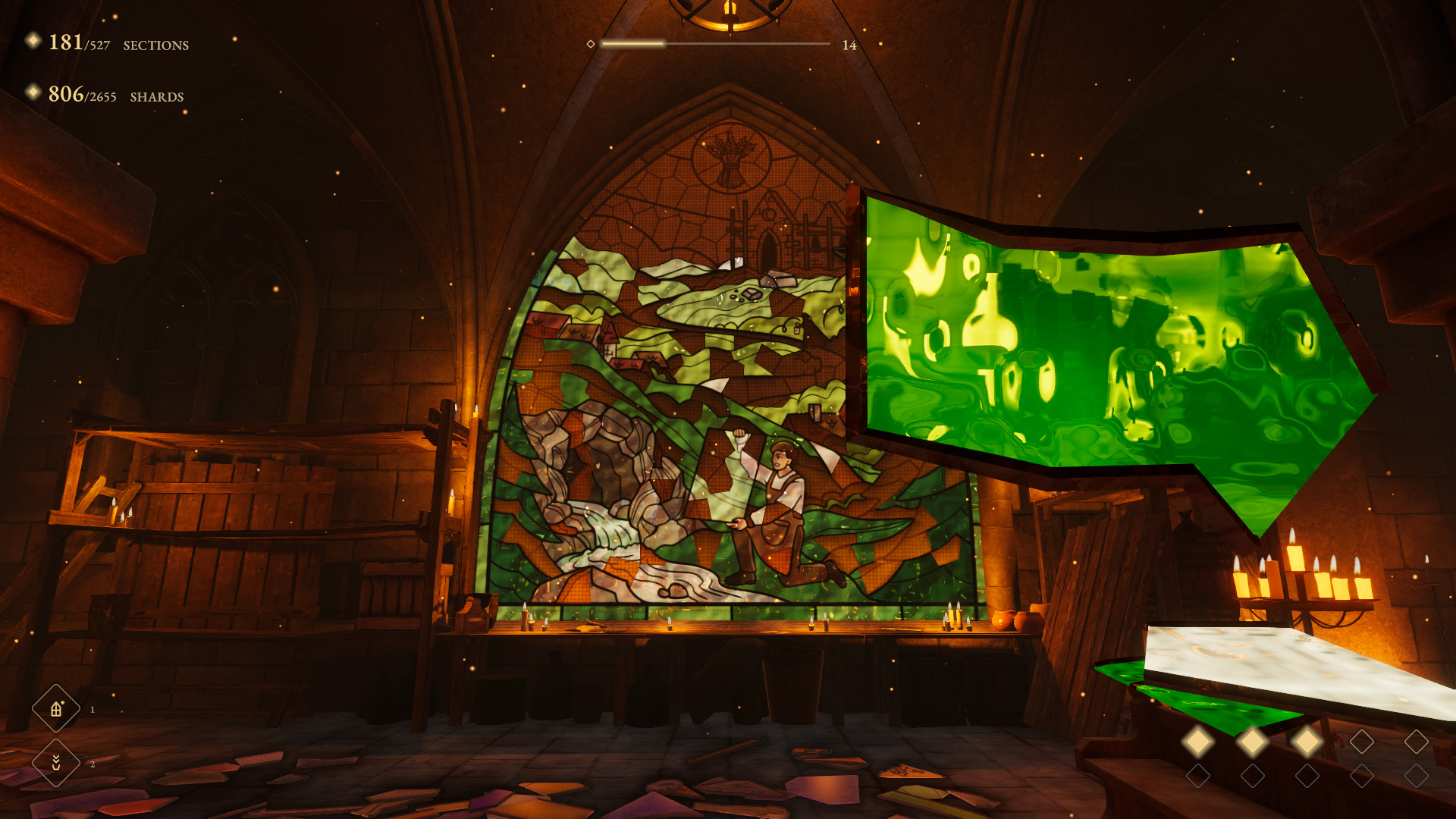
In total, six different stained glass windows are to be restored, and together they consist of as many as 2,655 individual glass pieces. For each section that is restored, a warm golden light spreads through the glass and the chapel slowly begins to regain its life. Each window depicts different scenes from a master glassmaker’s life. At the same time, you find handwritten notes scattered around the chapel that gradually reveal who the person was and what actually happened here.
At the same time, a game like this would have risked becoming monotonous quite quickly if there were no form of progression. Therefore, the developers have included ten upgrades that are unlocked as the work progresses. Some help you identify where a glass piece belongs. Others let you collect fragments faster or handle larger quantities of glass at once.
Relaxation on your terms
For those who still want a bit more structure, there is a time-based mode where the game records how fast you work. However, the focus remains on efficiency rather than stress. It’s more about challenging yourself than defeating the game. Additionally, there is a more advanced setup where all six windows and all fragments are available from the start. This creates significantly more chaos at the workplace and will likely appeal to those players who actually find organizing to be a form of entertainment.
Tech and performance
When it comes to the technical requirements, the developers seem to have kept the ambition at a reasonable level. As a minimum, an Intel Core i5-6600 or AMD Ryzen 5 1600 along with 8 GB RAM and a GTX 1060 or Radeon RX 580. This should be enough to run the game at 1080p and approximately 30 frames per second on low settings. For a more optimal experience, an Intel Core i5-10400 or Ryzen 5 3600, 16 GB RAM and an RTX 3060 or Radeon RX 6600 XT are recommended. In that case, the game targets 1080p and 60 frames per second with high graphics settings instead. The storage requirement is also almost comically modest with only 3 GB of free space, something that feels unusually refreshing in a time where many games easily surpass the 100 GB mark.
A game with some flaws
Piece & Quiet: A Stained Glass Restoration is certainly not a game for everyone. For me, it fits perfectly. Building puzzles, seeing color, shape, and patterns calms me down. What is a pity is that the music, which is supposed to be soothing, quickly becomes incredibly monotonous and repetitive, which bothers me. Now, you can turn it off and have your own music, but still.
Also, you always insert the pieces while standing on the floor, and even though you can zoom in a bit, it’s not always easy to aim a small piece high up. A ladder would have been preferable, or a cherry picker. Then, I was annoyed that you can find a picture of what the window should look like, but you can’t zoom in on the picture. When you press the zoom button, the world behind the image zooms in. I don’t know if it’s a glitch to be fixed or if it’s a conscious design choice.
It is possible to play with a controller even though I prefer mouse and keyboard, but for some reason, you cannot invert the Y-axis. The function to do so is listed in the menu, but there is no button for it. This leads me to believe that the game is missing a couple of patches before it is fully finished.
Summary
In conclusion, Piece & Quiet: A Stained Glass Restoration is a calm and cozy game that you can pick up whenever you want and build a bit on your window. However, this is certainly not a game for everyone, and the replay value is quite low once you have finished all the windows. Because even though there are different difficulty levels and features, the windows don’t change. So if these kinds of games suit you, you will spend many hours walking around looking for glass on the floor and slowly seeing the beautiful windows come to life again.
Spagetti Cat sent a review code. Senders of material have no editorial influence on our tests.
Review Highlights: Q&A
What is the core gameplay loop?
In Piece and Quiet: A Stained Glass Restoration, you explore a chapel from a first-person view, retrieve glass shards, clean away dust, and fit 2,655 pieces across six windows while unlocking ten progression upgrades.
Does the game offer different game modes?
Yes. Beyond the standard progression, there is a time-based mode focused on efficiency and an advanced setup that unlocks all six windows and all glass fragments from the start.
What are the PC system requirements?
The game needs 3 GB of storage. Minimum specs target 1080p at 30 fps using an i5-6600 or Ryzen 5 1600 with a GTX 1060. Recommended specs target 1080p at 60 fps on high settings using an RTX 3060 or RX 6600 XT.
Are there any control or camera issues?
Placing pieces high up from the floor is tricky even when zooming in. Additionally, reference pictures cannot be zoomed into directly, and the controller settings lack a functional button to invert the Y-axis.
How much replay value does the game have?
Replay value is low once all six windows are finished, because the windows and their designs remain identical despite different modes.