
TL;DR
The OPPO Find X9 Ultra is a photography powerhouse that blurs the line between smartphone and professional system camera. Boasting a luxury Hasselblad-inspired design and a world-first penta-camera setup, this flagship features a massive 200MP main sensor and an ambitious 10x optical zoom. Under the hood, it’s a performance beast with the Snapdragon 8 Elite Gen 5 chip, a stunning 3,600-nit AMOLED display, and an industry-leading 7,050 mAh battery. While minor gripes like a finicky shutter button and the lack of Qi2 magnets persist, the "Master Mode" processing delivers breathtaking, DSLR-like results that must be seen to be believed. At a premium price point, it’s a bold statement of intent from OPPO that challenges the industry’s elite. Read the full review to discover if this camera-centric flagship is the ultimate tool for your creativity.
Is it a mobile phone or is it a system camera? With the OPPO Find X9 Ultra, the line is honestly quite blurred. This is the first time OPPO is releasing its “Ultra” globally—previously, these models were more or less China-exclusives—and OPPO has taken the opportunity to go all in. While OnePlus recently ended its collaboration with Hasselblad, OPPO continues alone, and the result is a penta-camera setup topped by a true 10x optical zoom, something almost no one else dares to attempt. Add to that the most powerful chip available, a massive battery, and a design that looks like it came straight from a luxury Hasselblad camera.
But can OPPO really deliver, or is it mostly marketing and flashy specs? Let’s find out!
Design and Build Quality
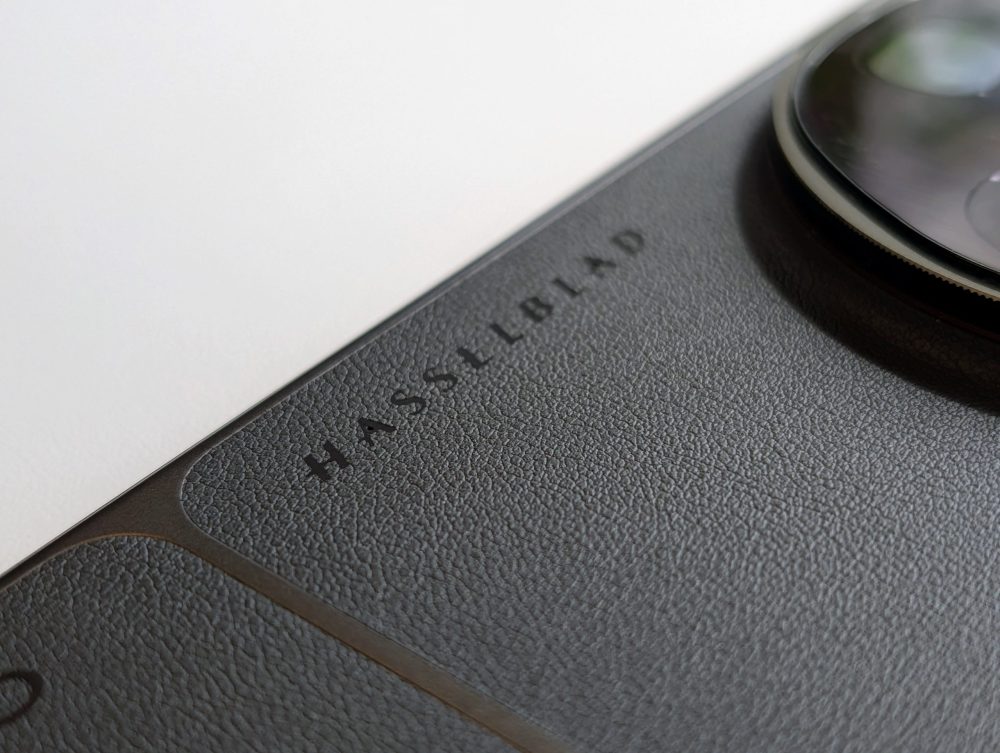
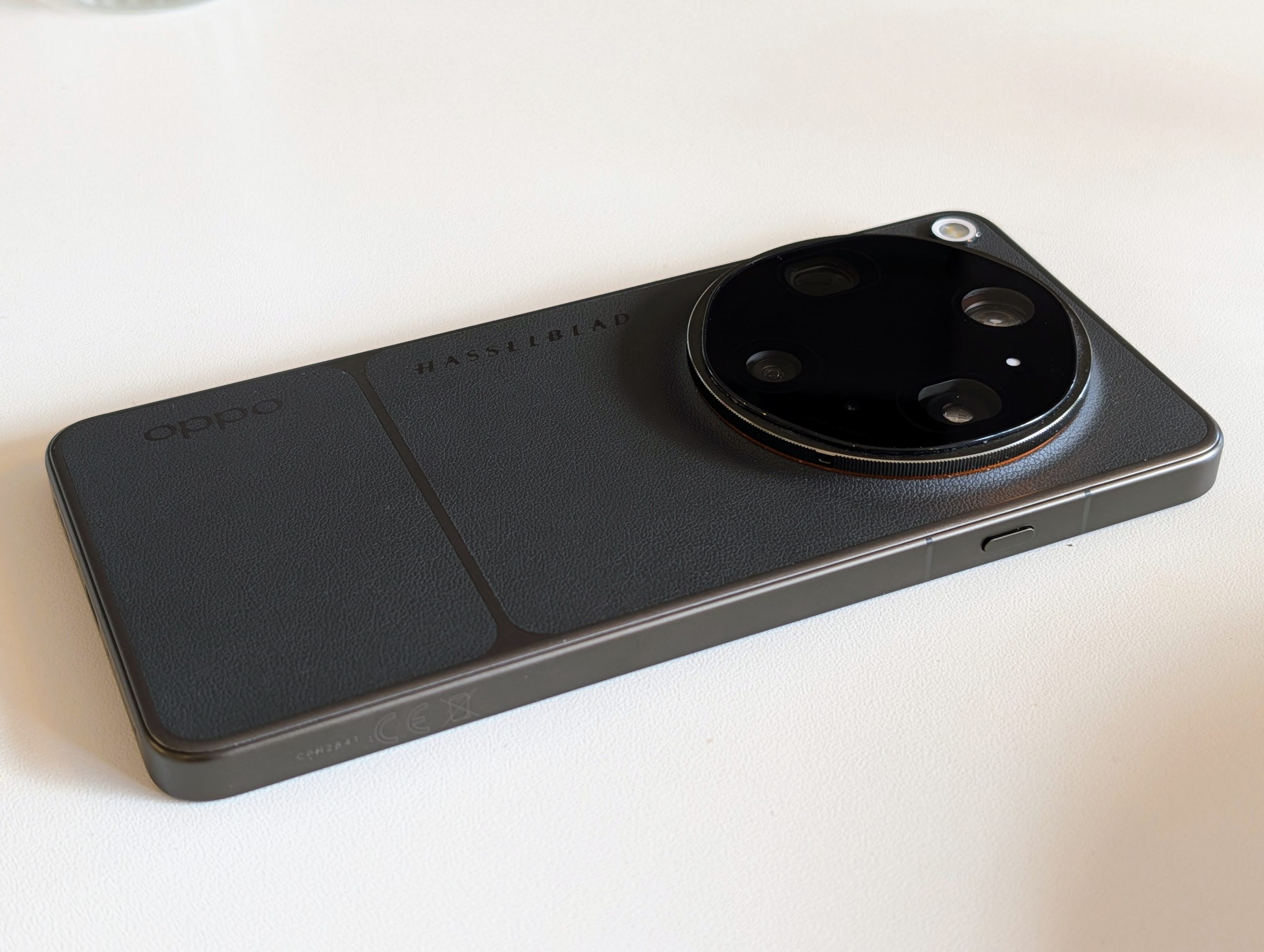
The first thing that strikes you when unboxing the Find X9 Ultra is how incredibly well-built and stylish it is. We are testing the “Tundra Umber” variant, which is finished in vegan leather and takes clear inspiration from the Hasselblad X2D system camera. It actually looks more like a camera than a phone, featuring a knurled ring around the camera module that mimics the focus ring on a real lens, and the iconic orange Hasselblad circle as the finishing touch. There is also a “Canyon Orange” variant that is more eye-catching, but for me, it is the discreet Umber version that really sets the mood.
The build quality is absolute top-tier. The phone feels substantial and solid in the hand, and like several other flagships this year, it features the market’s broadest IP rating with IP66, IP68, and IP69. This means it can theoretically withstand both immersion and being sprayed with high-pressure hot water. The back is protected by Gorilla Glass Victus 2, and OPPO states that the phone meets SGS’s highest level for drop resistance.
The fingerprint sensor is located under the screen and is of the ultrasonic type; it is fast and doesn’t care if your finger is wet. A small detail I appreciate is that the camera module, despite being quite prominent, acts as a nice finger rest when holding the phone horizontally to take photos.
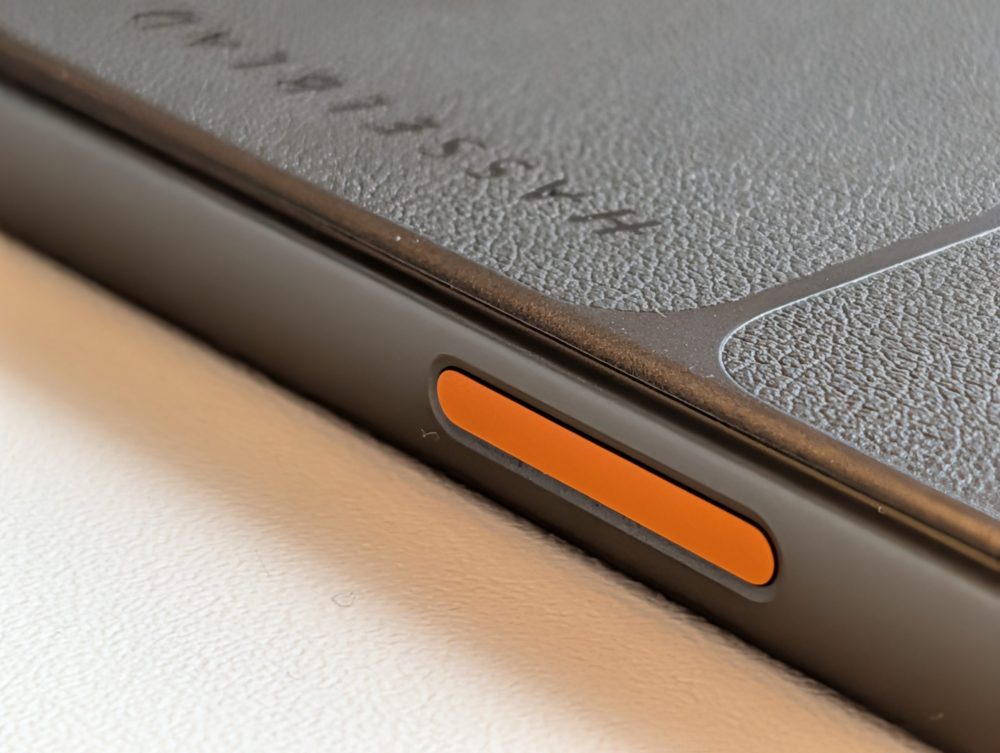
The phone weighs around 236 grams and has a dedicated camera button in Hasselblad orange on the side. And here comes one of the few real disappointments. In theory, it’s exactly the kind of thing I like—a physical shutter button allows for quick access to the camera. In practice, I’m not as fond of it. The button doesn’t feel entirely precise; sometimes it doesn’t react, and the function where you can “swipe” your finger on it to zoom feels mostly like a gimmick. It’s easy to zoom by mistake when you actually just want to take a picture, and after a while, it’s a feature you’d rather turn off. The idea is good, but the execution isn’t quite there.
Screen
The screen is a fantastically beautiful 6.82-inch LTPO AMOLED panel with QHD+ resolution (3,168 x 1,440) and a pixel density of 510 ppi. It supports a refresh rate of up to 144 Hz, although in practice, the full 144 Hz is only activated in certain games; in everyday use, it runs at 120 Hz and flows smoothly and nicely. The bezels around the screen are symmetrical and thin, providing a premium impression.
This is one of the brightest screens I have tested. OPPO specifies 1,800 nits at full brightness and up to 3,600 nits peak in HDR, and outdoor readability in sunlight is excellent. For those sensitive to flickering, it is worth mentioning that the panel uses high-frequency PWM dimming at 2,160 Hz at low brightness, and it can go down to just 1 nit for comfortable reading in the dark.
I do have one small objection, however, and that concerns the automatic brightness. When it’s really dark, it’s a bit too conservative, and I’ve had to increase the brightness manually more than I would have liked. It’s not a major problem, but it is noticeable.
Performance
Under the hood sits the most powerful hardware in the Android world right now: the Qualcomm Snapdragon 8 Elite Gen 5 manufactured on TSMC’s 3nm process. We are testing the model with 16 GB of RAM and 1 TB of storage, and the performance is simply absolute top-tier. Regardless of what I throw at it, it moves fast; everything feels lightning-quick and responsive.
OPPO has built in what they call an “Encapsulated Thermal Unit” along with a vapor chamber and graphite to keep temperatures in check during heavy tasks like 8K recording and gaming. Just like with several other flagships I’ve tested, it can get warm and throttle performance slightly during very long consecutive benchmarks, but in normal use, even during longer gaming sessions, I haven’t encountered any problems.
Software and AI
The phone runs ColorOS 16 based on Android 16. The interface is stylish and the animations are smooth, and there are a plethora of AI features built-in, such as “AI Mind Space” where you can quickly capture and organize content from the screen, a new “Live Space” on the lock screen, an AI Bill Manager for keeping track of expenses, and a menu translator that even generates images of the dishes. Much of it is nice, but some feel more like features you try once rather than something you actually use daily. It also comes with some pre-installed apps that I would have preferred to be without. It is worth mentioning that several of the AI functions do not yet support Swedish.
Where I am a bit more critical is the update policy. OPPO promises five major OS updates and six years of security updates. That is acceptable, and actually a step better than, for example, the OnePlus 15, but on a phone in this price range, I would have liked to see the same as flagships from Samsung and Apple, which stand at seven years.
Battery and Charging
Battery life is one of the phone’s absolute greatest strengths. The Find X9 Ultra has a substantial 7,050 mAh silicon-carbon battery, and the endurance is incredibly good. This is a phone where you don’t have to worry about top-up charging in the middle of the day, and with lighter use, you can easily get well into day two.
The phone supports wired charging up to 100 W, but a special SuperVOOC charger from OPPO is required to reach that speed. If you use a standard PD charger, which most people already have at home, you will never exceed about 50 W. That is still perfectly acceptable, but that true fast charging requires the right accessory. Wireless charging is available up to 50 W (also with the right charger), as is reverse charging for topping up something like a pair of headphones. Sadly, the phone lacks built-in magnets (Qi2 / MagSafe), which feels a bit behind the times for 2026.
Camera
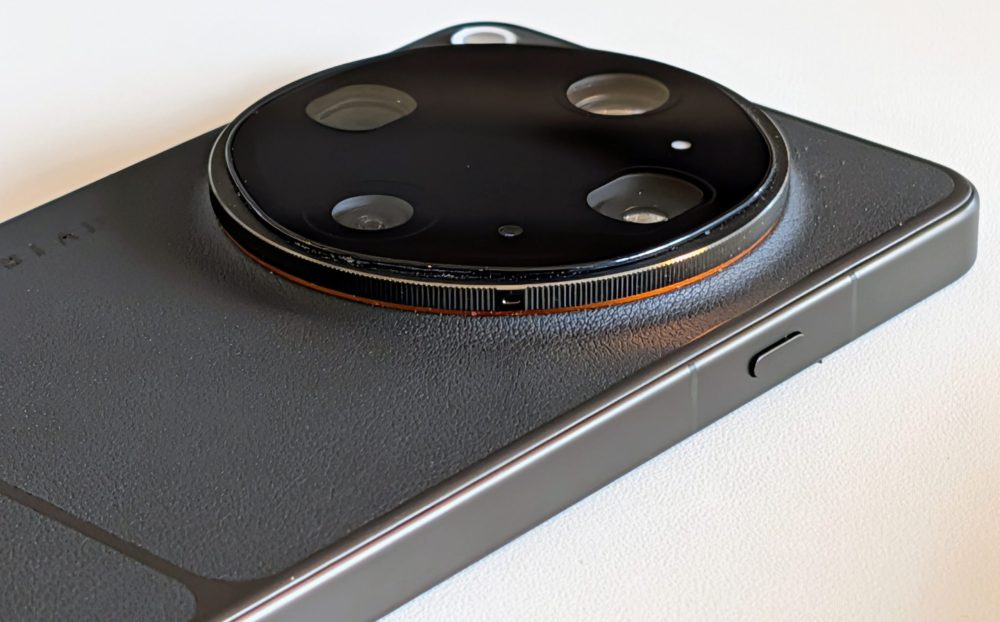
Now we come to the main event: the cameras. And it is undeniably here that OPPO wants eyes to be focused. The system was developed together with Hasselblad and consists of four real lenses plus a separate sensor for color reproduction.
The main camera is 200 MP (Sony LYT-901) with a large 1/1.12-inch sensor, 23 mm, and a bright f/1.5 aperture. It is, according to OPPO, the largest 200MP sensor ever put in a mobile phone. In daylight, it takes excellent pictures with plenty of detail, fine dynamics, and natural texture. Because there is so much resolution to spare, a crop to 2x (50 mm) effectively works as its own little telephoto lens with really high quality.




Then we have the two telephoto lenses. The 3x telephoto (70 mm) also sits on a 200MP sensor, and it is great for portraits. But one thing that really makes the phone stand out—and I wasn’t prepared for how good it would be—is that the same 3x telephoto also functions as a macro camera. It can focus as close as 15 centimeters from the subject, and the results are simply astonishingly good. Being able to get this close with a bright telephoto lens means you get detailed and sharp close-ups with a nice, soft background blur. This is one of the features I liked most during the test and something that elevates the entire camera experience.
But what everyone is talking about, and what OPPO is pushing heavily in its marketing, is the 10x telephoto. It is a true 10x optical zoom at 50 MP (230 mm), something almost no other manufacturer even attempts, built with an advanced periscope construction featuring five prism reflections inside. And sure, it is impressive. The ability to get this close, optically, is something out of the ordinary.
However, the 10x camera requires a lot of light to truly shine, and it actually isn’t that much better than, for example, the Pixel 10 Pro XL in practice. In good light, the results are superb, but as soon as it gets darker or the subject moves, it loses both sharpness and speed, which is pure physics at those focal lengths rather than a software error. It is still a fantastic feature to have, but it doesn’t quite live up to all the hype built up around it.


What is truly impressive, however, is Hasselblad’s Master Mode. Here, the tone curve is changed so that the images get that soft, muted character reminiscent of a real system camera, and you can also choose between a bunch of film simulations. The resulting images look very much like they were taken with a system camera and are simply really, really good. It is when shooting in this mode that you understand what the collaboration with Hasselblad is actually about.
The ultra-wide angle (14 mm, 50 MP) is the weakest link in the camera package. It gets the job done but doesn’t quite reach the level of the other lenses, especially in poor light. It’s not a bad camera, but it’s clear where OPPO has focused its efforts.
On the video side, the specs are really strong, with 4K at 60 frames per second on all lenses, 4K at 120 frames per second on the main and 3x cameras, 8K recording, and advanced professional features like O-Log2 and support for LUTs. The video is perfectly capable and stabilization is good, but the still images are still the big star here; video feels a step behind the absolute best.
Images taken during the testing period:







Conclusion
The OPPO Find X9 Ultra is one of the most complete and lavish phones I have tested. It is fantastically well-built and stylish, has a top-class screen, cutting-edge performance, impressive battery life, and a camera system that, especially in Master Mode, can deliver images that come close to a real system camera. It is a phone that truly wants to be a tool for those who love photography, and in many ways, it succeeds.
But it’s not perfect. The dedicated camera button is mostly a gimmick in practice, Qi2 magnets are missing, true fast charging requires a special charger, and the update policy is a bit stingy for a phone in this class. And then there’s that 10x zoom. It is impressive, but it is marketed as something more revolutionary than it actually is in everyday life.
Then there’s the price. With a recommended price of 18,990 kronor (16,990 kronor on promotion at the time of testing), this is a very expensive phone. If you are willing to spend that amount and want one of the absolute best and most enjoyable camera phones on the market—one that actually makes you want to go out and take pictures—then the Find X9 Ultra is a good choice.
If you are primarily looking for performance and battery life, there are cheaper ways to get there, such as the OnePlus 15, and if you are looking for the absolute best camera for the money, it is worth comparing it against the Xiaomi 17 Ultra and the Pixel camp before you decide.
With a slightly more well-thought-out camera button, Qi2 support, and an update policy as generous as Google’s and Samsung’s, this would have landed even higher. For now, it’s a strong seven.
OPPO sent a review unit for this test. Senders of material have no editorial influence on our tests; we always write independently with you readers and consumers in focus.
How we rate products at SensesReview Highlights: Q&A
How powerful is the optical zoom?
It features a true 10x optical zoom at 50 MP.
What is the battery capacity?
It has a substantial 7,050 mAh silicon-carbon battery.
Does it support wireless charging?
Yes, it supports wireless charging up to 50 W.
How long will the phone receive updates?
Five major OS updates and six years of security updates.
Is the phone water-resistant?
Yes, it has top IP66, IP68, and IP69 water resistance.
What is the screen's peak brightness?
It reaches up to 3,600 nits peak brightness in HDR.
Can the camera take macro photos?
The 3x telephoto lens also acts as a macro camera.