

TL;DR
The Redmi Note 15 Pro+ upgrades its predecessor with a much-improved, grippy fiberglass back and impressive IP66/IP68 water and dust resistance, plus Gorilla Glass Victus 2 for durability. It boasts a bright 6.83-inch AMOLED display with a handy wet touch feature. Big wins include a massive 6,500 mAh battery offering nearly two days of life and 100W charging (charger sold separately). Performance is smooth for daily tasks thanks to the Snapdragon 7s Gen 4, but UFS 2.2 storage and a lot of pre-installed bloatware/ads detract from the experience, as does the camera relying on digital zoom beyond 2x. If battery, durability, and a great screen are your priorities over a top-tier camera and clean software, this phone is a strong contender. Read the full review to see if its trade-offs are worth it for you.
This is the successor to one of the phones we liked best last year, the Redmi Note 14 Pro+, which has since been one of our benchmarks. It was a phone that wasn’t actually the best at anything, or even close. But it was good at many things and had a great price, so overall it was a very good purchase.
How does the successor Redmi Note 15 Pro+ stack up? Has Xiaomi made any major changes, or is it essentially last year’s phone in a new shell? Let’s find out!
Design and Build Quality
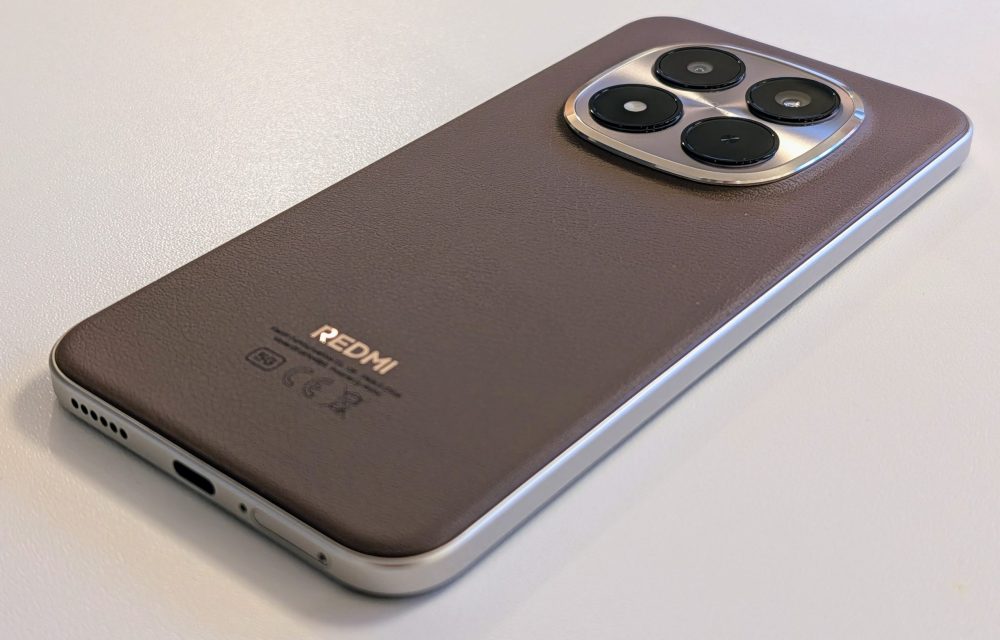
The Redmi Note 15 Pro+ immediately feels different in the hand compared to last year’s model. The model we are testing is in the Mocha Brown color, and the back is made of a fiberglass composite with a texture reminiscent of leather.
This is a welcome change. While the Note 14 Pro+ was as slippery as a bar of soap, this model sits incredibly securely in the hand, and you don’t have to worry about it sliding out of your grip. Additionally, the back doesn’t attract any fingerprints at all.
The build quality feels very solid. Xiaomi is focusing heavily on durability with this model and has reinforced corners and internal structure in what they call “Redmi Titan Structure”. The phone has both IP66 and IP68 ratings, meaning it can withstand not only immersion in water but also powerful water jets.
The front is protected by Gorilla Glass Victus 2, which according to Xiaomi allows it to withstand drops from heights of up to 2.5 meters. We didn’t dare test that, but it feels like a phone you actually dare to use without a case (even though a basic case is included in the box).
Display
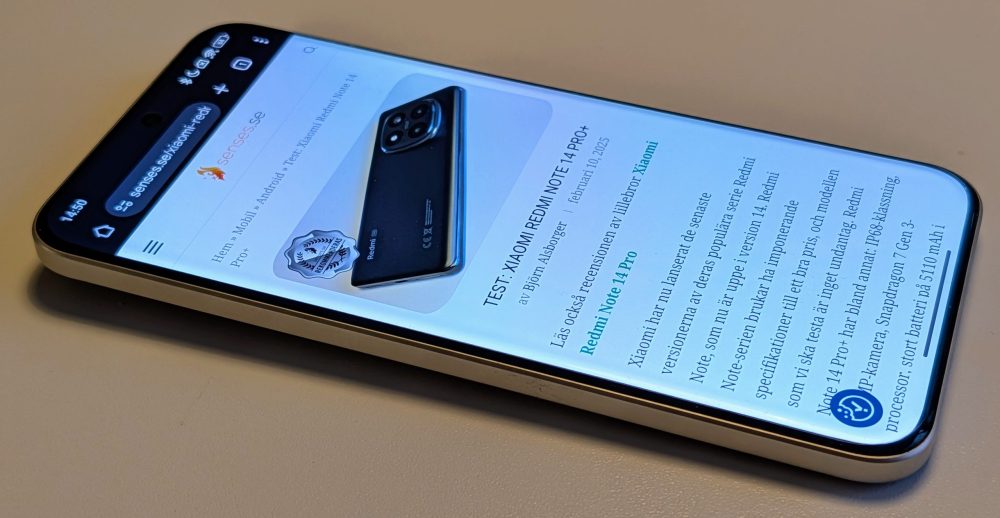
The display is a 6.83-inch AMOLED panel with so-called 1.5K resolution (2772 x 1280 pixels) and a 120 Hz refresh rate. It is a really nice panel with a peak brightness of a whopping 3,200 nits. This means there are never any issues seeing what’s happening on the screen, even in direct sunlight. It is slightly curved at the edges, not much, and while it looks nice, we prefer a completely flat panel. A screen protector comes pre-installed.
A new feature that actually works surprisingly well is something Xiaomi calls “Wet Touch 2.0”. We’ve all experienced the screen going haywire when it’s raining outside, but here it remains responsive even with wet fingers or raindrops on the glass. It’s one of those features you don’t know you need until you have it.
Battery and Charging
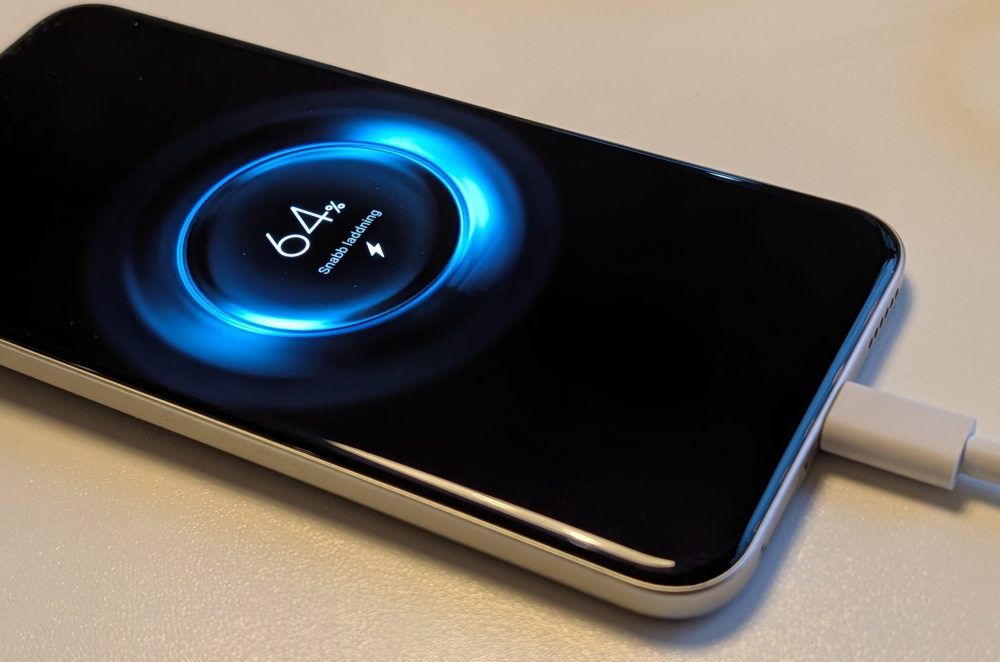
Major things have happened here. Xiaomi has managed to squeeze in a battery of a whopping 6,500 mAh by using new silicon-carbon technology. It shows. The battery life is excellent. With normal use, you can last almost two days without having to hunt for a charger.
The phone supports 100 W HyperCharge. Charging is very fast, but there is a catch. Just like with the Oneplus 15 (and all newer phones), the charger is not included, and if you don’t have the right charger from Xiaomi, you’ll have to settle for up to 50W. If you want to be able to fully utilize the fast charging, you’ll need to buy a compatible charger separately. When we test with the office’s Anker Prime-laddare, we usually hit around 30-35W.
There is no support for wireless charging, but there is support for reverse charging at up to 22.5 W. A handy feature if you need to charge a pair of headphones or help a friend who, as usual, has forgotten to charge their phone.
Performance and Software
The brain / heart is a Snapdragon 7s Gen 4 processor. Note the “s” in the name; it hints that it isn’t the absolute fastest chipset in the 7-series, but for everyday use, it is more than sufficient. The system runs smoothly, apps start quickly, and we experience no lag in the interface. However, it’s noticeable that it’s not a flagship chip if you try to play the most demanding games at the highest graphic settings. Something that’s a bit disappointing is the UFS 2.2 storage, so handling larger files takes a bit longer than necessary.
The phone ships with Xiaomi’s HyperOS based on Android 15. It is clean and snappy, but just as we pointed out in previous reviews of the Redmi Note series, the amount of “bloatware” is frustratingly large.
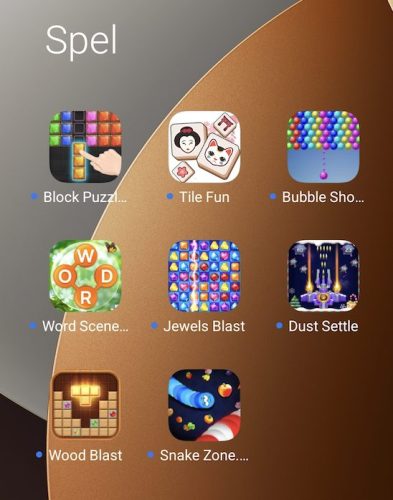
There are plenty of pre-installed games and apps that you didn’t ask for. Sure, they can be uninstalled, but it detracts a bit from the premium feel. Something that really takes away from the premium feel is the presence of unwanted ads.

You can easily get rid of the ads by either uninstalling Xiaomi’s browser (or turning off notifications from it), but regardless, it is something that is extremely annoying.
As mentioned earlier, the phone comes with Android 15, and not Android 16, which has been released for several months. This makes Xiaomi’s promises of four OS updates feel more like three, as the update to Android 16 will likely arrive shortly. They also promise six years of security updates, which is decent for a mid-range phone.
Camera
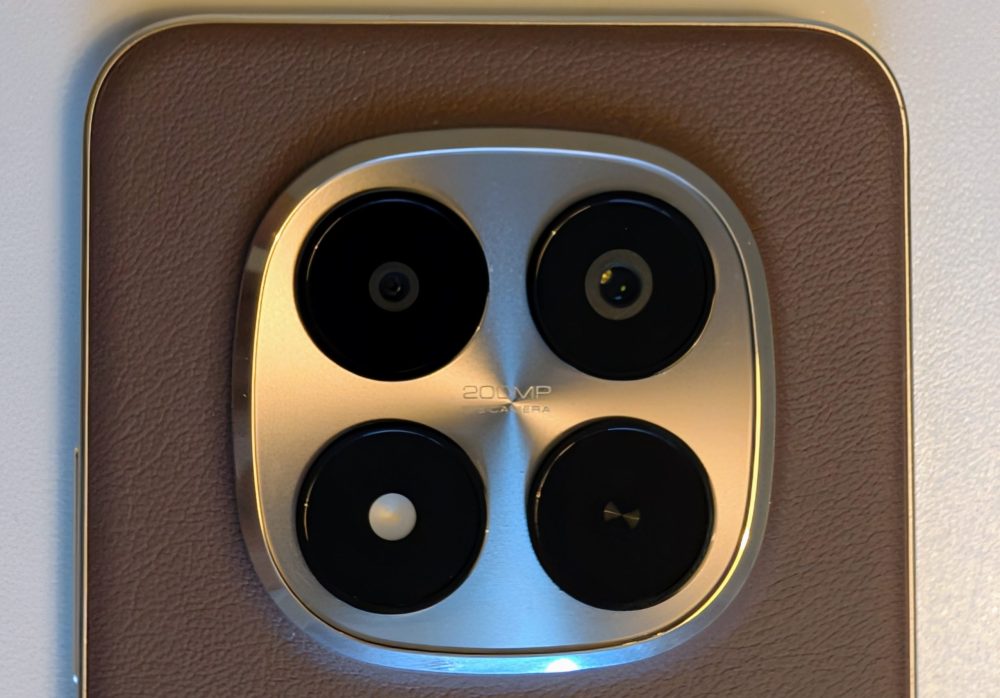
The camera setup consists of a 200 MP main camera with a large 1/1.4-inch sensor, an 8 MP ultra-wide angle, and… well, that was actually it. It looks like there are three lenses + flash, but unlike the Chinese version of the phone, we in the Nordics do not get a dedicated telephoto lens. Instead, Xiaomi relies on cropping the image from the high-resolution 200 MP sensor to provide 2x and 4x zoom. And the third lens? That’s just for show; it’s not actually a lens.
The result? The main camera performs okay. Photos in daylight are sharp with nice colors, and even at 2x zoom, they look reasonably good. At 4x, however, you start to see that it is digital zoom, and details become smeared. At even higher zoom levels, it is more or less unusable. Here is a comparison against the Google Pixel 10 Pro XL.








In poorer lighting, the differences become larger. Here are two different examples, also against the Pixel 10 Pro XL. One image at 1X where it struggles to capture details on the house wall while handling the lighting correctly. And then a slightly more extreme image, with 10X zoom in poor lighting.




The 8 MP ultra-wide angle feels a bit dated in this price range. It’s sufficient for landscape photos in good light, but sharpness falls off toward the edges and it gets quite noisy in low light.
Here are some miscellaneous photos we took during the test:








Conclusion
The Xiaomi Redmi Note 15 Pro+ is a phone that is easy to like, especially if you prioritize battery life and durability. It feels fantastic in the hand thanks to the new back, and the display is a joy to look at. Knowing that the phone can withstand both water and drops provides peace of mind in everyday use.
The lack of a real telephoto lens and the presence of ads / bloatware pull the rating down slightly. The model we tested (512 / 12) has a recommended retail price of 6,290 SEK, but during the launch period (until 8/2), it is being sold for 5,290 SEK.
If you need a phone that “just keeps going” and can handle heavy use, and the camera is not your highest priority, then the Redmi Note 15 Pro+ is a very strong alternative. You get a lot for your money. Just make sure to uninstall unnecessary apps to avoid the ads.
Xiaomi sent a review unit for this test. Providers of material have no editorial influence on our tests; we always write independently with you, the readers and consumers, in focus.
How we rate products at SensesReview Highlights: Q&A
How long does the battery typically last?
With normal use, the 6,500 mAh battery can last for almost two full days.
Is a fast charger included in the box?
No, you must buy a compatible charger separately to reach 100W speeds.
Does the camera have a dedicated telephoto lens?
No, it uses digital cropping from the 200MP main sensor for zooming.
Is the phone waterproof and durable?
It features IP66/IP68 water resistance and Gorilla Glass Victus 2.
Are there ads or bloatware in the software?
Yes, it includes a lot of pre-installed bloatware and unsolicited ads.
What is the retail price for the phone?
The standard price is 6,290 SEK, or 5,290 SEK during the launch period.
Can the screen be used with wet hands?
Yes, Wet Touch 2.0 allows the screen to work with wet fingers or rain.