
TL;DR
JBL's Charge 6 is here, four years after the Charge 5, bringing a refined, durable design with IP68 water and dust resistance and an upgraded 45W RMS output for clearer highs and deeper bass. Enjoy a massive 28-hour battery life, faster charging, and USB-C for external devices. JBL's AI Sound Boost technology promises optimized, clear audio across genres, while the JBL Portable app offers easy customization and stereo pairing. While sound improvements over the Flip 7 are marginal, the Charge 6 delivers solid, well-defined audio and a premium experience, even if the carrying strap lacks a quick-release. Dive into our full review to see if it's the upgrade you've been waiting for!
In April, one of the most anticipated products for the summer was released: the JBL Charge 6. It has been about four years since its predecessor, the Charge 5, arrived, and quite a lot has happened along the way. Is the technology upgraded? Is the sound better? Is there anything new? Join me as we find out.
Design
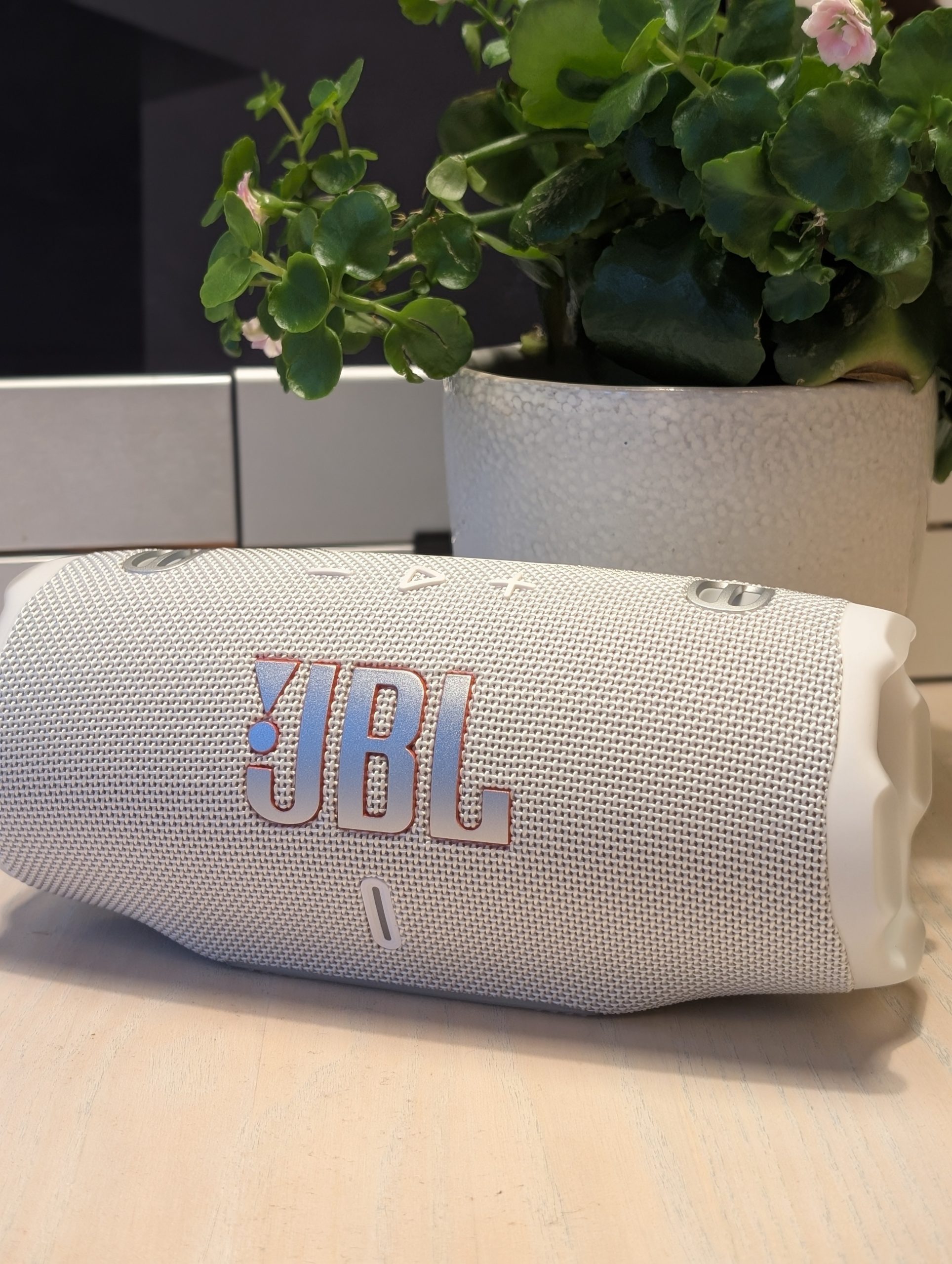
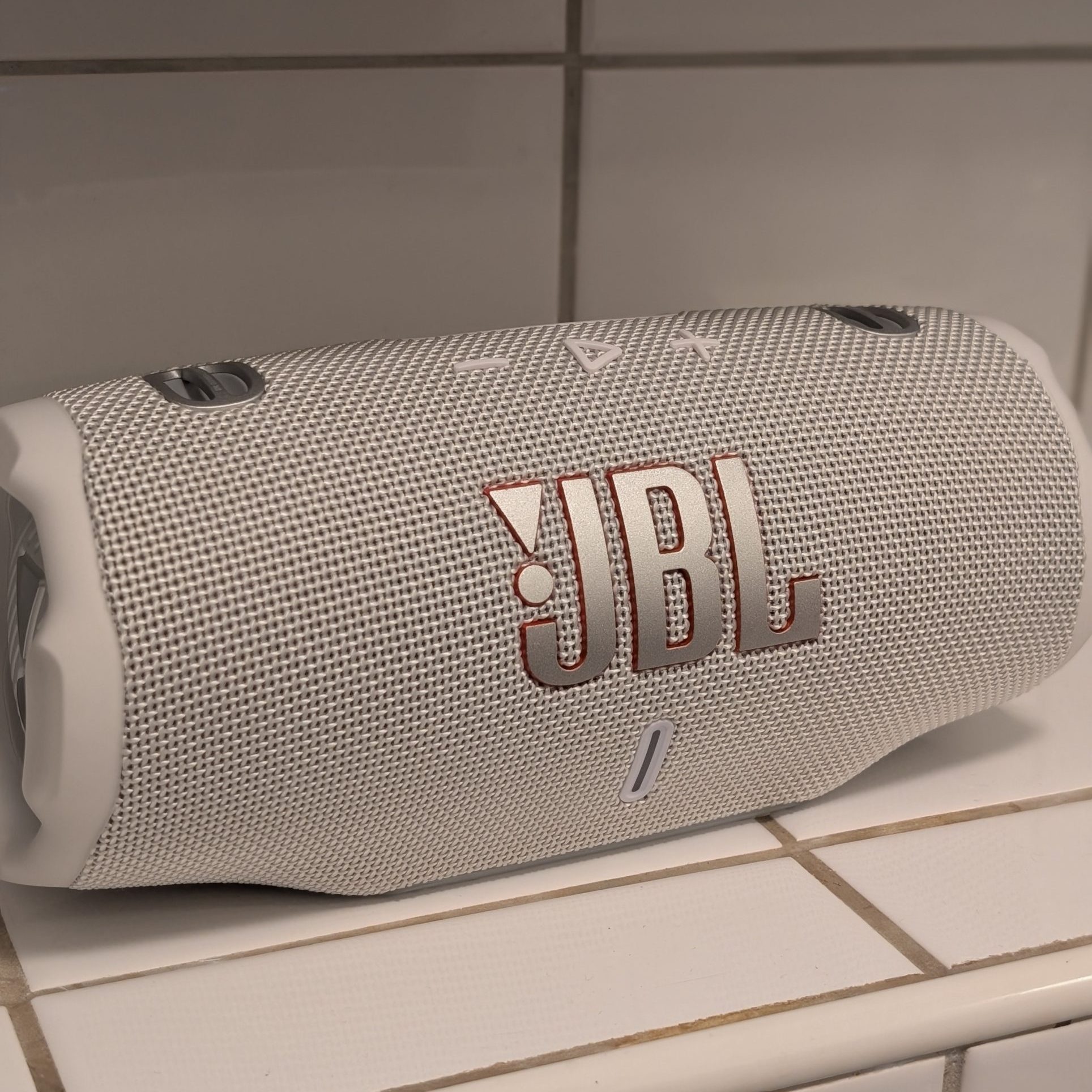
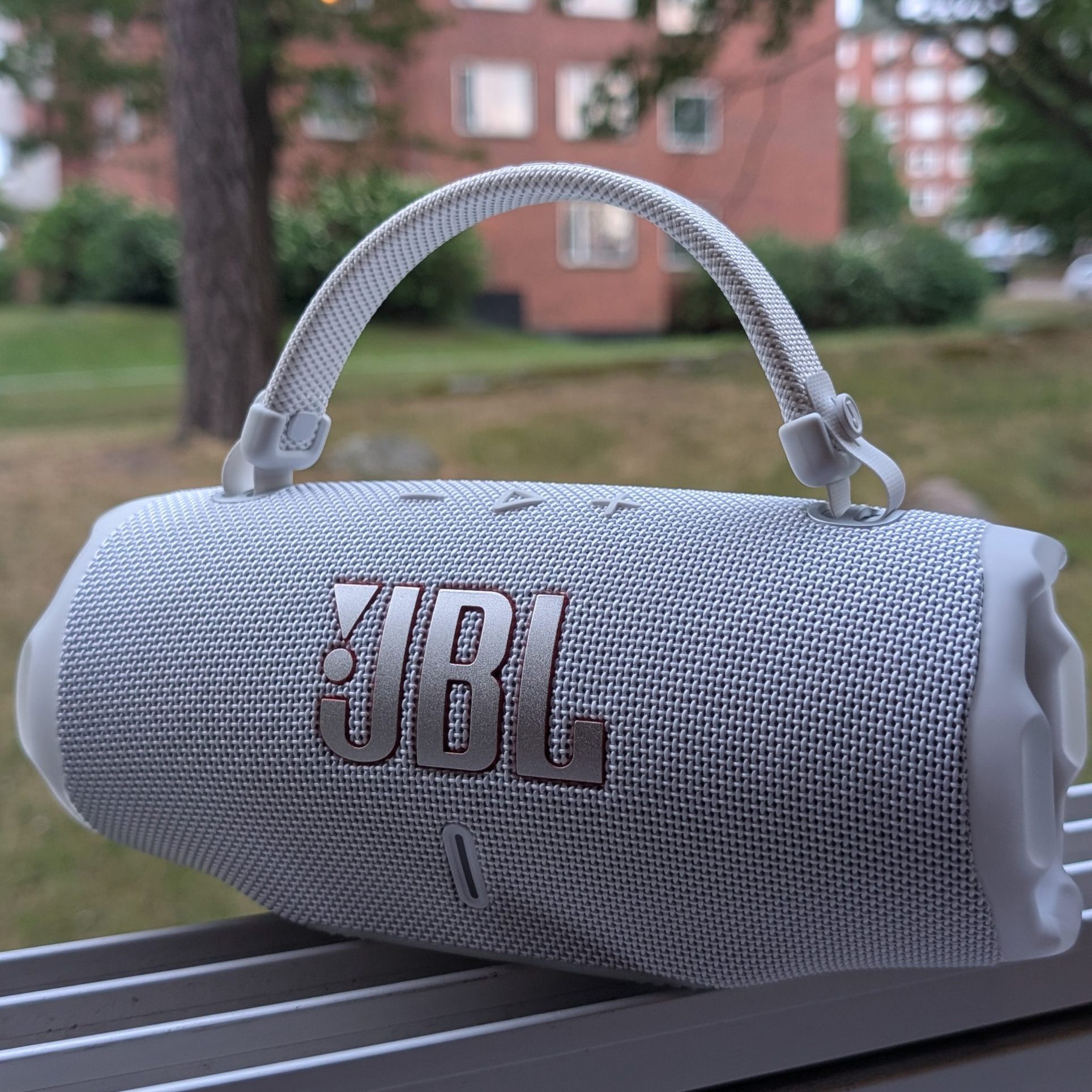
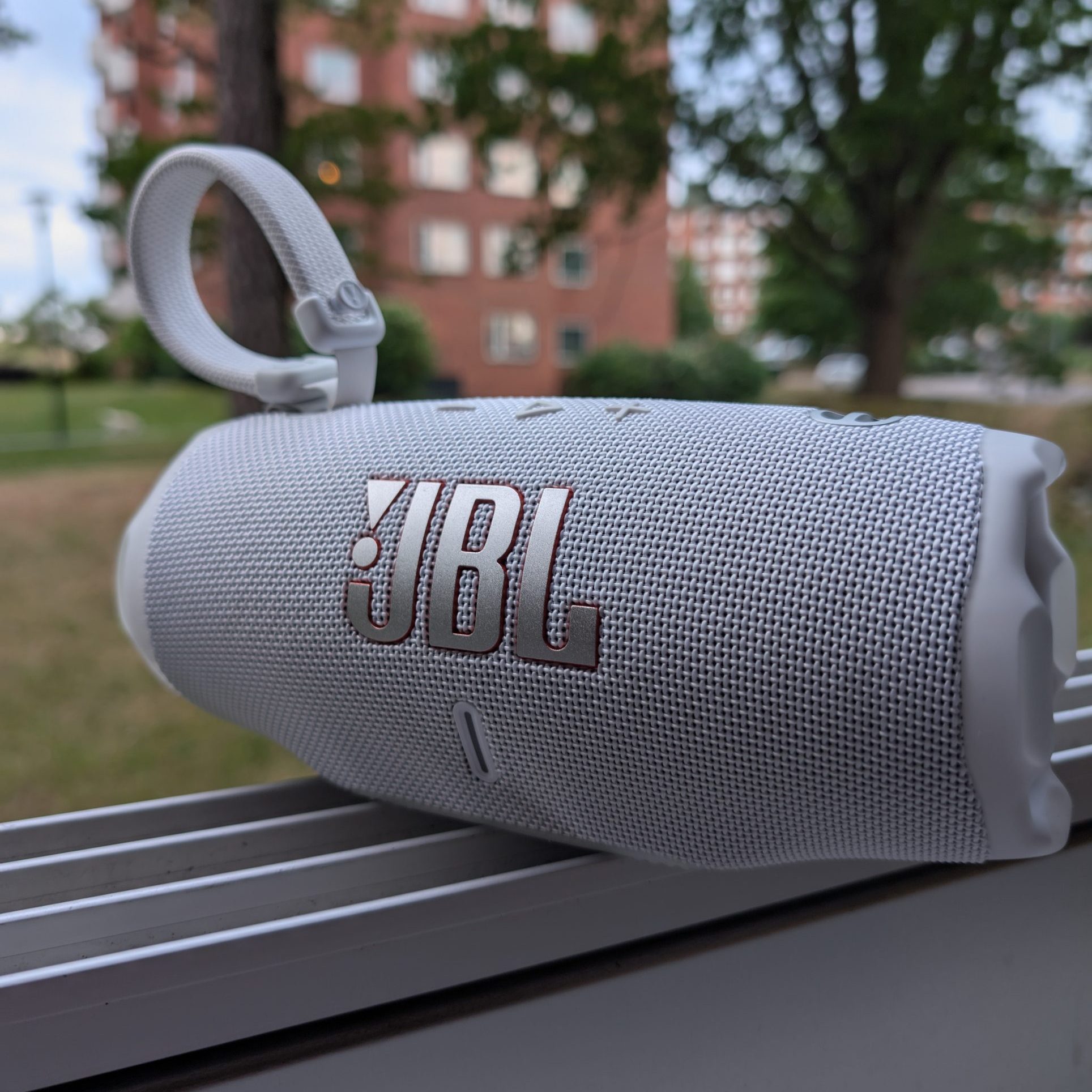
When it comes to the speaker’s appearance, it is clear that JBL has put some thought into it. At first glance, it looks somewhat premium. As before, they have continued with the familiar cylindrical design, which in my opinion is very sleek. But it doesn’t just look premium—it feels premium too. Holding it, it is a relatively robust unit with a weight of just under a kilogram. It is also more durable than before. The speaker has been tested in lab conditions with drops from up to one meter without sustaining damage.
Like its more compact younger brother, the Flip 7, the Charge 6 has an industry-leading IP rating of IP68. This means it is dust- and waterproof down to a depth of 1.5 meters for up to thirty minutes. The Charge 5 previously had an IP67 rating.
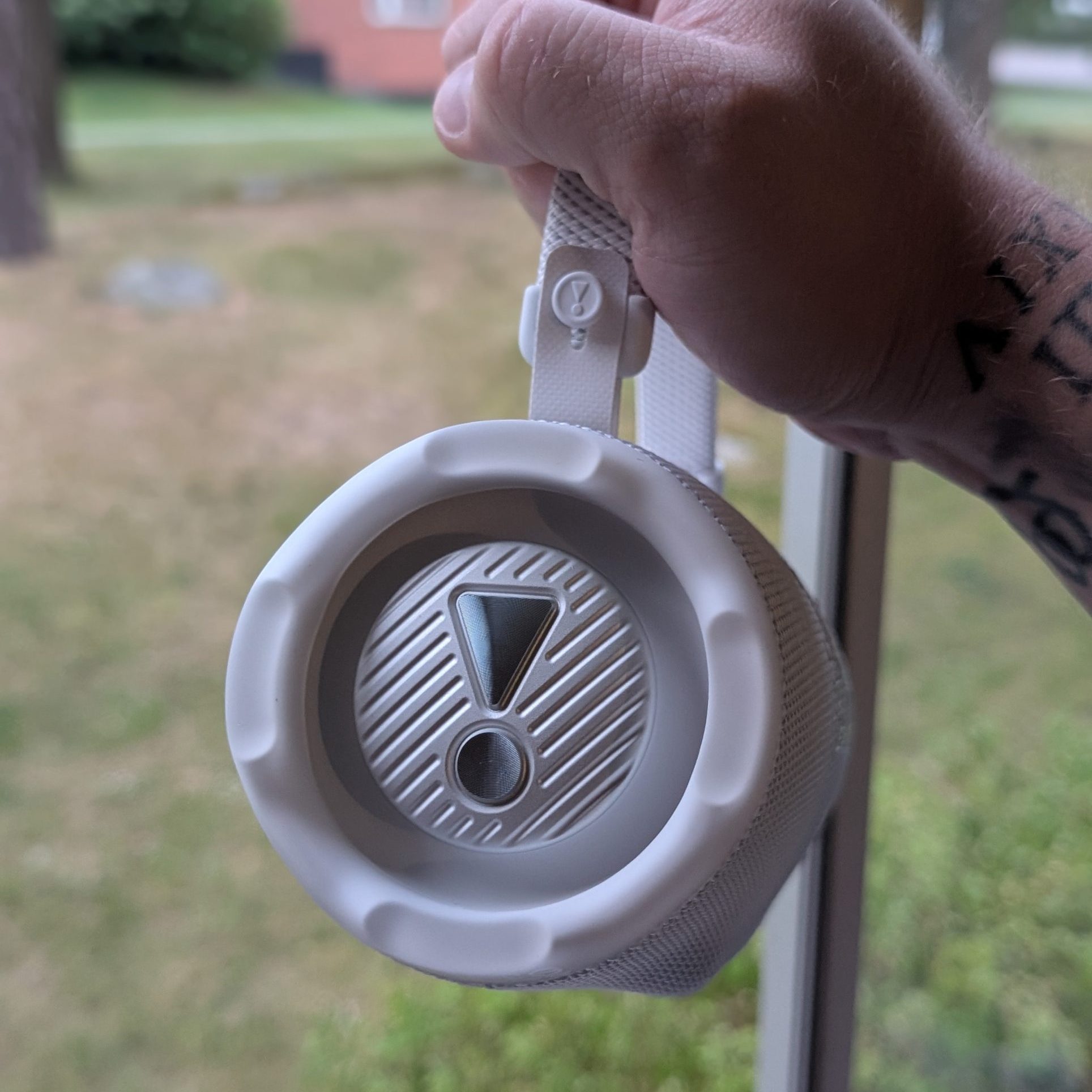
Something that was a bit disappointing, even if it’s not a major issue, was that like the Flip 7, the Charge 6 also comes with a carrying handle. It can be set up as a traditional handle or a wrist strap. However, they have chosen not to include the unique push-lock system found on the Flip 7, which allows you to release the strap with the press of a button. It doesn’t affect performance, but it still feels like a missed opportunity when a clever solution already exists.
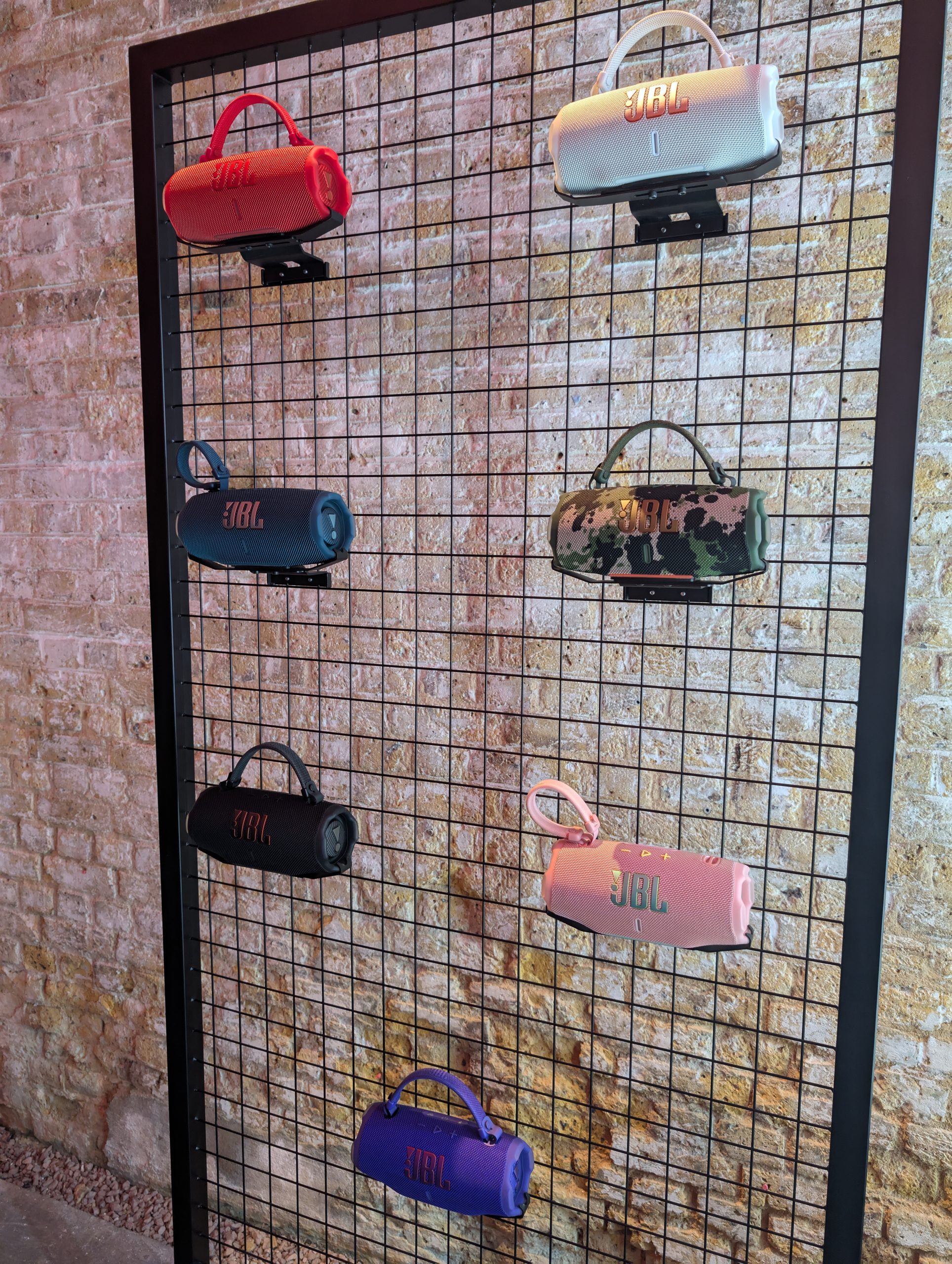
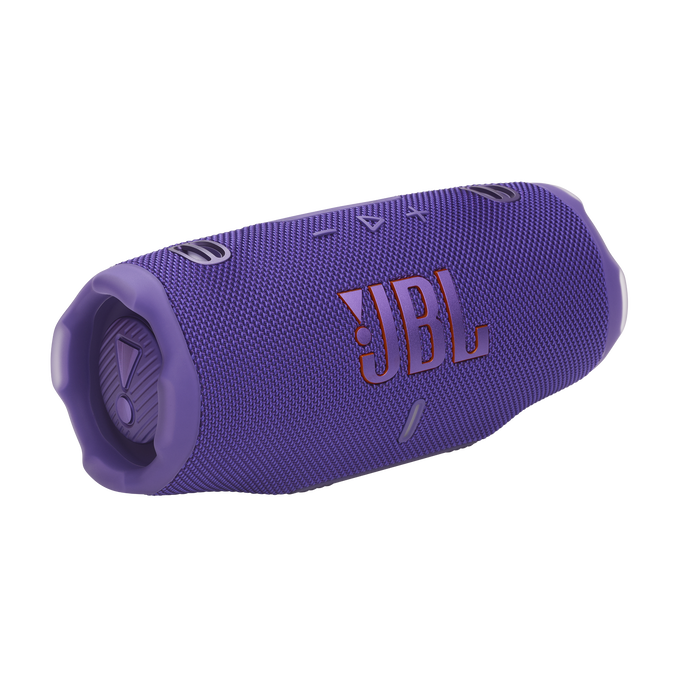
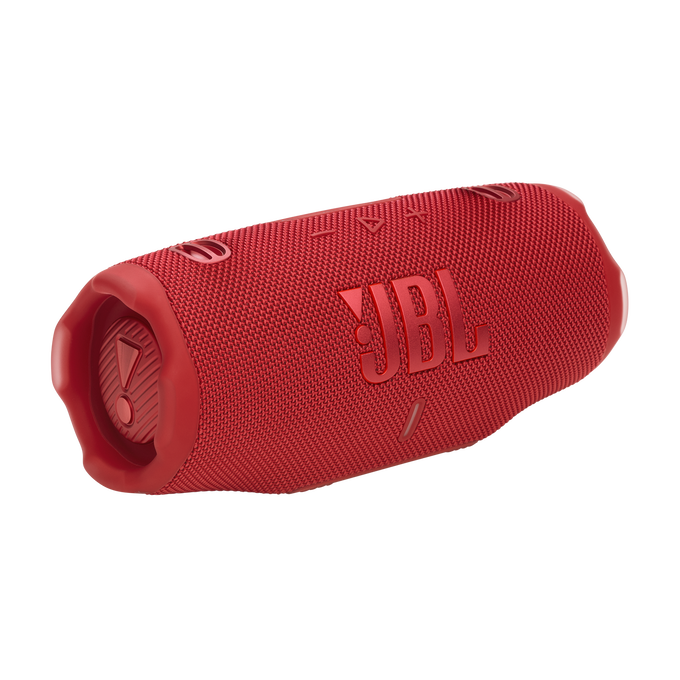
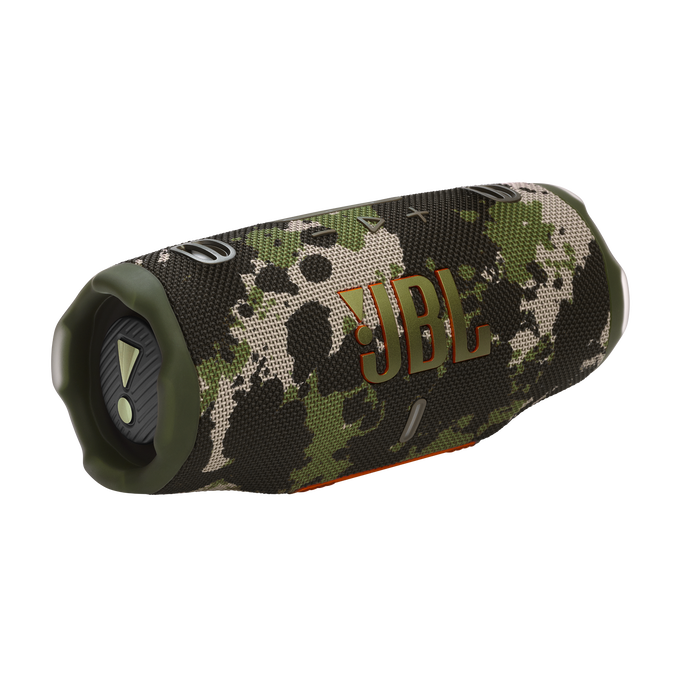
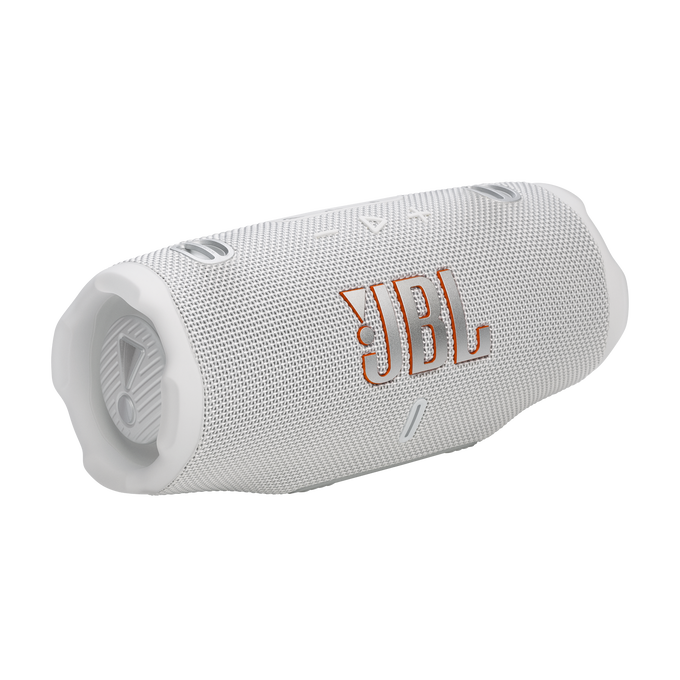
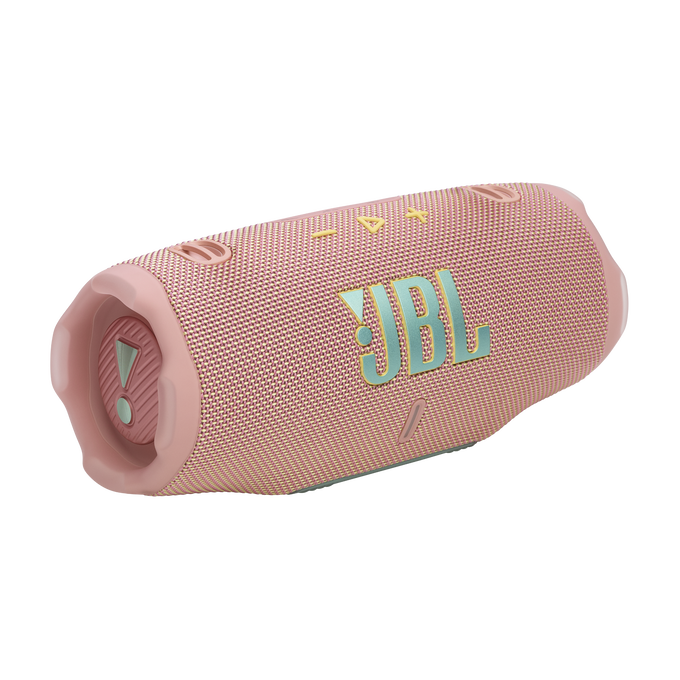
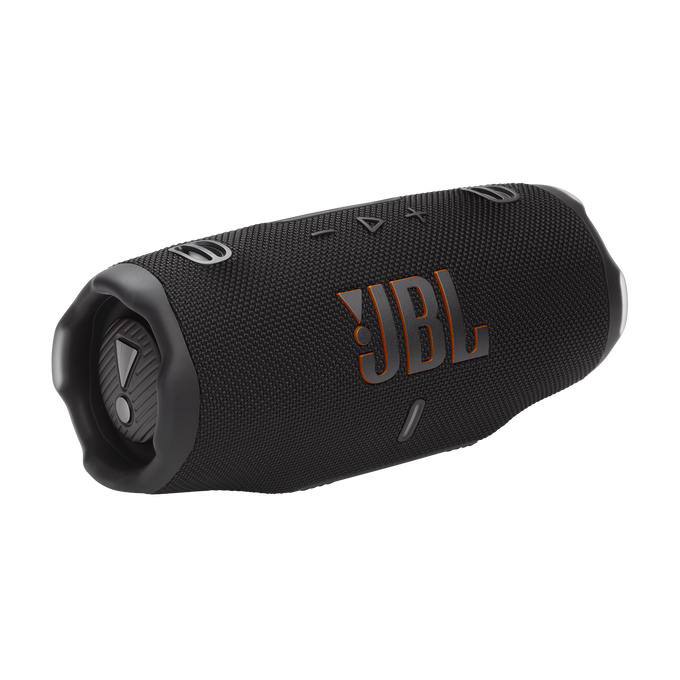
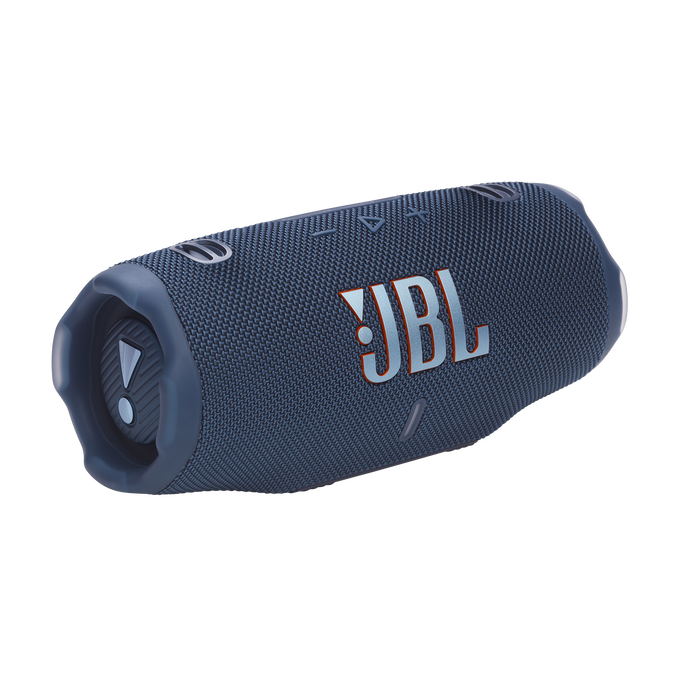
We were able to test the speaker in its stylish white finish. The Charge 6 is available in seven different colors: white, red, blue, purple, pink, black, and squad (camo). It is also worth mentioning that JBL has a clear environmental focus in its products. This particular speaker is made with 85% recycled material, which is an extra plus.
Performance
Let’s start with what most people find most important in a portable speaker: battery life. With a capacity that provides up to 28 hours of playtime—that’s over a full day! Here, the Charge 6 has received a significant boost—8 hours more than the Charge 5, which offered 20.
The built-in power bank for charging other devices has been upgraded from USB-A to USB-C. The same port is used to charge the speaker itself. This means the Charge 6 has one fewer port than before, as the USB-A port is no longer needed. Additionally, it now supports fast charging. Ten minutes of charging provides approximately 2.5 hours of playtime, and a full charge takes around three hours.
The power output has also been upgraded, from 40W RMS to 45W RMS. This provides heavier bass and sharper treble. So, how do you get the most out of the sound? JBL has thought of that too. With their proprietary AI Sound Boost, the audio is analyzed in real-time to optimize it and provide the best possible listening experience. To explain what I mean by that, I can give a brief example. For us metalheads, it’s very noticeable. Take, for instance, Slaughter To Prevail and the song “Bratva”. About 2:40 into the song, if you listen via a mobile speaker or a Marshall Emberton III, the soundscape becomes quite chaotic—the sound tends to bleed together. But with AI Sound Boost, the audio and instruments are separated so that everything is heard clearly and individually. This is especially noticeable in the lower register, where you can actually hear the growls and the bass clearly as two distinct elements. Normally, AI and other digital effects can make the sound feel distorted and unnatural. But I must say that here, AI Sound Boost does a great job of maintaining the authenticity of the sound and music.

JBL Portable
When it comes to apps and technology, we’ve all heard the phrase “plug and play.” But often, there’s still something you have to fiddle with. With JBL Portable, however, I find it to be as seamless as promised. You connect via Bluetooth, and as soon as I opened the app, it found the speaker immediately, ready to be customized to my liking.
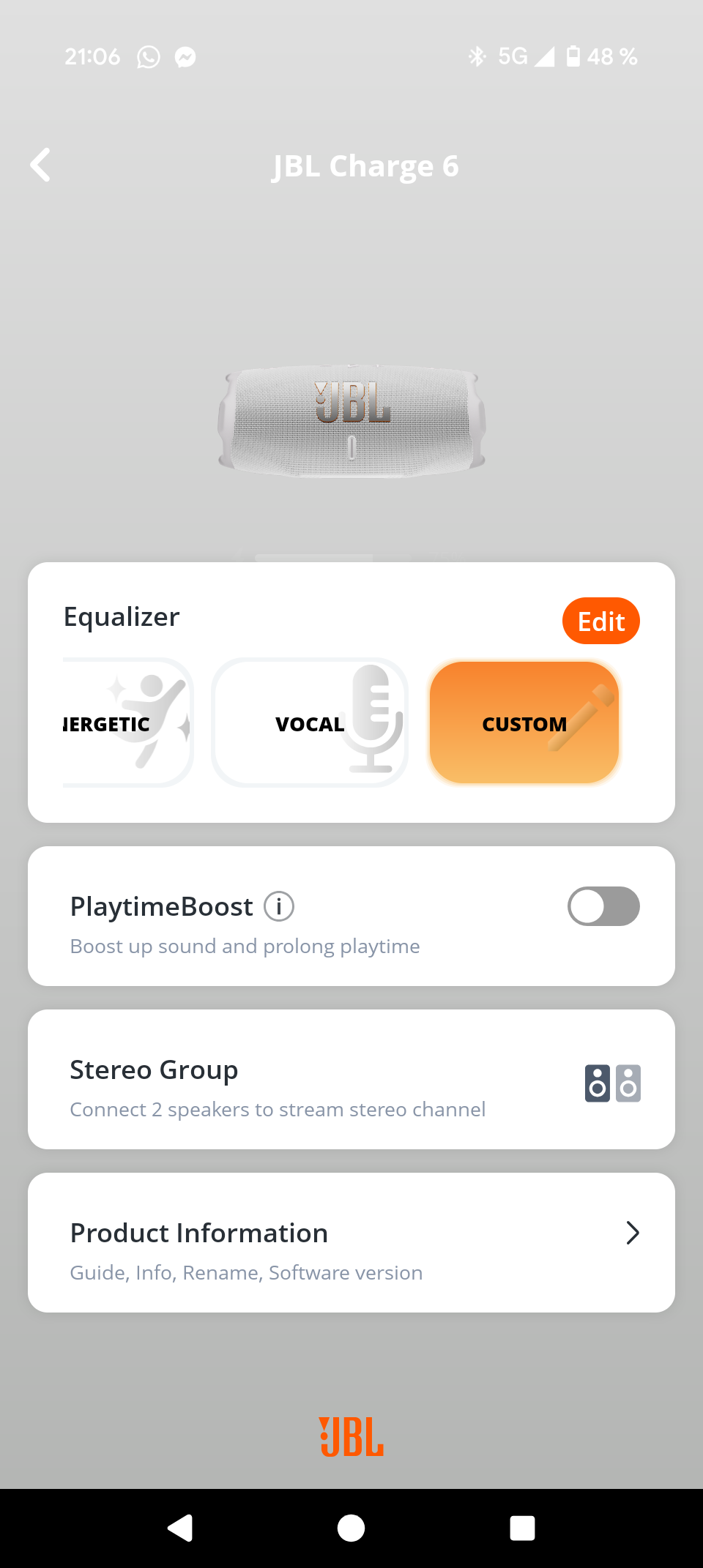
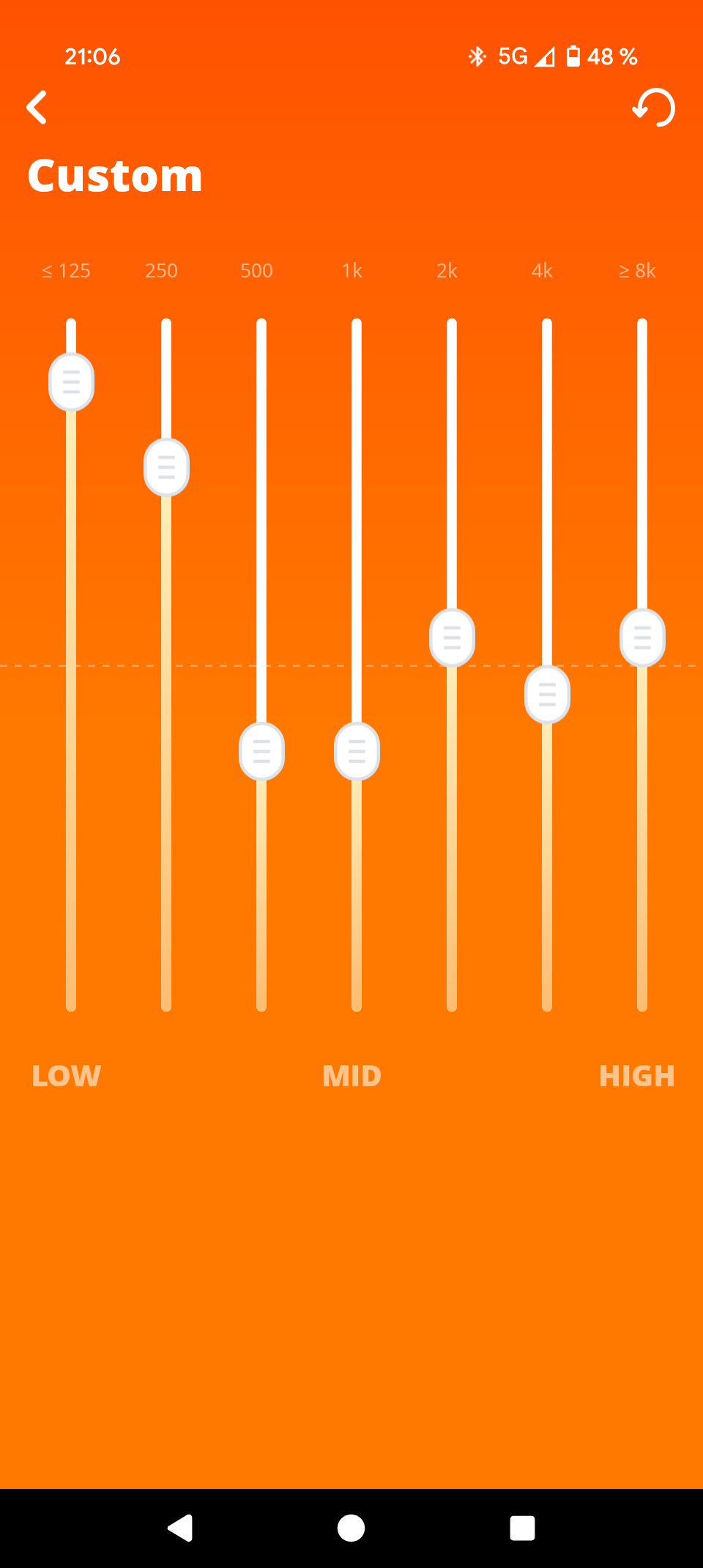
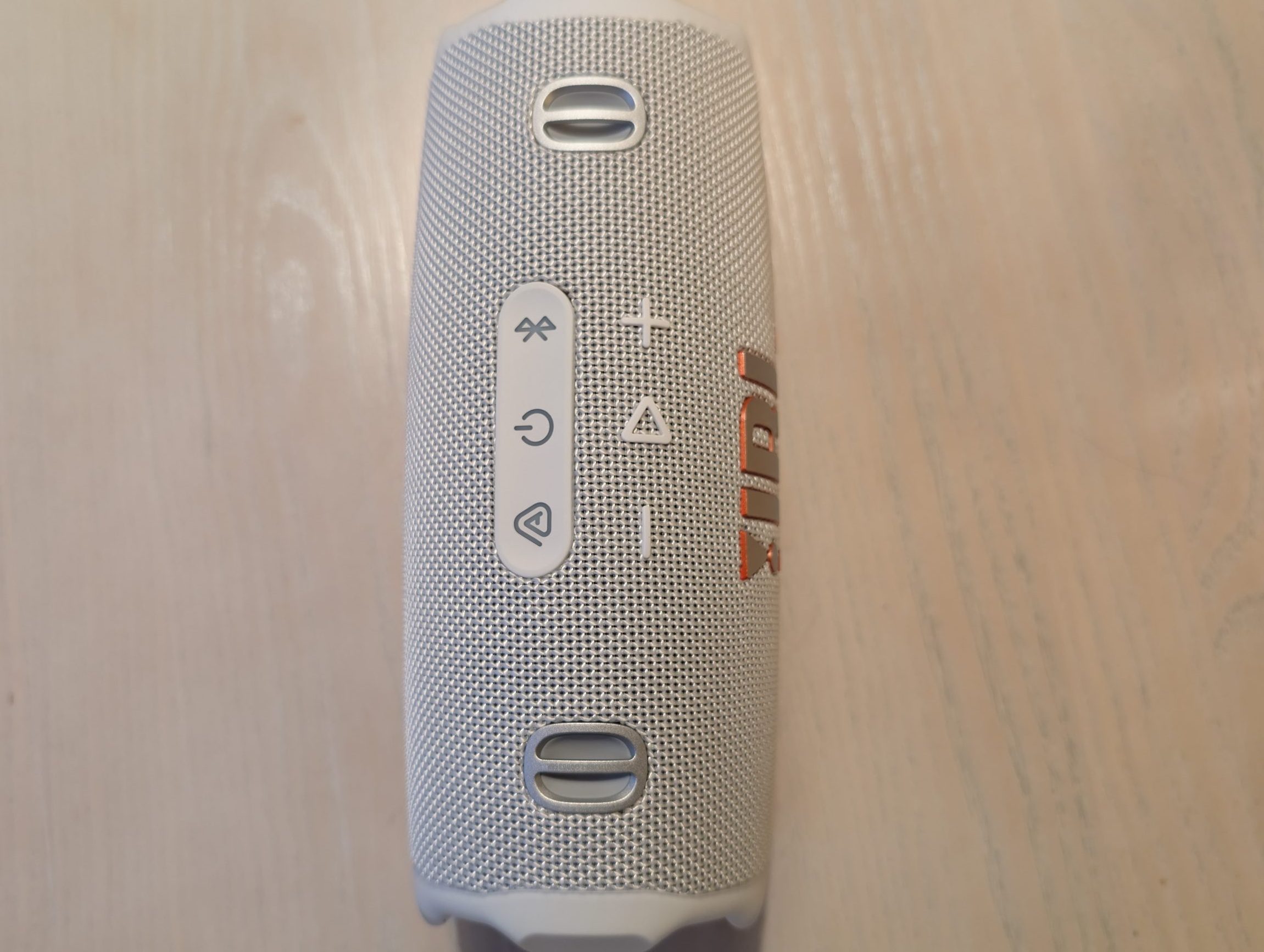
In the app, there are preset sound modes such as “JBL Signature” and “Energetic.” There is also a seven-band Custom mode where you can adjust the sound exactly how you want it. For me, this is a welcome addition. I often find that preset sound profiles don’t quite suit my taste; either the drums lack punch, or the vocals get lost in the background. That whole problem is avoided here. It’s clear that JBL has focused on the user. Like the Flip 7, the Charge 6 is also equipped with multi-connectivity via AuraCast. In short, this means you can stereo-pair two speakers for a better audio experience. With a simple press of the AuraCast button on the top, the audio automatically syncs to both speakers.
Soundscape
After the Flip 7 test, my expectations were sky-high. I thought that speaker was fantastic. The Charge 6 is larger and has a total power output that is 10W higher. It should only be better, right? And sure, it was better. But not as much as I had hoped. I must admit I was a little disappointed. The sound isn’t significantly better, and I want to be very clear that while it didn’t get much better, it certainly didn’t get worse either. For an average user, the difference is barely noticeable. So the sound experience felt a bit underwhelming compared to my expectations.
On one hand, compared to, for example, the Marshall Emberton III, which is in the same price range, the sound from the Charge 6 is clearly better. It also keeps pace with the Anker Soundcore Motion X600, which is comparable in both price and power. But it is only marginally better than the Flip 7, which costs a few hundred kronor less and has half the power output.
With that said…
The Charge 6 is still a really good speaker. Whether I’m listening to Enya‘s soft, embracing voice in May It Be from The Lord of the Rings, the snappy accordion and mandolin in Galway Girl by Mundy & Sharon Shannon, or if I want to hear Hail The Apocalypse by Avatar—it delivers. Every instrument has its place. The sound is clear and detailed without becoming muddy. The guitar riffs in Mark Knopfler‘s Money For Nothing are crystal clear. The warm strings in Bear McCreary‘s Old Tom Bombadil give me goosebumps, and the drums in Viking by Slaughter To Prevail feel like a right hook.
Summary
So, what is the conclusion? The JBL Charge 6 is a well-built speaker. It looks premium, feels robust in the hand, and can withstand water, dust, and the occasional drop. It weighs just under a kilogram—not a speaker you’d put in your pocket, in other words—but it is built to last. It sounds great across all registers and features AI Sound Boost, which automatically adjusts the sound in real-time.
As I mentioned, I wasn’t completely blown away. But the sound is definitely a step up from both the Charge 5 and the Flip 7—just not a giant leap. The JBL Charge 6 is a very good speaker. Perhaps not revolutionary, but it is stylish, reliable, durable, and has sound that impresses in most situations.
JBL sent a review unit for this test. Material providers have no editorial influence on our tests; we always write independently with our readers and consumers in focus.
Review Highlights: Q&A
What is the battery life of the JBL Charge 6?
It offers up to 28 hours of playtime, which is 8 more than the Charge 5.
Is the JBL Charge 6 waterproof and dustproof?
Yes, it has an IP68 rating, meaning it is dust- and waterproof.
How long does a full charge take?
A full charge of the speaker takes approximately three hours.
Does the speaker have a built-in power bank?
Yes, it includes a USB-C power bank for charging other devices.
Can I customize the sound settings?
Yes, the JBL Portable app features a seven-band custom equalizer.
What is the power output of this model?
The power output has been upgraded to a total of 45W RMS.
Can I connect multiple speakers?
Yes, it uses AuraCast technology to sync audio across two speakers.