TL;DR
Xiaomi's Mijia Smart Audio Glasses offer a unique take on wearable tech, blending everyday eyewear with built-in speakers for an open-ear audio experience. They boast a comfortable design, surprisingly good call quality, and impressive battery life, making them a decent option for podcasts or calls. However, massive sound leakage makes discreet listening in quiet environments impossible, even with the flawed privacy mode. Music lovers will also be disappointed by the lack of bass. While functional, these glasses cater to a very specific niche and struggle to justify their price over traditional headphones. Curious to see if this audio eyewear is right for you? Dive into the full review to find out!
Xiaomi has in just a few years become one of the most interesting manufacturers to follow, not least because they constantly squeeze into new markets with products that often surprise in terms of price. We have tested most things over the years, from phones, watches, speakers to headphones, and now it is finally time for smart glasses.
Mijia Smart Audio Glasses are Xiaomi’s second generation of smart audio glasses (even though the first generation was not sold outside of China). This is not about smart glasses with AR, cameras, or AI, but rather glasses with built-in speakers. The concept sounds simple, and it is. But is it enough for everyday life, and can glasses with small speakers in the temples really replace your glasses and/or headphones?
We are going to find out!
Design and Build Quality
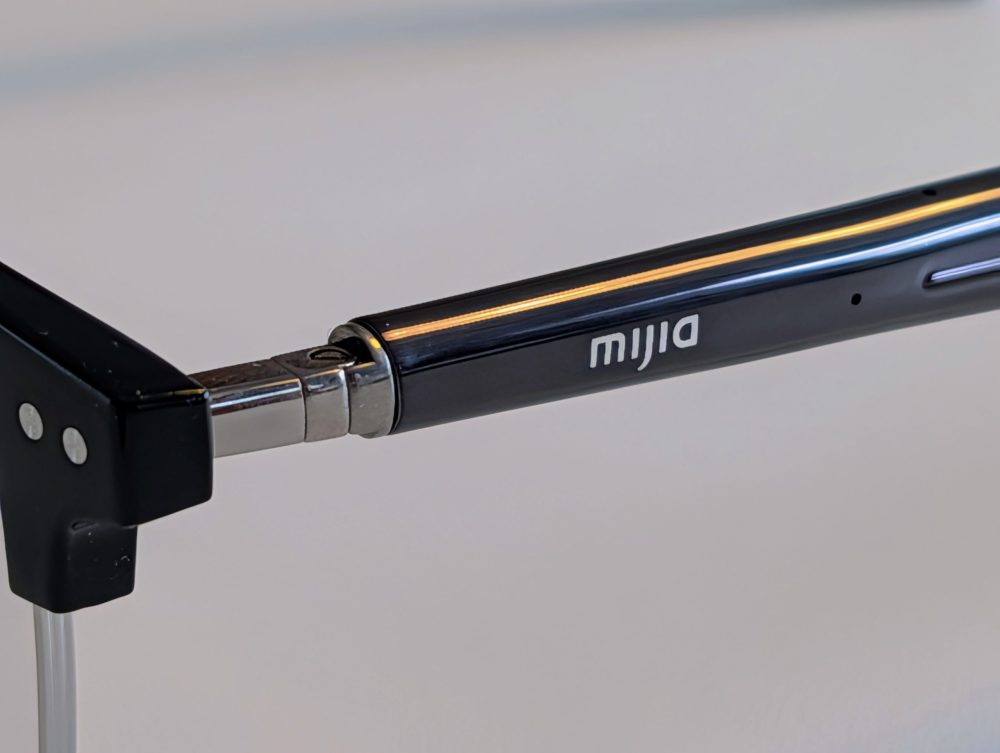
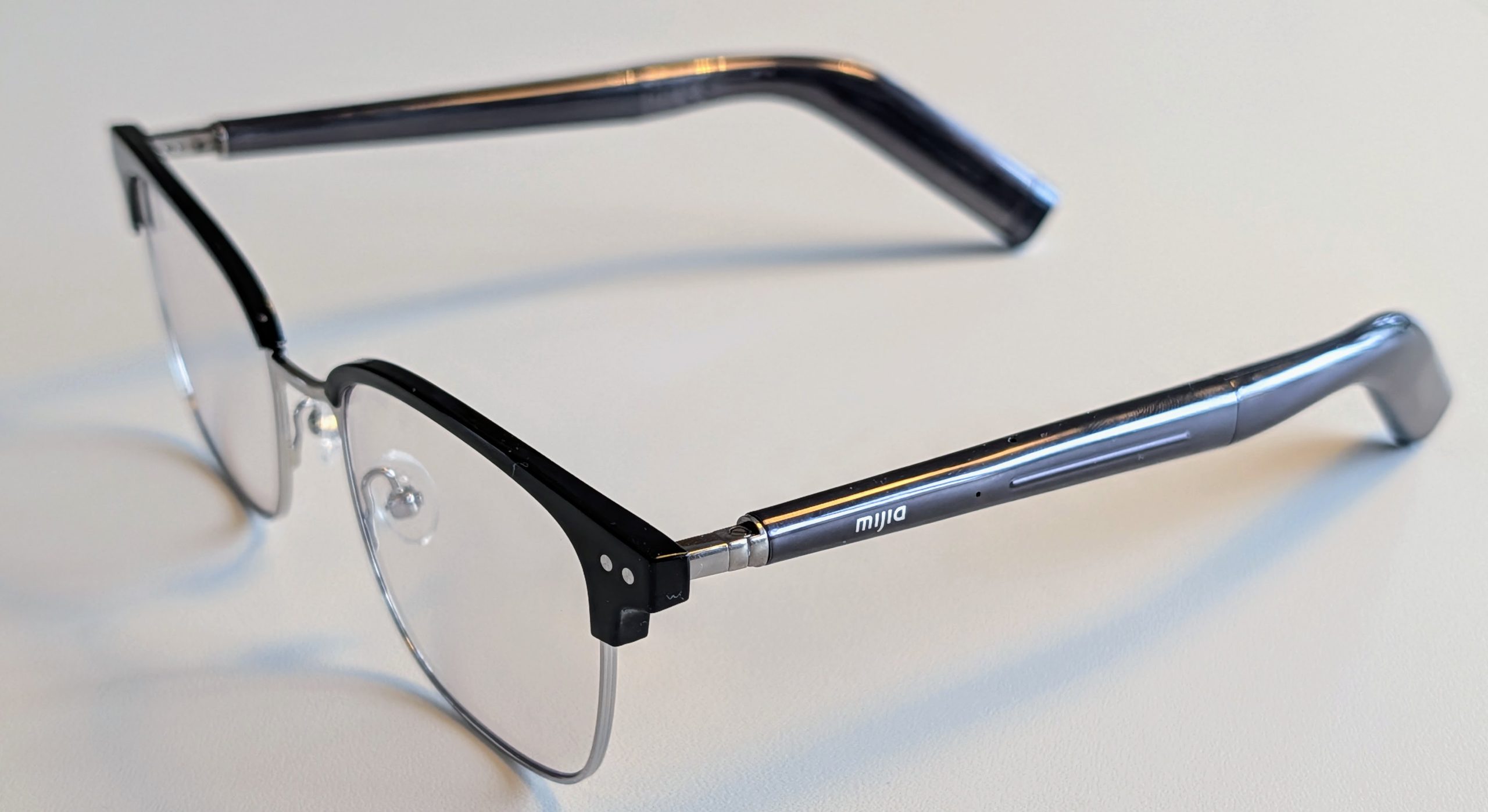
We received the Browline variant at the editorial office, one of three frame models available in Europe (the others are Titanium in beta-titanium and Pilot-Style). The Browline model weighs just under 40 grams with lenses. This is relatively light considering the technology built into the temples, but there is one thing that must be mentioned immediately: the temples are noticeably thicker and larger than on a pair of regular glasses. Xiaomi has certainly made them thinner compared to the predecessor, but they still stand out a bit when compared to standard frames. If you wear them out in public, it is doubtful anyone will notice, but if you place them next to your regular glasses at home, the difference is clearly visible.
However, it is hard to complain about the build quality itself. The Browline model features a frame made of stainless steel and nylon that feels solid and well-thought-out, and it is clear that Xiaomi has invested time in the details. Specifically, the Browline and Pilot-Style have quick-release hinges, which allows you to swap the front. This system has been tested for 2,000 connections, so durability should not be an issue. If you want the absolute lowest weight, there is also the Titanium variant, which comes in at 27.6 grams + lenses.
The IP54 rating means the glasses can handle sweaty runs and light rain, but these are not something you should go swimming with. The finish on the temples provides a stylish metallic luster but unfortunately attracts fingerprints as if it were magnetic. You will have to get used to wiping them down regularly.
Sound and Call Experience
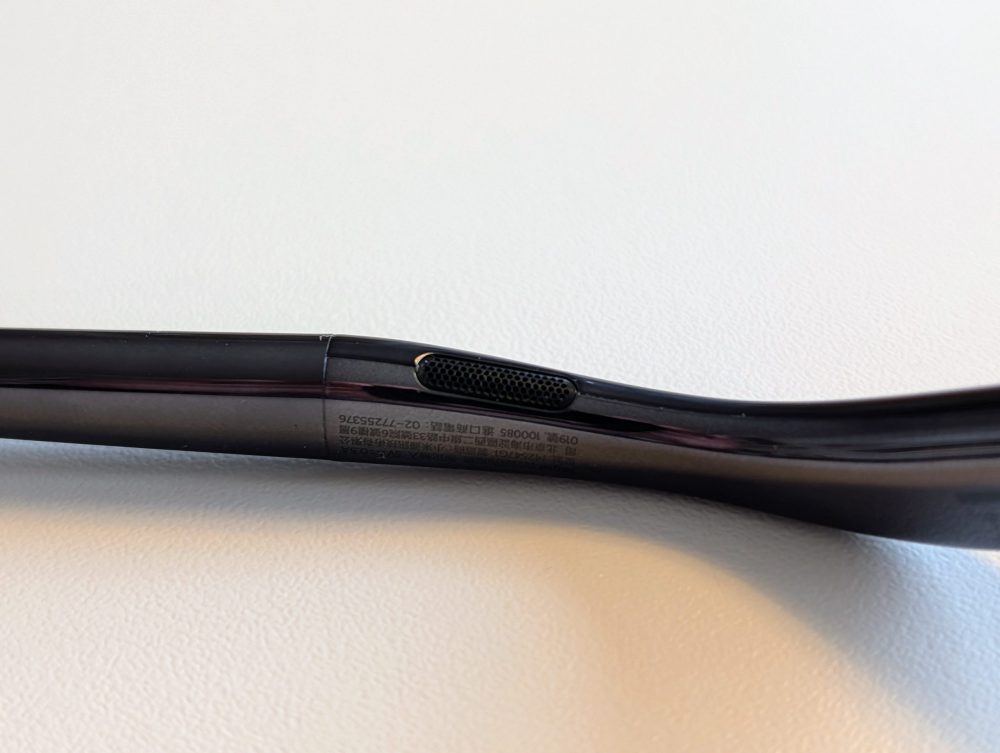
The glasses use speaker drivers with an open-ear design, which means the sound reaches the ear without blocking out the surroundings. That is the entire point of the concept: being able to listen to music, podcasts, or calls while simultaneously hearing what is happening around you.
Sound-wise, it is perfectly fine for podcasts, audiobooks, and calls. The treble is clear and voices are reproduced well. But the bass is essentially non-existent. If you listen to music that actually requires some punch in the bass, it is completely missing. It sounds thin and occasionally shrill at higher volumes.
The call experience, on the other hand, was a pleasant surprise. The four microphones (with AI-based noise reduction and echo management) do a really good job. Wind noise is handled well, and the people I spoke with during test calls had no trouble hearing me, even outdoors in strong winds.
Sound Leakage and Privacy Mode
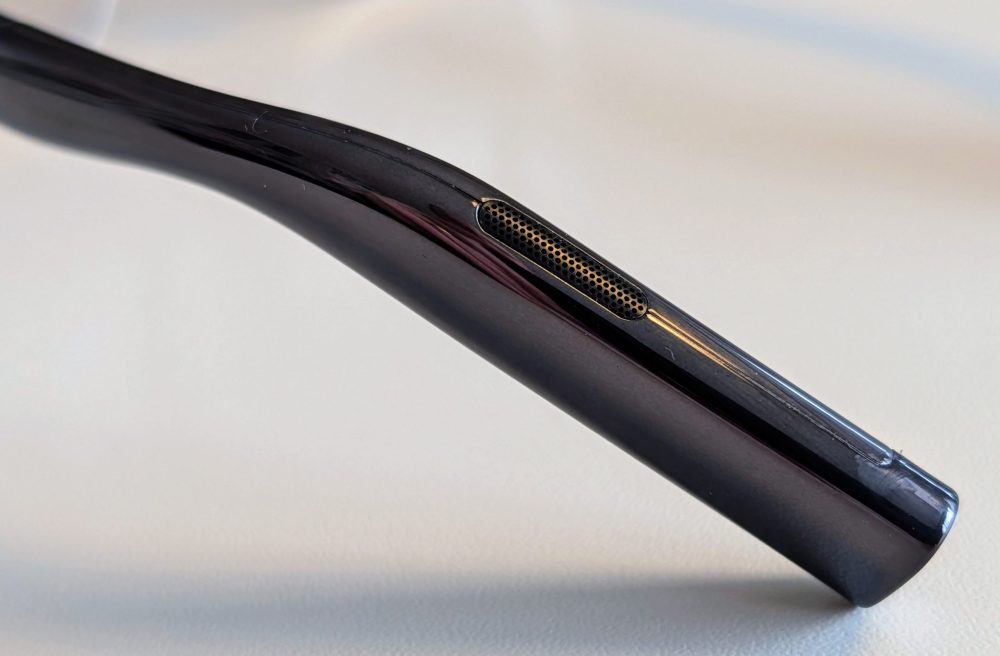
And here we come to the major problem. The sound leakage is enormous. In quiet environments, people around you can clearly hear what you are listening to, even at quite modest volumes. We are not talking about a faint background noise, but clearly audible voices, melodies, and details. At 40 percent volume, people within one meter can make out the words of what you are listening to. It is simply not acceptable if you want any kind of discreet listening.
Xiaomi has built in a Privacy Mode that is supposed to use inverted sound waves to reduce leakage. On paper, it sounds clever. In reality, it muffles the sound slightly but significantly degrades the audio quality. It sounds muddy and muffled, almost like listening through a pillow. And even with Privacy Mode activated, it still leaks audibly in quiet rooms. If you are sitting alone at home or outdoors in a noisy environment, it works okay, but in anything resembling a quiet office environment, you can simply forget about it.
Smart Features
Despite Xiaomi deliberately opting out of camera/AR/AI, you still get some features that make the glasses more than just a pair of speakers/headphones. There are smart recording functions, and both temples have touch-sensitive surfaces: double-tap for play/pause, swipe for volume, and long press to start recording. It works surprisingly well and reacts quickly. You can also activate the voice assistant with a gesture.
The accompanying app, Xiaomi Glasses, handles recordings, gesture settings, notification readouts, and device connections. The app is simple but gets the job done. The glasses support multipoint and Google Fast Pair, making pairing seamless. The glasses detect if you take them off and pause the music automatically, but this function can be a bit sluggish at times and fail to register that the glasses were actually removed.
Battery and Charging
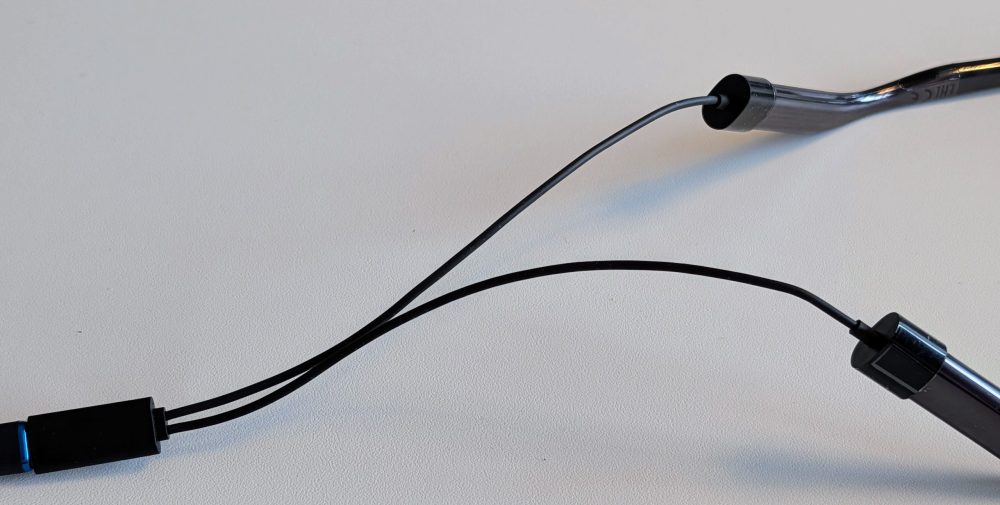
Xiaomi specifies 13 hours of music playback at 50 percent volume, and that is fairly accurate. During our test period with mixed usage, we got about 12 hours out of the glasses, and with lighter use (a couple of hours a day), a single charge lasted several days. 12 days of standby is claimed, and we have no reason to doubt that.
Charging takes place via a proprietary magnetic USB-C adapter that connects to the ends of the temples. A full charge takes about an hour, and a 10-minute fast charge provides a full 4 hours of listening. The latter is impressive and a real lifesaver if you have forgotten to charge overnight. However, the magnetic connection is a bit weak; it can detach if not placed exactly right, which is a minor annoyance.
Conclusion
Mijia Smart Audio Glasses succeed at exactly what they set out to do, but absolutely nothing more. The comfort is genuinely good (the Browline model we tested felt comfortable all day) and the battery life is solid. The design passes for regular glasses for most people, and the call experience was a pleasant surprise.
But the massive sound leakage significantly drags down the overall experience. In quiet environments, it becomes embarrassing, and Privacy Mode does not solve the problem but instead introduces new ones in the form of significantly degraded audio quality. The lack of bass makes listening to music feel half-hearted. And despite the “smart” in the name, the glasses almost entirely lack AI features.
At 2,200 SEK (Browline or Pilot-Style) or 2,700 SEK (Titanium), it is a product for an extremely specific niche: eyeglass wearers who want audio without having to use a pair of headphones. However, it is hard to recommend them over a really good pair of headphones, or even a cheap pair for that matter. Headphones will sound better and, furthermore, keep your audio to yourself.
Xiaomi sent review units for this test. The providers of the material have no editorial influence on our tests; we always write independently with you, the readers and consumers, in focus.
