
TL;DR
Roborock is bringing its cleaning expertise outdoors with the RockMow Z1, a rugged robot lawn mower built like a ground drone. Boasting impressive four-wheel drive, the Z1 tackles steep 80 percent inclines and uneven terrain with ease. Its wire-free installation uses RTK and VSLAM technology, while built-in cameras and lights ensure precise obstacle avoidance even at night. While the hardware is top-tier—featuring active steering and a floating cutting deck—the software currently feels like a work in progress with some features still rolling out. It is a premium machine for complex, hilly gardens, though key accessories like the PreciEdge module come at an extra cost. Is this high-tech "Batmobile" the right fit for your lawn, or is the software still too green? Dive into the full article to see if the RockMow Z1 can truly master your toughest backyard obstacles.
Over the past few years, Roborock has become a name most people recognize when it comes to robot vacuums, and the quality of their products rarely disappoints; most recently, we were very pleased with their flagship Saros 20 Sonic.
Now they are heading out onto the lawn instead, promising a robot lawn mower that can handle almost any plot, regardless of slopes, obstacles, and bumpy surfaces. But does a vacuum manufacturer measure up out in the garden, and is the RockMow Z1 really worth its substantial price tag? We’re going to find out!
Models and the difference between RTK and LiDAR
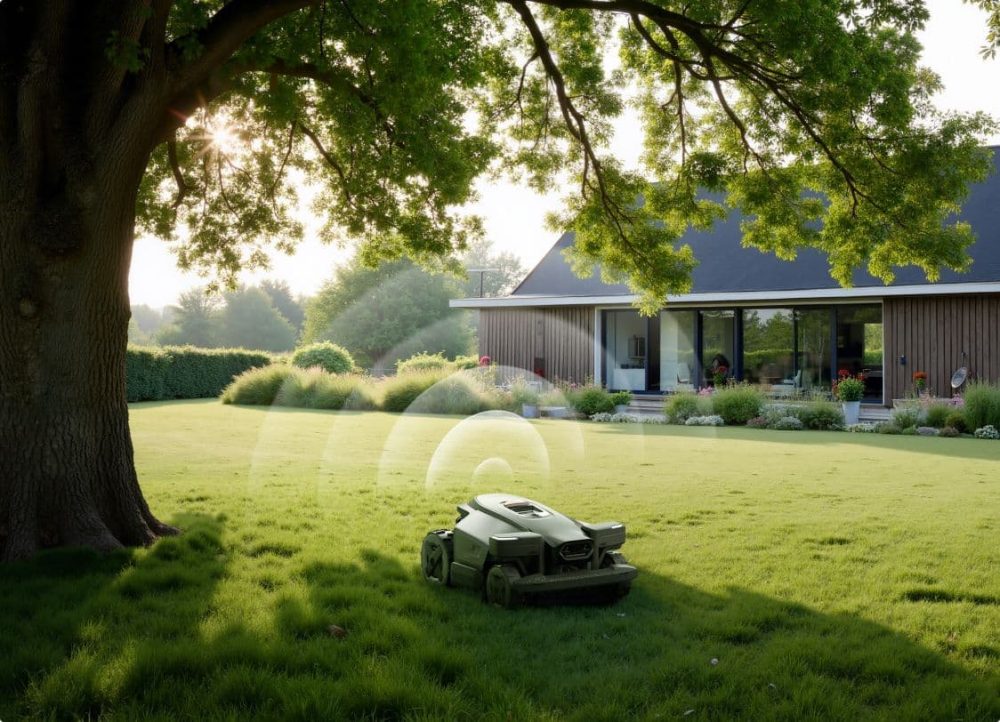
It’s important to pay close attention here, as there are several variants and they are easy to mix up.
The RTK version, which we tested, is available in three sizes: Z115, Z130, and Z150. The only thing that separates them is the battery and cutting capacity. Z115 is designed for plots up to 1,500 square meters, Z130 for up to 3,000, and Z150 for up to 5,000. Accordingly, the battery and runtime per charge also increase. Otherwise, they are identical: same terrain capability, same cameras, same everything. You simply choose a model based on how large your plot is.
Then there is the LiDAR version, and this is where the major difference lies. Instead of requiring an RTK antenna at the base station, the LiDAR model uses a rotating 360-degree sensor on the roof to orient itself, and it is adapted for denser, more shaded, and more complex gardens with many trees and bushes.
The RTK version we are testing relies instead on satellite positioning (RTK) combined with visual navigation (VSLAM), and is best suited for large, open lawns without too many trees. If you have a lush plot where the sky is often obscured, the LiDAR variant is the obvious choice, but you will also have to pay a good deal more for it.
Update July 2026: Roborock has announced that they are rolling out support for nRTK (network-based positioning), meaning the physical antenna in the garden will soon no longer be needed. Instead, the mower retrieves its position via the network (Wi-Fi or 4G), making an already smooth installation even easier. The feature enters beta testing for Z1 users starting in July.
Design and Build Quality
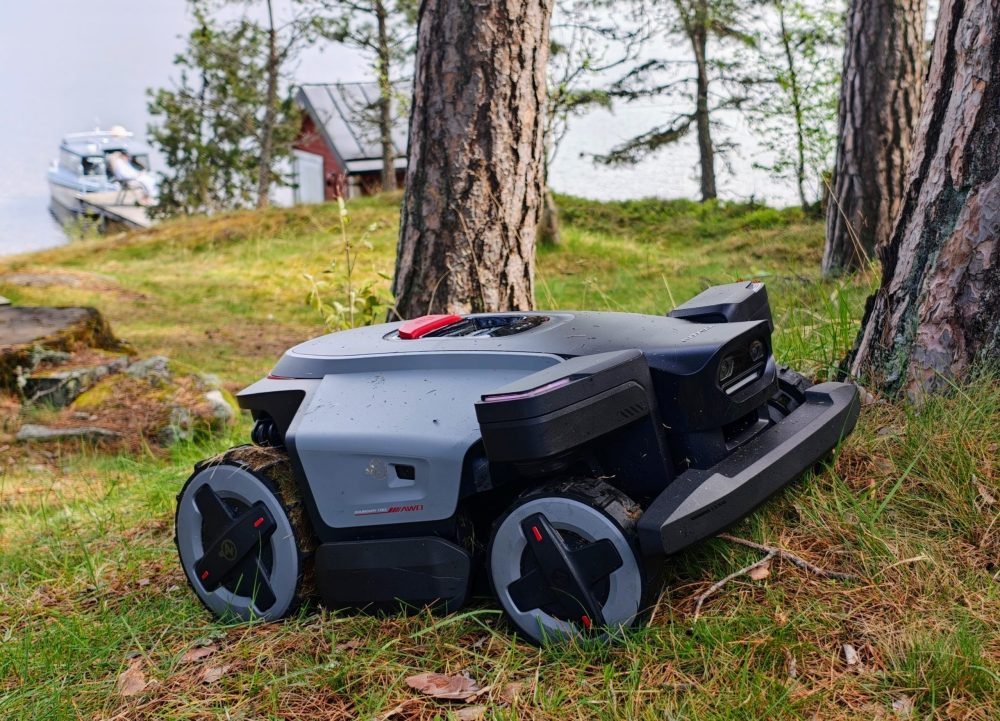
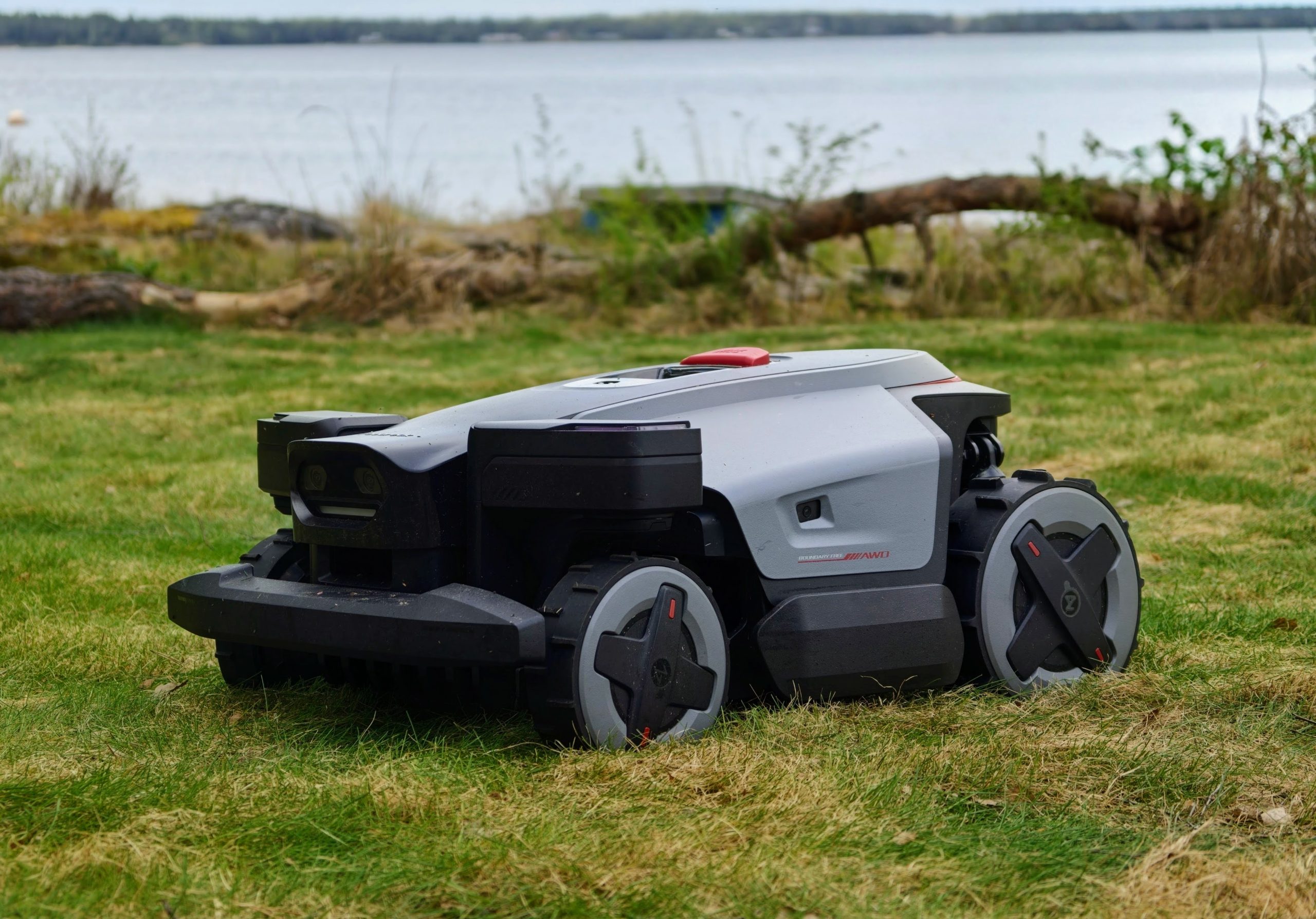
The first thing you notice when lifting the RockMow Z1 out of the box is that this is a solidly built machine. Several people who saw it during the test called it a “Batmobile” or a “ground drone.” It weighs just over 21 kilograms, feels compact and substantial, and has a bit of a rugged off-road look with large treaded wheels and front cameras that almost look like a face. No gaps, nothing that creaks or feels loose. It is simply extremely well-built, exactly the sense of quality we are used to from Roborock.
The machine can also withstand quite a bit. It is IPX6 rated, which means it handles rain and can be rinsed off with a garden hose after a muddy day. It also has a rain sensor that causes it to automatically return to the charging station when it starts raining, and then resumes mowing after a set time.
Installation and Mapping
Installing the RTK version was actually very simple. The RTK antenna needs to be placed in an open area with a clear view of the sky, at least two meters away from walls and trees, and standing upright. The smart thing is that a long cable was included in the box, so the antenna doesn’t have to be placed right next to the charging station.
One thing to keep in mind is that the machine requires Wi-Fi for the actual installation; if you don’t have it out on the plot, sharing a hotspot from your phone works perfectly fine just for setup. Once set up and running, however, it works without problems entirely without Wi-Fi, thanks to the built-in 4G support (three years of free data included). You can therefore control and monitor the mower even when it’s working at the far end of the garden, out of reach of your own network.
Mapping is done by driving the mower along the edge of the lawn via the app, like a remote-controlled car. No buried cables are needed. During the test period, Roborock also rolled out AI mapping, where the machine can detect boundaries and draw the map on its own. It actually works quite well, but the truth is that it is still more precise if you take the time to drive the round manually yourself.
Terrain and Maneuverability
This is where the RockMow Z1 really shows what it’s capable of, and it is impressive. With four-wheel drive, it handles slopes with significant incline (according to Roborock: 80 percent or 38.7 degrees) and obstacles up to 8 centimeters high. In practice, this means it powers through uneven ground, steep hills, and edges without getting stuck, and we have had difficulty finding anything in the garden that actually stops it.
Added to that is an active steering system with its own steering motors on the front wheels. Here it is worth distinguishing two things: all four wheels drive the machine forward (that’s the four-wheel drive), but it is the front wheels that, with their own steering motors, can be turned and thus handle the actual steering, while the back wheels are fixed.
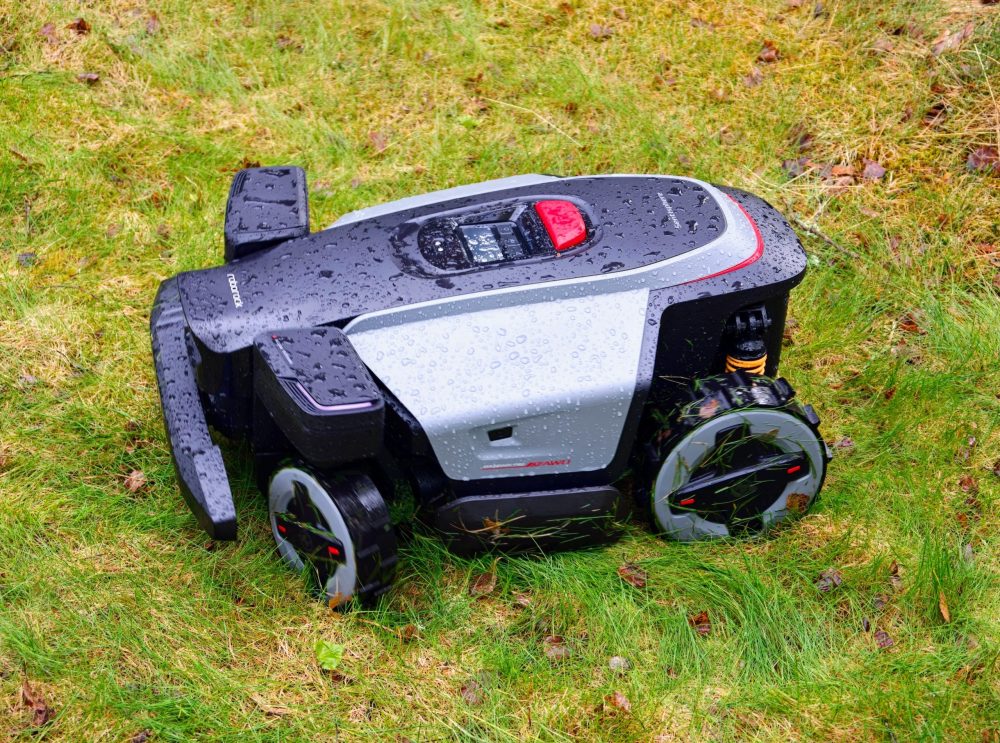
The wheels can rotate enough that the turning radius becomes very small. This allows the machine to turn smoothly and manage in small areas, and above all, it is gentle on the grass. It leaves no unsightly scuff marks where it turns, which is otherwise a common sight with mowers that drag their wheels during turns.
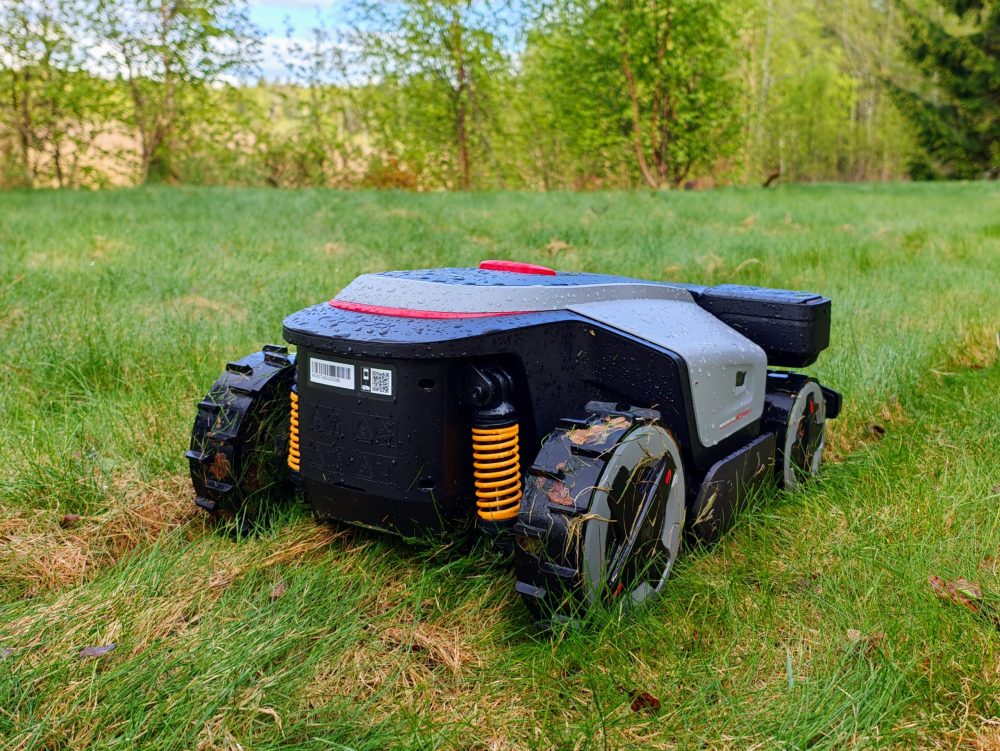
It also features a dynamic suspension with dual independent springs at the rear that allow the wheels to move individually. The result is that the body remains stable and the cutting deck stays level even over bumps and dips, so the cutting result is straight and clean even on lumpy ground.
Obstacle Avoidance and Night Mowing
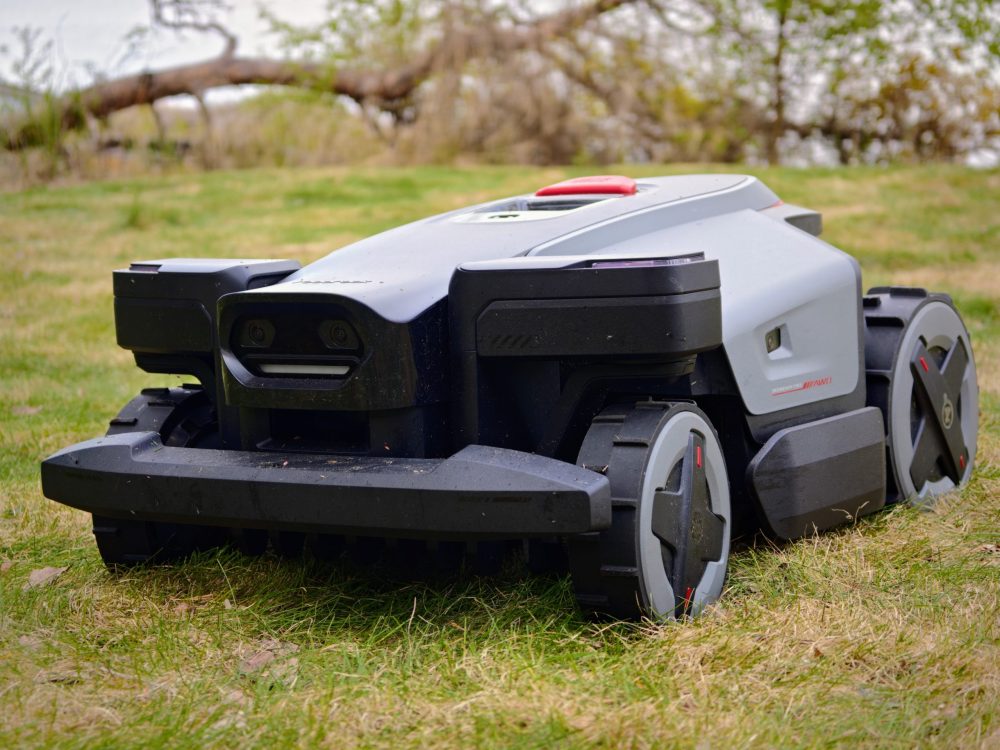
RockMow Z1 has four cameras—two forward-facing and two on the sides—which together provide a wide view of the surroundings. In practice, it avoids obstacles almost perfectly. It finds forgotten slippers, toys, hoses, and everything else you might have left behind, and rounds them neatly.
If there’s one thing to be said, it’s perhaps even a bit too cautious. It often takes large detours around obstacles and leaves a somewhat excessive margin of uncut grass around items. At the same time, this is of course preferable to the opposite, as it means even that forgotten slipper is left in peace instead of being run over.
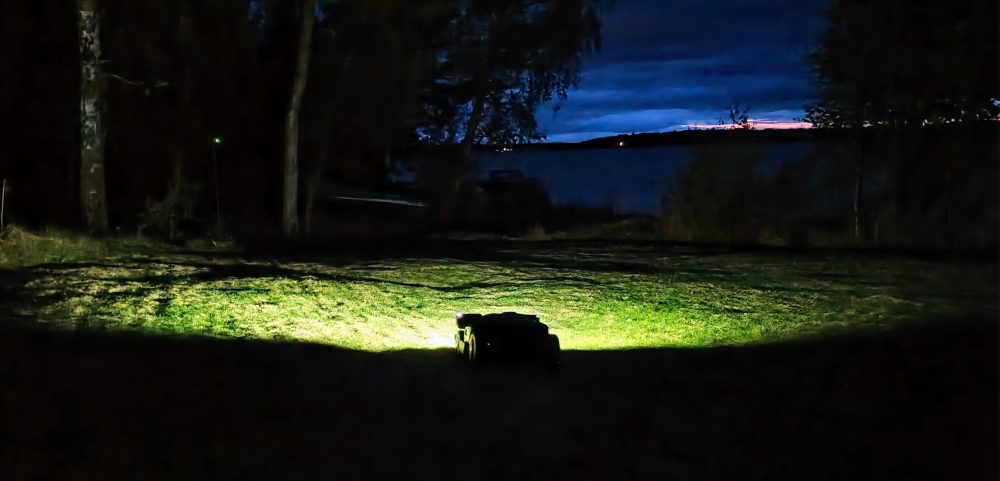
A small but nice detail is that it has a built-in front light, which allows the cameras to function even when it’s dark. If you want to run the mower in the evening or at night, it’s a definite advantage.
Mowing and Edges
Under the hood sits a floating cutting deck with six blades, a 24-centimeter cutting width, and a cutting height that can be adjusted between 20 and 70 millimeters directly in the app. The cutting deck adapts to the shape of the ground, and a double-layered cutting disk is meant to prevent grass from building up and clogging. The cutting result is even and fine.
The big weakness of most robot lawn mowers is the edges, and here Roborock has a solution in the form of the PreciEdge module. With it mounted, the machine cuts as close as approximately 3 centimeters from the edge, compared to around 10 centimeters without it. This is a significant improvement and greatly reduces the amount of manual trimming required.
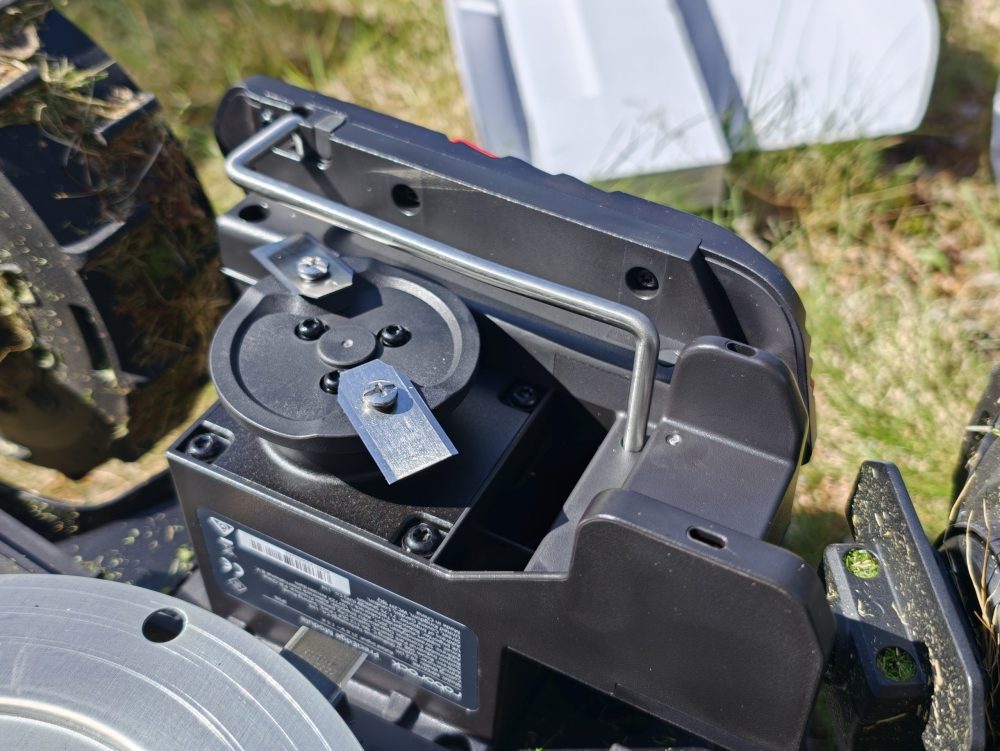
But there are a couple of catches. Firstly, the module makes the machine slightly less agile, and when it is attached, the maximum obstacle height the machine can clear drops from 8 to 5 centimeters. Secondly, the module is not included and must be purchased separately as an accessory (RRP 1,799 SEK). It feels a bit stingy, and actually somewhat strange that something like this isn’t standard given the cost of the machine.
The App and Software
The Roborock app is, as usual, clean, attractive, and easy to understand. You can set the cutting height, direction, efficiency, and edge mowing, set schedules, divide the plot into zones, and follow the machine in real-time on a map. There is also a mode for nocturnal animals like hedgehogs, which pauses mowing during selected hours, and a robust anti-theft system with a loud alarm signal, PIN code, 4G tracking, and even support for inserting an AirTag into the machine.
At the same time, this is where the product shows its weakest side. It feels almost like a beta product in the sense that features are dropping in all the time. During the test period itself, the AI mapping arrived as mentioned, and pattern mowing—where the machine can cut shapes and patterns into the grass—is at the time of writing not promised until the third quarter. It’s an exciting journey to be on, but you are buying a machine that is not yet fully finished, and some of what is touted in marketing requires a wait.
A specific drawback worth mentioning is that passages between different zones require quite a lot of space. According to Roborock, a width of just 0.8 m should be sufficient, but we found that at least one meter, preferably more, is needed in width. If the passage is too narrow, the machine has difficulty getting through, so if you have tight paths between different parts of the plot, it can be tricky. This is something that will likely be updated via software, but it’s worth knowing.
Conclusion
RockMow Z1 is an extremely well-built and competent machine. The build quality is top-notch, the terrain capability is in a class of its own, the obstacle avoidance is reliable if a bit too cautious, and with the PreciEdge module, it gets closer to the edge than most. The active steering system and suspension mean it is both gentle on the grass and handles lumpy ground without problems. Add to that the light for night mowing, strong anti-theft protection, and smooth RTK installation, and we have a robot lawn mower that impresses purely from a hardware standpoint.
What brings down the overall package and prevents us from giving a top rating is that the software hasn’t quite caught up with the hardware yet. It feels almost like a beta product where features arrive bit by bit, pattern mowing is delayed until the third quarter, and the PreciEdge module, which really elevates the machine, costs extra instead of being standard.
Then there is the matter of the price. RockMow Z1 starts from 23,499 SEK, and the LiDAR version from 31,999 SEK. That is a lot of money. But if you can swallow the price tag and have a large, hilly, or obstacle-ridden plot where simpler mowers give up, then this is a machine that actually gets the job done.
Roborock sent a test unit for this review. Senders of material have no editorial influence on our tests; we always write independently with our readers and consumers in focus.
How we rate products at Senses
Review Highlights: Q&A
How does the mower handle steep slopes?
It handles slopes up to 80 percent or 38.7 degrees.
Does it require buried perimeter wires?
No, it uses satellite or LiDAR mapping instead.
How close to the edge can it cut?
It cuts within 3 cm using the PreciEdge module.
Can it operate in the dark?
Yes, front lights allow cameras to work at night.
Is it waterproof?
It is IPX6 rated and can be rinsed with a hose.
What is the maximum obstacle height?
It clears obstacles up to 8 centimeters high.
Does it require Wi-Fi to operate?
It uses built-in 4G support after the initial setup.