
TL;DR
The Poco X8 Pro Max aims to reclaim the flagship killer title, delivering elite specs at a mid-range price point. Powered by the MediaTek Dimensity 9500s, this device offers brutal performance that rivals the most expensive flagships on the market. Its standout features include a blindingly bright 3,500-nit AMOLED display and a massive 8,500 mAh battery that easily lasts up to three days on a single charge. While you will have to compromise on wireless charging and navigate some annoying software bloatware, the premium build quality and lightning-fast ultrasonic fingerprint sensor make it an incredible value for under 6,000 SEK. If you are looking for raw power and record-breaking battery life without the premium price tag, this might be your next phone. Dive into our full review to see how it holds up against the industry giants!
Poco is a sub-brand of Xiaomi and is in many ways reminiscent of Redmi, from which we have previously tested several phones / tablets / headphones. Poco, however, has a slightly clearer focus on the now somewhat dated term “flagship killer,” meaning top performance at mid-range prices. We have never tested any Poco phones before, but now that Poco X8 Pro Max was launched, we simply couldn’t resist.
It promises brutal performance combined with a ridiculously large battery, all at a third of the price of today’s flagships (MSRP is under 6,000 SEK).
If the phone delivers on its promises, it is indeed a true flagship killer. But is it really as good as it seems? Let’s find out!
Design and Build Quality
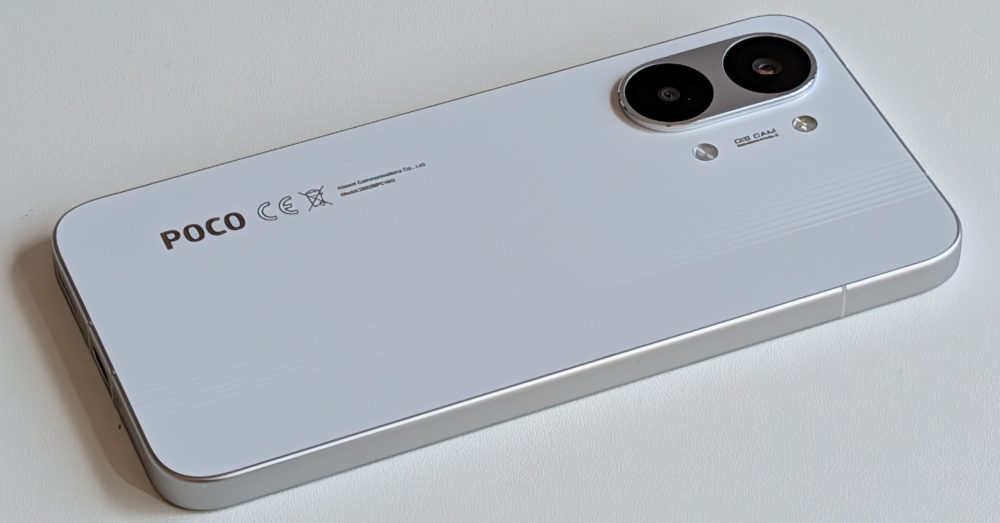
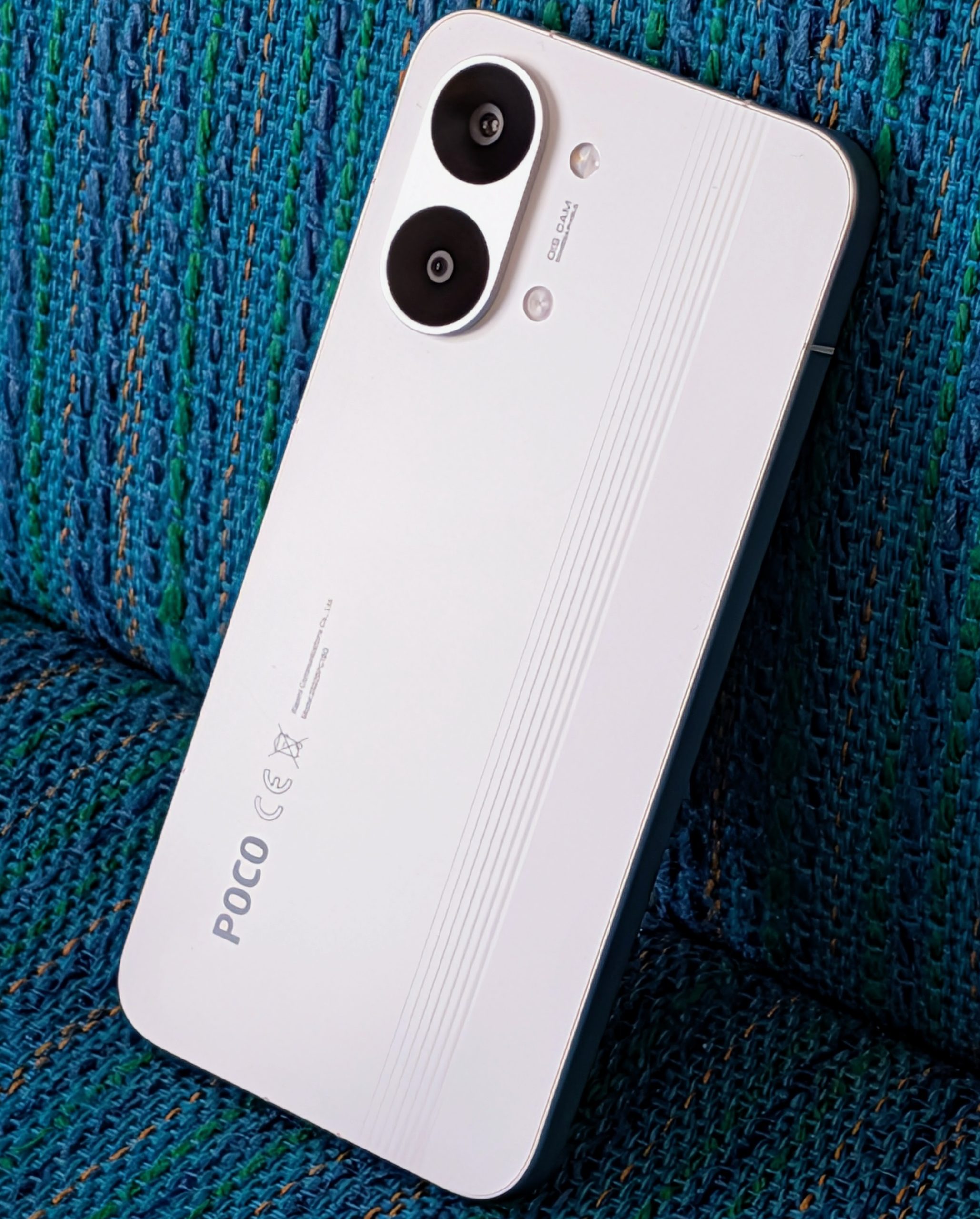
The first impression when picking the Poco X8 Pro Max out of the box is that it feels extremely well-built. Nothing here feels budget or mid-range. The frame is made of aluminum and the back is fiberglass, which makes it feel more premium than the price suggests.
It’s big, that much should be noted. With its 162.9 x 77.9 x 8.2 mm and 218 grams, it definitely makes itself known in your pocket, but it is actually roughly the same weight as a Samsung Galaxy S26 Ultra.
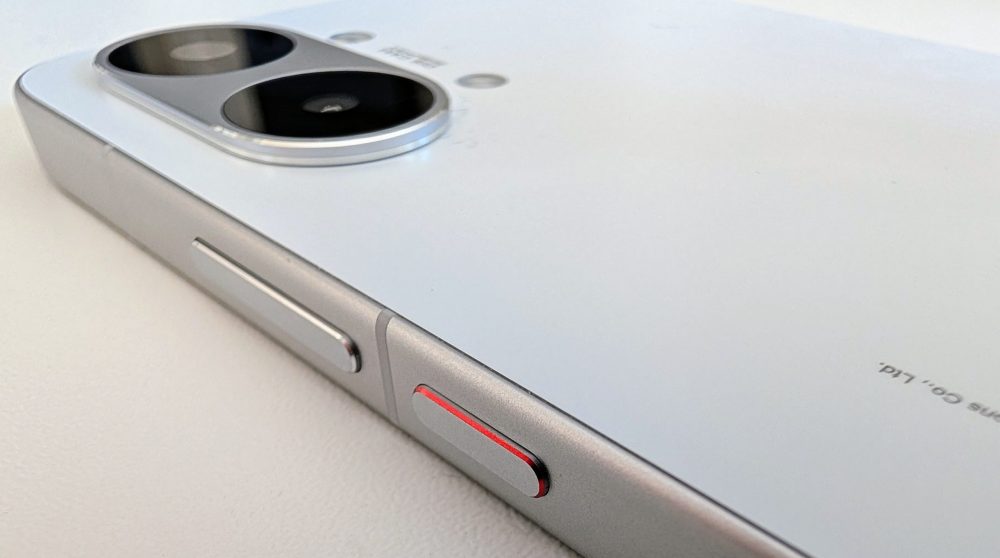
It’s just a small detail, but the red-orange accent around the power button gives a very well-thought-out impression. Clearly, nothing has been left to chance here.
The front is protected by Gorilla Glass 7i, and the entire phone is IP68-rated, meaning it can withstand being submerged in water. It also features a so-called SGS Premium Performance certification, which guarantees durability against drops, crushing, and bending. It all feels robust, to say the least.
A really nice detail not usually found in cheaper phones is the ultrasonic under-display fingerprint sensor. Unlike traditional optical variants, it reads your finger in 3D. In practice, this means lightning-fast unlocking that works flawlessly even if you happen to have damp fingers or are standing in bright sunlight.
The stereo speakers use dual symmetrical drivers with support for Dolby Atmos and Hi-Res Audio. They sound surprisingly good for a phone, with decent bass and good clarity. There is a feature that allows you to go above 100% volume, up to 400%, but as soon as you exceed 100%, the sound quality deteriorates the more you increase it.
Display
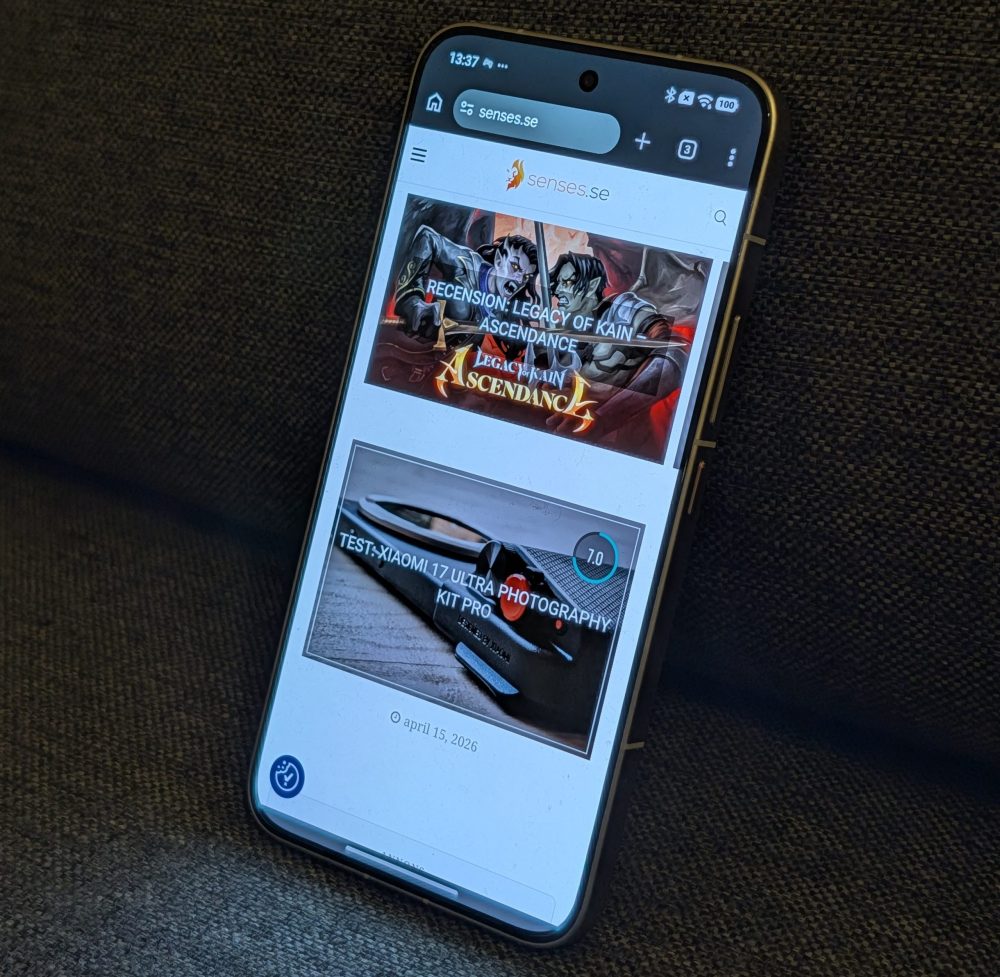
The display consists of a 6.83-inch AMOLED panel with a resolution of 2772 x 1280 pixels (1.5K) and a 120 Hz refresh rate. The pixel density lands at 447 ppi. As is usual with phones from Xiaomi, a screen protector comes pre-installed.
However, what’s truly impressive is the brightness. The manufacturer claims the screen reaches a staggering 3,500 nits at its peak. In practice, this means we haven’t had any issues with readability, neither in direct spring sunlight nor during our outdoor tests. The panel supports Dolby Vision, HDR10+, and HLG.
An important point to note is that this is an LTPS panel, not LTPO. This means the refresh rate jumps in fixed steps between 30, 60, 90, and 120 Hz instead of adjusting seamlessly. In reality, we don’t notice a massive difference, but it’s worth mentioning for those comparing specifications with significantly more expensive models.
The so-called PWM dimming runs at 3,840 Hz, and the panel has a TÜV Rheinland certification for low blue light and flicker-free performance, which is a big plus for those with sensitive eyes.
Performance and Software

Poco X8 Pro Max is powered by MediaTek’s Dimensity 9500s, which is a chipset built on 3 nanometers. It uses an “all big core” architecture, consisting of one Cortex-X925 core at 3.73 GHz, three Cortex-X4 at 3.3 GHz, and four Cortex-A720 at 2.4 GHz. The GPU is an Immortalis-G925 MC11.
In our performance tests, we reach a level equivalent to the Snapdragon 8 Gen 5. This means it has the exact same class of hardware found in phones costing 10,000 SEK or even more. When compared to the Google Pixel 10 Pro XL (which is admittedly notoriously poor in such tests), benchmarks like AnTuTu yield roughly double the result of the Google phone. Compared to the phone we’ve tested that achieved the best benchmark results, the OnePlus 15 with the Snapdragon 8 Elite Gen 5 chip, it doesn’t quite reach those levels.
The storage memory is based on UFS 4.1 technology and delivers sequential read speeds of over 2,100 megabytes per second. Combined with 12 GB of LPDDR5X RAM, everything runs without the slightest hitch. While figures and benchmarks might not tell the whole story, apps launch lightning-fast and multitasking works flawlessly. The phone feels incredibly fast.
During long gaming sessions in demanding titles like Genshin Impact and Call of Duty Mobile, the phone remains remarkably stable and delivers high frame rates without issues. It definitely gets warm, but never uncomfortably hot. The manufacturer calls its cooling system “3D IceLoop,” which consists of a substantial vapor chamber combined with an 11,000 square millimeter graphite layer.
The phone ships with Android 16 and the HyperOS 3 interface. The company guarantees four major OS updates and six years of security patches. This is the exact same promise we received with the OnePlus 15. The level is certainly acceptable, but not much more than that. We’ve been spoiled by manufacturers like Samsung, Google, and Apple, who now offer a full seven years of support.

But the biggest problem with the software isn’t the updates—it’s the bloatware. Upon initial setup, you’re greeted by a bothersome amount of pre-installed apps and games. This ranges from random games to third-party apps like Temu and Booking.com. Even in the notification shade, unwanted suggestions and advertisements appear. To put it mildly, it’s annoying.

Can you uninstall everything? Yes, for the most part. But you shouldn’t have to spend the first half-hour with your new phone clearing out junk.
Battery and Charging
This is the phone’s absolute greatest strength. Xiaomi has managed to squeeze in a battery with an incredible capacity of 8,500 mAh, thanks to new silicon-carbon based technology. The battery life is extremely good. During the test period, we’ve managed two to three days on a single charge without any problems.
To put it into perspective: when we recently tested the OnePlus 15, which has a 7,300 mAh battery, we were impressed by the battery capacity. The Poco X8 Pro Max thus has an additional 1,200 mAh in capacity, and furthermore, the Dimensity chip seems to be extremely energy-efficient.
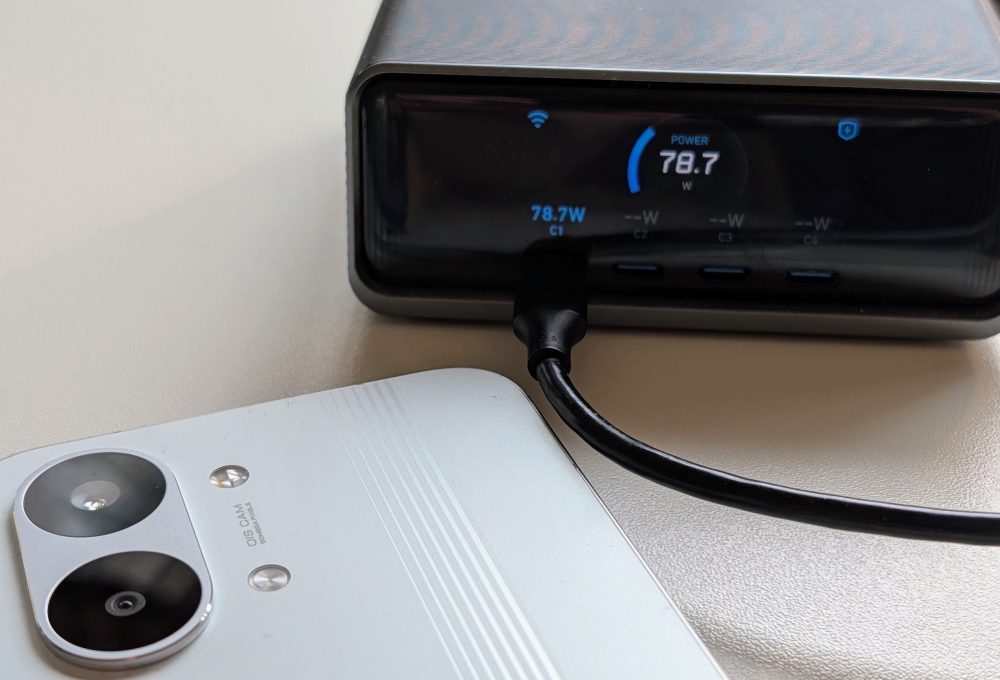
Charging occurs at 100 watts via HyperCharge technology, which is supposed to take about 50 minutes from zero to one hundred percent. With our own Anker Prime charger, we admittedly never exceed a little over 80 watts. But just being able to reach that level, without having to use a specific proprietary charger from the manufacturer, is impressively good.
Pleasingly, the phone also supports reverse wired charging at 27 watts, so it can act as a power bank in an emergency. However, support for wireless charging is completely absent.
Camera
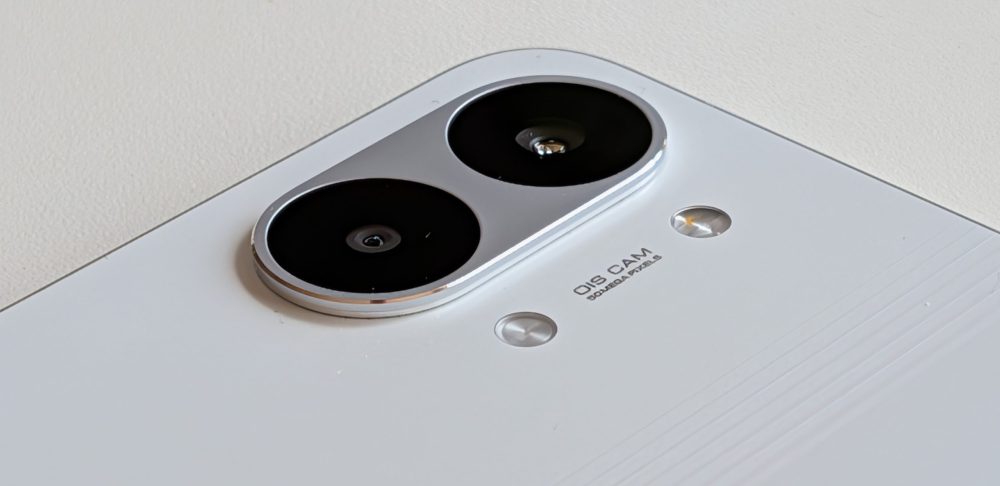
The camera system consists of a 50MP main camera (Light Fusion 600 sensor, 1/1.95″, f/1.5 with OIS), an 8MP ultra-wide-angle, and a 20MP selfie camera.
The main camera actually takes very good photos in daylight. The colors are vibrant, the dynamic range is good, and the images are sharp. Both colors and contrast can sometimes feel slightly exaggerated—not to the point of being bad, and likely not something you’d notice unless comparing side-by-side with a phone that’s a bit closer to reality. The images are a bit more “Instagram-friendly” than strictly true-to-life. And that doesn’t have to be a bad thing at all.


I have compared it side-by-side with the Pixel 10 Pro XL, and if you ignore how differently they handle colors and shadows, I find it hard to see any noticeable difference in many scenes. The image above is one with the most significant difference. Which one you think looks best is really a matter of taste; both images are good. It’s actually impressive considering the price difference. Even the digital 2x zoom gives surprisingly good results. At higher zoom levels, the lack of a telephoto lens becomes obvious; quality drops off quickly.




In lower light, the large aperture (f/1.5) helps, and the night shots from the main camera are perfectly acceptable. Not always in the same class as a Pixel 10 Pro XL or Xiaomi 17 Ultra, but clearly better than the price tag suggests. It’s quite quick to automatically activate night mode when lighting is poor, which means images can sometimes turn out a bit too bright (as seen below), but this can be turned off.


The 8MP ultra-wide-angle is, however, the phone’s weakest link. It lacks autofocus, and the images are quite blurry in the details. Colors become unnaturally saturated compared to the main camera. It’s a typical budget ultra-wide, and it shows.
Video is recorded at up to 4K 60fps with HDR10+, and the stabilization works well from a stationary position. When walking, some shakes leak through, but it’s acceptable. The quality (colors and sharpness) drops quite drastically at 4K 60fps, so 4K 30fps is preferred for the best results. Pro mode offers Log recording, which is nice for those who want to color grade.
Some example photos we have taken during the test period:





Conclusion
The Poco X8 Pro Max is not the phone that does everything best. It lacks a telephoto lens, the wide-angle is underwhelming, the software needs a major cleanup, and update support lags behind top competitors. Wireless charging is also missing.
But what it does well, it does really well. The battery life is in a class of its own, images from the main camera are good, performance competes with phones costing 2-3x as much, the screen is bright and beautiful, and the build quality feels very premium. All this for under 6,000 SEK. The recommended price is 5,999 SEK, but at the time of testing, it costs 5,390 SEK at Xiaomi.
Is a razor-sharp camera with zoom capability the most important thing for you? Then there are better alternatives, even if the main camera is by no means bad. But for those who primarily want brutal performance, a display visible in all lighting conditions, and a battery life that lets you forget the charger at home for a couple of days, well, it’s hard to find anything better regardless of price. And that says a lot.
Xiaomi sent test units for this review. Senders of material have no editorial influence on our tests.
How we rate products at SensesReview Highlights: Q&A
How long does the battery last on a single charge?
It lasts two to three days on one charge thanks to its 8,500 mAh capacity.
Does the Poco X8 Pro Max support wireless charging?
No, the phone completely lacks support for wireless charging functionality.
How bright is the display in outdoor conditions?
The screen reaches 3,500 nits, providing excellent readability in sunlight.
What is the primary weakness of the software?
It includes significant bloatware, pre-installed games, and annoying ads.
Is the phone protected against water and drops?
Yes, it has an IP68 rating and SGS certification for durability against drops.
How does the camera perform when zooming in?
Quality drops quickly at high zoom levels because there is no telephoto lens.
What kind of fingerprint sensor does the phone have?
It uses an ultrasonic under-display sensor that works even with damp fingers.
How many years of software updates are guaranteed?
The company promises four major OS updates and six years of security patches.