
TL;DR
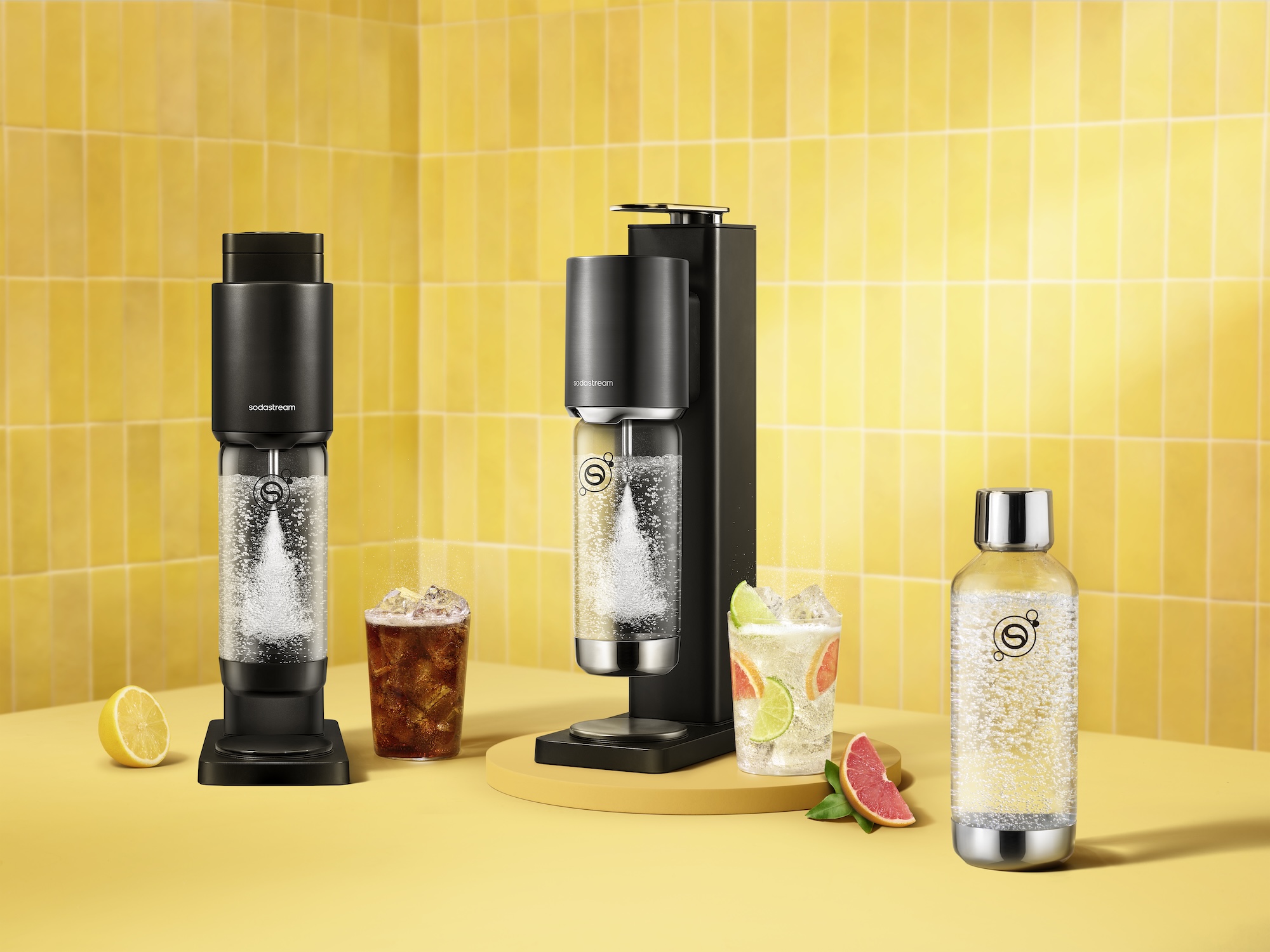
The SodaStream Fresh Plus is a sparkling water maker costing 1,350 kr that stands out for its slim 11.6 cm profile, side handle, and dishwasher-safe bottle with a removable bottom. Carbonation performance is identical to cheaper entry-level options, and the depth reaches 24 cm. It suits households buying a new machine who want convenient ergonomics under low kitchen cabinets.
Quiz: how long would you say SodaStream has been on the Swedish market? If your answer is around 20 years (or since the 2000s), that is perfectly reasonable; the concept grew significantly shortly after the turn of the millennium, peaking in 2011 when one million Swedish households had a machine in their kitchen. This likely coincided with a paradigm shift regarding whether carbonated water is good or bad for us (current scientific consensus is “predominantly good“). But for those of you who were around in the 70s and 80s and have some sort of dream-like memory of owning such a machine even then, it’s not a dream – it’s very possible, as the brand was sold in stores back then but essentially disappeared due to declining sales (the brand was founded in London as early as 1903). Today, SodaStream Nordics AB is owned by the American beverage giant PepsiCo.
There are few everyday chores that feel as dated as lugging water home in a country where we have such high-quality water directly from the tap. Especially a six-pack of 1.5-liter PET bottles from the grocery store, only to stand at a sticky reverse vending machine a few days later that refuses to read the barcode on every third bottle (though if you ask the kids, the best incentive is getting to return the bottles and then buying candy with the money – ka-ching!)
In autumn 2026, SodaStream will retire its faithful workhorses Terra and Art to instead roll out a completely new, cohesive trio: the entry-level model Classic (approx. 900 kr), the mid-range Fresh (around 1,100 kr), and the top-tier model of the family, Fresh Plus (1,350 kr). We have placed the latter on the kitchen counter at the senses office to see if the extra features justify the price tag – and also calculated (with the help of AI) how quickly a sparkling water maker actually pays for itself.
Slim profile and a bottle that can finally be properly washed
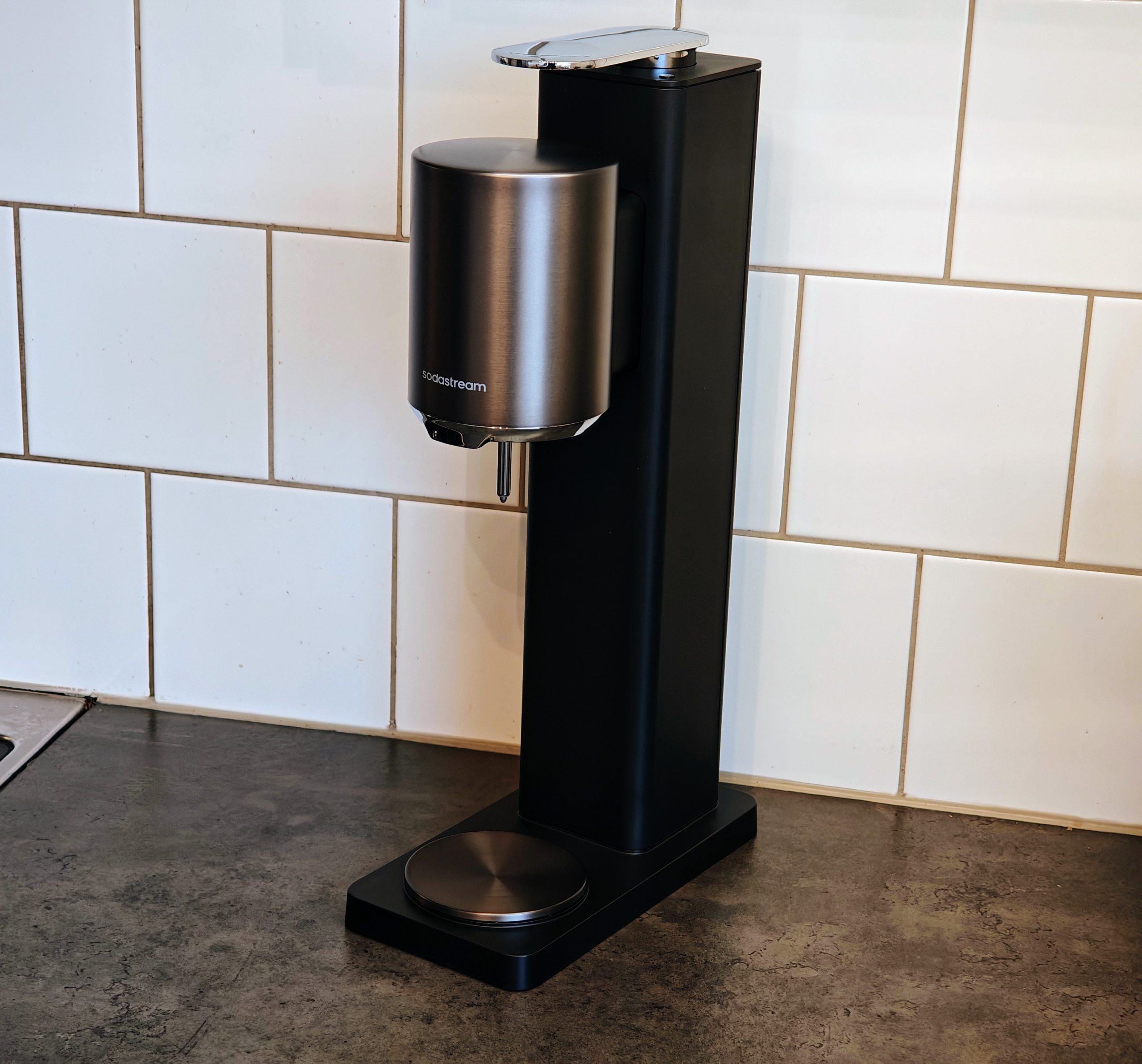
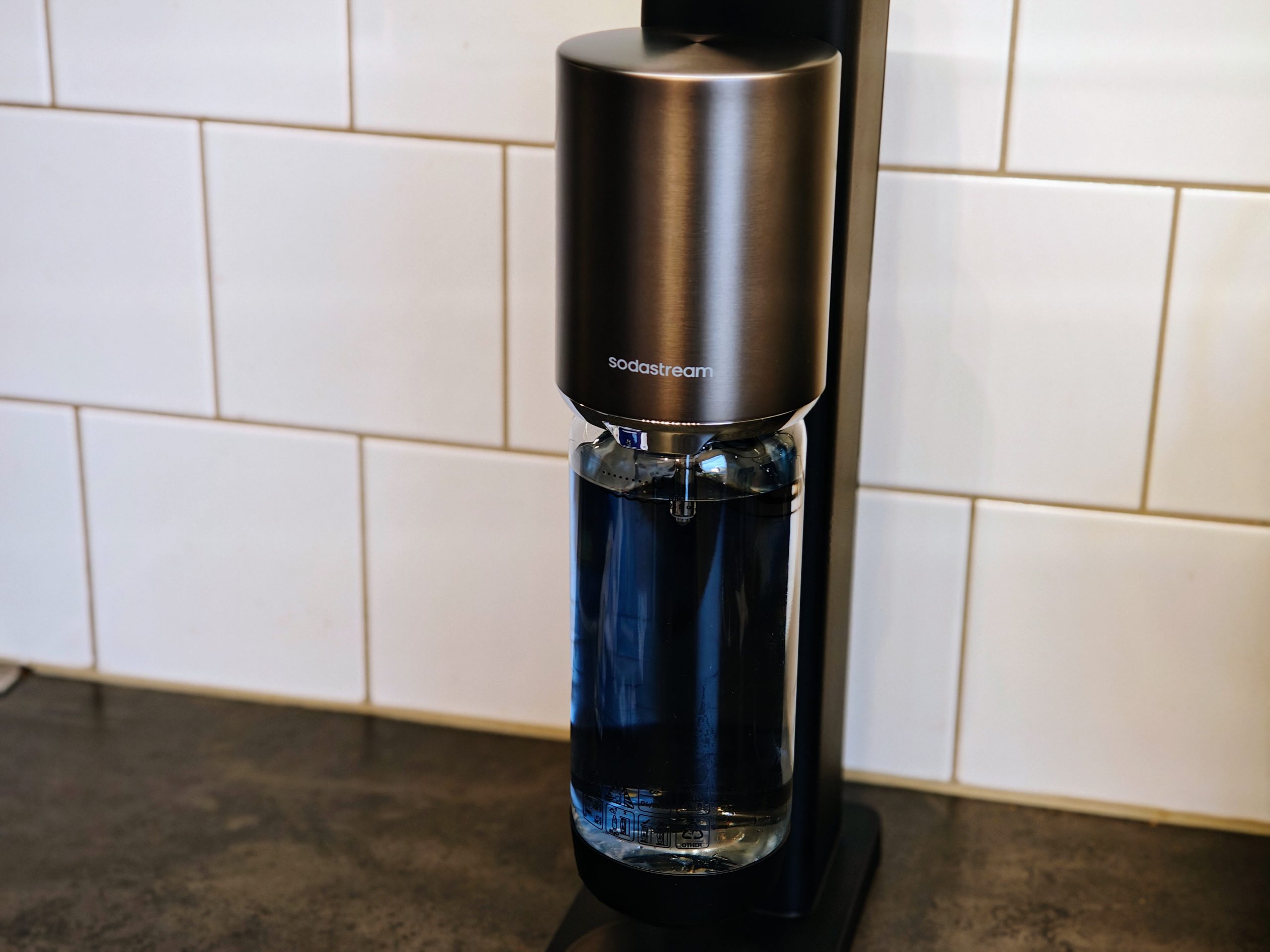
The first thing that strikes me when unboxing the SodaStream Fresh Plus (in my case, the matte black model) is how sleek and “tidy” it looks from the front. With a width of only 11.6 cm, it is almost two centimeters narrower than its budget sibling Classic, allowing it to blend in extremely well next to the coffee machine or air fryer. However, one should keep in mind that the tilting head makes the chassis 23.2 cm deep (24 cm including protruding parts), so if you have a very shallow kitchen counter, it takes up a bit more depth than before.
The machine body itself is primarily built of plastic, but SodaStream has clad the right places – such as the drip tray, the top, and the details around the controls – in brushed stainless steel. It feels solid and significantly elevates the impression compared to the plastic models. It’s not quite as high-end luxury as the ENSO model, but it’s not far off, and you save a thousand kronor on the design.
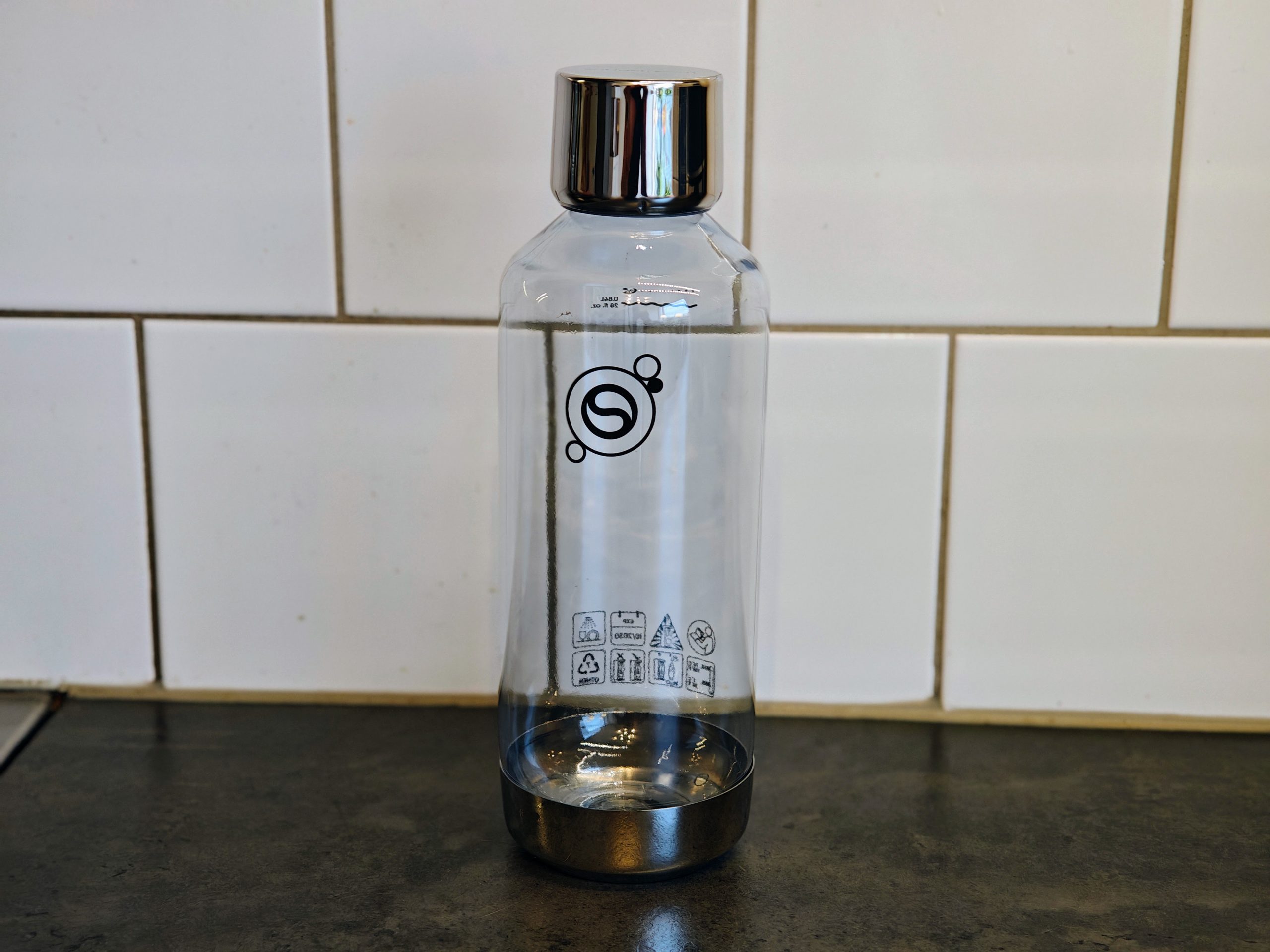
It comes with a 1-liter bottle of the new model, which is dishwasher safe, making life significantly easier. For the health-conscious, one of the most exciting updates is the 1-liter bottle Fizz & Refresh Metall (which holds 840 ml up to the fill line). Besides the stainless steel cap and bottom cup making it stylish enough to put straight on the dinner table, we also avoid ingesting plastic from the bottle. Furthermore, the fact that the design has a removable bottom is a detail one might not have thought much about, but it makes a difference: Anyone who has ever run a standard, narrow-necked PET bottle (that is dishwasher safe) through the dishwasher knows that the spray arms rarely reach all the way to the bottom. Here, you simply detach the bottom part, run everything in the machine (up to 70 °C), and get a bottle that actually becomes clinically clean. A simple but brilliant detail.
The “arm” and the “light” – not necessities, but they elevate the experience
The unsentimental truth about SodaStream’s new series is that Classic, Fresh, and Fresh Plus have exactly the same carbonation performance. You don’t get a more high-pressure nozzle or finer bubbles by spending 450 kronor more to go from the entry-level model to the Fresh Plus. What you are paying for is ergonomics, material choices, and two specific features: the carbonation arm and the gas indicator.
And in all honesty: even if neither is an absolute “must-have” for getting carbon dioxide into tap water, these are precisely the details that make the machine so pleasant to live with every day:
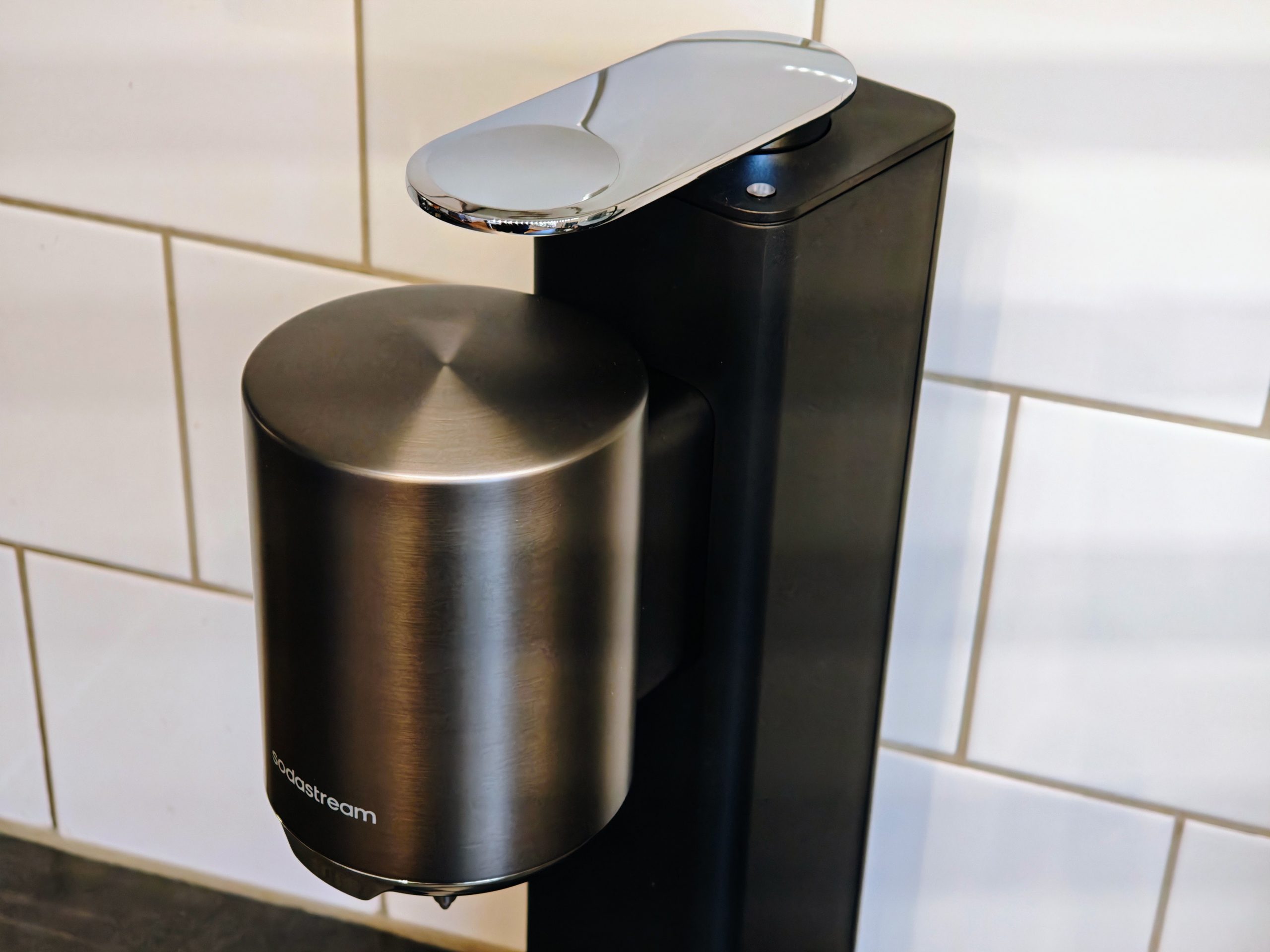
- The tilting mount and the “arm”: Just like on the standard Fresh, you tilt the carbonating head towards you, snap the bottle in place with a one-handed click (Easy Click / Snap-lock), and push it back in. No screwing required. But instead of pressing a plastic button on top of the machine itself, the Fresh Plus uses a side-mounted handle. Pulling the arm down gives a distinct, mechanical feel – a bit like pulling a beer tap at a bar. Additionally, you don’t have to reach for the top of the machine, which is worth its weight in gold if the machine is tucked away under low kitchen cabinets where access is limited.
- “The Light” (Low gas level indicator): We’ve all been there. It’s Friday night, dinner is on the table, you push the lever, and you’re met with a tired little hiss. The gas is out and the store is closed. Fresh Plus has a dedicated button with an LED light that glows white when the gas level is good, and turns orange when it’s time to get a new Quick Connect cylinder (or better yet, refill your spare cylinder).
One thing to keep in mind regarding the light: There is no digital scale inside the otherwise completely cordless and battery-free machine. The indicator works as a counter. This means you must remember to hold the indicator button for 3 seconds to reset the counter every time you click a new gas cylinder into the back of the machine. If you forget – or if someone curious in the family holds the button down mid-period – the light may glow a happy white even though the cylinder is on its last legs. If you manage the reset during cylinder changes, however, it works excellently as a warning.
Economy: Watch out for the “sold without cylinder” trap and how much you save over time
Before you order a SodaStream Fresh Plus, there is an important detail in the price lists you need to be aware of. The official starter kit costs 1,350 kr (for example, directly from SodaStream), and that includes a full pink Quick Connect cylinder.
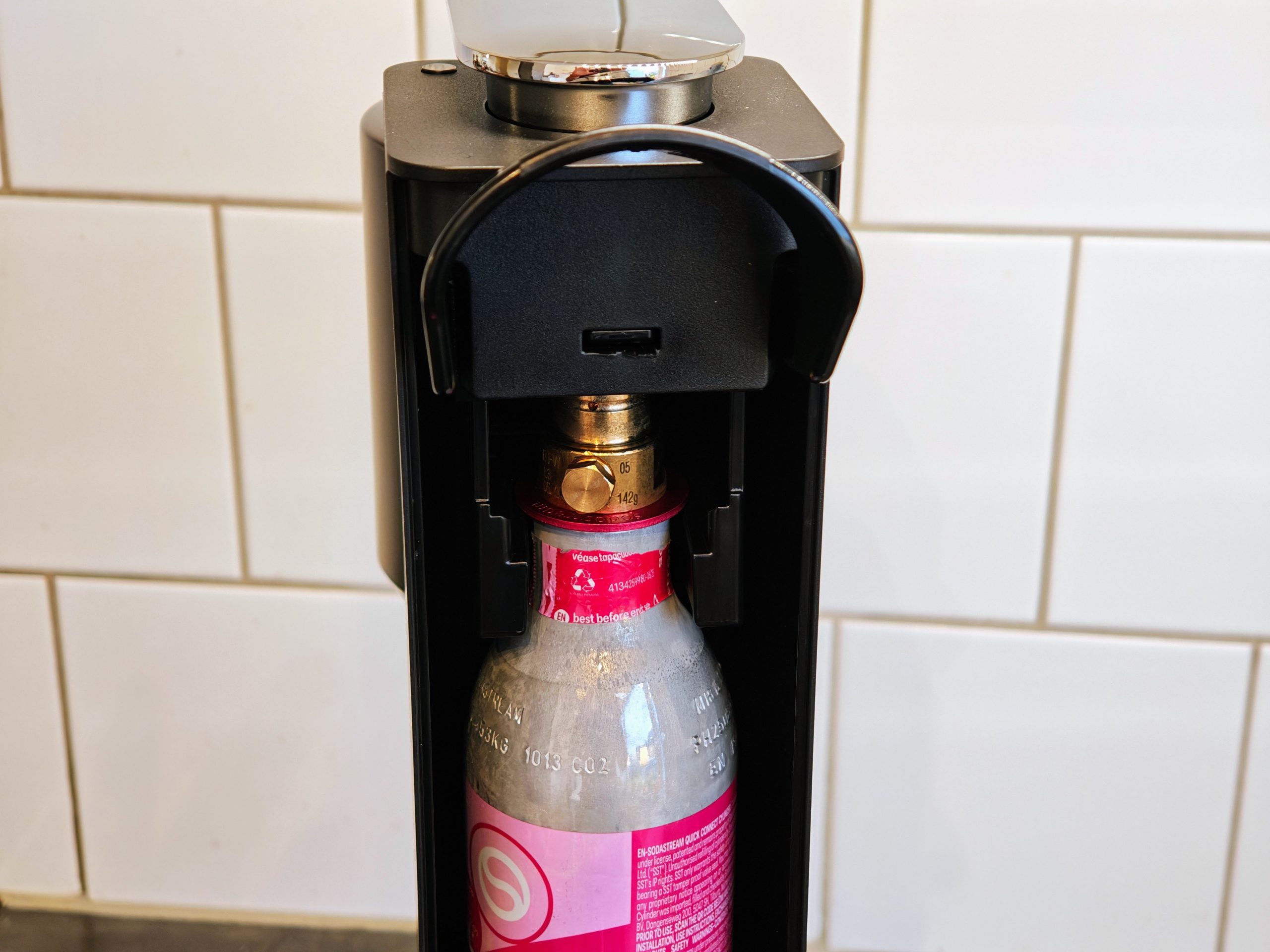
At most major chains – such as POWER and NetOnNet (1,090 kr) as well as Elgiganten, Clas Ohlson, and Kjell & Company (1,099 kr) – the machine is sold cheaper, but without a carbonating cylinder (W/O cylinder).
- Do you already have a machine with a pink Quick Connect cylinder at home? Buy the machine without the cylinder for 1,100 kr and transfer your old cylinder over.
- Are you a first-time buyer? If you buy the machine for 1,100 kr and a new separate cylinder for 300 kr, you end up at 1,400 kr, which is about fifty kronor more expensive than the starter kit. It’s not a huge amount of money, but given how cheaply you can refill cylinders today, it’s still worth considering in your calculation.
What do the bubbles cost in the long run? (Calculation based on 1 liter/day)
Assuming an average household drinks about 1 liter of sparkling water a day, that household saves between 1,800 and 3,500 kr per year with a SodaStream compared to buying bottled water or cans in the store. The machine itself has on average paid for itself after 3–5 months (approx. 90–150 liters of water, depending on which brand you usually buy).
Here is how the actual cost breakdown looks when we analyze all the parts:
- Value of the first cylinder: A complete starter kit includes a full CO2 cylinder which practically lasts for the first 50 liters or so. You essentially get “free” carbonation during the first months before the first exchange occurs.
- Operating cost – Gas (Exchange): approx. 1.00–1.80 kr per liter. A gas cylinder is marked “up to 60 liters,” but in reality – especially if you, like me, prefer a bit more kick in the carbonation – you get out perhaps 45–50 liters per cylinder. An exchange costs 50–90 kr at chains like Rusta, Clas Ohlson, Elgiganten, or Byggmax, but often 100–120 kr in regular grocery stores. If you exchange for 75 kr on average and get 50 liters, you end up at 1.50 kr/liter.
- Maintenance – New bottles: approx. 100 kr/year. Plastic bottles have an expiration date (up to 4 years on the new Fizz & Refresh, 2–3 years on many standard bottles) because the plastic ages from the high pressure. A 2-pack of new dishwasher-safe bottles costs 200–250 kr.
- Flavoring (Optional): Unsweetened fruit drops/aromas (approx. 35 kr for 40 ml, enough for 12 liters) add about +2.90 kr/liter. Soda concentrates like Pepsi Max and 7UP Zero in the new 440 ml bottles cost approx. 50–70 kr and provide 8–9 liters of finished soda, adding approx. +6.00–7.50 kr/liter.
Below you can see the annual cost for a consumption of 365 liters per year (1 liter a day), calculated based on a gas exchange for 75 kr (50 liters/cylinder) and a standard machine in the 800-kronor class as a base reference (if you choose the Fresh Plus starter kit for 1,350 kr, you just add about 550 kr to the one-time cost during Year 1):
| Option | Price per liter (operating) | Cost Year 1 (incl. machine) | Cost Year 2+ (operating only) | Annual saving (from Year 2) |
|---|---|---|---|---|
| SodaStream (Plain) | 1.50 kr | 1,273 kr (machine + gas) | 648 kr (incl. bottle wear) | Reference |
| SodaStream (Flavored water) | 4.40 kr | 2,331 kr | 1,706 kr | Reference (vs flavored) |
| Store: Private Label 1.5L PET (ICA/Garant) | approx. 5.50 kr | 2,008 kr | 2,008 kr | +1,360 kr/year |
| Store: Loka/Ramlösa 1.5L PET | approx. 8.00 kr | 2,920 kr | 2,920 kr | +2,272 kr/year |
| Store: Value pack 12–20x33cl can | approx. 11.50 kr | 4,198 kr | 4,198 kr | +3,550 kr/year |
| Store: Individual 33cl/50cl bottles | approx. 18.00 kr | 6,570 kr | 6,570 kr | +5,922 kr/year |
(Note: In Year 1, the included 50-liter starter cylinder has been deducted. The bottle deposit is not included, assuming everything is recycled – if you forget to recycle 20 percent of the cans, the savings with SodaStream increase further).
When do you reach “Break-Even”?
Since the first 50 liters in a starter kit are free to operate, it is relatively quick to recoup the investment:
- Against Loka/Ramlösa in 1.5-liter bottles (8 kr/liter): The first 50 liters save 400 kr immediately, and thereafter you save 6.50 kr per liter (8.00 minus 1.50 kr). An 800 kr machine is paid off at 112 liters (just under 4 months at 1 liter/day), and a Fresh Plus for 1,350 kr is fully recouped at 196 liters (just over 6 months at 1 liter/day, or 3 months if you drink 2 liters a day).
- Against cases of 33 cl cans (11.50 kr/liter): Here, the first 50 liters save a full 575 kr, and thereafter you save a clean 10 kr per liter. A basic machine is recouped after 73 liters (2.5 months) and a Fresh Plus after 127 liters (approx. 4 months).
- Against soda (Pepsi Max / Cola Zero in 1.5L bottles): Here, the margin is significantly tighter. With gas (1.50 kr/l) and soda concentrate (approx. 6.50 kr/l), the price per liter ends up at approx. 8.00 kr/liter. If you buy 1.5-liter sodas on promotion in stores for 10–12 kr/liter, you save 2–4 kr per liter, which requires over 250–350 liters before the machine has paid for itself if you only make soda.
3 quick tricks to maximize savings
- Always chill the water in the fridge before carbonating: Cold water (4–6 °C) binds carbon dioxide considerably more effectively than lukewarm tap water. If you carbonate room-temperature water, it requires more pulls of the arm and more gas hisses straight out into the air via the pressure relief valve.
- Never exchange gas at a convenience store at full price: It’s exactly the same food-grade carbon dioxide (425 grams) in all standard cylinders. Exchanging for 49–69 kr at discount warehouses instead of 119 kr at a gas station halves your cost per liter.
- Know the difference between Pink vs. Blue cylinders: Fresh Plus (as well as Terra, Art, Duo, and Ensō) uses the pink Quick Connect-system which clicks into place without threads. Old blue screw-in cylinders do not fit, so check that your local discount warehouse exchanges pink CQC cylinders.
Review and Conclusion
If you already have a fully functioning SodaStream Art or Terra at home on your counter, there is really no practical reason to replace it with a Fresh Plus – the bubbles in the glass will be exactly the same, and if you want the brilliant, detachable stainless steel Fizz & Refresh bottle, you can buy the bottle itself separately for 250 kronor (it fits perfectly in both Terra and Art).
But – if you are about to buy a new sparkling water maker, SodaStream Fresh Plus is clearly the most pleasant acquaintance in SodaStream’s new mid-range. The combination of a super-slim, stylish design with stainless steel details, the convenient tilting click-mount, the satisfying bar-handle arm, and an indicator light that saves your Friday night means the price premium over the entry-level models actually feels like money well spent!
SodaStream sent review units for this test. Senders of material have no editorial influence on our tests; we always write independently with our readers and consumers in focus.
Review Highlights: Q&A
How much does the SodaStream Fresh Plus cost?
The official SodaStream Fresh Plus starter kit costs 1,350 kr and includes a full pink Quick Connect CO2 cylinder. Major retail chains sell the machine alone without a cylinder for 1,090 to 1,099 kr.
Can the included water bottle be washed in a dishwasher?
Yes. The included 1-liter bottle has a detachable bottom and stainless steel parts, allowing it to be safely washed in a dishwasher up to 70 °C.
What kind of gas cylinder fits the machine?
The machine uses pink Quick Connect cylinders that snap into place without threads. Older blue screw-in cylinders do not fit.
How does the low gas level indicator work?
The indicator functions as a counter rather than a digital scale. It glows white when gas is sufficient, turns orange when a refill is needed, and requires a 3-second button hold to reset after each cylinder swap.
What are the dimensions on the kitchen counter?
The machine has a width of 11.6 cm and a chassis depth of 23.2 cm, which extends to 24 cm when measuring protruding parts.