TL;DR
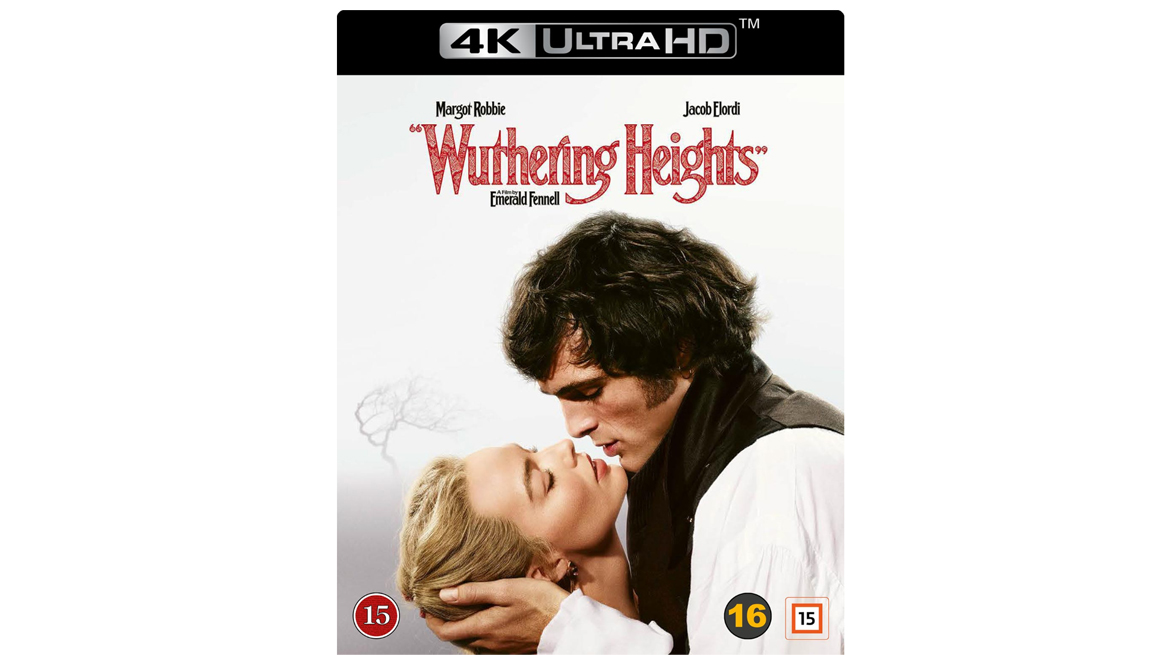
Wuthering Heights is Emerald Fennell's 2026 film adaptation of the classic tragedy. It delivers exceptional cinematography, rich 4K visual detail, and a compelling lead performance by Margot Robbie. However, Jacob Elordi's detached acting creates a lack of romantic chemistry that weakens the central emotional stakes. It suits fans of tragic romances, the cast, and reference-quality home cinema transfers, while those seeking a deeply resonant emotional connection between the leads may want to pass.
Wuthering Heights is a visceral and relentless love story set against the desolate backdrop of the Yorkshire moors. The narrative is driven by the volatile relationship between Heathcliff (Jacob Elordi) and Catherine Earnshaw (Margot Robbie)—a destructive bond that ripples through everyone in their orbit. When passion reaches its breaking point, no one is left unscathed.
Background of the novel and cinematic history
Wuthering Heights (originally titled Svindlande höjder in Swedish) was written between 1845 and 1846 and published the following year under the pseudonym Ellis Bell. The first American edition followed a year later. In 1920, the first cinematic adaptation premiered, and the story has since been reimagined for the screen in 1939, 1953, 1954, 1958, 1962, 1964, 1970, 1985, 1988, 1992, 1998, and 2011. Each iteration has offered a unique interpretation of the text while remaining anchored to its core themes.
The 2026 adaptation in context
This 2026 production marks the fourteenth major adaptation in just over a century. Only Charles Dickens’ A Christmas Carol has seen more frequent screen treatments, with a new version arriving this winter. What is it about these timeless classics that invites such frequent re-imagining? While I have explored various takes on A Christmas Carol—ranging from the Muppets to Bill Murray—this review marks my first encounter with a cinematic version of Wuthering Heights.
Direction, style, and narrative approach
While I cannot compare it to previous versions, it is clear that director Emerald Fennell has adopted a visual aesthetic reminiscent of Tim Burton, paired with a heightened, theatrical style in both dialogue and performance. This combination lends the film a surreal quality; the contrast between this artifice and the raw human elements keeps the viewer engaged throughout. Like many previous adaptations, this film focuses on the first part of the novel, concluding with a pivotal character’s death, whereas the book continues the saga through subsequent generations.
Performances and character interpretations
Margot Robbie has built a career on portraying complex, morally ambiguous characters, as seen in her work as Harley Quinn and Tonya Harding. Her acting style is perfectly suited for this role, effectively balancing magnetism with repulsiveness. Conversely, I found Jacob Elordi’s performance somewhat detached; there is a certain coldness in his portrayal that prevents the film’s emotional stakes from truly resonating. Because the narrative relies so heavily on their romantic connection, the lack of a palpable spark between the leads is a notable drawback.
Picture quality and technical presentation
To fully appreciate Swedish cinematographer Linus Sandgren’s masterful photography, Wuthering Heights should be viewed on the best possible format, and this UHD edition delivers exactly that. The 4K master provides a razor-sharp image with exceptional detail in costume textures, skin tones, and environments. The absence of aggressive noise reduction preserves a natural cinematic grain and clarity. The release supports both HDR10 and Dolby Vision, which further enhances the visual depth. The attention to detail is remarkable—notably a bedroom where the wallpaper is designed to mimic Robbie’s skin, including veins and moles—and this high-quality transfer ensures every nuance is visible.
Audio and bonus features
The audio is presented in Dolby Atmos. While this isn’t an action-heavy film, the sound design adds an immersive dimension to the unfolding madness. The sounds of the windswept estate and whispers echoing through the corridors are rendered with crystalline clarity.
The disc also includes a substantial selection of bonus features that delve into the production process. These segments are concise yet informative, avoiding the overly promotional tone of many contemporary documentaries. The inclusion of a commentary track is also a significant value-add for enthusiasts.
In summary, Wuthering Heights is a compelling watch, even if the lead performance by Elordi didn’t fully resonate with me. However, fans of the cast and those drawn to timeless tragedies will find much to enjoy. The technical excellence and comprehensive content of this UHD edition further elevate the overall experience.
SF Studios provided a review copy for this test. The provider has no editorial influence on our review; we maintain full independence with our readers and consumers as our primary focus.
Review Highlights: Q&A
How are the lead performances?
In Wuthering Heights, Margot Robbie excels with a magnetic yet repulsive performance, while Jacob Elordi delivers a detached and cold portrayal that results in a lack of palpable chemistry between the leads.
How does the 4K UHD transfer look?
The 4K master offers a razor-sharp image with natural film grain, showing fine textures in skin tones and costumes. The transfer supports both HDR10 and Dolby Vision to enhance visual depth.
What audio format does the disc use?
The audio is presented in Dolby Atmos, rendering the sounds of the windswept estate and whispering corridors with crystalline clarity.
Does the film cover the entire novel?
The film adapts only the first part of the novel, ending with the death of a pivotal character rather than continuing through the subsequent generations.
What bonus materials are included?
The release includes a concise, informative selection of behind-the-scenes production features alongside a full commentary track.