
TL;DR
Samsung's Galaxy S26 Ultra arrives with a thinner profile and a groundbreaking Privacy Display that uses "Magic Pixels" to keep your data safe from prying eyes. While it boasts a blistering Snapdragon 8 Elite chip and improved low-light photography via a wider f/1.4 aperture, the device reflects a cautious evolution. Samsung has surprisingly swapped titanium for aluminum and stuck with a 5,000 mAh battery for the seventh consecutive year. With upgrades to 60W charging and impressive 8K video stability, it remains a powerhouse, but a downgraded 3x telephoto lens and missing S Pen Bluetooth features raise questions about its "Ultra" status. Is this the definitive Android flagship or a missed opportunity to truly innovate? Dive into our full analysis to see how the S26 Ultra stacks up against the fiercest competition yet and decide if it's the right upgrade for you.
We tested the Samsung Galaxy S25 Ultra just over a year ago and gave it a solid rating of 7 out of 10. It was a phone that performed really well in every aspect but lacked that “must-have” feeling. Now, the successor has arrived at the office. The big question is, of course, whether the Samsung Galaxy S26 Ultra can succeed where its predecessor failed: namely, making us genuinely excited. Let’s find out!
Design and build quality
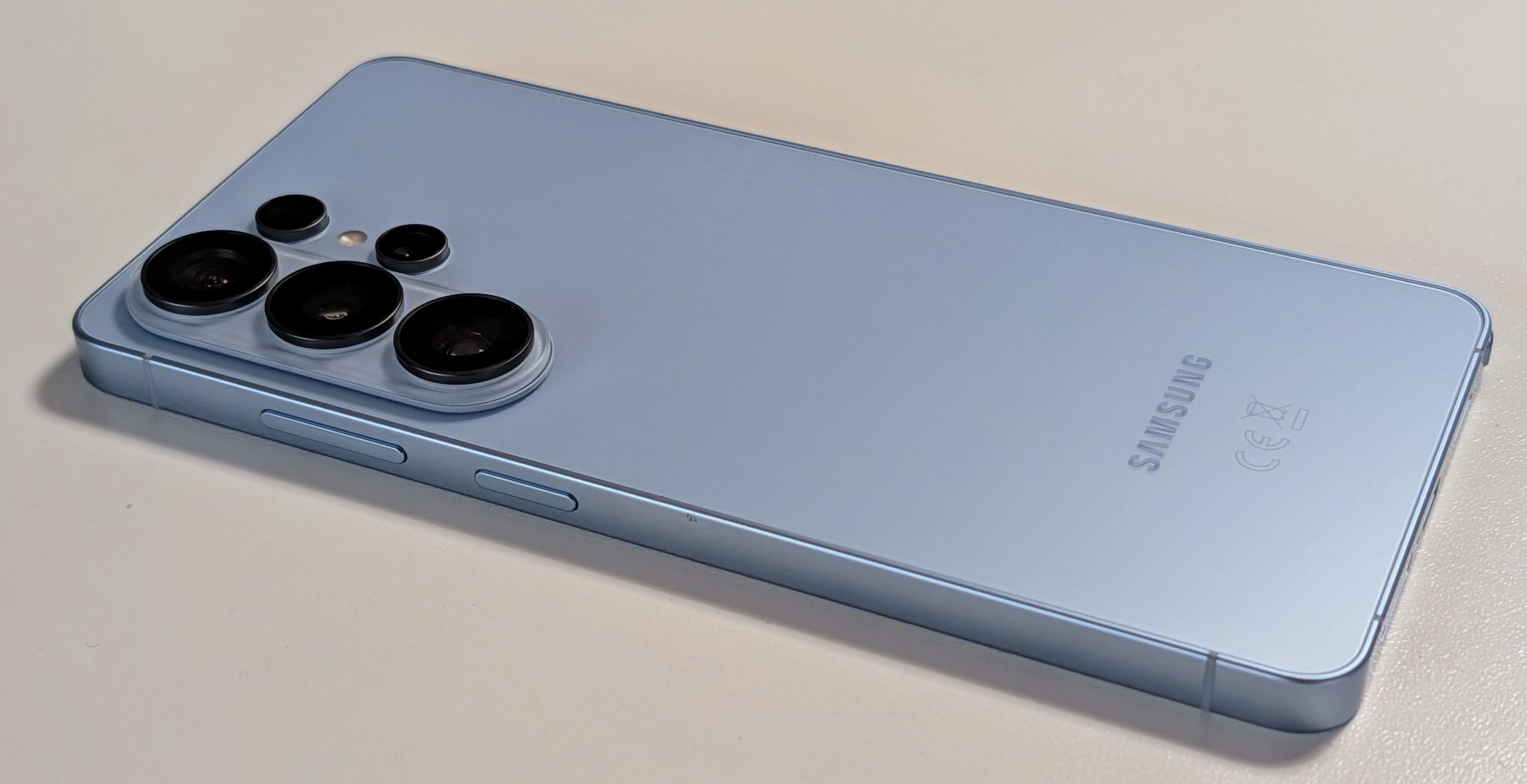
The first thing you notice when you pick up the Galaxy S26 Ultra is that it is actually thinner and lighter than its predecessor. We are talking about a thickness of 7.9 millimeters and a weight of 214 grams. That is a reduction from 8.2 millimeters and 218 grams for the Galaxy S25 Ultra. It might not sound like a huge difference, but it is actually noticeable. Samsung has kept the rounded corners introduced with last year’s model. This makes the phone sit very comfortably in the hand.
The big news regarding materials is that the titanium frame has been replaced with what Samsung calls Armor Aluminum 2. Samsung claims that this aluminum absorbs shocks better, though it is hard not to see it as a cost-saving measure. Apple, for that matter, did something similar with its latest iPhone.
The front is protected by Corning Gorilla Armor 2 glass, which features an anti-reflective surface. The back, in turn, is covered in Gorilla Glass Victus 2. However, the camera module protrudes more this time, largely due to the thinner body of the phone. This causes the phone to wobble quite a bit when lying on a flat surface. This was something that annoyed us with the predecessor, and unfortunately, it hasn’t improved.
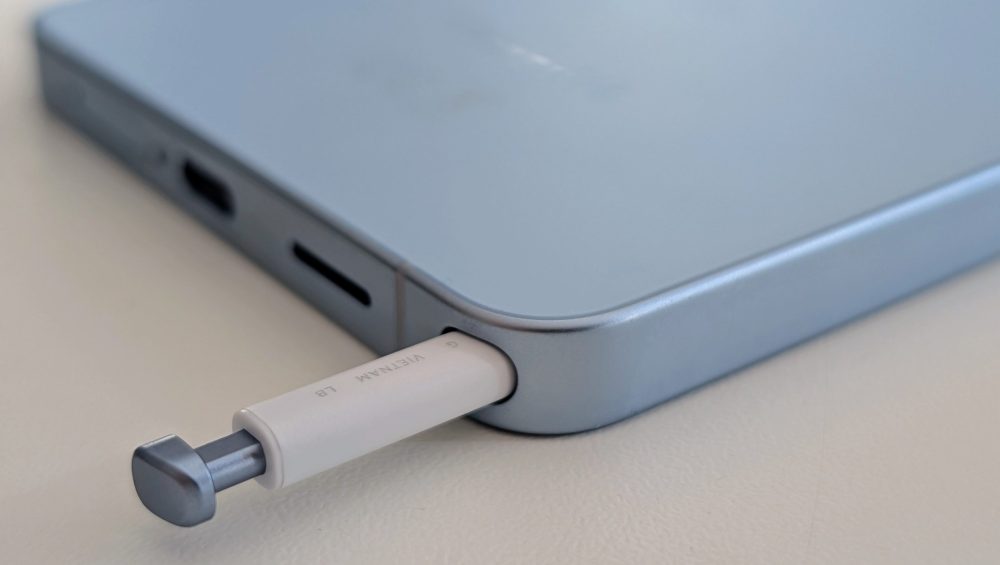
The built-in S Pen remains in its usual place. Just like with the previous generation, however, Bluetooth support is missing. This is now solely a pen in the most literal sense of the word. It is excellent for handwriting, sketching, and note-taking. On the other hand, it does not work as a remote shutter for the camera or for Air Actions gestures.
Samsung points to statistics showing that less than one percent of users utilized the features requiring Bluetooth. It is still disappointing for those who actually did, of course. However, the experience of writing with the pen is still fantastic. The screen reacts lightning-fast, and the phone’s ability to interpret handwriting works perfectly.
Display
The display on the S26 Ultra is a 6.9-inch OLED panel with QHD+ resolution. On paper, it looks like an upgrade over last year’s model. In practice, however, you don’t notice much of a difference. It is extremely bright, colors are very accurate, and the contrast is excellent. LTPO technology and a 120 Hz refresh rate also make all movements incredibly smooth.
The single biggest news is what the manufacturer calls Privacy Display. This is actually the most exciting feature on the entire phone. It is all based on Flex Magic Pixel, a technology where each individual pixel is divided into forward-facing Narrow Pixels and angle-based Wide Pixels.
When you activate Privacy Display, the light from your Wide Pixels is dimmed. This makes the screen content readable only to someone looking straight at it. Think of it as a built-in privacy screen at the pixel level.
In practice, it works really well. If you set the function to its strongest setting, the screen unfortunately becomes a bit milky. However, this is easily bypassed. You can choose to only hide your notifications, or have the protection activate only in specific programs like your banking app or Swish.
This is genuinely smart. In an era where new features in our phones often consist of marginal camera improvements or slightly faster processors, it is incredibly refreshing to see something that actually changes how you use your device in everyday life. Being able to sit on the subway and scroll through your banking app without having to worry about who is peeking over your shoulder is actually worth a lot.
Is there a downside? Yes, the brightness is roughly halved when Privacy Display is activated. It is definitely noticeable, but as long as you’re indoors, it is rarely a problem.
Camera
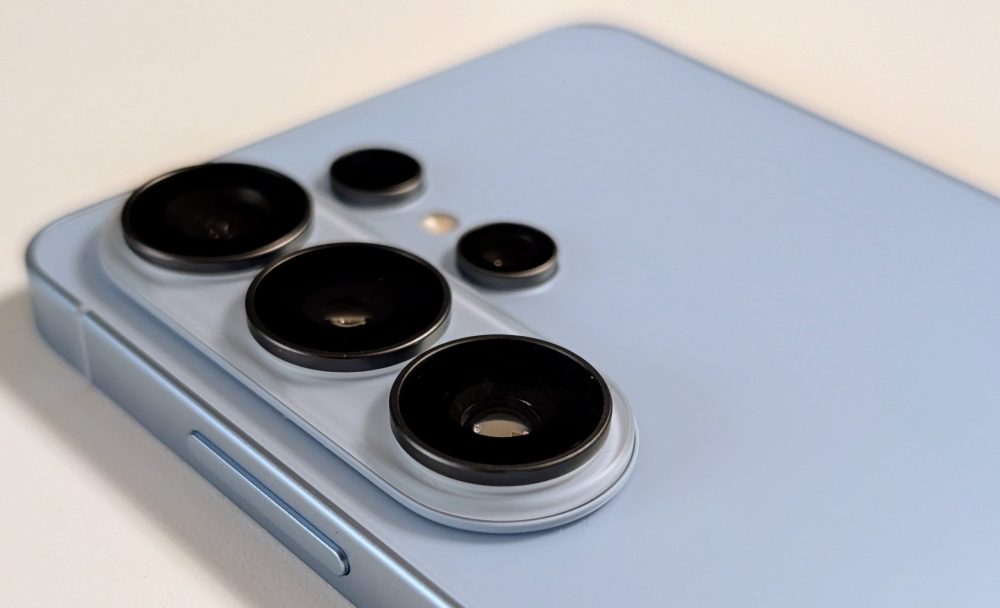
The camera system in the Galaxy S26 Ultra offers some changes compared to last year’s model. However, there are still no major leaps forward since the S23 series.
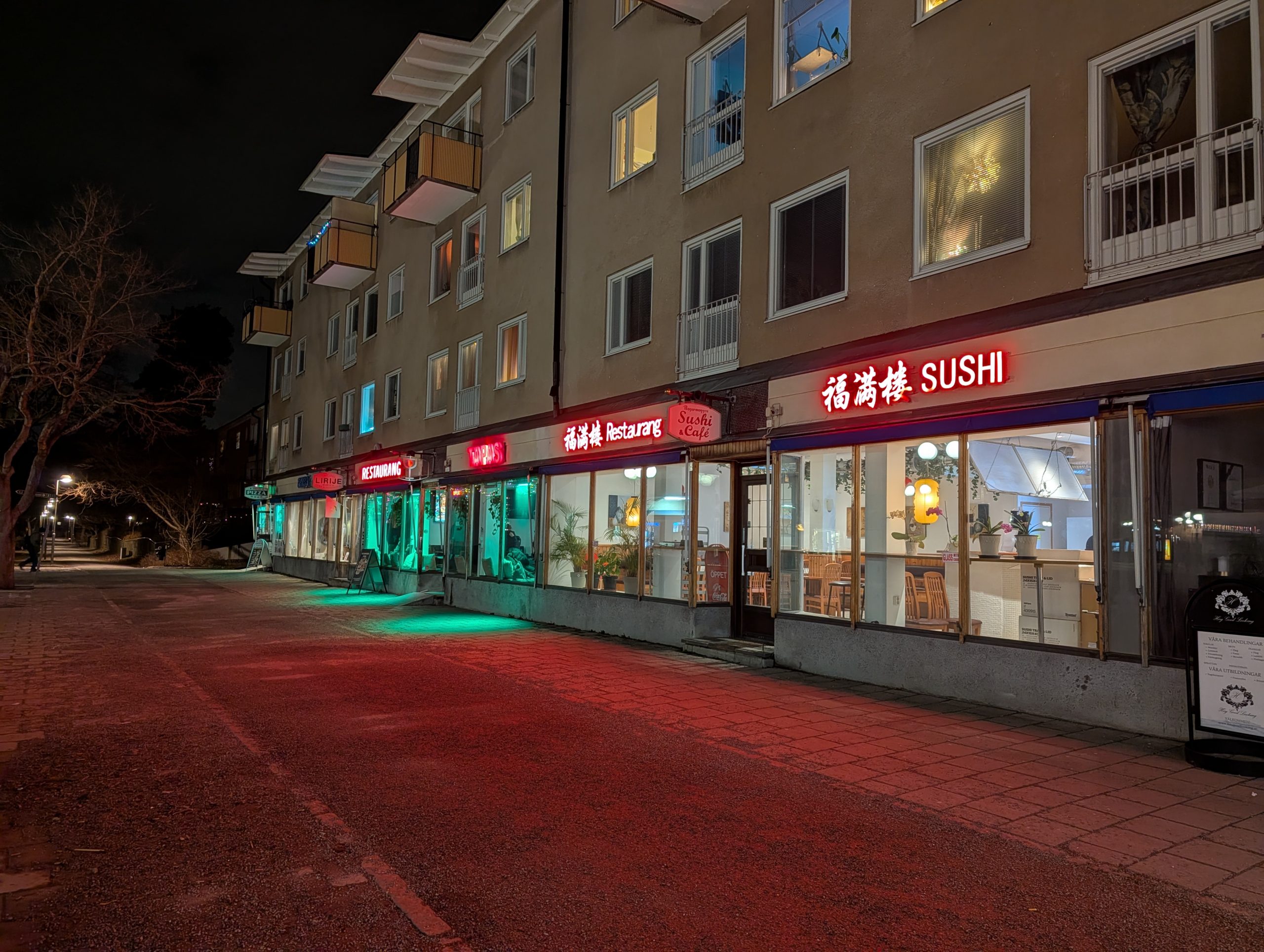
The main camera still relies on a Samsung ISOCELL HP2 sensor with a resolution of 200 megapixels. New for this year, however, is a wider aperture of f/1.4, which is a clear step up from the f/1.7 value on the Galaxy S25 Ultra.
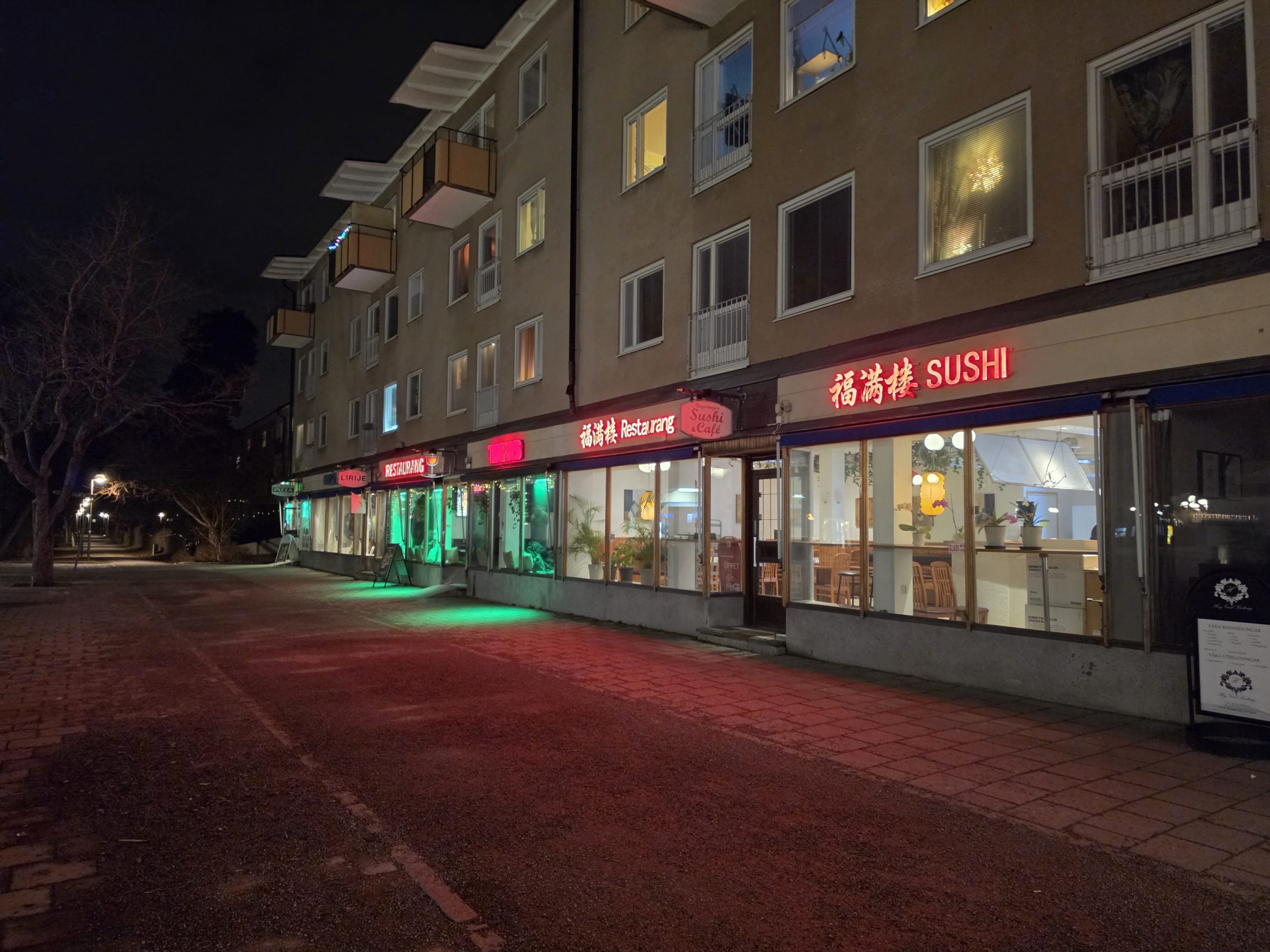
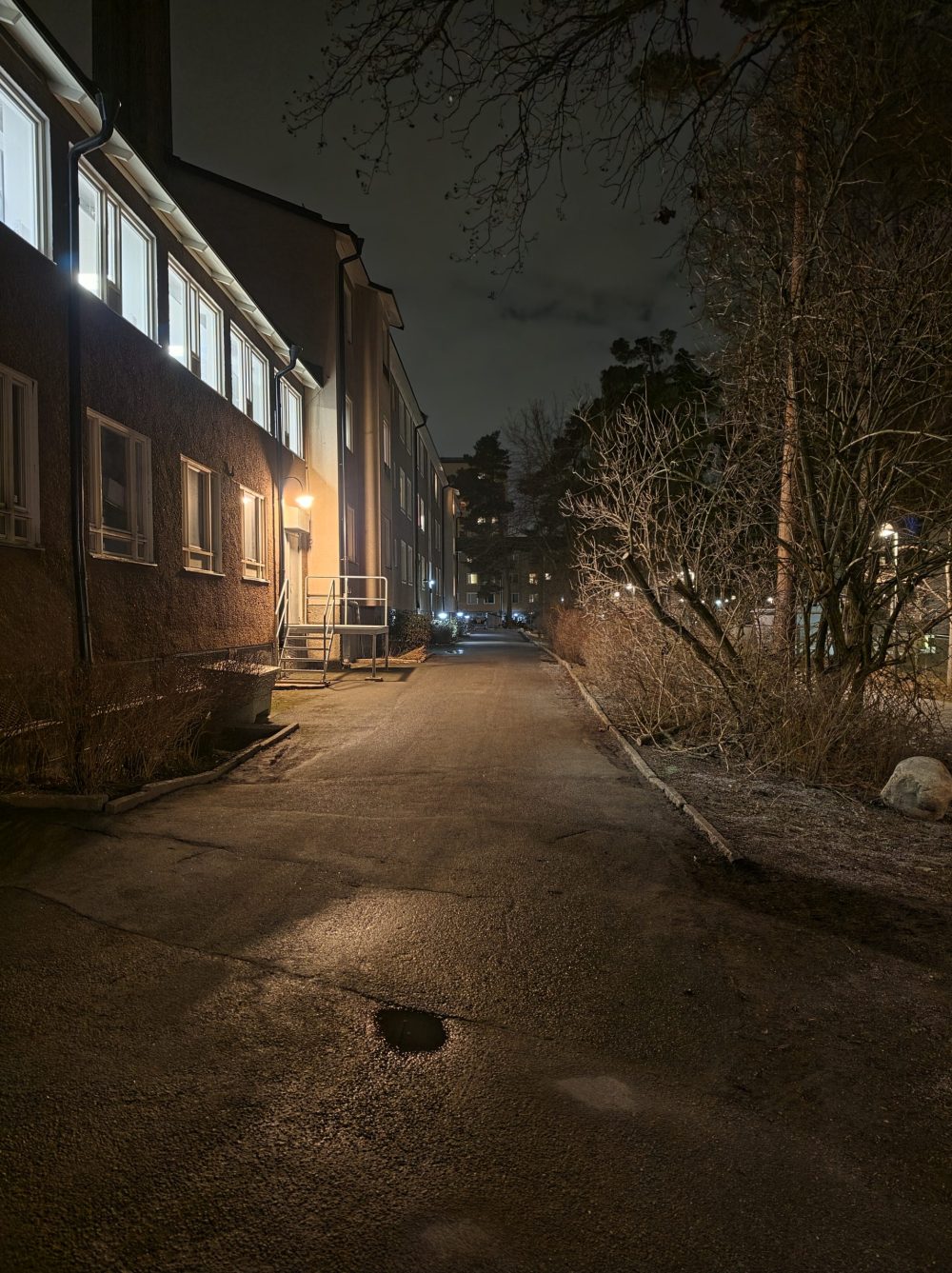
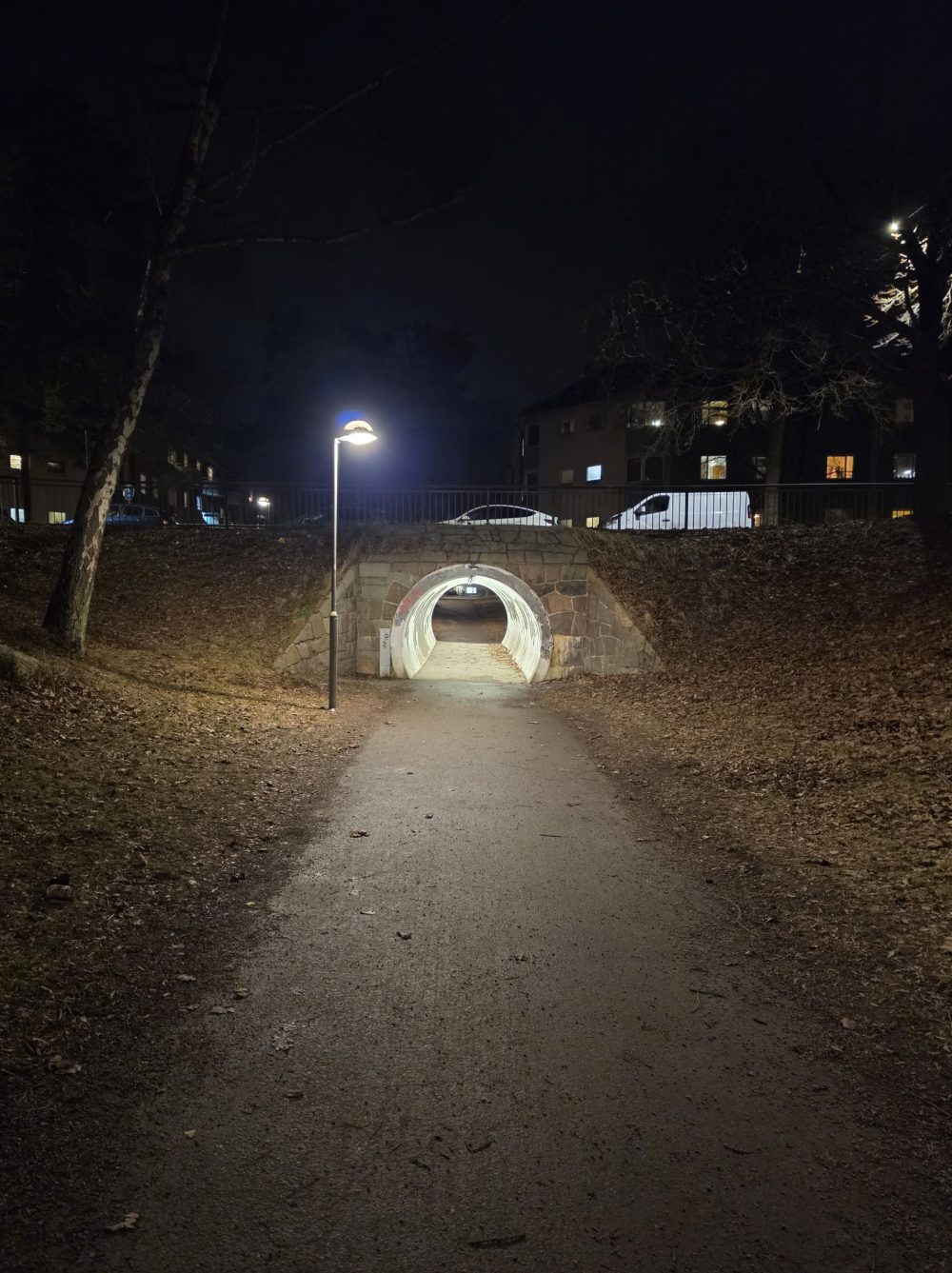
The manufacturer claims this provides a 47 percent increase in light intake. In practice, you notice this primarily in low-light conditions. There, your images get significantly less noise and much more natural skin tones.
The 5x telephoto lens features a brand-new construction with Samsung’s All Lens on Prism (ALoP) architecture, which makes the module 22 percent smaller while widening the aperture from f/3.4 to f/2.9. Zoom at 5x and 10x has improved slightly. The downside of this new construction, however, is that the minimum focus distance increases to 52 centimeters. This makes close-up shots taken with the telephoto lens essentially impossible.
What is strange is the 3x telephoto lens. Samsung has moved down to a 10 MP sensor (ISOCELL 3LD), which is the smallest telephoto sensor on any flagship phone right now. It works okay as a bridge between 1x and 5x, but it is hard not to see it as a downgrade.
Video is perhaps the area where the S26 Ultra takes the biggest leap. The new Horizon Lock keeps the image stable even if you rotate the phone, and the result is impressive. The phone records 8K at 30fps and 4K at 120fps from both the main and ultra-wide cameras, supports the APV codec for professional workflows, and the new Audio Eraser function lets you adjust the volume of speech, wind, and background noise separately in post-production.
The camera app, however, is still very cluttered, just like on the S25 Ultra. Expert RAW and Pro mode overlap in a confusing way. There is still a lot for Samsung to work on here.
Sample images:



Performance
Under the hood is Qualcomm’s Snapdragon 8 Elite Gen 5, in an exclusive overclocked variant for Samsung. This means two Oryon V3 Phoenix L cores clocked up to 4.74 GHz (compared to 4.61 GHz as standard) and an Adreno 840 GPU at 1,300 MHz.
What does that mean in practice? The phone flies. Just like the S25 Ultra, it’s peak performance no matter what you do, but now with an even better margin.
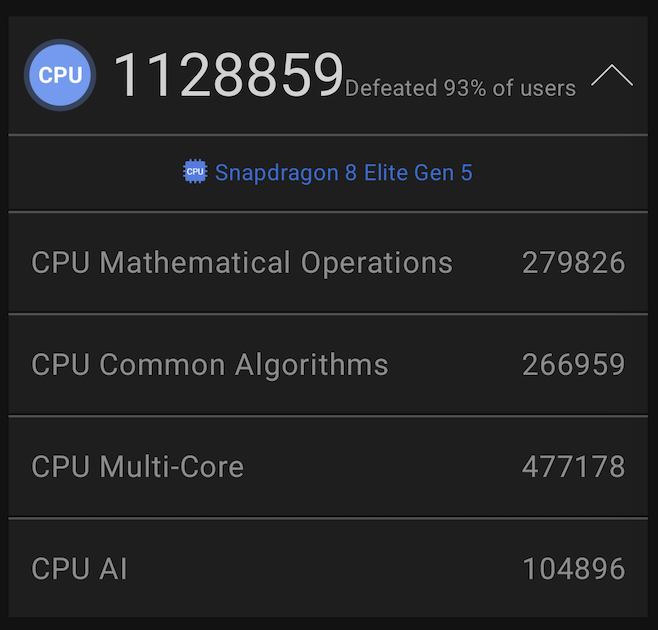
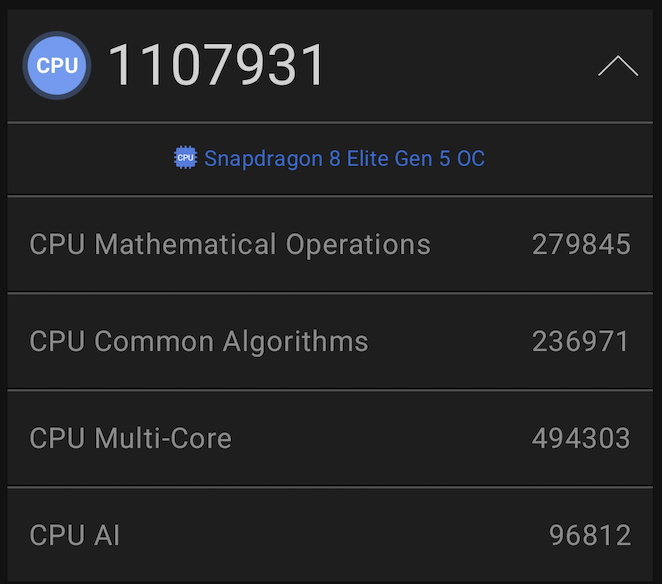
But it should be mentioned that a cheaper phone like the OnePlus 15 actually beats the S26 Ultra in some of our benchmarks, showing that Samsung’s “for Galaxy” overclocking doesn’t necessarily yield the absolute best possible results.
Battery and charging
The 5,000 mAh battery remains unchanged since the S25 Ultra. And the S24 Ultra. And the S23 Ultra. And the S22 Ultra. Samsung has kept the same battery size for seven generations of Ultra phones, and in an era where competitors like OnePlus and Xiaomi offer 7,000+ mAh, it is becoming increasingly difficult to justify.
In practice, however, you can manage a full day of use without problems, even under heavy load.
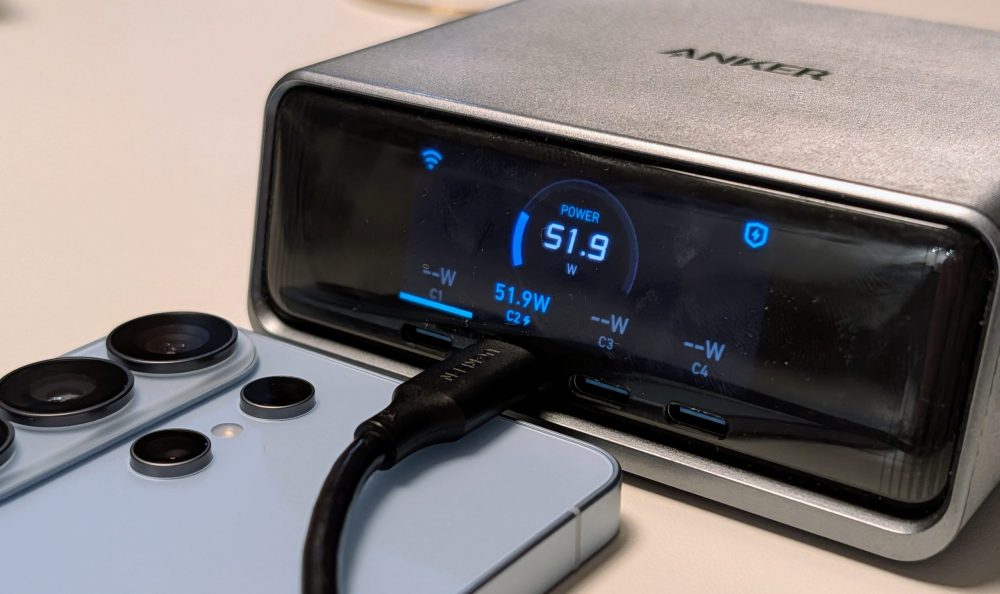
Charging has finally received an upgrade. Samsung has moved up to 60W wired (Super Fast Charging 3.0), and we are seeing just over 50W in our measurements. A full charge from zero takes about 45 minutes, and in 30 minutes, you’re up to around 75 percent.
Wireless charging has jumped to 25W via Qi 2.2, but there are no built-in Qi2 magnets. This means you need a magnetic case to properly use Qi2-compatible chargers, which feels like a very strange choice by Samsung. Not everyone uses cases on their phones.
Software and AI
The S26 Ultra runs Android 16 with One UI 8.5, and Samsung guarantees seven years of OS updates and security patches. This means support until approximately 2033, which is among the best in the industry.
One UI has grown into a mature and well-polished interface. Just like with the S25 Ultra, it’s clean and sleek with minimal bloatware besides a few Microsoft apps.
Photo Assist has become even better at removing objects, and just like on the S25 Ultra, it works impressively well, significantly better than any of the competitors’ equivalents delivering.
The call assistant we praised in the S25 Ultra review still works well in Swedish, but some of the newer features have more limited Swedish support. It’s a bit of a shame, as that was one of Samsung’s clear strengths last generation. We hope it improves with future updates.
Conclusion
The Samsung Galaxy S26 Ultra is in many ways the best Android phone you can buy right now, and at the same time, a phone that demonstrates Samsung’s increasing conservatism. Sure, Privacy Display is a genuinely innovative feature that actually changes how you use your phone in everyday life, and Samsung deserves all the credit for that.
But the list of nagging issues is long. The same 5,000 mAh battery for the seventh generation in a row. No Qi2 magnets. The switch from titanium to aluminum. A downgraded 3x telephoto. A marginally improved camera system. And a price tag of 16,990 SEK which, despite actually being lower than the S25 Ultra’s launch price, is still hard to swallow when a OnePlus 15 provides better battery life and performance at the same level (in some aspects even better) and currently costs under 10,000 SEK.
For those who like Samsung and are upgrading from an S23 Ultra or older, the S26 Ultra is an excellent choice. If you have an S25 Ultra, there is very little to justify a switch, unless you are obsessed with Privacy Display. And for those who prioritize battery life and pure performance per dollar, the competition has never been tougher.
Once again, it receives a solid 7 out of 10 rating, because this is still among the absolute best Android has to offer. But Samsung needs to start taking risks again.
Samsung sent review units for this test. Senders of material have no editorial influence on our tests; we always write independently with you, the readers and consumers, in focus.
How we rate products at SensesReview Highlights: Q&A
What is the main new feature of the display?
The Privacy Display hides screen content from side angles.
How has the design changed from the S25 Ultra?
It is thinner, lighter, and switched from titanium to.
Does the S Pen support remote camera control?
No, it lacks Bluetooth and remote shutter functionality.
What are the charging speeds for the S26 Ultra?
It supports 60W wired and 25W wireless charging.
How long will the phone receive software updates?
Samsung guarantees seven years of OS and security updates.
What is the battery capacity of this model?
The battery remains at 5,000 mAh, unchanged for years.
Does the camera perform better in low light?
Yes, the f/1.4 aperture allows for 47% more light intake.